When I wake up, I have a morning ritual that I do. Obviously, this changes if I have an appointment or a schedule I need to keep, but I usually try to slowly wake up and follow my routine. This consists of taking my morning meds, and then getting on my kindle: games, email, threads, banking, and then I begin my day with breakfast, shower, getting dressed, and lately sitting right down at the computer to get my writing in. I like routines.
The first of the games I go to is The Washington Post’s Quotes. They give you a quote, and you have three chances to guess who the speaker is or what they’re speaking about. It scores between one and five points depending on when you guess, but of course, in the grand scheme of things the points don’t matter. Still, I enjoy getting a five on most days. On Fridays, they give you ten questions so that takes a bit longer.
I woke up yesterday and went to the link, but paused, thinking that I did not have time to do ten questions before I needed to start my day, and so I skipped ahead to Wordle, and planned to get back to the quotes later in the afternoon. It took a few minutes, but in the middle of the puzzle, I realized that it wasn’t Friday, but Tuesday.
It’s only Tuesday?!
How long was Monday?!
How could it not be Friday? Monday was like ten days long!
Monday has been ten days long for about six weeks now. Mondays have been so productive and busy that it feels like a week has gone by when I wake up on Tuesday.
I saw a friend last night, and mentioned this to her, and she agreed and said she has the same phenomenon happen to her. I’m glad I’m not the only one living in a prolonged Monday.
We spent eclipse weekend in Montreal, Canada. Once we were shut out of Syracuse (too expensive) and Plattsburgh (no room at the – or any – inn), it wasn’t a difficult decision to go a short distance further. I love being that close to the border, and luckily our passports are current.
Because of the research I planned to do while we were up there, I thought we’d pop our chairs down at the park near the Ile de Tekakwitha on the Mohawk territory/Kahnawake. We scoped it out the night before and the parking looked extremely limited, but we were still hopeful. We would decide when the time came. As darkness settled in, we drove out to the main road for dinner – Robbie’s Smokehouse!
On Monday, we woke up bright and early; adventure awaited!
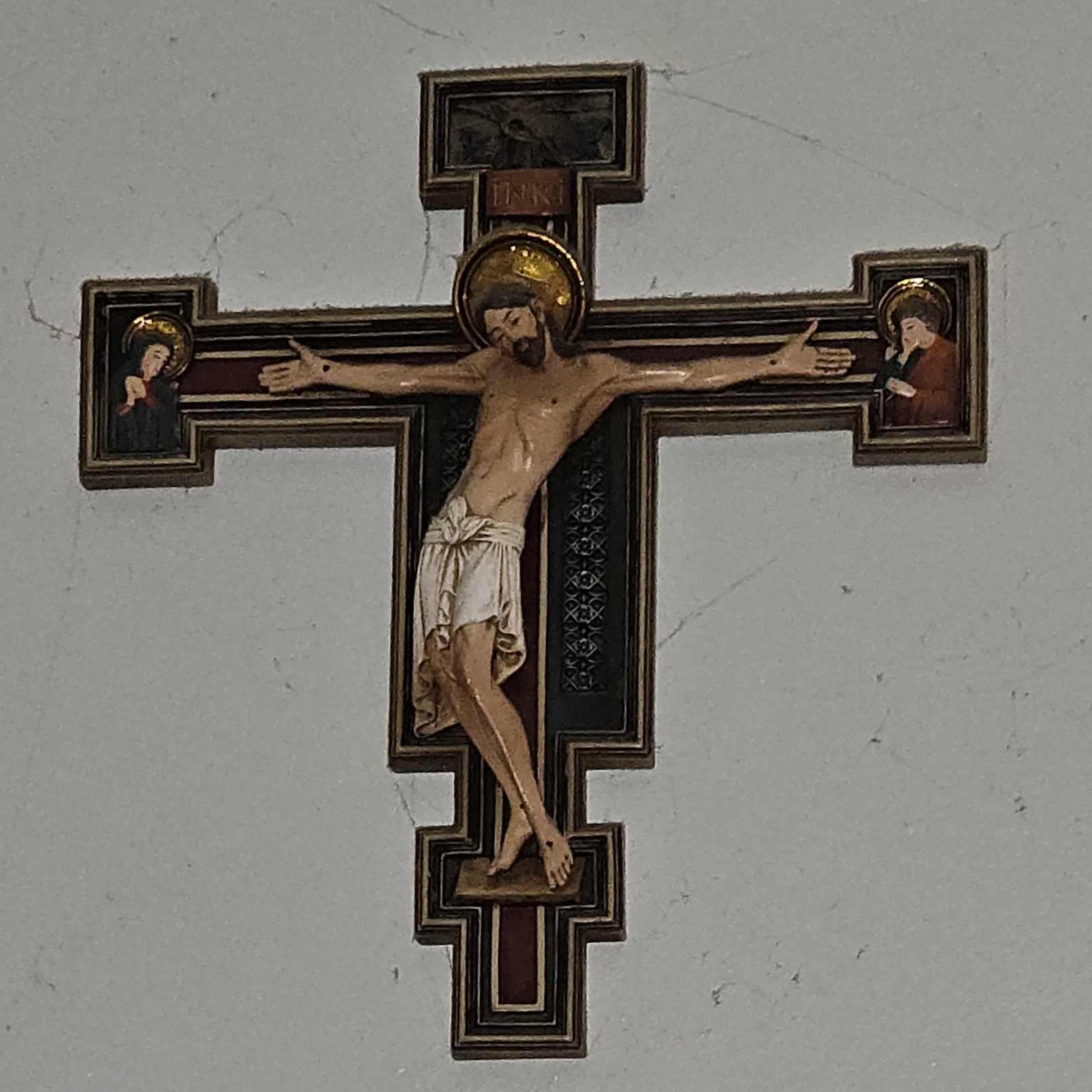
Easter falls so weirdly on the calendar. Often it is the same week as Passover, which makes sense because Jesus went to Jerusalem for the Passover Festival during what is now Holy Week. But this year, Easter is this Sunday (March 31), and Passover doesn’t begin until nearly a month later, at sundown on April 22. Adding into that is that this is my ten-year anniversary of coming into full communion with the Catholic Church. A decade. So long and so short simultaneously showing truly how the days are long, but the years short.
My Easter Vigil was on April 19, 2014. I’ll celebrate that day as well, attending church, having mass said for special people in my life, and I’ll also be celebrating this week as we welcome new people into the church and our parish. There are two baptisms which I find fraught with emotion. Being able to watch what I went through is both nostalgic and spiritual. I still remember the water being poured over my head, slowly, three times, as the words penetrated my being. I still talk about how my priest used a water pitcher, a small one, but still a pitcher and how in subsequent years it was more like a clam shell. It’s amusing to me until I think about the amount of icy water dripping down my robe, although I guess flowing might be a more apt word. I kneeled in a tub, a literal baby-sized plastic pool while subsequent catechumens were stood over a basin. It is a beautiful, ceramic basin, and I am in part jealous and also awed by watching my own experience play out for others, regardless of the intricacies and the details. My robes were made by my friend. The incense rising on Holy Thursday made the shape of a Jewish star. I pointed it out to my godmother, so I know I didn’t imagine it. The chrism oil from the confirmation smelled of rosemary. I leaned over to my husband and friend and told them to smell my face. It was a pleasant, old-world, feeling of ancestors, and something I’ve only felt a few times, three times during my children’s brises and namings, and on my pilgrimage to Wales and Auriesville. It was doing something as part of something bigger, huge, that often can’t be put into words or even thoughts. It’s not that it’s old, but it’s, as Tevye says in Fiddler on the Roof, “tradition,” where tradition means so much more than the dictionary definition. It’s deeper than the ocean and vaster than the stars. It’s time stood still and it’s time speeding past. A single line or a wibbly-wobbly mush of threads or yarn tightening in some places, loose in others, knotted, and dangling and frayed and worn and strong and sturdy. It is faith, and it is questioning. It is changing and encouragement. It is friendship and relationship and knowing everything and still nothing.
Ten years of prayer, of mass, of rosaries, of devotions, novenas, saints and blessed, seeing beyond and within. When we renew our baptismal vows on Saturday night, I will close my eyes and let the water land where it wills, the cleansing water of G-d, that reminds of the past and prepares for the future.
I’ve been thinking a lot about my observances and views especially since coming across the thoughts of Robin Wall Kimmerer in reconciling her own feelings on her family’s rituals, but also since the terror attacks in Israel on October 7th and the rampant antisemitism since then. I wonder if I should be doing more as a Jewish person. I wonder (for the first time) if I should have converted – it’s not that I don’t believe; I do believe wholeheartedly, but am I betraying the Jewish people? Am I still Jewish to others? *I* know I am still Jewish. I just feel on the outside. I have always felt somewhat on the outside. I’m more religious than some; I’m less than most. Does what I do count? Who decides that?
I have many thoughts, but they are not forming cohesively and rationally. They come in screams and anger and heartbreak. And reflection.
A family piece that’s come down from my mother. A Rabbi, praying. (c)2024
This is the first part of a three-part series. The impetus was something I read in Braiding Sweetgrass by Robin Wall Kimmerer, which I will reflect on in the last part. Part One delves into my childhood, growing up Jewish in what I consider a fairly religious household, although it was less religious than my grandparents’ households that my parents grew up in. Looking back, it is certainly more religious than I raised my own kids in, and that will be discussed in Part Two. Part Three, funny enough is the part I wrote first, but then kept expanding and writing and re-writing, and realized there was more backstory than I could fit into that section. I hope you enjoy reading about my past lives, and my reflections and reconciliations with who I am today and how I became that person, at least in this one aspect of my life.
I’ve been searching for the write inspiration for December, and this first night of Chanukah brought things into perspective. A little bit of perspective. While the internet and the news are filled with antisemitism and protests from people intent on gaslighting the Jewish experience and deny Jewish people the indigeneity of their homeland, I have been on a quest to celebrate Chanukah publicly. I’m a little wary about it. I live in a nice neighborhood, but I don’t put my head in the sand and think that it couldn’t happen here. I know it can.
Still….
I went out and bought blue and white lights for outside, something I’ve never done. I have an interactive menorah hanging on my front door, again, something I’ve never done. In fact, since I’ve been on my own (and with my own family) I have not put Chanukah lights in the window. That unfortunately will continue because I know that if I put candles on my windowsill, my mother would come back from the grave and blow them out with a raucous, and loud message of fire safety.
Most people don’t know the story of Chanukah; perhaps some teachers wanting to bring multiculturalism to their classrooms, and now the story of the Maccabees is being co-opted to match the narrative, anything to turn the words of Jews and their history against them. The Festival of Lights isn’t about war. It isn’t about victory. It is about faith. The miracle isn’t that the Maccabees won against their most recent oppressor. The miracle is the lights themselves. When we retook the temple, amid the destruction, they went to light the candelabra to rededicate the temple, the menorah – not the nine-branch one that most are familiar with, but the regular, ordinary menorah that is always lit in the temple. There was only enough oil to keep it lit for one night. There was no other oil. So, what did they do? They lit it anyway.
And it remained lit, not one night, not two, not three or four, not even five or six or seven, but it remained lit for eight days. One day’s oil lasted for eight days. That is the miracle. And that is why we light eight candles on a new type of menorah used just for this holiday: a hanukkiah.
Tonight, I will say the prayers (that I don’t normally say). I will fry the latkes in oil. I will fry the chicken in oil. I will light the first candle on the same menorah that I lit as a child; the one that I grew up watching the candles burn down on the dining room table that was my grandmother’s. It will be placed on that same dining room table in my own house. My kids will see the lights on the same menorah, the same table, and they will be able to see through my eyes, even amidst the clutter that seems to grow multi-generationally on this dining room table.
This year, however, this old menorah has a special, additional meaning. I saw this menorah in Toronto at the Royal Ontario Museum in their Judaica exhibit, in the Chanukah window. A copy/replica of MY Chanukah menorah sits in the largest museum in Canada. The exhibit label states that it is from Gdansk, Poland, brass, from the early 1900s.
Happy Chanukah.
My family menorah. (c)2023
Royal Ontario Museum Judaica Exhibit. Hanukkah menorah, “Danzig” type, Gdansk, Poland, early 1900s. (c)2023
Ready for sundown. You can view it lit later tonight on Instagram (link in sidebar). (c)2023
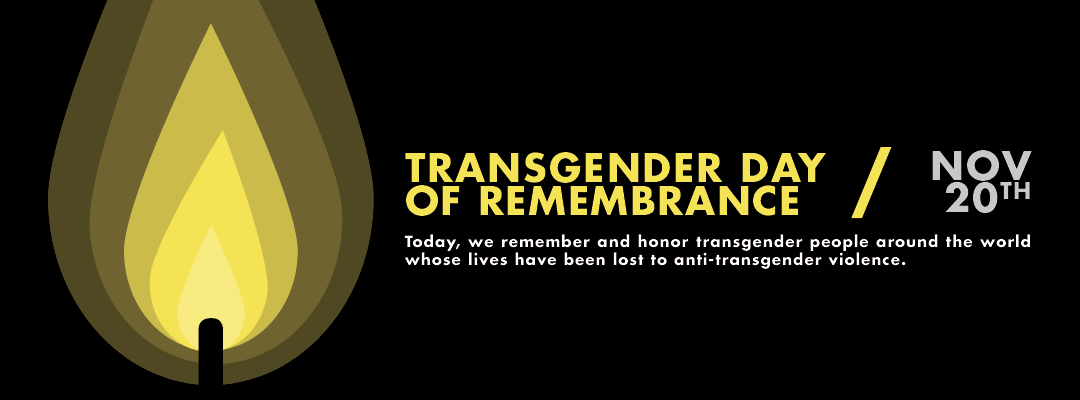
I wanted to observe this day of remembrance for the transgender people who have been assaulted and murdered in the last year. I wanted to do this especially this year when transphobic rhetoric has been at an all time high, at least in my experience. This day reminds me of those people lost, and it reminds me how I can continue to speak out and make the world safer for trans people. That is what makes me an ally. Wearing a t-shirt or a pin doesn’t make me one. Speaking out with general information, corrections to misconceptions and misinformation, and calling out transphobia when I see/hear it is what makes me an ally.
I thought about this a lot this weekend. I was on retreat and without getting into private details, I was in the presence of two mothers of transgender sons. One was accepting and one was not. The one who was accepting walked her road, steady over the potholes, and came to understand and accept her son’s new place in her life, never once wavering in her love for them. The second mother was not accepting. She detailed some medical experiences her child had, she shared their new name, but in that, she was not accepting of that name, and would continue to call her child by their birth name. I had a choice to speak out and possibly offend someone; or speak out and educate or really take a stand on that child’s side. I chose to speak out. I think I did it tactfully. The point of speaking out wasn’t to make the mother feel bad or guilty or angry; the point was to make her think, to consider what she’s saying versus the reality of her situation with her child. Silently, I felt that if she continued with this way of thinking, she will lose this child, and I don’t think that’s what she wanted.
Last week, I had a similar opportunity with someone else. He said something that I considered transphobic. It was a small thing, and it wasn’t to a trans person or about anyone, and really it wasn’t that bad in the great, big world of transphobia, but I called it out anyway. It caused an argument with the other person saying that I was being overly sensitive – it was not transphobic. The only response that I could make was that trans people will let you know what’s transphobic. My point here was that it is the small stuff that tells a trans person they’re not welcome or safe with you. You don’t have to murder a trans person to make them feel unsafe with you. I did let it go. People need to hear what’s said and then be given time to think about it, coming to the realization in their own time.
However, knowing that today was coming so soon after these conversations, I knew that I needed to acknowledge this day and these conversations. Those of us who are not transgender do need to have conversations that encourage our questions, that enable us to move beyond our internal biases, that allow us to change our hearts and become un-transphobic. It is not easy for any of us who love people that change before our eyes, but when we look deeper, I think we’ll see that they changed very little. They were always who they were, and it is not up to us to accept them; it is up to us to continue to love them.
I think that when we look at trans folks, the biggest change that we may or may not see is that they are comfortable. They are happy. They are lighter than they used to be now that they are who they are supposed to be, who they’ve always been, hidden away. This is who they’ve always been, except now they’re smiling.
Today is to honor the dead, but it is also to save the living through our acceptance and love. Please consider my words with the intention they were meant, and for everyone, but especially trans people, to have a peaceful day in contemplation and commemoration. I will prayerfully be considering those who lost their lives this past year, but also those who are journeying their own paths and that they remain safe on their journeys.
The photo below represents both the start and the end of the day.
Beginning with the end, I have slept with a Dream Catcher for most of my life. I notice a change in my sleep when I don’t sleep with one. It creates a calm and peaceful rest as it catches the bad and lets the good continue through. This particular dream catcher is one I got in Niagara Falls, Canada. I was drawn to the colors of the beads that represent the four directions as well as the uniqueness of the center stone.
The booklet is something that I was more recently introduced to through Mohawk Elder Tom Porter of the Kanatsiohareke Community in New York. Since then, I’ve seen it in other Haudenosaunee writings and readings. It is called the Thanksgiving Address, but it has nothing to do with the Thanksgiving holiday, but in giving thanks for all that is around us in the natural world, all that we have, all that we see. It is said at the beginning of all important gatherings, ceremonial and/or governmental. The Haudenosaunee call them the Words Before All Else.
I recently used a form of this address for a meditation that I was tasked to share, and it was very well received. I read mine, but most are recited and because of that they are often never the same twice since the words change with the speaker and the timing of the gathering.
As I said at my own (non-Native) gathering, as a shared meditation, I acknowledged the land we were standing on (Mohawk), and reaffirmed that I am a non-Mohawk, non-Native, sharing their wise words.
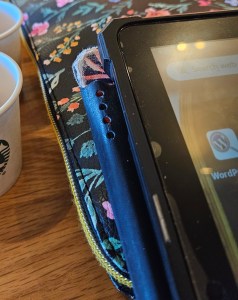
I have not been to Starbucks in quite some time. Today is Red Cup Day, so I planned a quick in-and-out/grab-and-go, get my drink, get my cup, and go home to do some work. On the way out the door I grabbed my pouch and keyboard, just in case.
I walked in, and this place is hopping. Seven baristas behind the counter, all moving, creating the dance that has everyone doing their parts, seeing the rhythm that is so natural to them, and yet in that small space, no one is tripping over any of the others, smoothly weaving in and out, and the one barista who seems to be tracking everyone’s drinks, knows all of our names, our orders, who’s waiting for what, greeting, smiling, conversating.
It’s a joy to be here.
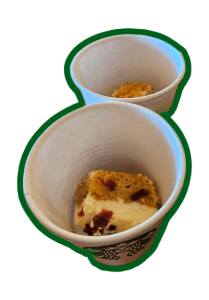
I chose my drink, which is a feat in itself since I don’t like coffee, and for the red cup you’re limited on what you can order – they want to show off their seasonal treats and have you try those. I finally settled on the caramel brulee latte, but no coffee; comes with whipped cream and a caramel-ish drizzle. There is a tray of free samples – cranberry bliss bar, which I haven’t had yet this year.
I got my breakfast wrap, and was offered a second sample. I was going to decline, but the customers all have, and this is my favorite treat, so why not.
I settle in, and decide to share with you the wonder of the holidays at Starbucks, especially this one that is my local, well-run, friendly, and makes me remember what joy in the everyday is.
Yes, it’s children laughing and choirs singing. It’s songbirds and sunrises, it’s well-worn jeans and waking up before the alarm, but it’s also the simplicity of the coffee shop where they learn your name, and make your morning that much lighter and brighter, and add just a little bit of joy to the regular.