Friday Food – Montreal

Standard

We spent the last five days in Montreal doing research for my book, seeing the St. Kateri Shrine, attending masses, seeing St. Brother Andre Bessette’s tomb and relics at the St. Joseph’s Oratory, and we also ate some really great food!

Picture heavy/links to restaurants below:

Continue reading

Feast Day of St. Kateri Tekakwitha (in Canada)

Standard
(c)2025

This is the feast day of St. Kateri Tekakwitha. She died on this day in 1680 at twenty-four years of age. Since that time, miracles have known to have occurred through her intercession. In two more days, is the anniversary of my own conversion.

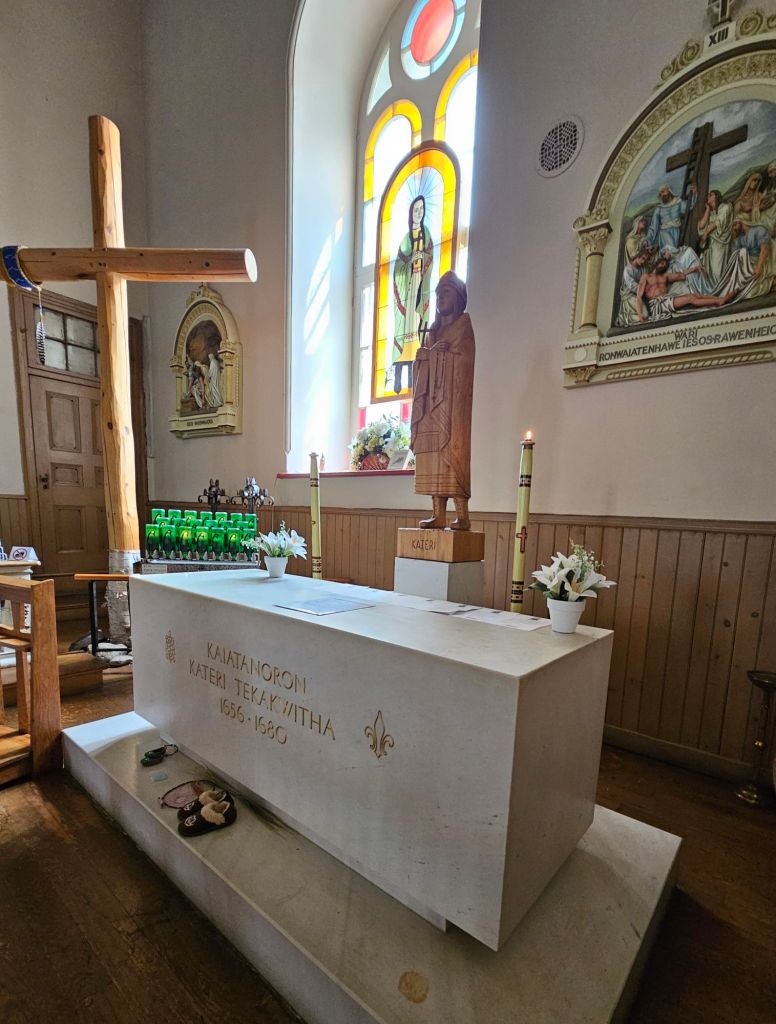
The photo above is at her tomb where her earthly remains rest at the St. Francis Xavier Mission Church in Kahnawake, Quebec. This is at the National Canadian Shrine of St. Kateri Tekakwitha.

I’m looking forward to the celebration of her feast day in the US in July, and my visit to this shrine and her tomb in June, partly for intensive research, but also hopefully to attend mass while we’re there.

St. Kateri, pray for us.

Native American Heritage Month Can Be All Year Long If You Know Where to Go

Standard

I think when it comes to marginalized groups in this country, it is important to remember that even though we attempt to celebrate them and honor them, we can still do that on the other 364 days of the year, and not just on “their” day.

Native American Heritage Month officially ended on November 30th, and Native American Heritage Day was commemorated on November 29th.

In addition to the post last week with links to the American Indian Museum in Washington, DC, I’d like to share the following links and travel recommendations for you to consider over the next 361 days.


The Akwesasne Cultural Center is located on State Route 37 in Akwesasne, New York, near the Canadian Border. They are a museum, library, and cultural center focusing on the history and culture of the Mohawk people as well as protecting Mohawk culture and artifacts. The museum and gift shop are open T – F, 10-6, and Sat, 10-2. The library is open additionally on Monday, 9-5.

The Kanien’keha’:ka Onkwawen:na Raotitiohkwa Language and Cultural Center was established in 1978. Its mission is to preserve and enrich the language and culture of the Kanien’keha:ka (Mohawk) of Kahnawa:ke. They are located in the Mohawk Territory of Kahanwa:ke, south of Montreal, Canada.

You can also find the Welcome Center, the Kateri Interpretive Center, and the St. Francis-Xavier Mission Church (on this site since 1716) in the Mohawk Territory of Kahnawa:ke. I have toured all three of these sites and it is well worth the visit.


From The National Museum of the American Indian at the Smithsonian: The “First Thanksgiving”: How Can We Tell a Better Story?

Bluesky Handle, Puff the Magic Hater has a thread of ways to support Native people, for everything from abortion care, defending voting rights, keeping Native families together, and more. Visit the thread here.

I’d like to close this post with the words of someone smarter than me. On Nov 29, 2024, historian Heather Cox Richardson wrote on Facebook:

Continue reading

Research and Rabbit Holes

Standard

For my May inspired I thought I would indulge a little. As many know I have been doing a lot of research for my book on St. Kateri, and as I was reminded of in a recent writing class I took, with research you will learn much more than you will actually include in your book, whether that book is fiction or non-fiction, and I have discovered the truth in that. The research that I’ve been doing for this book includes not only St. Kateri’s life before sainthood, but also Mohawk history, the Jesuits in New France, and various aspects of both Catholicism and the longhouse religion as well as many other details that help to inform the writing and the context, something that I’m learning the Jesuits at the time lacked when they spoke of the Native American ways.

I went down one rabbit hole recently that led me to three separate web pages regarding President Ulysses S. Grant’s “Indian Policy,” which was both informative and disheartening. I spent two hours reading, and it will only result in one or two sentences in the entire book.

In discussing 19th century treaties with one of my writing groups, I was sent a recent article on a court case from 2005 that referenced a treaty from 1794. There was also a recent Supreme Court case whose decision was based on a treaty from the 1800s regarding water rights. Another disheartening read as while the Supreme Court agreed that the Native tribe had rights to water, they did not however have the right to have the US government provide said water. Whew! What an acrobatic backflip!

One thing that surprised me in reading about the Jesuit way of converting the Natives to Catholicism was how they dismissed the Haudenosaunee’s spirituality and religious ceremonies when they were already so close to Christianity: a monotheistic society with one Creator, virgin births, miracles, and several other instances of commonalities.

I’ve read five books, two of which had nothing to do with St. Kateri but was wholly about Haudenosaunee Creation and the creation of their confederation and countless journal articles including one comparing the Jesuits’ use of incense to the Native American’s use of sacred fire and smudging. In reading Tom Porter’s book, And Grandma Said…, I have confirmed that we are more alike than we are different. In fact, when he was discussing how he prayed (by talking to his Creator), but was told that was the wrong way to pray by Christians, I was aggravated; that was exactly the way I prayed since childhood – through conversations with my G-d.

As appalled as I’ve been over the years at the treatment of Native Americans by colonialists (and modern people) I have become even more appalled and tell anyone who will listen about these judgments and discrimination foisted upon the Native population here on Turtle Island.

The second time we visited Kahnawake in Quebec, I told our tour guide that I wanted to visit, not only for the St. Kateri information where her tomb was, but also because what my children, who are 27, 19, and 18 have learned of their Iroquois history in 4th grade is the same as I learned in my 4th grade class forty years before that.

I’m reaching out to people with questions. I’m visiting places where Kateri lived both as a child and as a young adult, taking notes, creating lists of questions, looking through land buying archives, borrowing well-worn books out of the library. I’m getting help from places I hadn’t expected and advice on where to look for information. I’ve reached out to an artist for permission to use his art and I’ve signed up for journal access, which fortunately was granted for one month rather than requiring payment for the entire year.

While there is a struggle to find some material, I am reading from Mohawk sources to realize the context and seeing the misunderstandings of the Jesuits towards Kateri’s people. I also believe some of those characterizations were intentional to make Kateri seem more pure, more otherworldly, more worthy of the sainthood they coveted for her future.

My next two research jaunts I’m hoping to make are to the shrines in Fonda, New York and Kahnawake, Quebec to visit their archives. In both cases, I’m hoping the papers are in English rather than French. I also hope to interview one or two people and visit one area’s Strawberry Festival and one area’s Pow-Wow (both of which are open to the public). Those have less to do with Kateri the person and more to do with the Mohawk heritage.

Rabbit holes. They are deep and twisty, and the bucket is often not big enough for what is unearthed.

A Total Totality

Standard

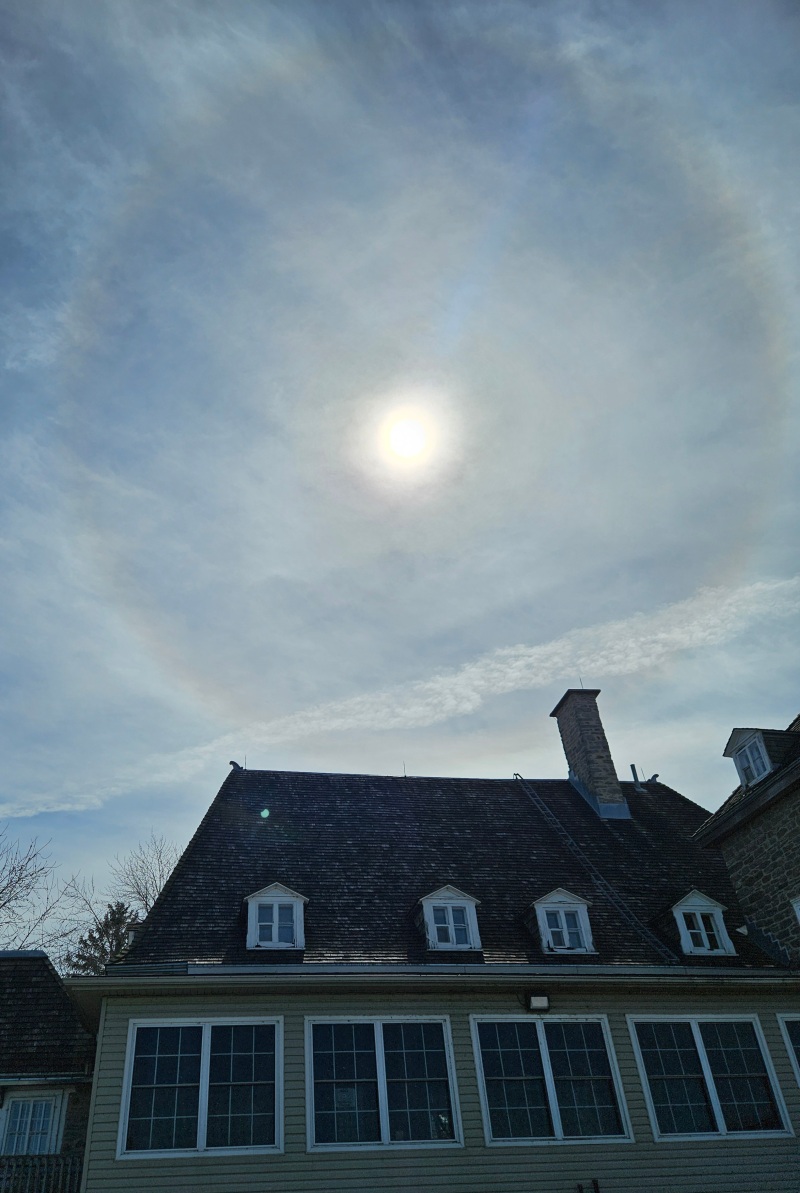
We spent eclipse weekend in Montreal, Canada. Once we were shut out of Syracuse (too expensive) and Plattsburgh (no room at the – or any – inn), it wasn’t a difficult decision to go a short distance further. I love being that close to the border, and luckily our passports are current.

Because of the research I planned to do while we were up there, I thought we’d pop our chairs down at the park near the Ile de Tekakwitha on the Mohawk territory/Kahnawake. We scoped it out the night before and the parking looked extremely limited, but we were still hopeful. We would decide when the time came. As darkness settled in, we drove out to the main road for dinner – Robbie’s Smokehouse!

On Monday, we woke up bright and early; adventure awaited!

Continue reading

St. Francis Xavier Mission Church in Kahnawake, Quebec

Standard

When I was studying Catholicism and becoming Catholic, I wanted to know which saint shared my birthday. As it turned out, when I discovered that “my birthday saint” was St. Francis Xavier, I was a little underwhelmed. Every time I said his name I thought of Rufus Xavier Sarsaparilla, and I thought couldn’t I have had a better saint.

I bemoaned and ignored him, later discovering him as a follower of St. Ignatius of Loyola, who’s Spiritual Exercises and Daily Examen I was also looking into. Still, I was unsatisfied. I think I wanted someone like Joan of Arc or Mary Magdalene.

When I became interested in and devotional to St. Kateri Tekakwitha, a very local saint and the first Native American canonized saint, I wanted to visit her homes and her shrines. I’ve often been to Fonda, where she lived for most of her life, and tried to visit her tomb in Quebec. However, it was during covid, and they weren’t allowing non-parishioners or pilgrims to visit the shrine.

Where exactly is her shrine in Canada?

Kahnawake, Mohawk Territory at the, wait for it, St. Francis Xavier Mission Church.

Really. Her earthly bones, her relics are laid to rest in the church dedicated to “my birthday saint”. A truly remarkable and at the same time ordinary coincidence.

I’ve been to Kahnawake three times. The first was during that covid time when we could only explore the outside. And then this past summer, I was able to visit Kahnawake twice. The first time we visited, we knew the church would be closed on the only day we had available, but we did attend a tour of the village through the Kahnawake Tourism Center. We received a very detailed and informational tour about the area, the Mohawks past and present, St. Kateri, and a bit about the mission church. On our next visit at the end of August, we were able to not only visit and see the inside of the church, we were also able to attend mass, see the original and earliest painting of Kateri by Father Claude Chauchetiere (one of the Jesuit missionaries at the time) as well as her relic that was removed from the vault for us to observe and venerate (if we chose to).

This mission church is a permanent building and was erected in 1716. Before that it was a moveable mission that traveled with the Mohawks beginning in La-Prairie-de-la-Madeleine. They moved a total of five times each time their mission church was constructed the same as the other Mohawk buildings until this last time in its permanent location. St. Kateri’s remains were entombed here in 1972.

Inside the church, in addition to St. Kateri’s tomb, are two memorials: the first is to the Mohawk men lost in the Quebec Bridge disaster in 1907, and the second is an ironwork replica of the World Trade Center’s Twin Towers in honor of 9/11. Both are on the main altar. It should be noted that the Mohawk are known for their ironworking skills, and were large parts of crews building not only the World Trade Center, but the Empire State Building as well in addition to many other high-rise buildings and skyscrapers across the area.

[Photos below cut]

Continue reading

Kahnawake, Quebec

Standard

Indigenous Peoples’ Day was Monday, nearly a week ago, but that doesn’t mean that now we can forget about an entire culture, language, history, or a people. I usually will say that especially in the Northeast, where the Iroquois, more properly known as the Haudenosaunee lived, we should remember them. There are several things wrong with that sentiment though, and I am embarrassed to admit them. For one thing, the Haudenosaunee live, now, among us. They cover the six nations: Mohawk, Onondaga, Oneida, Cayuga, Seneca, and Tuscarora, across all of New York State and the international border with Canada. For another thing, Native tribes have lived on this continent from ocean to ocean, from the time when there were no borders at all. Just like our states, their nations had rivalries with others, they had distinctive cultures separate from one another. It’s important to remember that Native culture, whatever nations are represented, they are a living, breathing group of people, and it is well past time to recognize their contribution and their sacrifices. I’ve had several people (non-Native, I should note) that it was in the past, it’s history, there is nothing I can do, and that attitude disturbs me on many levels. I don’t know if it’s a connection I feel to the people whose land I live and work on. I don’t know if it’s from my childhood admiration and longing to be more involved in the limited Native culture around me as a child. I don’t know if it’s because of my Jewish background where people will say the same sentiment: it’s history, why are you still upset about…? I will call out some by saying that the same people who say that the Trail of Tears and stolen land in the 1880s and 1890s is “ancient history” and we “need to move on” are the same people who insist on the rest of the country worshipping a man who died over two thousand years ago. The continued hypocrisy is staggering in so many ways.

I have a few thoughts and photos that didn’t make it onto the website on Monday, and I hope to share them with you today and in the early part of next week.

I have been fortunate to have visited the village of Kahnawake in Quebec, Canada three times. Kahnawake piqued my interest through my studies and research of St. Kateri Tekakwitha who was born, lived, and was baptized very near to where I sit right now. Each visit was unique in that I saw new things and learned new things each time. The first time during covid was very limited to the outside world and was a superficial encounter. The second time had a decidedly Mohawk perspective, and the third time was more of a Catholic and Mohawk-Catholic perspective. Each visit gave me a new outlook, answering questions and thoughts, and offering insights that raised more questions and contemplations. I expect and look forward to returning next year to do some more research as well as visiting their language and cultural center that we were unable to see previously.

These photos are a little taste of the village. I will also share the one thing that really surprised me. The Mohawk in Kahnawake primarily speak English and Mohawk. Their street signs and stop signs are in those two languages. I thought the second language would be French. As I said, there is always something new to learn.

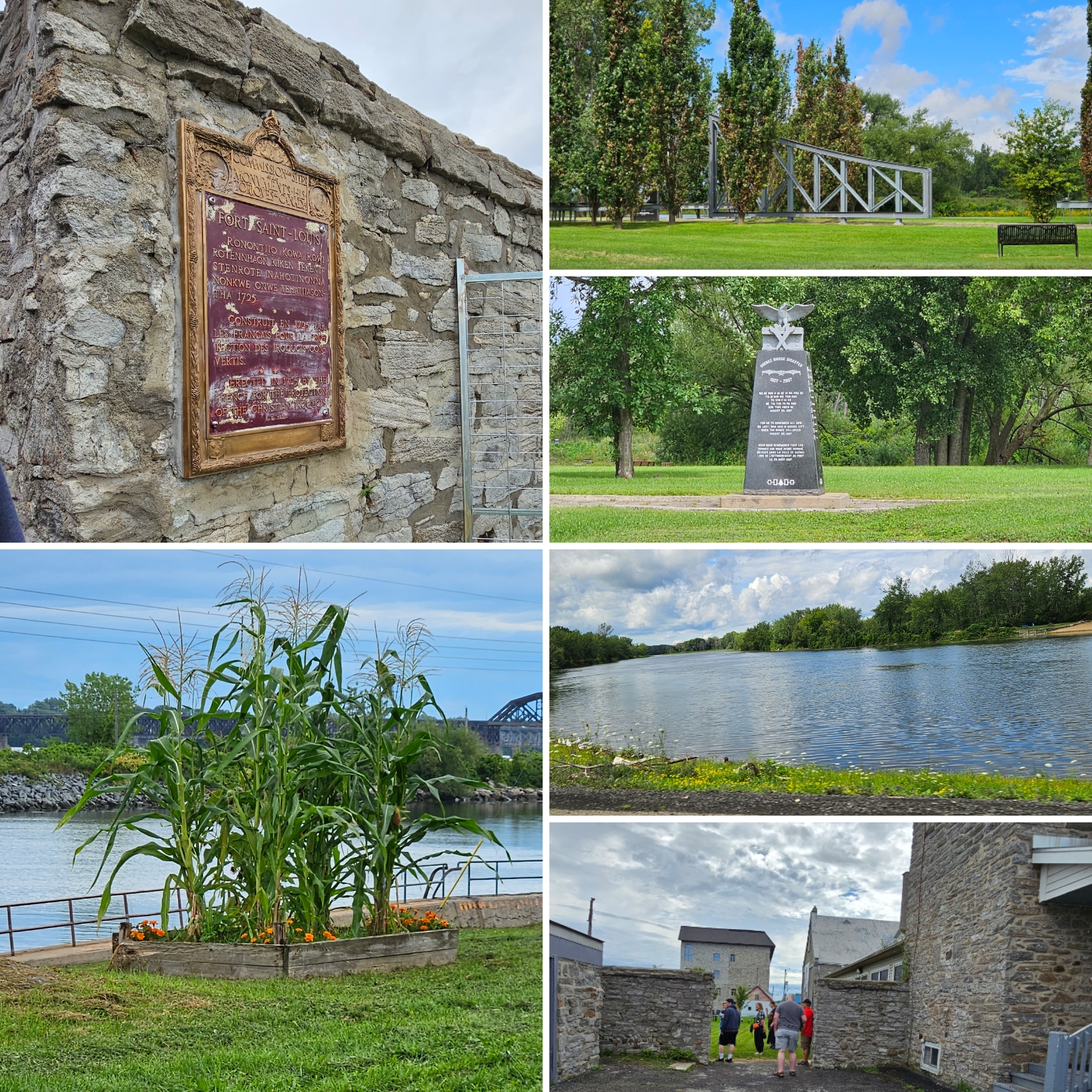
From the top, clockwise: Original wall of the Fort Saint Louis, Replica of the Quebec Bridge, Memorial to those who perished in the Quebec Bridge Disaster, part of the St. Lawrence Seaway, the back of the St. Francis Xavier Mission Church, what I presume are the Three Sisters, which are grown on Mohawk land.
Kahnawake, Quebec.
(c)2023

I just wanted to add one or two notes about the above photos:

The St. Francis Xavier Mission Church moved with the Mohawk. It moved four times,
I believe, before it settled permanently here and was built as a permanent structure in 1716. St. Kateri’s relics were moved here in 1973.

The Quebec Bridge Disaster killed 32 Mohawk ironworkers from Kahnawake. This left 25 widows and over fifty children fatherless. The compensation from the Canadian government was negligible. The Clan Mothers decided from then that so many members from one family could not work on such a dangerous job.

The Canadian government changed how the St. Lawrence River flowed, so it moved it away from Kahnawake and left the still St. Lawrence Seaway. The River was more profitable and was able to accommodate boats and fishermen as the Seaway was not. This is still an issue today.

The Three Sisters are known to the Haudenosaunee as the most important crops, sacred, and include corn, beans, and squash. They grow together in the same area and help each other thrive.

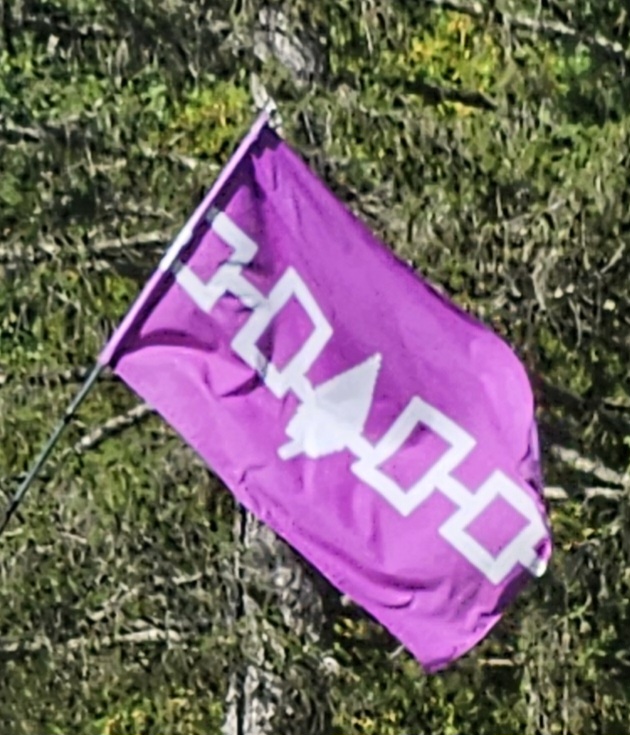
Haudenosaunee Confederacy Flag, which is a depiction of the Hiawatha wampum belt.
(c)2023
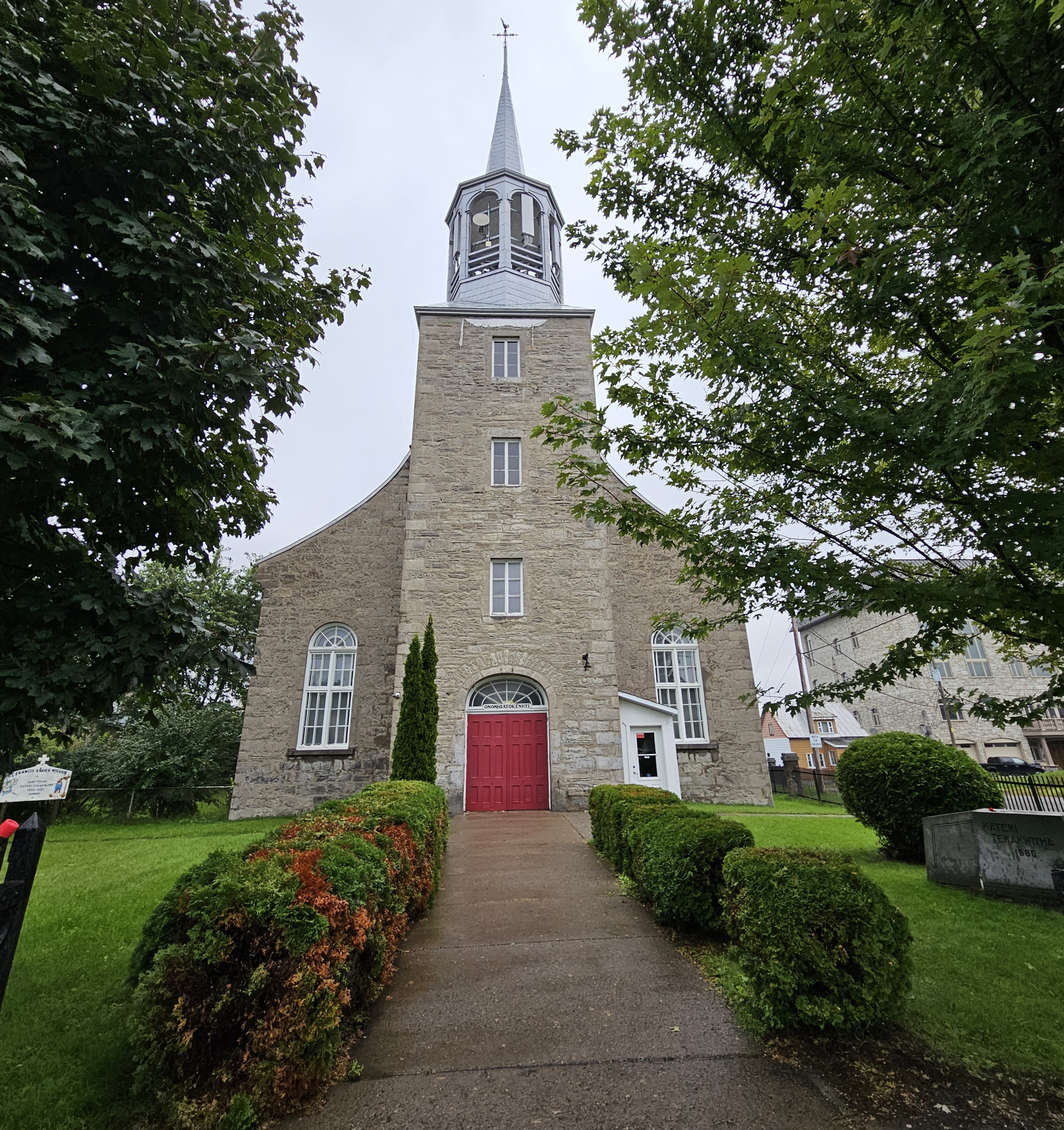
Front of the St. Francis Xavier Mission Church.
Kahnawake, Quebec.
(c)2023
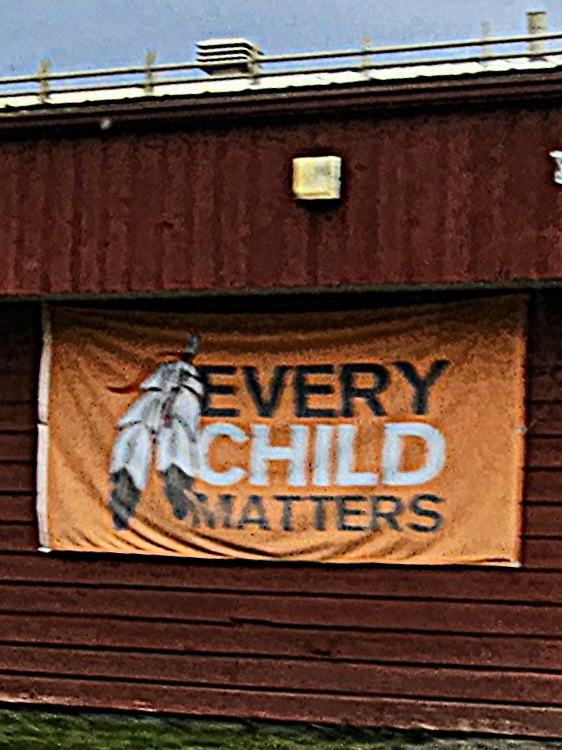
Signs and flags of Every Child Matters on orange are seen in many places. Despite Canada’s Truth and Reconciliation Committee, there is still much to be answered for.
(c)2023

September 11th

Standard

In our travels, I’ve been touched by how other countries have commemorated 9/11. We saw a tree that had been planted on the grounds of Belfast’s City Hall with an adjacent plaque that touched me deeply.

In our recent tour of the Mohawk village of Kahnawake in southern Quebec, we learned quite a bit about the Mohawk people of the area and their history, including their history of building many parts of New York City. One of the things our tour guide brought to our attention was the primary economy of Kahnawake; it’s easy to see once entering the village boundaries that cigarettes are one of the dominant businesses for the tribe. The second largest career for the Mohawk of Kahnawake is ironwork. This began long ago and continues to this day with many Mohawk men traveling each week to New York City to work as ironworkers, and then returning to their families on the weekend.

We were told about, and I subsequently read about a tribute that the ironworkers did for the 9/11 attacks on the World Trade Center, creating a replica that is kept in the chapel at the St. Francis Xavier Mission Church. With the WTC replica is a cross made from iron that came from the NYC site, and an artistic sketch showing the relationship of the traditional Mohawk with their older tools of their trade and the more modern Mohawk with their modern tools of the trade. There are also eagles and eagle feathers, both a symbol for the United State as well as an important symbol for First Nations/Native people, all set in front of the buildings rendered before the attacks on one side and the longhouse on the other, with both traditional and modern skylines reflected at the base. The visualization evokes many emotions and feelings for so many thoughts and for me, the pride depicted on the Mohawk faces supplants the sadness and creates a new somberness that dulls the pain and raises the heart.

Looking at the workmanship brings an emotion that welled in my chest: the work put into creating such a piece that is both simple and stunning while respecting the lives lost and the lives changed on that day.

When we returned to Quebec a couple of weeks later, we were able to tour the church itself and it was then that I took the pictures that I’m glad to share with you today on this twenty-second anniversary of 9/11.

Continue reading

Inspire. September.

Standard

Sometimes an inspiration takes on many forms and has many hands to form it.

The pictures below are a couple of my visit (pilgrimage, I suppose it could be called) to the Canadian National Shrine of St. Kateri Tekakwitha. I had been trying to visit here for several years. I was hampered from visiting due to their pandemic closure, and then I thought I wouldn’t be able to again this year because their opening hours did not coincide with our vacation plans.

My husband rectified that by suggesting our return a couple of weeks after our vacation to visit the shrine. And so, I was able to fulfill my desire to see the final resting place of St. Kateri Tekakwitha. This was my final stop in seeking out Kateri’s footsteps, and it was a beautiful experience that I will share in time.

In the meantime, enjoy these photos that do not do the site justice:

St. Francis Xavier Mission Church.
Kahnawake, Quebec, Canada.
(c)2023
The Altar.
(c)2023
Looking from the altar to the entrance of the church.
(c)2023
Tomb of St. Kateri Tekakwitha that holds her relics.
(c)2023