September 11th

Standard

In our travels, I’ve been touched by how other countries have commemorated 9/11. We saw a tree that had been planted on the grounds of Belfast’s City Hall with an adjacent plaque that touched me deeply.

In our recent tour of the Mohawk village of Kahnawake in southern Quebec, we learned quite a bit about the Mohawk people of the area and their history, including their history of building many parts of New York City. One of the things our tour guide brought to our attention was the primary economy of Kahnawake; it’s easy to see once entering the village boundaries that cigarettes are one of the dominant businesses for the tribe. The second largest career for the Mohawk of Kahnawake is ironwork. This began long ago and continues to this day with many Mohawk men traveling each week to New York City to work as ironworkers, and then returning to their families on the weekend.

We were told about, and I subsequently read about a tribute that the ironworkers did for the 9/11 attacks on the World Trade Center, creating a replica that is kept in the chapel at the St. Francis Xavier Mission Church. With the WTC replica is a cross made from iron that came from the NYC site, and an artistic sketch showing the relationship of the traditional Mohawk with their older tools of their trade and the more modern Mohawk with their modern tools of the trade. There are also eagles and eagle feathers, both a symbol for the United State as well as an important symbol for First Nations/Native people, all set in front of the buildings rendered before the attacks on one side and the longhouse on the other, with both traditional and modern skylines reflected at the base. The visualization evokes many emotions and feelings for so many thoughts and for me, the pride depicted on the Mohawk faces supplants the sadness and creates a new somberness that dulls the pain and raises the heart.

Looking at the workmanship brings an emotion that welled in my chest: the work put into creating such a piece that is both simple and stunning while respecting the lives lost and the lives changed on that day.

When we returned to Quebec a couple of weeks later, we were able to tour the church itself and it was then that I took the pictures that I’m glad to share with you today on this twenty-second anniversary of 9/11.

Continue reading
Inspire. September.

Standard

Sometimes an inspiration takes on many forms and has many hands to form it.

The pictures below are a couple of my visit (pilgrimage, I suppose it could be called) to the Canadian National Shrine of St. Kateri Tekakwitha. I had been trying to visit here for several years. I was hampered from visiting due to their pandemic closure, and then I thought I wouldn’t be able to again this year because their opening hours did not coincide with our vacation plans.

My husband rectified that by suggesting our return a couple of weeks after our vacation to visit the shrine. And so, I was able to fulfill my desire to see the final resting place of St. Kateri Tekakwitha. This was my final stop in seeking out Kateri’s footsteps, and it was a beautiful experience that I will share in time.

In the meantime, enjoy these photos that do not do the site justice:

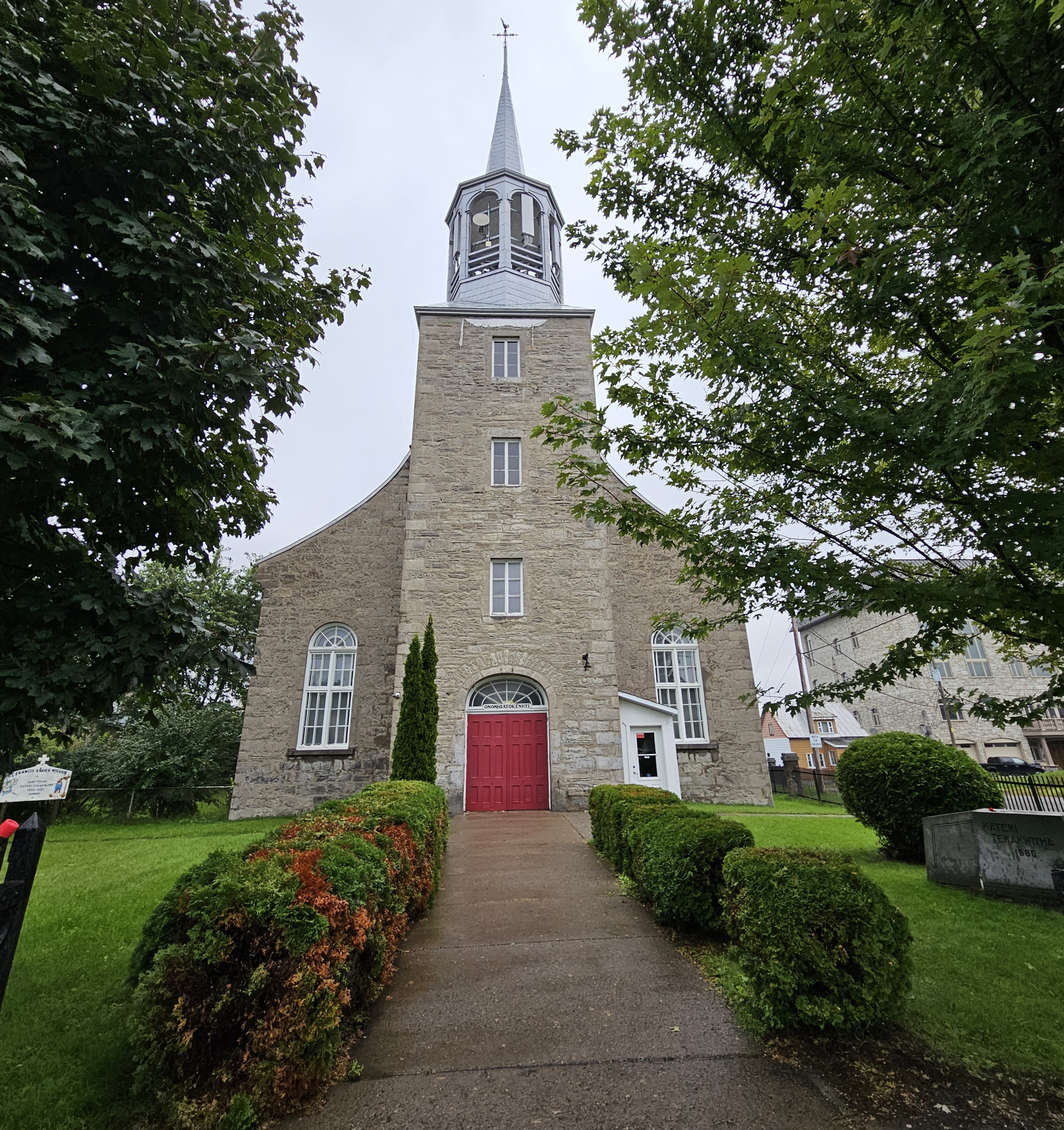
St. Francis Xavier Mission Church.
Kahnawake, Quebec, Canada.
(c)2023
The Altar.
(c)2023
Looking from the altar to the entrance of the church.
(c)2023
Tomb of St. Kateri Tekakwitha that holds her relics.
(c)2023

3 Days Late – National Photography Day

Standard

I didn’t want to let this one day go by without sharing some of my photographs from our Canada holiday. When we travel, we may have different objectives. Each trip is different, and it is only in looking back at journals and photos that a theme sometimes emerges. Sometimes it’s just family time, tourist time, foodie fun, and relaxation, and other times it fleshes out into something a little different.

In looking for photos to share as part of National Photography Day, I saw a theme of history; not only a historical perspective, but a focus on First Nations, ancient land, and my own personal history. I hope that the captions will tell a story.

[Picture heavy]


Continue reading

The Feast Day of St. Kateri Tekakwitha

Standard

St. Kateri Tekakwitha was the first Native American woman to be canonized. This was in 2012, the same year I joined the church with my ongoing attendance. It would be another two years before I came into full communion and participation.

There were many reasons that I was attracted to St. Kateri as I considered her among others while I discerned a confirmation name (ultimately choosing St. Elen of Caernarfon as many of you know).

I have always felt a connection to the Native American people and interested in their culture and spiritual practices. As kids our parents took us to the pow-wow out on Long Island with the Shinnecock Indians. It’s hard to live anywhere in New York State and not find nearby towns with Native names.

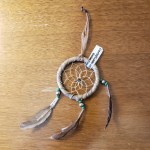
A gift from my friend in South Dakota. It is a dream catcher and it has helped me at times when I’ve had trouble sleeping. It is Native made near the sacred Black Hills.
(c)2021

Kateri was from nearby; just west of the Capital District. She was born in the village of Ossernenon, now known as Auriesville. The village is mapped out at the Martyrs Shrine. After a small pox epidemic killed her family and left her scarred, the remaining Mohawk burned the village and moved (as was done when a disease ran rampant through their homes).

They moved further west and to the other side of the river to what is now Fonda, above where the current Kateri Shrine is located in the village called Caughnawaga. The footprint of the village can be seen and can be reached either by car or by walking the trails to the village and the spring.

Continue reading