Mental Health Monday – Quietude

Standard

Today is the observance of Yom Kippur. It is the Jewish day of atonement, a time to think back on the bad we’ve done and ask forgiveness, and to look forward on how we can be better stewards of ourselves and our time.

When I was a child, we were not allowed into the temple. I don’t know if that was because the tickets were too costly or if we children made too much noise and fidgeted too much. I have strong and fond memories of playing in the parking lot (which was devoid of cars) and playing with other children. We were dressed relatively nicely, but still playing outside until one of our parents came out to the door at the back, and from the top of the stairs shushed us. If I were being honest, this happened more than the one time.

Growing up, I had difficulty on this day. As a teenager, I would sleep until one in the afternoon, hoping to shorten the fasting we were required to do. I was annoyed that I couldn’t participate in my favorite pastime – writing – because writing was work. (Not to me, but my parents would not hear of it.) We didn’t have computers then, so that wasn’t an issue for me.

As I grew up, I never had a temple near me to attend services (except once) and so I spent my Yom Kippur fasting, reading one or two books, and speaking to G-d.

After I had my kids, I would take them on walks, read to them, and watch PBS.

On these Yom Kippurs that fall during my Catholic years I find myself seeking quiet. Reading. Praying. Fasting. (I try to only take my medicine with a little bit of water.) Thinking back on the last year and looking forward.

For those of you who are not Jewish, who do not observe the fast, this is a reminder that we all need that quietude; that time to take for ourselves where we’re not making shopping or to-do lists, where our brains are not turning over a mile a minute. Take the day if you are able, or an hour, or even a block of fifteen to twenty minutes, and just be. It can be contemplation, meditation, prayer, or just simply resting your mind. That time is your refuge, and it is needed just as much as water is for life.

(c)2023

Providence

Standard

Fate. Coincidence. Providence.

Are they real? Really real?

Thinking about them happening, they might be far off and existential and not as real as touch, but when they happen –

BOOM!

The slight increase in heartbeat, a hitch in breath, the exhilaration of being aware as something remarkable happens right in front of you.

I’ve been aware of the spiritual, the extra-natural, and they are few and far between. Sometimes they travel to my consciousness after the fact, but when they happen within the moment, in the context, they become something special, something extraordinary, something to be held close for all time, and beyond time.

I had two times this week that something like that occurred.

Fate?

Coincidence?

Providence. All the above.

Several months ago, my memoir teacher recommended a book to me – one of many – The Cartographers. I presumed it was about maps or map-making, and I wasn’t able to find it in the library app on my Kindle. In the meantime, I read a bunch of other books. On Monday, I decided it was time to try again, so I checked the library app, and there it was: The Cartographers. I checked it out and began to read. Even in the pre-table of contents pages, I wasn’t sure about it – there was a warning of suicidal ideation and self-harm and to take care reading it. I burrowed on.

The main gist is a high school graduate who is lying to her mother about going to college; she lives in NYC with two roommates, meets an odd boy and just shows us her life and gives us some insight and lessons along the way. This did not seem like a book my memoir teacher would be drawn to, but I was definitely drawn to it. I couldn’t believe how much the main character, Ocean, resonated with me in very familiar and emotional ways, sometimes painful. I really related to her, the existential crisis that was continually her personality – I feel that in my bones. As Queen sings, “Is this the real life; is this just fantasy?” Or a simulation on some alien being’s computer. As Ocean asks, “Are you dead too?” I don’t feel that despondency, but it’s a good question.

Are the fate moments real and everything else is fluff? Or the opposite: all the misery and doldrums are real, and the fate moments are the fluff – the golden fleece, the silver lining, the gold at the end of the rainbow.

About halfway through the book, I suggested to my daughter that she would really like this book. She’s seventeen, and it seemed like her kind of style and subject that she might enjoy. She told me to text her. I searched for the book on Amazon to give her the link, so she’d know the title and the author, and I told her to borrow it from the library. It popped up on Amazon: The Cartographers by Peng Shepherd, but the cover seemed different. I thought it was the difference between hardcover and softcover editions, and then I realized that I was reading The Cartographers by Amy Zhang.

Not the same book at all.

My teacher had recommended a book about maps and murder and mystery – all in my wheelhouse, and I was reading a book about teen angst and friendship (and loving it by the way), and I suddenly realized that I was reading the wrong book.

Although was it really the wrong book?

It was the perfect book for me, at this moment in time.

Is that fate?

I don’t know, but it was perfect.

Then today. This morning, I had time to attend mass. The homily was about the poor. Blessed are the poor. But not just bless them but look at them. See them. We all come to the poor and houseless with preconceived notions and judgments; even me. Some of the things my priest said resonated with me, and tears welled in my eyes – I felt seen. I wasn’t, and haven’t been at a poverty level, but I understand not being able to move up, not being able to break even, being embarrassed and isolated. I was seen, but that’s not why I’m writing this.

While my priest was talking about seeing the poor and understanding how difficult it was for the poor to rise from their circumstances, I was wishing that a friend of mine could have been there to hear this homily. This friend is a good and decent person. They do so much for so many without asking for anything in return; it is just in their nature to give more; to volunteer; to be Christ in the world. I’ve witnessed that and have been the beneficiary of that. But I’ve heard them talk about people helping themselves and wanting to do more to get people back on their feet, and I wished they were there in the church this morning, listening to this homily that I thought was something they should hear.

The mass goes on, we say the Our Father, and offer peace. I turned to acknowledge the parishioners behind me with a hand wave of peace, and there they were – the one person I wanted to be there listening to the homily – they were there in the pew a few feet behind me listening to the homily.

I smiled.

I was pleased with how the world works.

And I guess that’s how the world works: being where you’re supposed to be when you’re supposed to be there.

Providence, maybe.


The Cartographers by Amy Zhang

The Cartographer by Peng Shepherd

September 11th

Standard

In our travels, I’ve been touched by how other countries have commemorated 9/11. We saw a tree that had been planted on the grounds of Belfast’s City Hall with an adjacent plaque that touched me deeply.

In our recent tour of the Mohawk village of Kahnawake in southern Quebec, we learned quite a bit about the Mohawk people of the area and their history, including their history of building many parts of New York City. One of the things our tour guide brought to our attention was the primary economy of Kahnawake; it’s easy to see once entering the village boundaries that cigarettes are one of the dominant businesses for the tribe. The second largest career for the Mohawk of Kahnawake is ironwork. This began long ago and continues to this day with many Mohawk men traveling each week to New York City to work as ironworkers, and then returning to their families on the weekend.

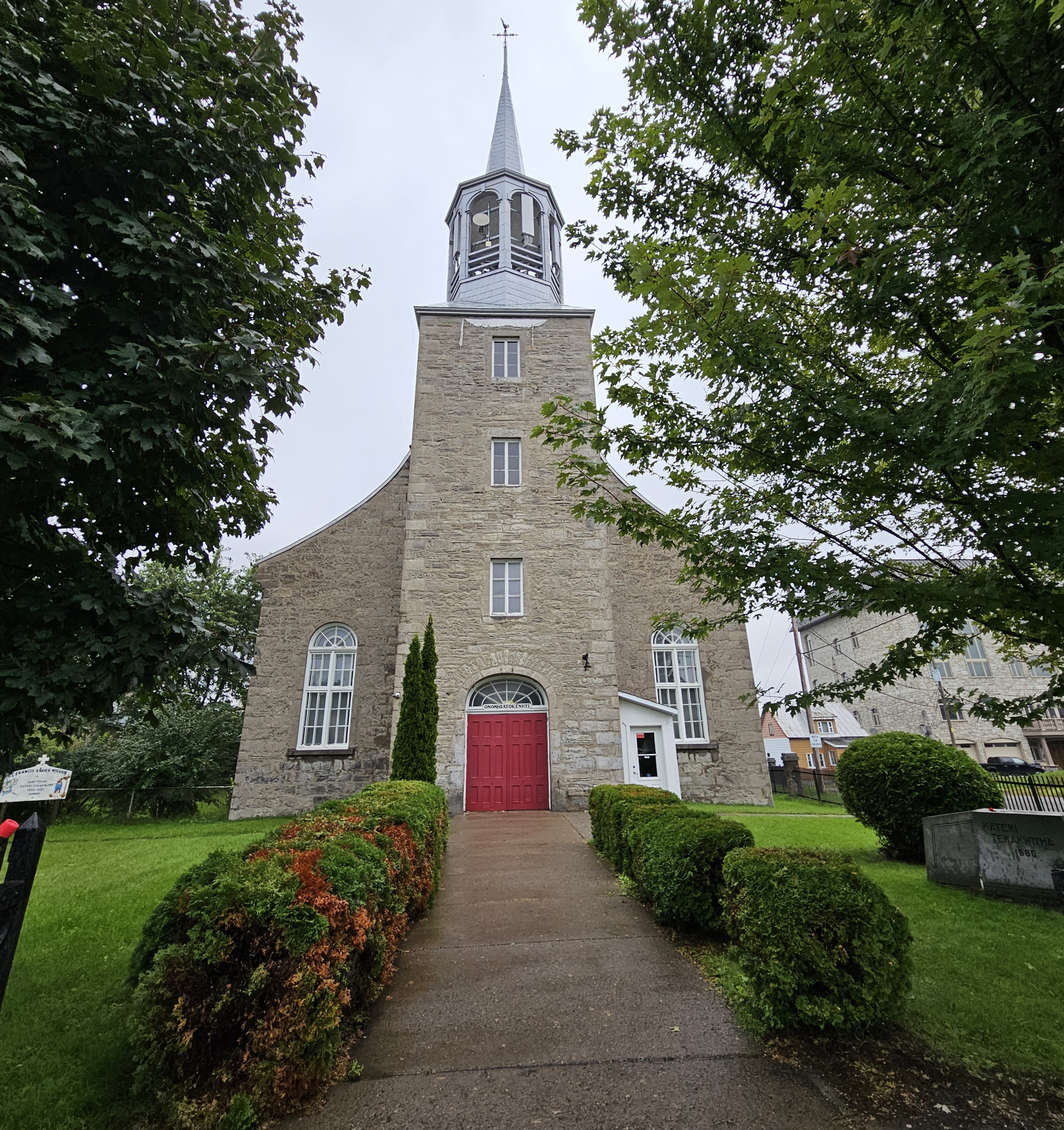
We were told about, and I subsequently read about a tribute that the ironworkers did for the 9/11 attacks on the World Trade Center, creating a replica that is kept in the chapel at the St. Francis Xavier Mission Church. With the WTC replica is a cross made from iron that came from the NYC site, and an artistic sketch showing the relationship of the traditional Mohawk with their older tools of their trade and the more modern Mohawk with their modern tools of the trade. There are also eagles and eagle feathers, both a symbol for the United State as well as an important symbol for First Nations/Native people, all set in front of the buildings rendered before the attacks on one side and the longhouse on the other, with both traditional and modern skylines reflected at the base. The visualization evokes many emotions and feelings for so many thoughts and for me, the pride depicted on the Mohawk faces supplants the sadness and creates a new somberness that dulls the pain and raises the heart.

Looking at the workmanship brings an emotion that welled in my chest: the work put into creating such a piece that is both simple and stunning while respecting the lives lost and the lives changed on that day.

When we returned to Quebec a couple of weeks later, we were able to tour the church itself and it was then that I took the pictures that I’m glad to share with you today on this twenty-second anniversary of 9/11.

Continue reading

Inspire. September.

Standard

Sometimes an inspiration takes on many forms and has many hands to form it.

The pictures below are a couple of my visit (pilgrimage, I suppose it could be called) to the Canadian National Shrine of St. Kateri Tekakwitha. I had been trying to visit here for several years. I was hampered from visiting due to their pandemic closure, and then I thought I wouldn’t be able to again this year because their opening hours did not coincide with our vacation plans.

My husband rectified that by suggesting our return a couple of weeks after our vacation to visit the shrine. And so, I was able to fulfill my desire to see the final resting place of St. Kateri Tekakwitha. This was my final stop in seeking out Kateri’s footsteps, and it was a beautiful experience that I will share in time.

In the meantime, enjoy these photos that do not do the site justice:

St. Francis Xavier Mission Church.
Kahnawake, Quebec, Canada.
(c)2023
The Altar.
(c)2023
Looking from the altar to the entrance of the church.
(c)2023
Tomb of St. Kateri Tekakwitha that holds her relics.
(c)2023

New Color Sheets

Standard

There are new coloring sheets on the downloadable page on the sidebar. One of these comes from one of my favorite Bible stories as a child.

I was attending mass a few weeks ago, and the daily reading was Genesis 41:55-57; 42:5-7a, 17-24a when Joseph’s brothers come to Egypt for grain during the famine and he imprisons them. He does let them know with conditions. Daily readings are often not the whole story, and hearing this little snippet of Joseph’s reunion with his brothers (even if they didn’t recognize him) caused me to go home that morning, and read the entire story from this point on until Joseph’s reunion with his father, Jacob.

As a child, I was focused more on Joseph’s Coat of Many Colors (Gen. 37:3). I didn’t see it, but I remember Donny Osmond playing Joseph on Broadway’s The Amazing Technicolor Dreamcoat, and I also recall my uncle in the same role in high school, so Joseph has always had a warm place in my heart.

After reading the story, I sat down and drew the coat of many colors, but before I filled in all the bright and beautiful colors, I took a photo of just the pen & ink sketch and saved it for use as a coloring sheet. I hope you will enjoy sitting in a quiet space, and filling in the patchwork with as many of your favorite colors as will fit.

Continue reading

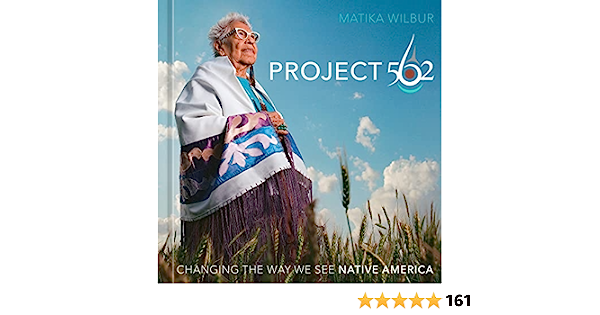
Book Rec (And a Bit More): Project 562: Changing the Way We See Native America by Matika Wilbur

Standard

I’ve been really immersed in Native American spirituality and history. I have always been intrigued and felt kinship with Native American/First Nation people, being drawn to their stories, their history, and their lives since I was a child. It’s been something that has ebbed and flowed throughout my life, even with the insensitive and appropriated costumes of my childhood. I know better now, and I hope that in my past teaching in early childhood, I’ve lessened some of those stereotypical ideas as those children grow up and remember their experiences of the culture as best offered by an outsider and non-Native person.

I’ve recently mentioned attending a weekend retreat with Terry and Darlene Wildman and learning about the First Nations Version of the New Testament. It was enlightening and eye-opening, and I enjoyed the ceremonies we were invited to participate in. I’ve been a visitor and participant at the nearby St. Kateri Shrine when they’ve had those ceremonies open to the public.

I spent all of June reading the Daily Readings from the FNV New Testament; it really highlighted the beauty of Native American storytelling, and I felt that I was hearing some of these Scriptures for the first time and in a completely new way.

Which brings me to the most recent book that I’ve been reading: Project 562: Changing the Way We See Native America by Matika Wilbur. I must say that I started the book in a naive headspace. I was looking forward to her interviews with modern Native people across Turtle Island (North America), hearing about how they keep their culture and religious rituals alive, and while I’m aware (more than the average person) of the history of the US’s forced removal, forced assimilation, and truly what can only be called genocide of the Native Americans, I was still surprised by so many things in this book that took  me by surprise.

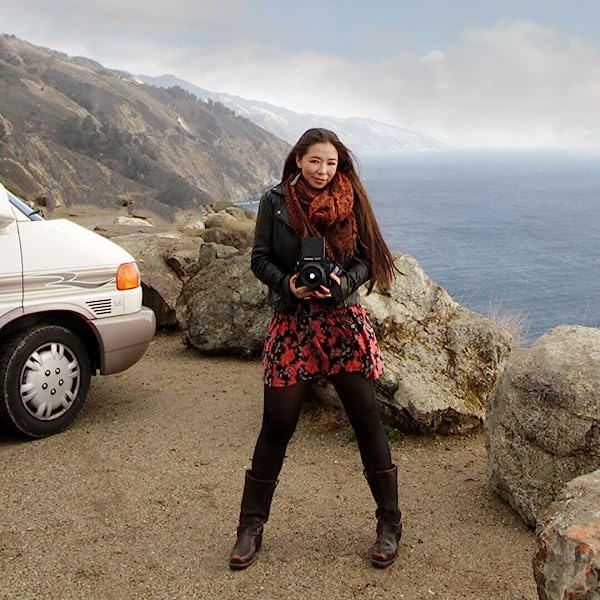
Author/Photographer, Matika Wilbur.
Continue reading

Feast of St. Kateri Tekakwitha

Standard
Chaplet of St. Kateri Tekakwitha.
(c)2023

Since I’ve been sharing quite a lot about Kateri Tekakwitha, I thought I’d share this older picture from when I tried to visit her shrine in Quebec at the Kahnawake Village of the Mohawk Community. I had been searching for a chaplet of St. Kateri and was unsuccessful before my trip. I had planned to pray the chaplet for my Cursillo friend who was living his Cursillo weekend while I was away. Since I didn’t have a beaded chaplet, I drew one (left side), and brought that with me to pray at Kateri’s empty tomb, located across the street from the church of St. Catherine of Alexandria.

It was a very emotional and spiritual site, and just like in New York near the Mohawk River, I could hear the rapids from behind the empty, marble coffin, a sound similar to the sound near her baptismal spring at her Fonda shrine. I was there in contemplation for some time and prayed the chaplet from my sketchbook. Upon arriving home, I was able to locate a beaded chaplet, which I will pray today for St. Kateri’s feast day.

Kateri is the patron of the environment, fitting as Indigenous people are the caretakers of the land, as well as a patron of others including Indigenous People and ecology and people in exile.

Travel – National Shrine of the North American Martyrs, Auriesville, NY and St. Kateri Tekakwitha, National Shrine & Historic Site, Fonda, NY

Standard

I hadn’t intended for this series on travel to wholly encompass shrines, but I was asked yesterday about visiting these two later in the summer and thought it would be a good opportunity to share their information with you.

The sites are spiritually connected by both St. Kateri Tekakwitha and the Jesuits. The site in Auriesville has a coliseum, one of the first circular churches built in the US. It holds about 6000 people. Across their 600 acres of land is a museum, one or two chapels, a grotto dedicated to Our Lady of Fatima, and Theresa’s Rosary, a rosary made of rocks embedded in the ground. I have walked and prayed this rosary on one of my visits.

There is also the ravine where Rene Goupil’s body was found. In visiting there, I found it very spiritual and a place of holiness. The way to the ravine is quite steep. On the way there are several statues and grottos to pray at as well as signs that tell the story of the Martyrs.

Prior to his martyrdom, Isaac Jogues had been held in captivity and tortured by the Mohawk (a different group) for over a year. With help he escaped in New Netherland or Albany, NY. He returned to France, where he visited his mother in Orleans (where Joan of Arc led France’s army 219 years before) and was considered a “living martyr” by Pope Urban VIII, but soon again returned to this area, longing for and meeting his martyrdom in what is now Auriesville. It had been the Mohawk village of Ossernenon. He, Jean de Lalande, and Rene Goupil were tortured and killed here. Jogues weighted Goupil’s body and placed it in the water of the ravine in order to return and bury him properly. He did return, but he was gone. He later found some of his body parts, and reverently buried them. I’ve heard others say that the ravine itself is a reliquary. As I said, the spirituality felt here is palpable.

At this same village, ten years after their deaths, Kateri Tekakwitha was born. She became ill with smallpox and both of her parents died. She was scarred, and it was difficult for her to see, needing to put her hands out and feel her way. Her name Tekakwitha translates into she who bumps into things. Her mother had been baptized Catholic and educated by the e missionaries. Her village moved from Ossernenon across the Mohawk River and rebuilt their village, named Caughnawaga, which means place of the rapids. She was bullied for practicing her Catholic faith. She refused to be married, and that did not make her popular within her adoptive family and aunts. She also practiced mortification, praying for the conversion of her family and for forgiveness.

Her name Kateri is for her baptismal name of Catherine, which she received after her baptism at the age of 19. It took me several years, but I was able to walk to the spring (it’s a bit of a steep incline) from the village footprint that archeologists uncovered. Her Native people still felt that the Catholic religious rituals and items were sorcery and opposed her conversion. At some point after her conversion, she was helped to leave and went north to the new Mohawk village where other Native converts had gone. This village was also named Kahnawake (this is the Mohawk spelling), just south of Montreal. She died in 1680.

When I visited her empty tomb (where she was first laid to rest until her relics were removed to the St. Francis Xavier Mission Church on the Mohawk land), the sound of the rushing water nearby was nearly deafening. I have had so many spiritual experiences in visiting the sites of Kateri and her people that it only makes me more in awe of the Holy Spirit.

For those who are not religious, but want to visit a pastoral, serene, place of comfort, both shrines offer that in the beautiful Mohawk valley. The sights and sounds are lovely, and it is easy to get lost in your own thoughts. Of course, that’s until the train comes roaring by, but that is in its own way an affirmation of the space we are in.


National Shrine of the North American Martyrs
Auriesville, NY

Open May 1 – October 19, 2023
Hours:
Grounds: Open daily 9-7
Museum: Open daily 11-3:30
Gift Shop/Visitor Center: Open daily 10-3
There is no fee for admission or parking.
If you are interested in attending mass or other events, visit their website.

National Shrine of the North American Martyrs.
(c)2023

St Kateri Tekakwitha, National Shrine & Historic Site
Fonda, NY

Summer Season: May 1st to October 31st
Hours:
Grounds are open sunrise to sunset daily.
Saint Peter’s Chapel and Native American Museum open daily, 9-5
Gift shop open: Sat, 10-6, Sun – Wed, 9-5, Thurs – Fri, 10-4
Office open daily 9-4
Candle Chapel, Caughnawaga Village Site, Kateri Spring and grotto, outdoor sanctuary, and hiking trails are open sunrise to sunset year-round.
If you are interested in attending mass (scroll down at the link) or other events, visit their website.

St. Kateri Tekakwitha statue with a sign of her last words:
Jesus, I love you!
(c)2023

Travel – Marian Shrine, Stony Point, NY

Standard

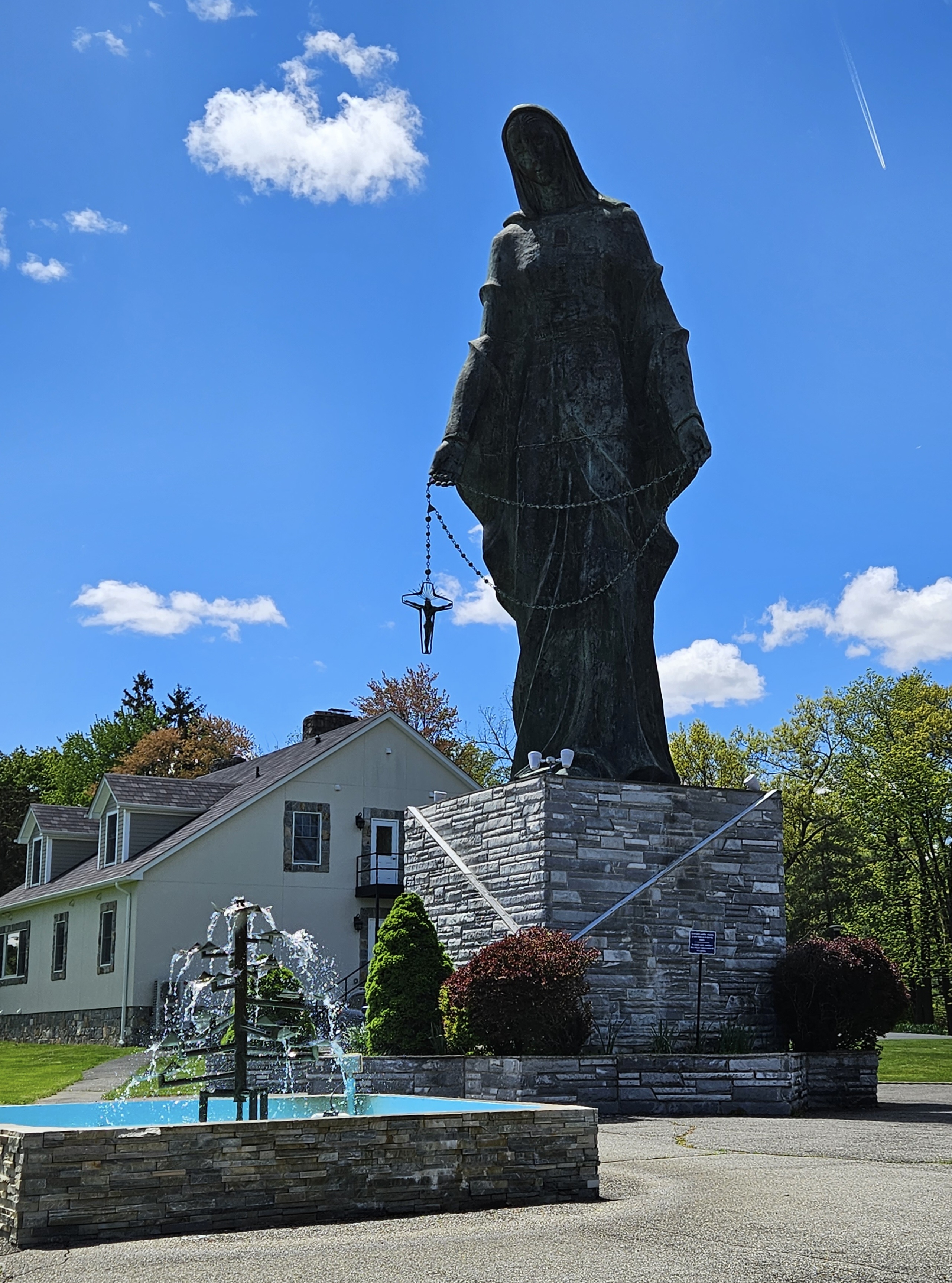
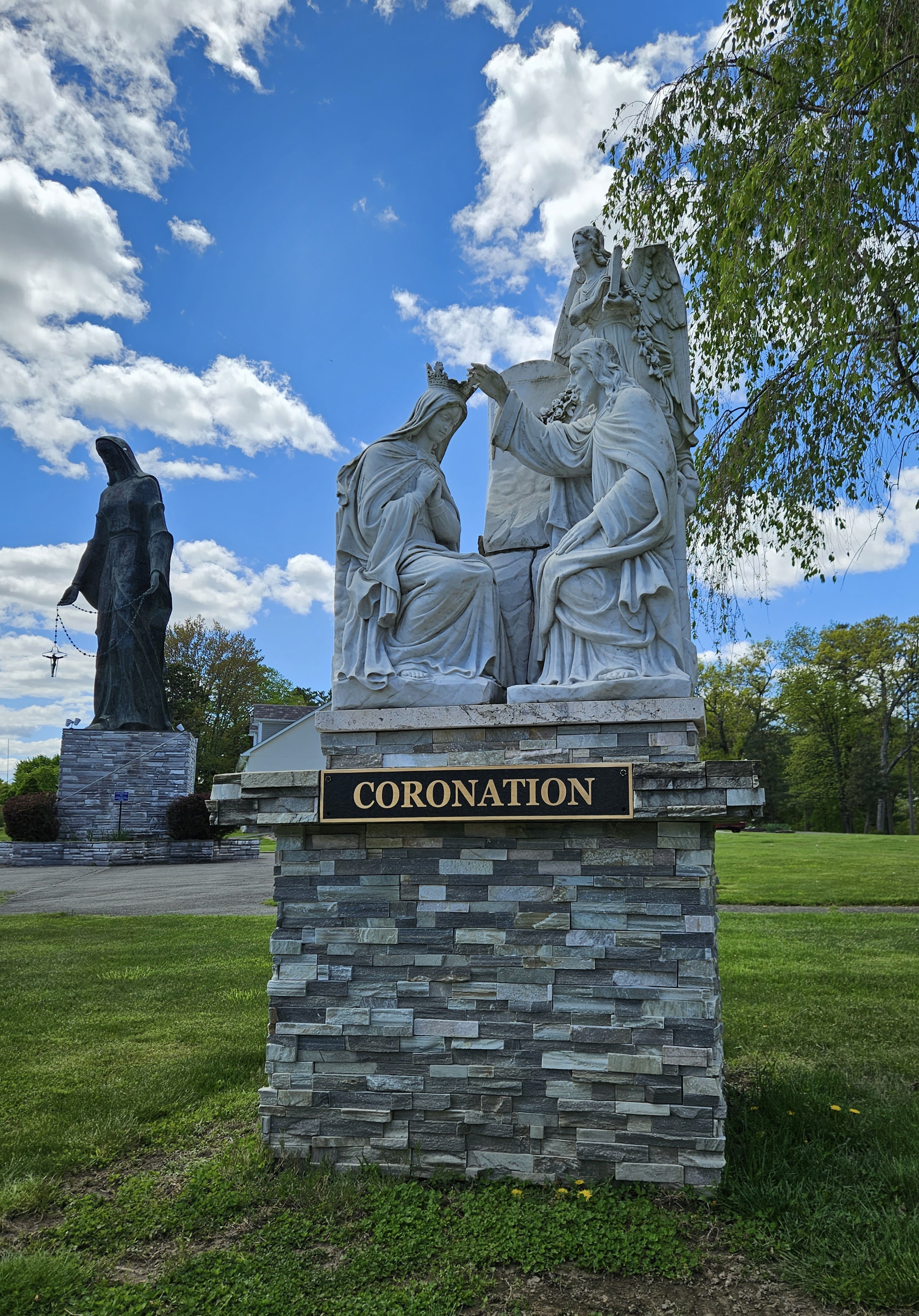
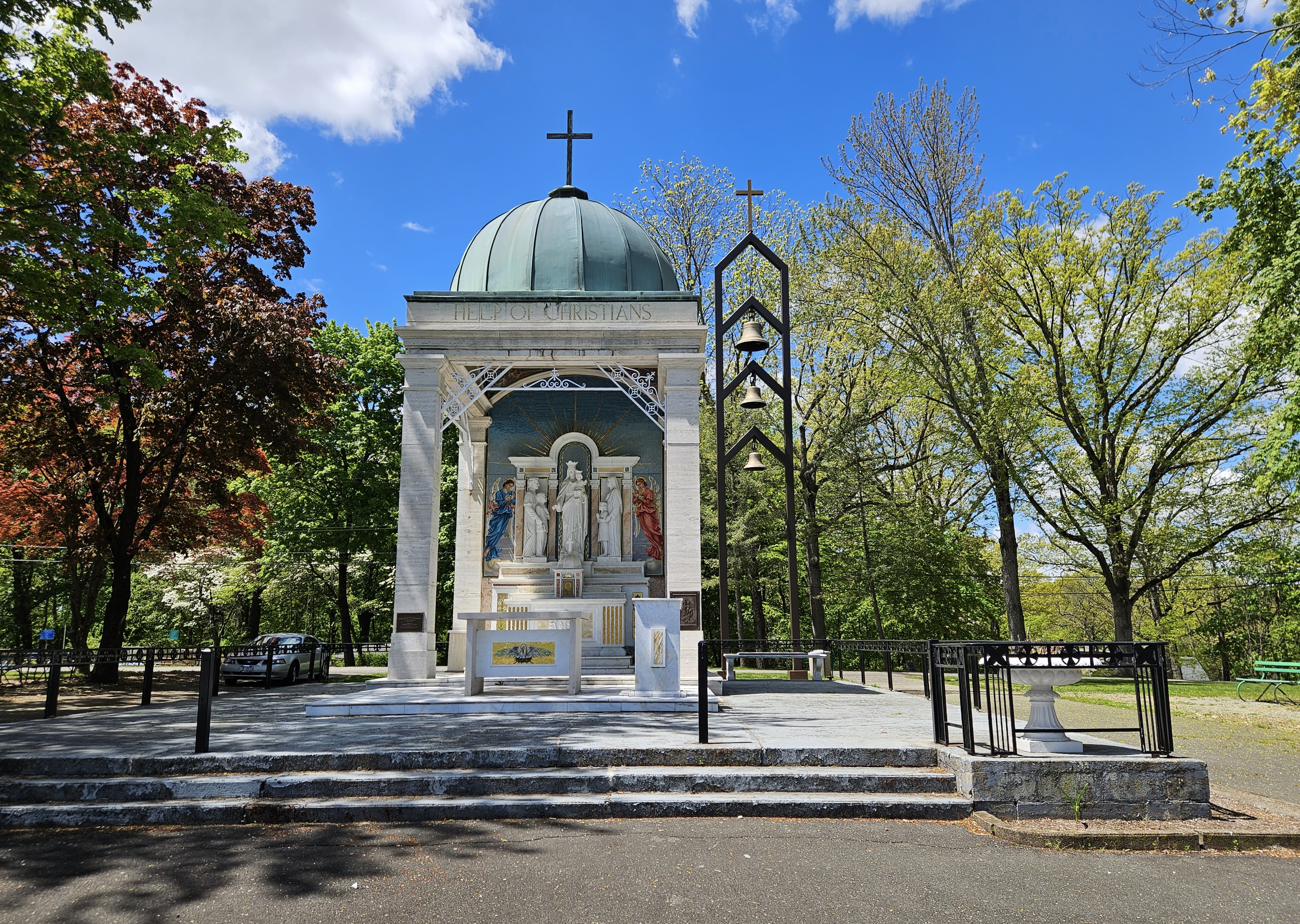
I had the privilege of visiting the Marian Shrine in Stony Point, New York, administered by the Salesians of Don Bosco recently, and I couldn’t spend nearly as much time as I had wanted to. As you can see from the photos of that day, the sky was a perfect shade of blue with fluffy white clouds floating. The green grass and leaves were a remarkable shade for early spring, and the cool breeze really made the spirituality tangible and profound.

(c)2023
(c)2023

Driving up the lane and seeing the statue of Mary of the Rosary as if rising from the ground made my jaw drop to the floor. The immensity of the statue (48 feet and 6 1/2 tons) is something I have never seen before. It was huge, but besides its size, there was a feeling of strength resonating from Mary, and once we parked, I just stood in awe and gratitude that I had made the decision to stop on our way to visit with family.

Our Lady of the Rosary, or the Rosary Madonna has been here since 1977. It was created in Italy in 1959 and blessed by Pope Saint John XXIII. From the star-shaped base and surrounding benches is a mesmerizing fountain and beyond this is the Rosary Way, constructed in 1954, during the Marian Year. The rosary way follows a shamrock shaped path through a wooded space. In addition to the mysteries of the rosary, there are also statues depicting the Stations of the Cross on the grounds.

(c)2023

Because of our family visit, I had very little time to explore, so I began with sitting on the benches surrounding Mary and said the Hail Mary. I listened to (and recorded for a short time) the sound of the fountain. The peace was contagious. I slowed my breathing for fear that a normal exhalation would be too loud for this gentle, serene place.

(c)2023

I moved on from there to the statue of St. Francis and his prayer, which is one of my favorite ones, touching on nature and Creation. It lends itself to so many other spiritual experiences. There are several other statues (St. Michael, St. John Bosco, St. Padre Pio, St. Joseph, St. Maria Goretti, and the aforementioned St. Francis of Assisi), and devotional areas, gardens, and grottos outside as well as a wooded path that helps to center the spirit for prayer. There is also an indoor chapel. See below for times for services.

(c)2023

Stopping briefly at the Outdoor Altar (with seating for 1000) and a quick visit to the gift shop where my family picked me up, and I wanted more time. The photos do not do this place justice at all.

If you’re in the area, stopping by for the day is encouraged. The grounds are open from sunrise to sunset, and while there is no food available onsite, there are picnicking areas that you may use when bringing your own food.

In addition to pilgrimages from individuals and families, they also hold retreats here as well as youth retreats and activities in their youth center and regular masses and confession times. Check their website for details or if you wish to bring a larger group of fifteen (you would need to fill out a form).


Mary Help of Christians Chapel
8:00 am – 4:30 pm
Marian Shrine Gift Shop
Monday thru Saturday
11:00 am – 4:00 pm
Sunday
12:00 noon – 4:00 pm
Administration Offices
9:00 am – 3:00 pm
Shrine grounds close at dusk


Links for Information:

June Inspiration, Expanded

Standard

As I mentioned in the June Inspire last week, I’ve been awed by the number of inspiring events I’ve been privileged to have participated in since the very beginning of the month. Since I was unable to choose one or two to write about, I thought I’d write about most of them, and include some photos and links so you can explore on your own in your own timeframe and let them capture your imagination and inspire you as well.

One warning before I really get into it: this will be picture heavy (as well as, from my estimate, word heavy).

June began with a weekend retreat that I’m still feeling. June is also the end of the school year, and so during finals and Regent’s exams, my youngest often doesn’t have to go to school, and since the whole crew at home took a day off to see The Flash movie (no spoilers ahead), we decided to take a road trip to Connecticut. And then finally, a field trip to a college outside of Albany to tour a set of books (a Bible actually) of Biblical calligraphy and illuminations. And in between all of that it’s been busy with driving my kids, funeral for a colleague and friend, interfaith doings, Red Hats lunch, a broken hearing aid, weekly rosary, and Father’s Day, an interfaith prayer service, and a fellowship luncheon.

June has been a lot more than usual, and it’s still got a few days left; Indiana Jones will be inspiring in its own way. I don’t want it to sound as though I’m complaining; I’m really not, although once I get started it’s hard to turn off the listing; it’s like a waterfall. However, I can’t say it’s been dull or uninspiring; it’s definitely been the opposite of both of those.

Continue reading