The photo below represents both the start and the end of the day.
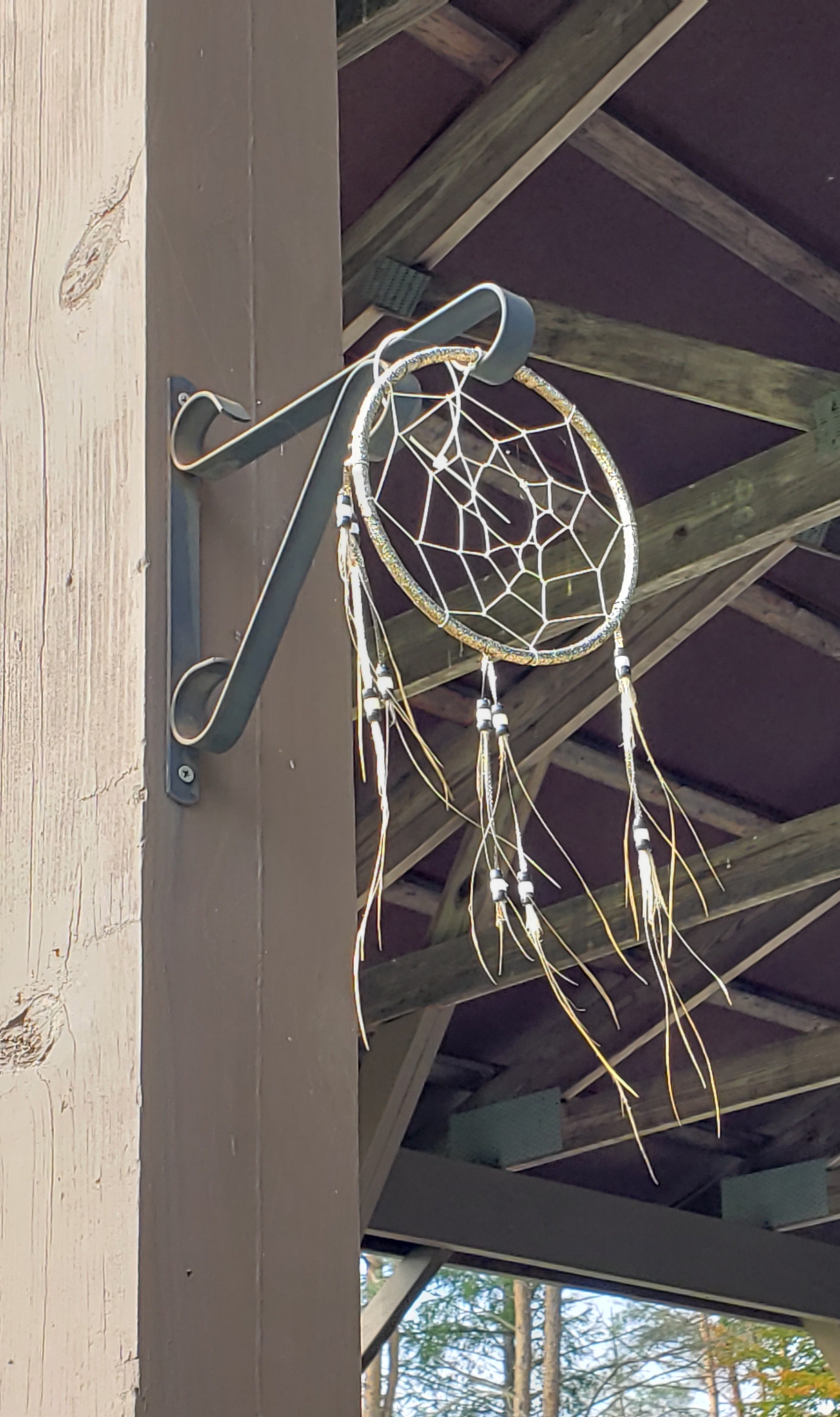
Beginning with the end, I have slept with a Dream Catcher for most of my life. I notice a change in my sleep when I don’t sleep with one. It creates a calm and peaceful rest as it catches the bad and lets the good continue through. This particular dream catcher is one I got in Niagara Falls, Canada. I was drawn to the colors of the beads that represent the four directions as well as the uniqueness of the center stone.
The booklet is something that I was more recently introduced to through Mohawk Elder Tom Porter of the Kanatsiohareke Community in New York. Since then, I’ve seen it in other Haudenosaunee writings and readings. It is called the Thanksgiving Address, but it has nothing to do with the Thanksgiving holiday, but in giving thanks for all that is around us in the natural world, all that we have, all that we see. It is said at the beginning of all important gatherings, ceremonial and/or governmental. The Haudenosaunee call them the Words Before All Else.
I recently used a form of this address for a meditation that I was tasked to share, and it was very well received. I read mine, but most are recited and because of that they are often never the same twice since the words change with the speaker and the timing of the gathering.
As I said at my own (non-Native) gathering, as a shared meditation, I acknowledged the land we were standing on (Mohawk), and reaffirmed that I am a non-Mohawk, non-Native, sharing their wise words.
I have not been to Starbucks in quite some time. Today is Red Cup Day, so I planned a quick in-and-out/grab-and-go, get my drink, get my cup, and go home to do some work. On the way out the door I grabbed my pouch and keyboard, just in case.
I walked in, and this place is hopping. Seven baristas behind the counter, all moving, creating the dance that has everyone doing their parts, seeing the rhythm that is so natural to them, and yet in that small space, no one is tripping over any of the others, smoothly weaving in and out, and the one barista who seems to be tracking everyone’s drinks, knows all of our names, our orders, who’s waiting for what, greeting, smiling, conversating.
It’s a joy to be here.
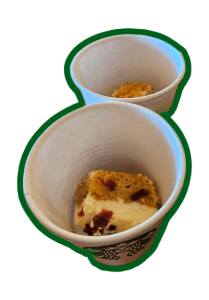
I chose my drink, which is a feat in itself since I don’t like coffee, and for the red cup you’re limited on what you can order – they want to show off their seasonal treats and have you try those. I finally settled on the caramel brulee latte, but no coffee; comes with whipped cream and a caramel-ish drizzle. There is a tray of free samples – cranberry bliss bar, which I haven’t had yet this year.
I got my breakfast wrap, and was offered a second sample. I was going to decline, but the customers all have, and this is my favorite treat, so why not.
I settle in, and decide to share with you the wonder of the holidays at Starbucks, especially this one that is my local, well-run, friendly, and makes me remember what joy in the everyday is.
Yes, it’s children laughing and choirs singing. It’s songbirds and sunrises, it’s well-worn jeans and waking up before the alarm, but it’s also the simplicity of the coffee shop where they learn your name, and make your morning that much lighter and brighter, and add just a little bit of joy to the regular.
Experimenting in the kitchen can be very freeing as well as inspiring. I sometimes feel very creative in other areas after making a great meal from scratch. For me, “from scratch” doesn’t necessarily mean a two-to-three-hour production. In the third photo below, the rice I used was Minute Rice. Both dishes can be made with leftover chicken. I used baby potatoes, but you could easily take the larger russets or reds and cut them into the smaller pieces, and again it’s a great way to finish your bag of potatoes.
Both meals used one pan and one metal bowl, and the second meal used a pot to make the Minute Rice. As I finished cooking something on its own, I moved it to the metal bowl until the next item was cooked and then everything was combined and simmered for a short time.
When we visited the Royal Ontario Museum this past August, I knew that I could not visit every nook and cranny as much as I might have liked to. I also knew that with five of us having different interests that we were going to get very frustrated very quickly if we stuck together. Upon entering and deciding who wanted to pay extra for the special dinosaur exhibit, I announced the three places that I wanted to focus on and whoever came with would be welcome, but if they wanted to explore on their own and meet back through texts, that would be great.
As an aside, I do miss my little ones, but I really appreciate going on vacation with teenagers and older kids because of this freedom for all of us. I didn’t want to see the dinosaurs; more to the point, I didn’t want to PAY to see them, so I didn’t. My daughter was not a fan of medieval arms and armor and so she veered away from that. The technology of texting let us know where the others were when we were engrossed in our little worlds. It was fantastic! And I think we all benefited from the freedom to explore our interests and the freedom from each other for an hour or so.
My three focuses were in the areas of First Nations, Medieval History and Arms & Armor, and Judaica.
These are a few of the things that have inspired me in the last several months and that keep inspiring me.
The duality of Niagara Falls, Ontario, Canada. Bright and flashy by night; beautiful and awe-inspiring by day (and by night also). (c)2023
This is the Louis Roy Press, the oldest wooden printing press, and one of two remaining in working order; the second of which is in the US at the Smithsonian Institution. This press was used to print the 1793 Act to Prevent the further introduction of Slaves and to limit the Term of Contracts for Servitude within this Province [Ontario]. (c)2023
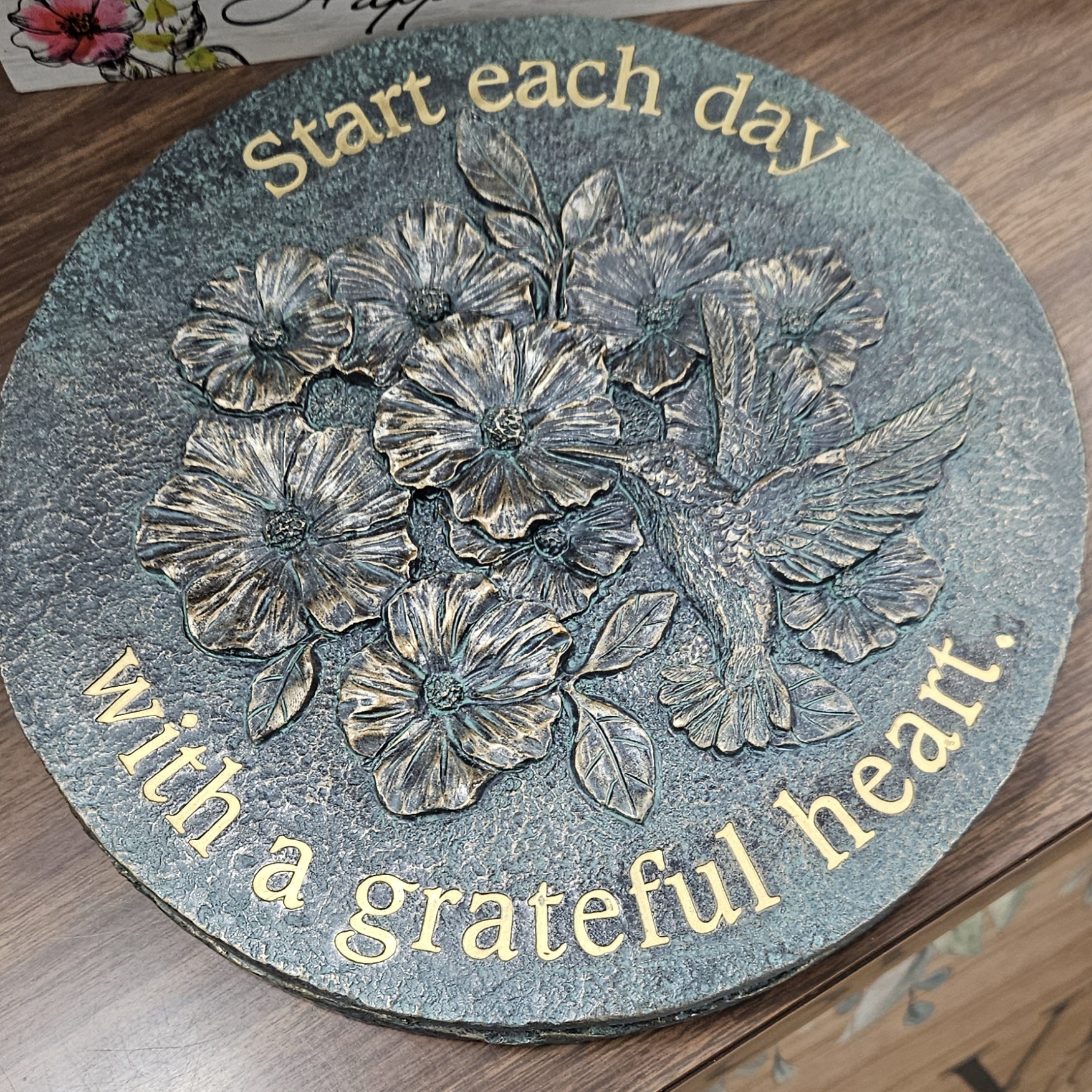
A good motto to follow. Begin the day with thanks, and the rest of the day will follow. (c)2023
A few days ago, the honoring of Native American Heritage Month began. Like Indigenous Peoples Day, I think this is timed for us to remember that there were both sides to Columbus’ landing in the New World and how we perceive the Thanksgiving story. The Thanksgiving story in and of itself isn’t as problematic to my mind as other European centered celebrations. We know and should acknowledge that the English settlers could not have survived their first (and to be honest, many subsequent) year in a new land without the help of the Native Peoples they met and who helped them immensely. I have always been a history buff and drawn especially to people of my own heritage and Jewish ancestry as well as people I feel somewhat paralleled that history including African- and Native- Americans. One of my favorite books as a child is The Magic Tunnel by Caroline Emerson. It had everything a young me could want in a book: time travel, the NYC subway system, NY history, American Indians. The perspective is of about a fourth-grade child’s view of history, but it’s a fun adventure for the elementary school age and a great jumping off point to discovering what’s true in their depictions and what is not.
As I’ve grown and became more of an in-depth reader, I’ve been exposed to more and more books about Native history both by Native and non-Native scholars. Living in New York state my whole life, we have a rich history of the Iroquois, and every place I’ve lived has had several towns still using names found from and in the variety of Native American languages found in the state. Some examples include: Shinnecock, Massapequa, Copiague, Hauppauge, Schenectady, Oneonta, Oneida, the Mohawk Valley, Chautauqua, Ontario, Otsego, Tioga, Cheektowaga, Ticonderoga, and of course, Niagara and Manhattan.
Over the next few weeks and through the end of November, I hope to offer you some resources to expand your knowledge of Native American history and culture as well as books, movies, and photos that you can enjoy in your explorations.
About a week ago, I was asked to give a meditation for what’s called an Ultreya, a gathering of Catholic Cursillistas for community and fellowship. I elected to read a Haudenosaunee Thanksgiving Address. It is called Ohen:ton Karihwatehkwen, which are the Words Before All Else. This is recited before any gathering or ceremony. At the beginning, prior to starting the reading, I explained to them that this is often different each time it’s told as it depends on the speaker to choose their own words. I explained that I, however, would be reading it. Two important things I stated before I began were who the Haudenosaunee were; we knew them as the Iroquois, which is the French word assigned to them by Canadian and French missionaries, and that we were currently on their traditional lands, the lands of the Mohawk. I also stated that I am not Mohawk, nor am I of First Nations descent. I have included a statement on my FAQ page.
I think it’s important to acknowledge whose land we’re on, and if we’re speaking authoritatively or in entertainment or spiritually, that we acknowledge when we are not Native and/or Indigenous People. I will also use Native American, American Indian, Native Peoples, Indigenous Peoples, and First Nations interchangeably unless asked specifically not to.
As we celebrate what we view as the first thanksgiving, it’s important to remember that the English settlers didn’t “give this tradition” to the Native Wampanoag people they met. The Native people across the continent had harvest festivals and days of giving thanks for their harvests towards the end of the fall and the coming of winter. This is what they shared with the settlers.
For my own Thanksgiving, I am thankful for my family and spending time with them, but I also think back to the historical first thanksgiving and look back on what could have been and look towards that future.
In this opening for me of Native American Heritage Month, I give you a few places to visit and learn from:
Killers of the Flower Moon – the movie is in theatres now, and it was wonderful. Don’t be scared off by its length; I barely noticed and easily sat through the whole thing. I also read the book about a year ago. I highly recommend both: Book
I’ve written before about the saints in my spiritual life. The photo below shows the three I considered for my confirmation saint (next Easter it will be ten years!): Joan of Arc, Kateri Tekakwitha, and Elen of Caernarfon as well as a fourth devotion, Mary, Untier of Knots. I had hoped to have a new prayer for the St. Elen card I sketched, but it wasn’t ready for today. I hope to share it in the next week.
Who are the saints you ask to intercede for you in prayer?
Many cultures and religions focus on peace, and with the events of the last couple of weeks, not to mention the last year around the world, it is imperative that we remind ourselves that peace is possible, through us, and around us as we go about our daily lives. Be peace. (c)2023
I’ve mentioned earlier in the year about a retreat I went on in June, which had stayed with me for weeks, and now, for many months. It still reverberates in me. I was privileged to be in attendance as it was guided by Terry and Darlene Wildman. Terry and Darlene are known for their music, which ironically, I did not know until they arrived and began playing and singing.
The retreat was primarily centered around the First Nations Version of the New Testament, and the weekend was filled with music, Scripture, prayer, Native American spirituality and ceremony, and really good, deep conversation.
When I awoke on the first morning, I knew that there was something special about this weekend retreat. I was awake early; not drowsy, and ready to start my day. I was reinvigorated. This is very unusual for me. While I’m very comfortable at this retreat house, I can never quiet my mind down enough to sleep at a reasonable time. On this weekend, this retreat gave me the exact opposite experience. I went to sleep every night before midnight (sometimes long before) and woke up refreshed at around seven in the morning, without an alarm, and with the sunrise shining out of my window.
The evening before and again on that first morning, we went into the warm courtyard where a sacred fire was burning. Darlene held an abalone shell with burning sage, smoke rising, guided by a large feather. We prayed in the seven directions, and then each of us had the opportunity to purify ourselves with the smoke, using our hands to bring it in, while the feather helped the smoke. I think we also had the opportunity to add a pinch of tobacco to the fire.
This table held the sacred plants for smudging and purifying: braided sweetgrass, sage, cedar, and tobacco as well as a large feather, traditionally an eagle feather along with an abalone shell to hold the smoking sage. (c)2023
It was a very profound experience, and it enhanced the rest of the prayers that we each would do that day. I found it very natural and complementary to my own rituals. It was a wonderful experience.
In the months since, I’ve immersed myself in local Native American history. I haven’t changed my religion or coopted anyone else’s, but I have found a place in my daily readings for the First Nations version. I read from this Bible every day in June and continue to do so during my weekly prayer time. While I was on vacation, I recorded the daily readings in my notebook, and took photos of those pages to bring with me for my daily prayers.
I spent time with other experiences of Native American spirituality and storytelling, reading a book by Mohawk Elder Tom Porter, and completing a historical account of Wounded Knee. I’ve also spent time in the museum at the St. Kateri Shrine in Fonda, examining the Caughnawaga archaeological site, and touring the Mohawk village of Kahnawake in Quebec. Next year, I plan on attending the Strawberry Festival in Kanatsiohareke, just west of Fonda, New York.
All of this was a direct result of that holy weekend.
I’ve spent weeks listening to the music of RainSong, the music of Terry and Darlene whenever I get into the car. I sing along and it brings me back to that weekend and the feelings of being closer to G-d, and of being uplifted spiritually. My favorite CD so far is Hoop of Life, which has many of the songs that Terry and Darlene shared with us on our weekend.
Use the links throughout this post to meet Terry and Darlene and find your own way to their wonderful sounds.
Indigenous Peoples’ Day was Monday, nearly a week ago, but that doesn’t mean that now we can forget about an entire culture, language, history, or a people. I usually will say that especially in the Northeast, where the Iroquois, more properly known as the Haudenosaunee lived, we should remember them. There are several things wrong with that sentiment though, and I am embarrassed to admit them. For one thing, the Haudenosaunee live, now, among us. They cover the six nations: Mohawk, Onondaga, Oneida, Cayuga, Seneca, and Tuscarora, across all of New York State and the international border with Canada. For another thing, Native tribes have lived on this continent from ocean to ocean, from the time when there were no borders at all. Just like our states, their nations had rivalries with others, they had distinctive cultures separate from one another. It’s important to remember that Native culture, whatever nations are represented, they are a living, breathing group of people, and it is well past time to recognize their contribution and their sacrifices. I’ve had several people (non-Native, I should note) that it was in the past, it’s history, there is nothing I can do, and that attitude disturbs me on many levels. I don’t know if it’s a connection I feel to the people whose land I live and work on. I don’t know if it’s from my childhood admiration and longing to be more involved in the limited Native culture around me as a child. I don’t know if it’s because of my Jewish background where people will say the same sentiment: it’s history, why are you still upset about…? I will call out some by saying that the same people who say that the Trail of Tears and stolen land in the 1880s and 1890s is “ancient history” and we “need to move on” are the same people who insist on the rest of the country worshipping a man who died over two thousand years ago. The continued hypocrisy is staggering in so many ways.
I have a few thoughts and photos that didn’t make it onto the website on Monday, and I hope to share them with you today and in the early part of next week.
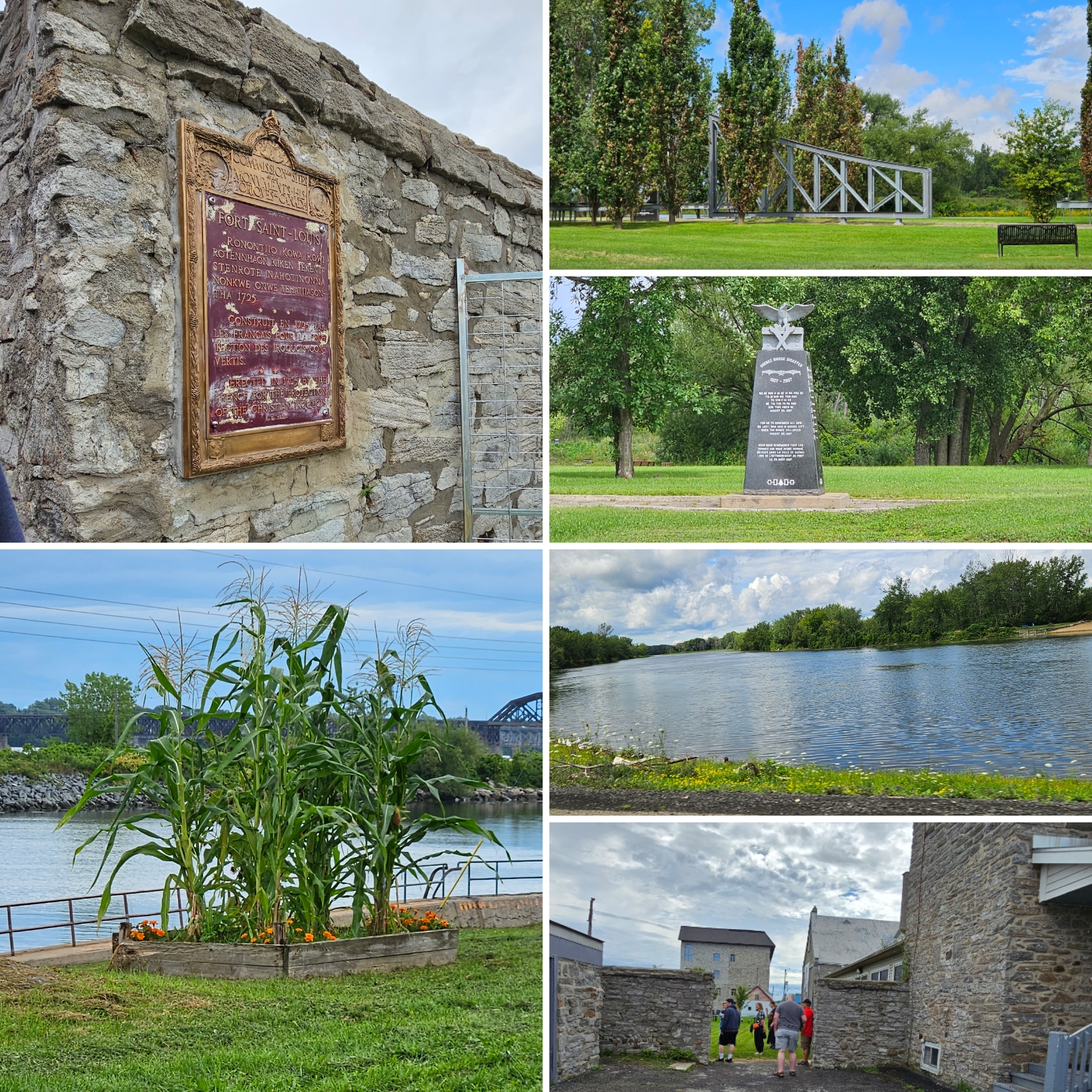
I have been fortunate to have visited the village of Kahnawake in Quebec, Canada three times. Kahnawake piqued my interest through my studies and research of St. Kateri Tekakwitha who was born, lived, and was baptized very near to where I sit right now. Each visit was unique in that I saw new things and learned new things each time. The first time during covid was very limited to the outside world and was a superficial encounter. The second time had a decidedly Mohawk perspective, and the third time was more of a Catholic and Mohawk-Catholic perspective. Each visit gave me a new outlook, answering questions and thoughts, and offering insights that raised more questions and contemplations. I expect and look forward to returning next year to do some more research as well as visiting their language and cultural center that we were unable to see previously.
These photos are a little taste of the village. I will also share the one thing that really surprised me. The Mohawk in Kahnawake primarily speak English and Mohawk. Their street signs and stop signs are in those two languages. I thought the second language would be French. As I said, there is always something new to learn.
From the top, clockwise: Original wall of the Fort Saint Louis, Replica of the Quebec Bridge, Memorial to those who perished in the Quebec Bridge Disaster, part of the St. Lawrence Seaway, the back of the St. Francis Xavier Mission Church, what I presume are the Three Sisters, which are grown on Mohawk land. Kahnawake, Quebec. (c)2023
I just wanted to add one or two notes about the above photos:
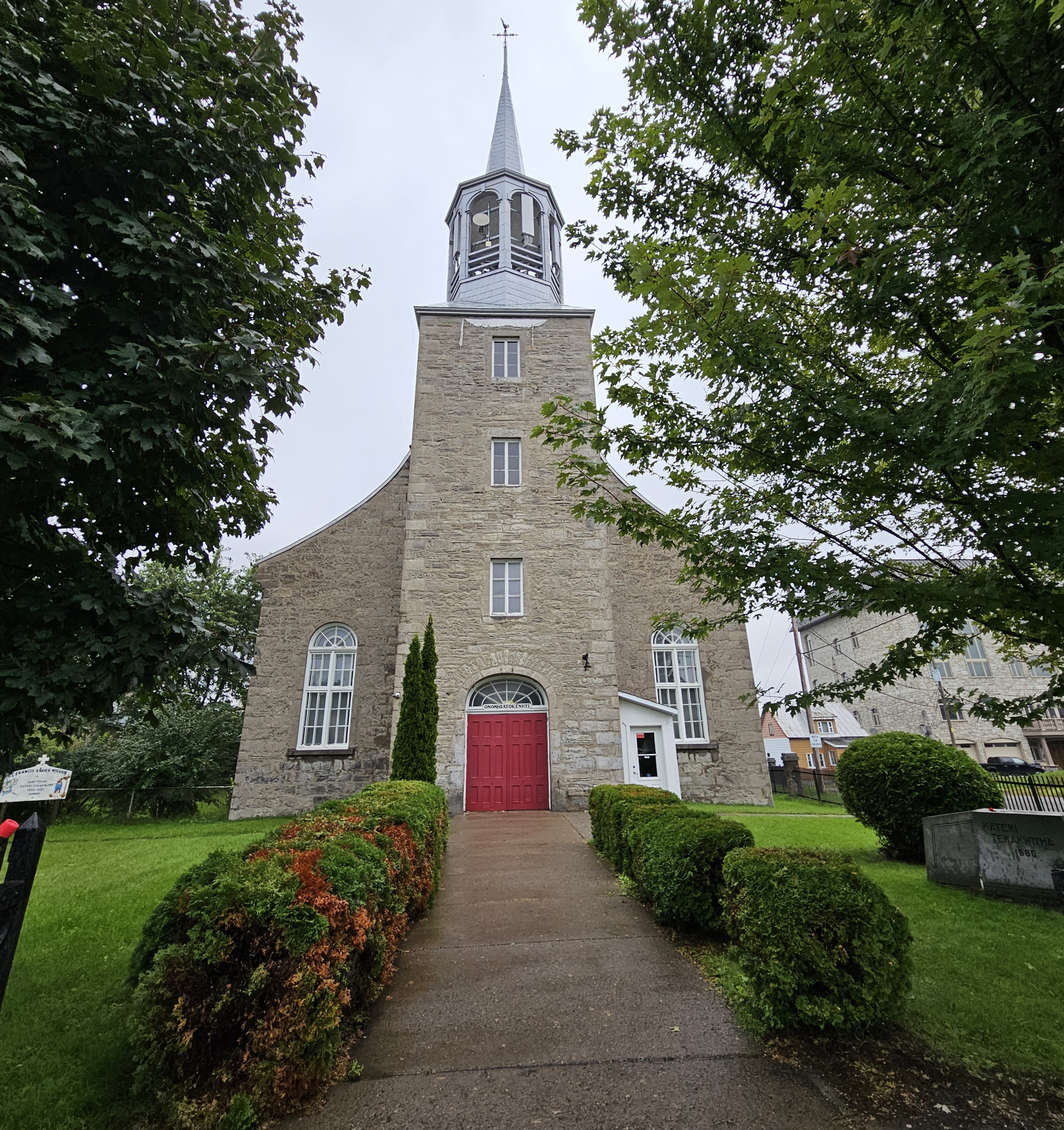
The St. Francis Xavier Mission Church moved with the Mohawk. It moved four times, I believe, before it settled permanently here and was built as a permanent structure in 1716. St. Kateri’s relics were moved here in 1973.
The Quebec Bridge Disaster killed 32 Mohawk ironworkers from Kahnawake. This left 25 widows and over fifty children fatherless. The compensation from the Canadian government was negligible. The Clan Mothers decided from then that so many members from one family could not work on such a dangerous job.
The Canadian government changed how the St. Lawrence River flowed, so it moved it away from Kahnawake and left the still St. Lawrence Seaway. The River was more profitable and was able to accommodate boats and fishermen as the Seaway was not. This is still an issue today.
The Three Sisters are known to the Haudenosaunee as the most important crops, sacred, and include corn, beans, and squash. They grow together in the same area and help each other thrive.
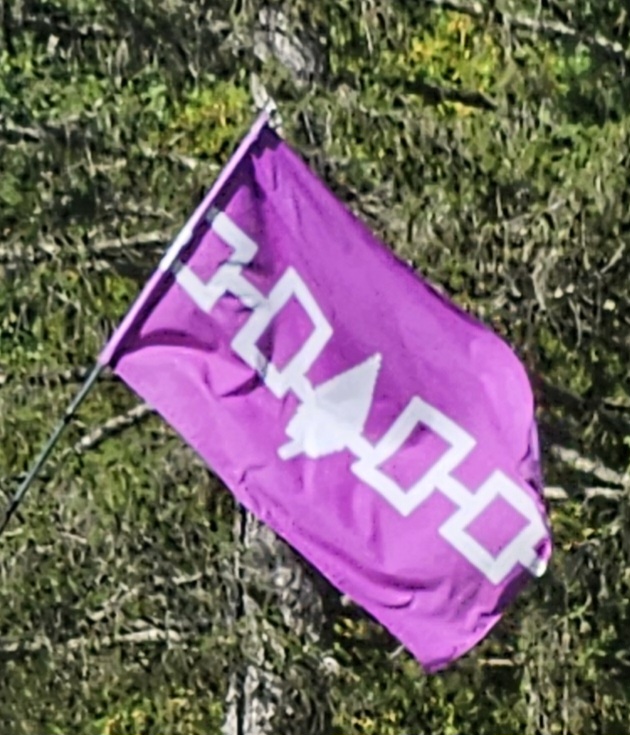
Haudenosaunee Confederacy Flag, which is a depiction of the Hiawatha wampum belt. (c)2023
Front of the St. Francis Xavier Mission Church. Kahnawake, Quebec. (c)2023
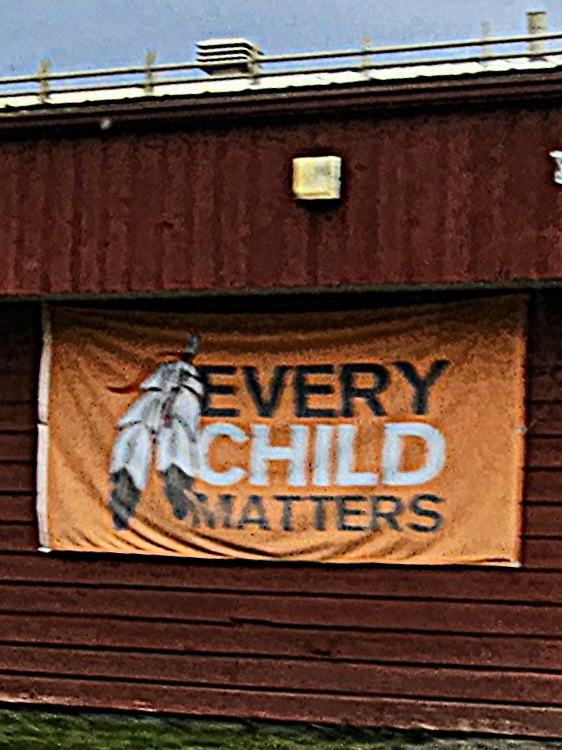
Signs and flags of Every Child Matters on orange are seen in many places. Despite Canada’s Truth and Reconciliation Committee, there is still much to be answered for. (c)2023






 Griffins and Ginger Snaps