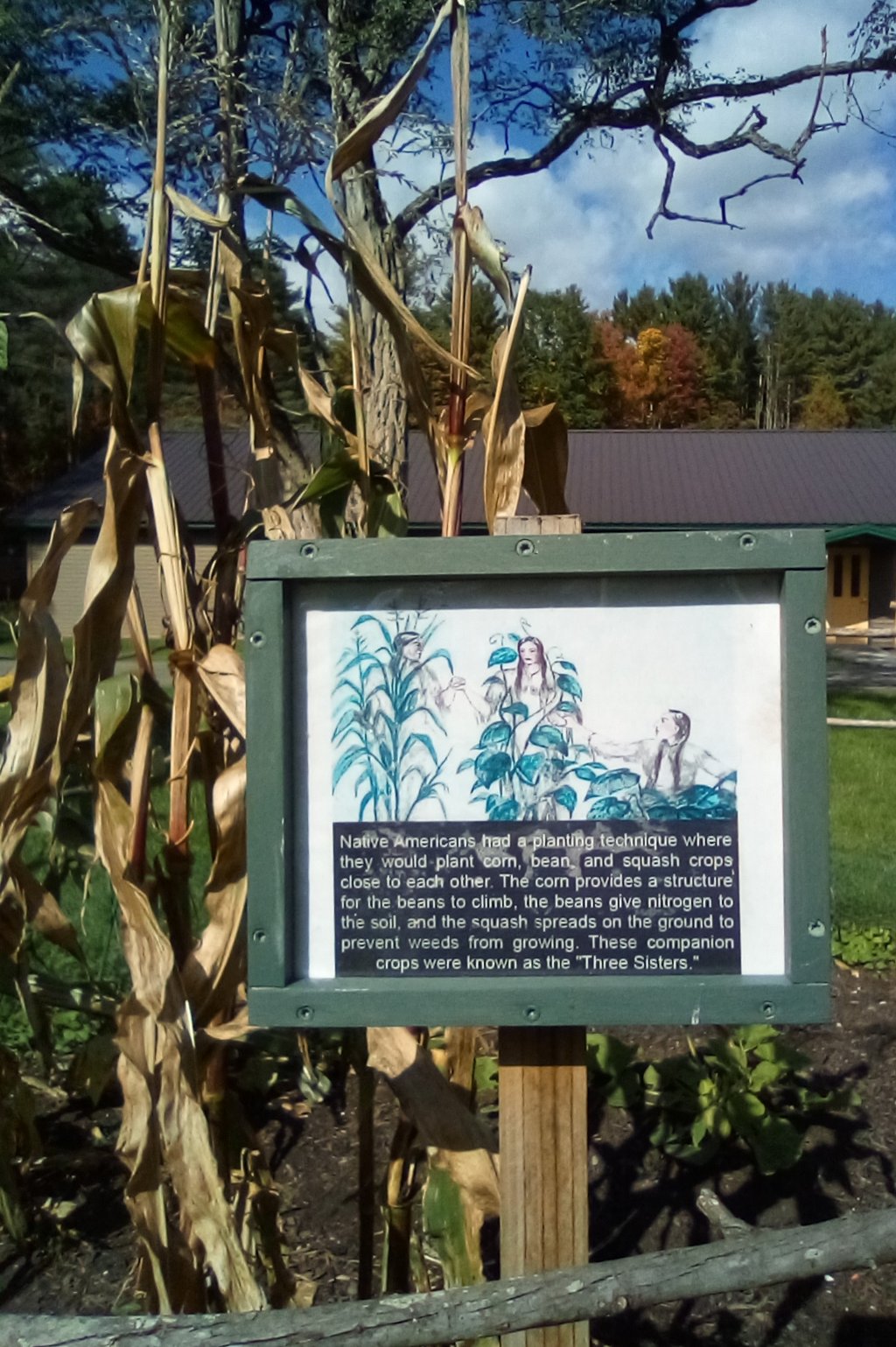
On the Coloring Sheets page, there is a new sheet for Indigenous Peoples’ Day which is today. Below I will explain what each square represents. I’m glad that we are beginning to acknowledge the people who were here long before the Europeans arrived and drastically changed things through their way of life, their diseases, their concepts of ownership, and of course, their biases, which for many remain today.
I am determined to remind myself and others that the land I live and work on once belonged to the world, and the Haudenosaunee (in my specific area) were the caretakers. They were willing to help the new settlers, and did. And I’m sure regretted it. The Europeans weren’t exactly grateful in the long run.
Wherever you live look at the names of the towns. Across this country (the US) and Canada you will find many towns and streets are named with Native American names. I like to look into some of those names and see what they mean in the various languages.
Sometimes an inspiration takes on many forms and has many hands to form it.
The pictures below are a couple of my visit (pilgrimage, I suppose it could be called) to the Canadian National Shrine of St. Kateri Tekakwitha. I had been trying to visit here for several years. I was hampered from visiting due to their pandemic closure, and then I thought I wouldn’t be able to again this year because their opening hours did not coincide with our vacation plans.
My husband rectified that by suggesting our return a couple of weeks after our vacation to visit the shrine. And so, I was able to fulfill my desire to see the final resting place of St. Kateri Tekakwitha. This was my final stop in seeking out Kateri’s footsteps, and it was a beautiful experience that I will share in time.
In the meantime, enjoy these photos that do not do the site justice:
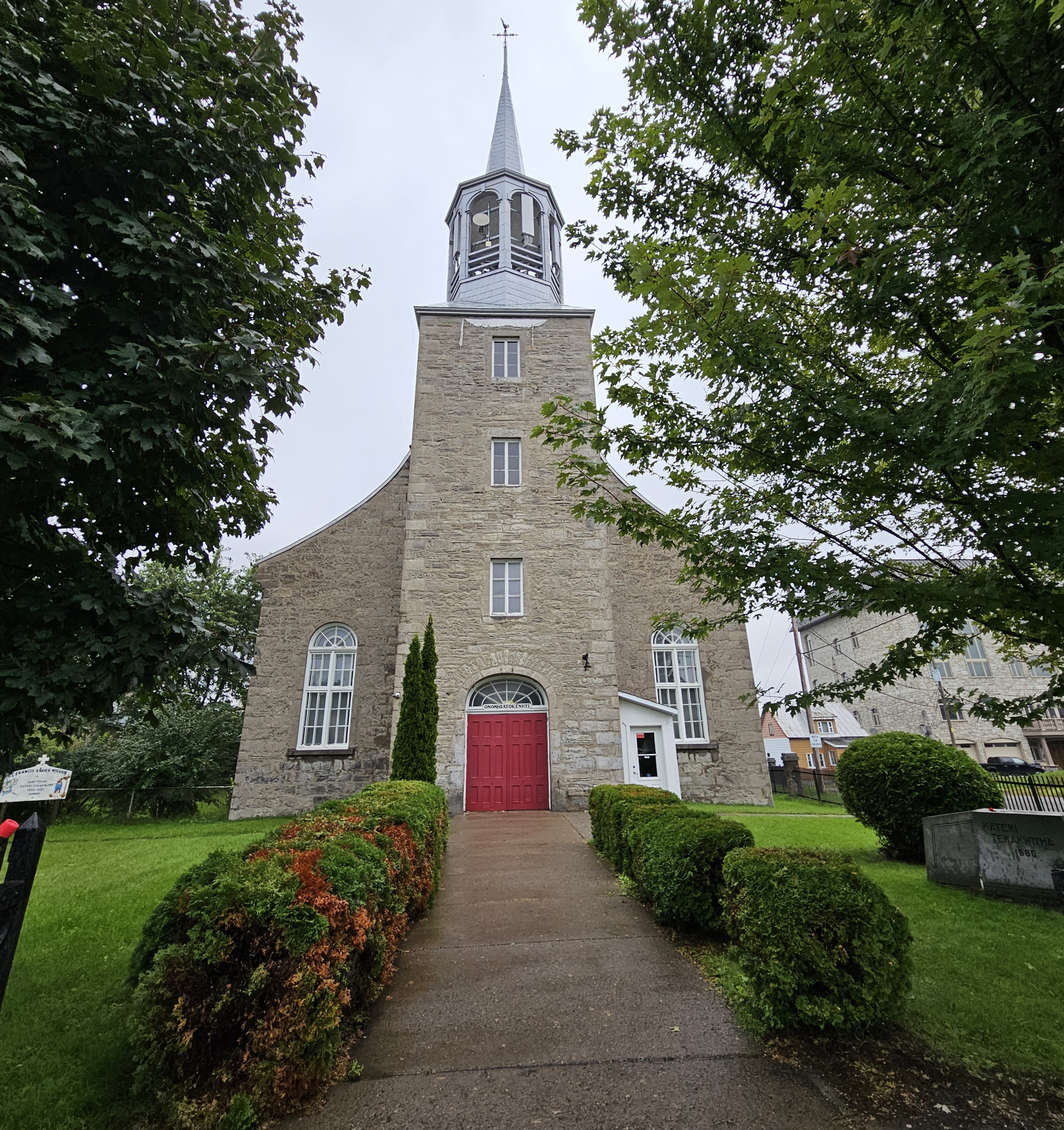
St. Francis Xavier Mission Church. Kahnawake, Quebec, Canada. (c)2023
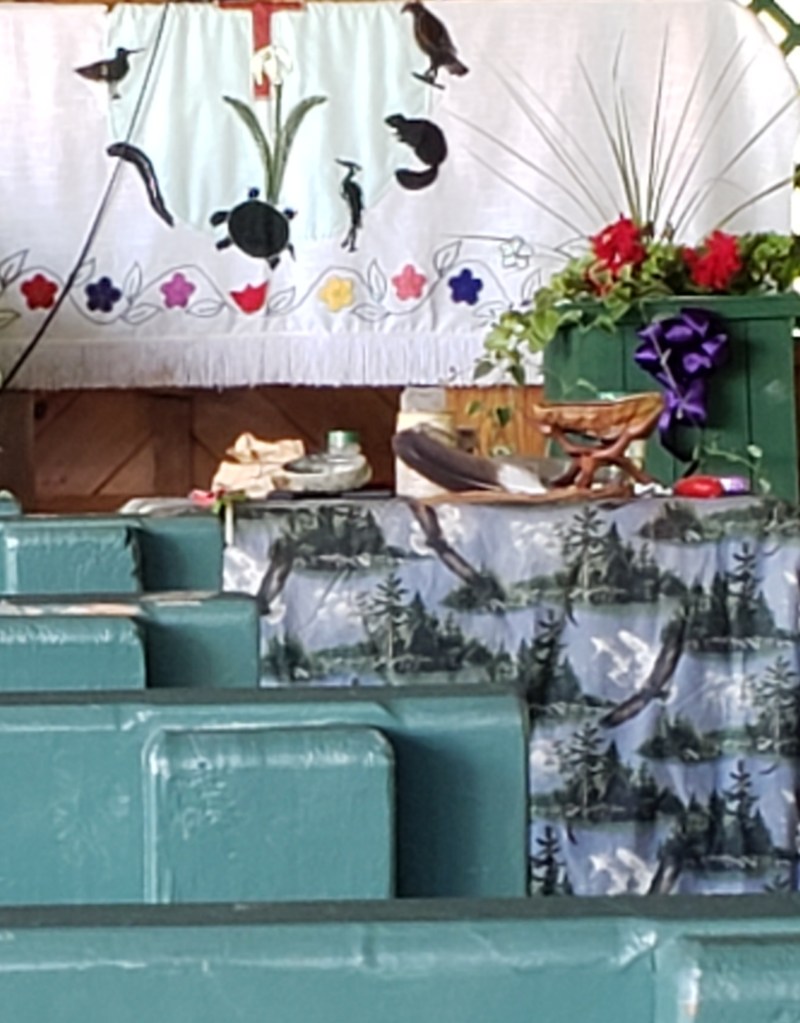
The Altar. (c)2023
Looking from the altar to the entrance of the church. (c)2023
Tomb of St. Kateri Tekakwitha that holds her relics. (c)2023
Since I’ve been sharing quite a lot about Kateri Tekakwitha, I thought I’d share this older picture from when I tried to visit her shrine in Quebec at the Kahnawake Village of the Mohawk Community. I had been searching for a chaplet of St. Kateri and was unsuccessful before my trip. I had planned to pray the chaplet for my Cursillo friend who was living his Cursillo weekend while I was away. Since I didn’t have a beaded chaplet, I drew one (left side), and brought that with me to pray at Kateri’s empty tomb, located across the street from the church of St. Catherine of Alexandria.
It was a very emotional and spiritual site, and just like in New York near the Mohawk River, I could hear the rapids from behind the empty, marble coffin, a sound similar to the sound near her baptismal spring at her Fonda shrine. I was there in contemplation for some time and prayed the chaplet from my sketchbook. Upon arriving home, I was able to locate a beaded chaplet, which I will pray today for St. Kateri’s feast day.
Kateri is the patron of the environment, fitting as Indigenous people are the caretakers of the land, as well as a patron of others including Indigenous People and ecology and people in exile.
I hadn’t intended for this series on travel to wholly encompass shrines, but I was asked yesterday about visiting these two later in the summer and thought it would be a good opportunity to share their information with you.
The sites are spiritually connected by both St. Kateri Tekakwitha and the Jesuits. The site in Auriesville has a coliseum, one of the first circular churches built in the US. It holds about 6000 people. Across their 600 acres of land is a museum, one or two chapels, a grotto dedicated to Our Lady of Fatima, and Theresa’s Rosary, a rosary made of rocks embedded in the ground. I have walked and prayed this rosary on one of my visits.
There is also the ravine where Rene Goupil’s body was found. In visiting there, I found it very spiritual and a place of holiness. The way to the ravine is quite steep. On the way there are several statues and grottos to pray at as well as signs that tell the story of the Martyrs.
Prior to his martyrdom, Isaac Jogues had been held in captivity and tortured by the Mohawk (a different group) for over a year. With help he escaped in New Netherland or Albany, NY. He returned to France, where he visited his mother in Orleans (where Joan of Arc led France’s army 219 years before) and was considered a “living martyr” by Pope Urban VIII, but soon again returned to this area, longing for and meeting his martyrdom in what is now Auriesville. It had been the Mohawk village of Ossernenon. He, Jean de Lalande, and Rene Goupil were tortured and killed here. Jogues weighted Goupil’s body and placed it in the water of the ravine in order to return and bury him properly. He did return, but he was gone. He later found some of his body parts, and reverently buried them. I’ve heard others say that the ravine itself is a reliquary. As I said, the spirituality felt here is palpable.
At this same village, ten years after their deaths, Kateri Tekakwitha was born. She became ill with smallpox and both of her parents died. She was scarred, and it was difficult for her to see, needing to put her hands out and feel her way. Her name Tekakwitha translates into she who bumps into things. Her mother had been baptized Catholic and educated by the e missionaries. Her village moved from Ossernenon across the Mohawk River and rebuilt their village, named Caughnawaga, which means place of the rapids. She was bullied for practicing her Catholic faith. She refused to be married, and that did not make her popular within her adoptive family and aunts. She also practiced mortification, praying for the conversion of her family and for forgiveness.
Her name Kateri is for her baptismal name of Catherine, which she received after her baptism at the age of 19. It took me several years, but I was able to walk to the spring (it’s a bit of a steep incline) from the village footprint that archeologists uncovered. Her Native people still felt that the Catholic religious rituals and items were sorcery and opposed her conversion. At some point after her conversion, she was helped to leave and went north to the new Mohawk village where other Native converts had gone. This village was also named Kahnawake (this is the Mohawk spelling), just south of Montreal. She died in 1680.
When I visited her empty tomb (where she was first laid to rest until her relics were removed to the St. Francis Xavier Mission Church on the Mohawk land), the sound of the rushing water nearby was nearly deafening. I have had so many spiritual experiences in visiting the sites of Kateri and her people that it only makes me more in awe of the Holy Spirit.
For those who are not religious, but want to visit a pastoral, serene, place of comfort, both shrines offer that in the beautiful Mohawk valley. The sights and sounds are lovely, and it is easy to get lost in your own thoughts. Of course, that’s until the train comes roaring by, but that is in its own way an affirmation of the space we are in.
National Shrine of the North American Martyrs Auriesville, NY
Open May 1 – October 19, 2023 Hours: Grounds: Open daily 9-7 Museum: Open daily 11-3:30 Gift Shop/Visitor Center: Open daily 10-3 There is no fee for admission or parking. If you are interested in attending mass or other events, visit their website.
National Shrine of the North American Martyrs. (c)2023
St Kateri Tekakwitha, National Shrine & Historic Site Fonda, NY
Summer Season: May 1st to October 31st Hours: Grounds are open sunrise to sunset daily. Saint Peter’s Chapel and Native American Museum open daily, 9-5 Gift shop open: Sat, 10-6, Sun – Wed, 9-5, Thurs – Fri, 10-4 Office open daily 9-4 Candle Chapel, Caughnawaga Village Site, Kateri Spring and grotto, outdoor sanctuary, and hiking trails are open sunrise to sunset year-round. If you are interested in attending mass (scroll down at the link) or other events, visit their website.
St. Kateri Tekakwitha statue with a sign of her last words: Jesus, I love you! (c)2023
Two weeks ago, I was privileged to attend Mass at the St. Kateri Shrine in Fonda, New York. It was a dual celebration: today is ten years since the canonization of St. Kateri Tekakwitha, the first Native American saint. The celebration on October 9th was held on Indigenous Peoples Weekend, acknowledging the history and legacy of the Native peoples who were already living and thriving in the Americas at the time of Columbus’ landing in what is now the Bahamas.
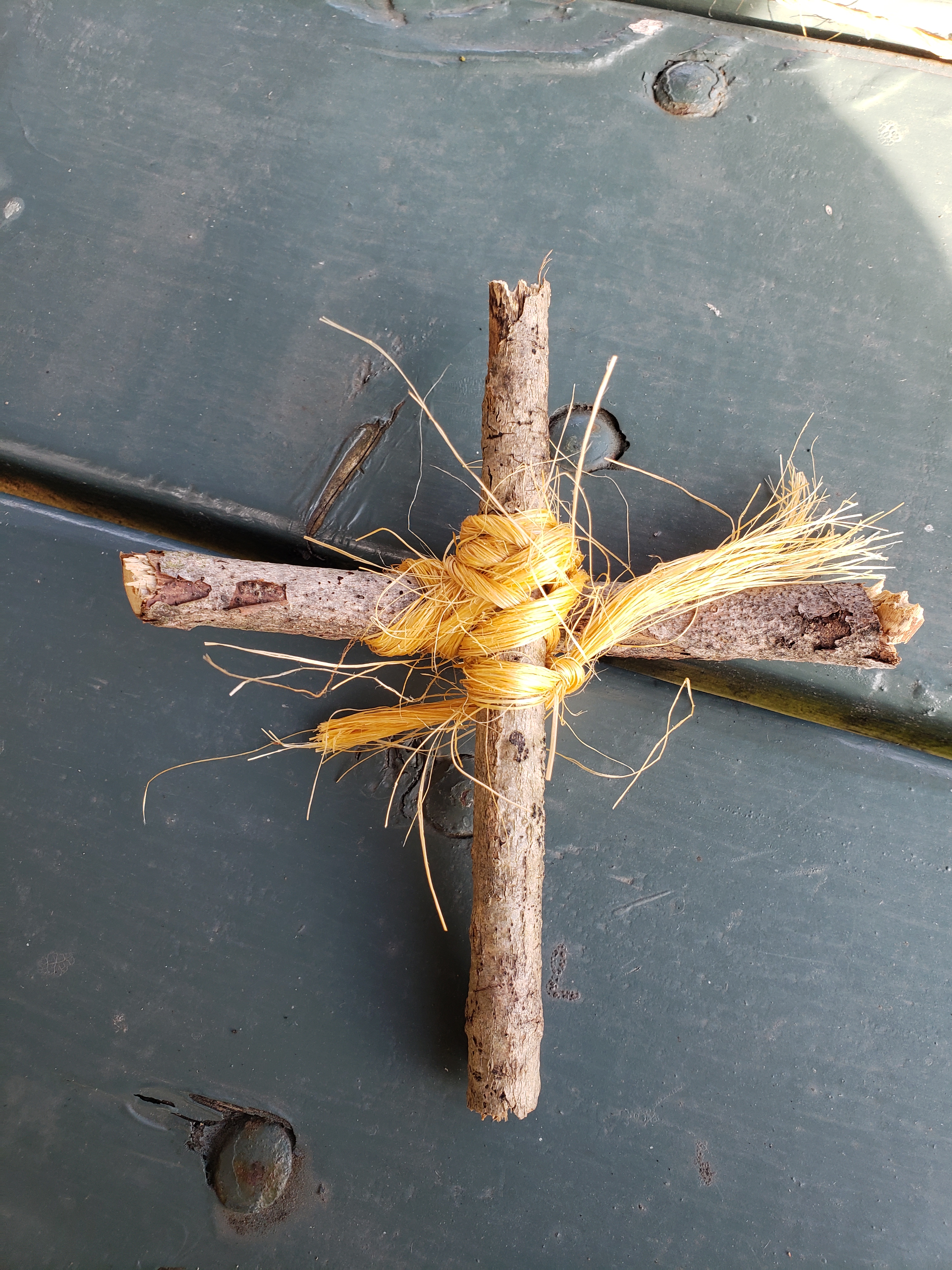
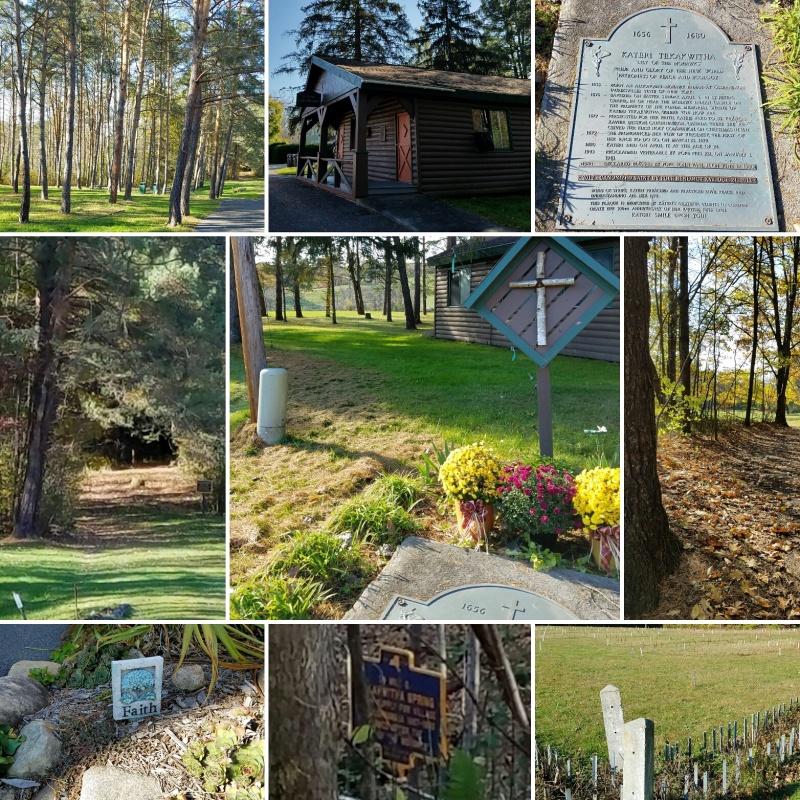
It was a chilly, fall day with bright blue skies and vibrant, colorful leaves, mostly still waving from their branches. Mass was held outdoors in the pavilion, a roof the only cover from the elements. As mass is celebrated, an occasional breeze flutters in, and really reminds you of Creation and the Creator. I had time before the mass and so I wandered the grounds a bit, spent some quiet time in the candle chapel, contemplated the words of Handsome Lake, an Iroquois Prophet whose words appear in the Peace Grove; I made a small cross from sticks and twine, reminiscent of St. Kateri’s own according to the sign on the table.
But mostly, I simply settled in with a subdued awe in the anticipation of the mass, the quiet celebration of Kateri’s canonization and difficult life that she never shunned from nor complained about. My eyes were drawn constantly to the bright colors of the Native dress, the feathers adorning and the large eagle feathers carried and used for the Mohawk rituals.
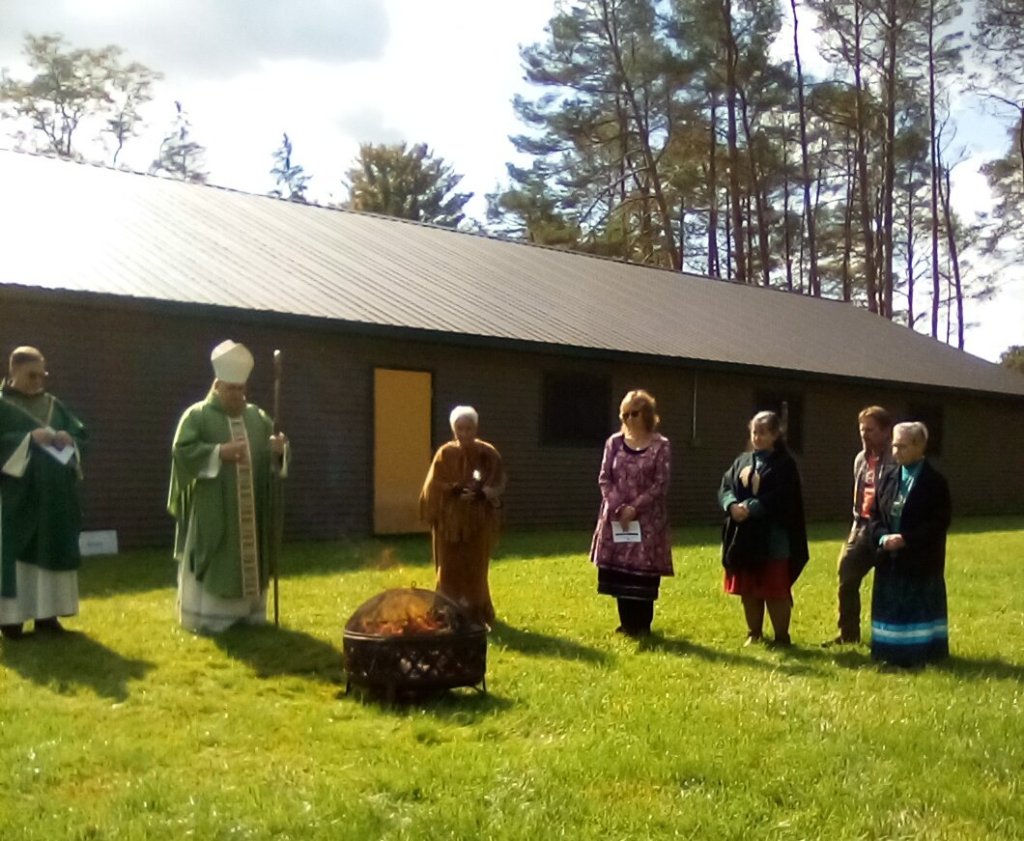
Between the Greeting and the Liturgy of the Word was the Sweetgrass Blessing, the burning of plants and herbs, assisted in its smoking by the motion of the eagle feather. We were invited to proceed up, as if for communion to receive the smoke. I felt as though I was part of something bigger, something ancient, and of course, I was, and I felt honored and humbled to be there. The four sacred plants used in Mohawk ceremonies are cedar, tobacco, sweetgrass, and sage.
Throughout the mass whenever hymns or songs were presented they were by the Mohawk Choir of Akwesasne. I couldn’t understand the words but the meaning was clear. Their voices carried on the wind and through the chapel and transported me far away and very near.
Sister Kateri Mitchell, who played a part in the 2006 miracle for St. Kateri Tekakwitha’s elevation to sainthood was there to share the prayer of the faithful and to talk about the miracles associated with the saint. I have met her before and was happy to see her and talk to her briefly on this day.
Following the mass, there was the annual burning of the prayer petitions. The Bishop said the prayer over them and that concluded this remarkable day.
I have found that attending mass in other cultures deepens my own faith and commitment to my own prayer and meditations. I have included some links throughout this post in the hopes that you will read more about St. Kateri Tekakwitha and her people and their journeys.
Takwaién:a karonhiá:ke tehsí:teronTakwaién:a karonhiá:ke tehsí:teron Aiesahsén:naien Aiesawenniióhstake Aiesawennaráhkhwake nonhwentsiá:ke Tsi ní:ioht né karoniá:ke tiesawennaráhkhwa Takwá:nont né kenwénte Niationnhéhkwen, nia'tewenhniserá:ke Sasa'nikónr:hen né ionkwarihwané:ren Tsi ní:ioht ní:'i tsonkwa'nikór:henhs Bothé:nen ionkhi'nikonhrasksá:tha nón:kwe. Nok tóhsa aionkwa'shén:ni né karihwané:ren Akwé:kon é:ren shá:wiht né io'taksens Asekenh í:se sáwenhk né io'taksens Asekenh í:se sáwenhk né kanakeráhsera' Ka'shatstenhsera, kaia'tanehrakwáhtshera Tsi nienhén:we e'thó naiá:wen
I would like to acknowledge the land where I live is the traditional and historic land of the Haudenosaunee, specifically the Mohican [Eng.] or Lenape and the Mohawk, known as Kanienʼkehá꞉ka in the Mohawk language.
The Haudenosaunee have been known in New York as the Iroquois and the Mohawk are the Keepers of the Eastern Door, traditionally guarding the Iroquois Confederation from eastern invasions.
In acknowledging the land I am on, it is an attempt to come to terms with the violent history of the European settlers and immigrants who did not understand the way the Native peoples viewed the land and in many cases simply did not care.
We, and they are the caretakers, not the owners of the land, and it is important to recognize that and move towards the future with respect and compassion while acknowledging our collective past.
I spent today praying at the St. Kateri Shrine. There was Catholic Mass and a celebration of miracles attributed to St. Kateri. This was also in recognition of Indigeneous Peoples Weekend as well as commemorating the tenth anniversary of the canonization of St. Kateri Tekakwitha.
Tomorrow, I will share some photos from that beautiful time. It was full of Mohawk tradition, language, music, and spirituality and grace. It left me in a better place.
Many people question why we need to focus on the diversity of our nation and celebrate heritage days and months; why can’t we simply celebrate our sameness as Americans.Also questioned is why we look back on the way we treated the indigenous peoples who were already here at our country’s very beginnings.
People want to forget the bad parts of our history.
The racist parts. The genocide. The meanness and the bigotry.
We can’t let those memories fade. They are a part of our history, and as we saw earlier in the year in British Columbia, Canada, it is part of the collective history of this continent.
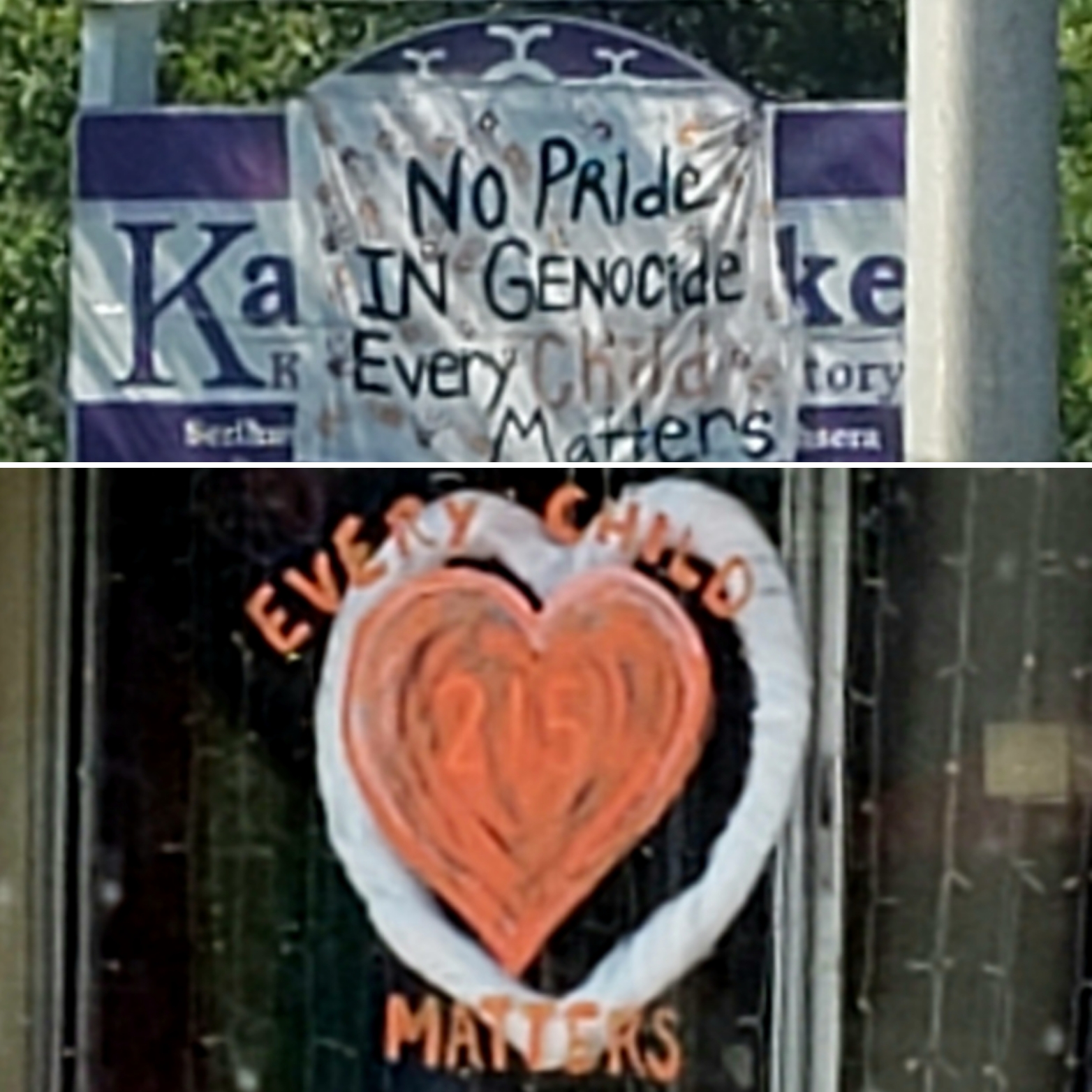
While we were on vacation in August, we couldn’t help but notice the signs, the memorials for the two hundred fifteen First Nations children found in unmarked graves in Kamloops, British Columbia.
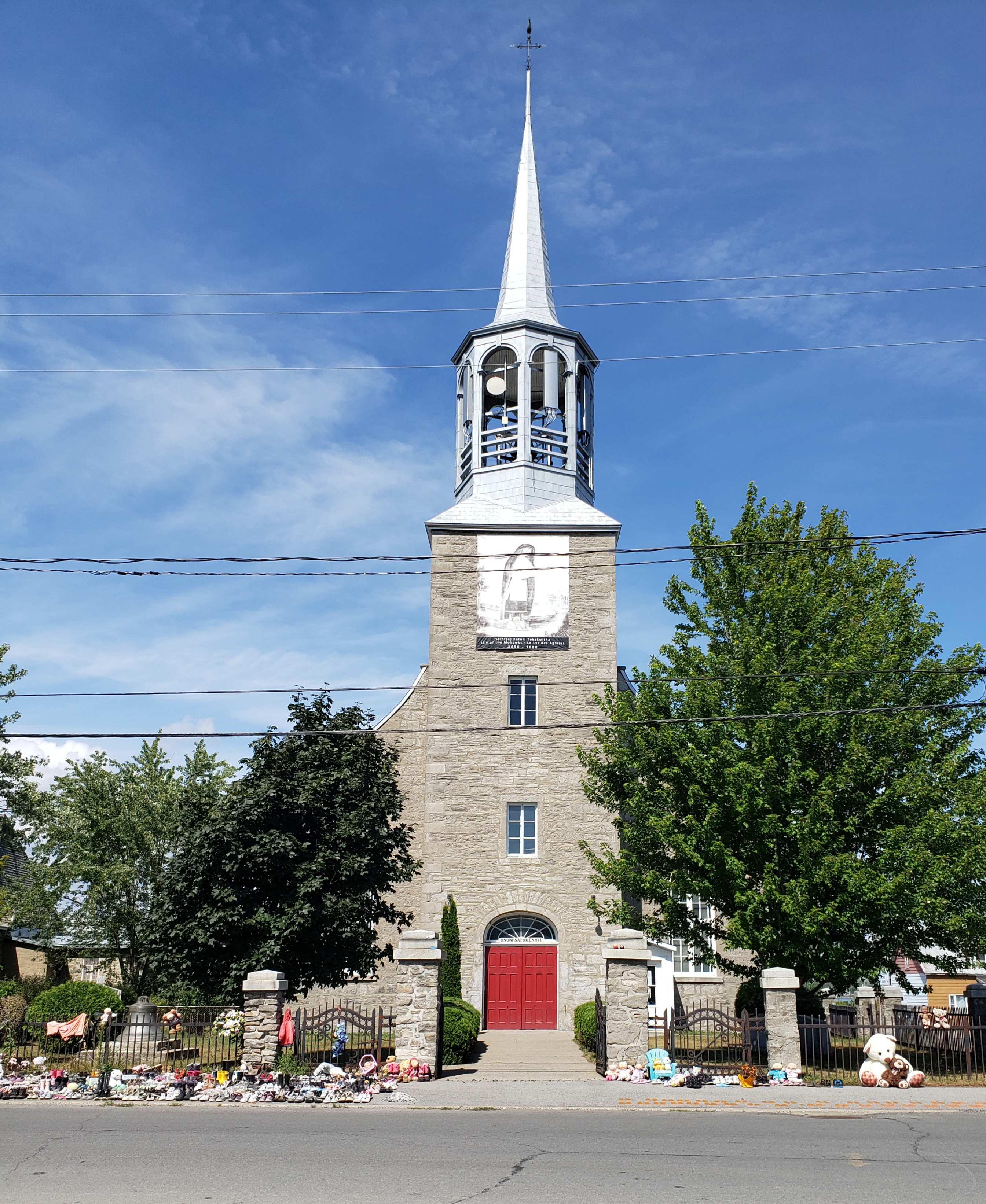
The articles read and linked below, as well as others were difficult enough to accept and they are still being processed emotionally by Native and non-Native peoples alike. However, happening upon one such memorial in Kanawake, the Mohawk tribal lands in southern Quebec tugged at emotions I was unaware of. The sight of the small shoes, representing the dead and unremembered 215 children, some as young as 3 was a lot to take in. It left me with a profound sadness, but also an emptiness that even the sadness couldn’t fill.
I leave you with links to read and photos to meditate on.
The emtpy shoes representing the 215 Indigenous children found in Kamloops. My presumption is that the ashes are from a First Nations religious ceremony in memory of the children. (c)2021
The above shoes can be seen at the St. Francis Xavier Mission in Kanawake, Quebec. This is also the site of the St. Kateri Tekakwitha Shrine where her body was brought. She is the first Native American Catholic saint. (c)2021
Signs we saw at various places across Quebec and Ontario, Canada. (c)2021
I do have plans to post a few things this week while I’m away from home. If you can’t wait for the prose, check out the Instagram link on the lower sidebar. I’ve just posted a vignette of snapshots from our first two days in Montreal, Quebec, Canada.
Included in the photo are:
Historic Site of Margeuerite Bourgeoys et Chapelle Notre-Dame-de-Bon-Secours – outside and altar
Emtpy tomb of St. Kateri Tekakwitha in Kanawake (the site where she died)
One of the oldest doors of the first hotel in Montreal. A nearby historical buiilding is keeping its historical features and turning into an Air-bnb
Largest potted plant *I’ve* ever seen – Town of Mont Royal
Riding the Metro
Poulet et poutine at St. Hubert’s
Gelato! Creme broule, napolean, and raspberry sorbet
Sculpture on our walk through towards the Port of Montreal
I will try to post photos on this Instagram daily.
Any suggestions on what to see and where to go in Toronto and Niagara Falls are welcome in the comments.tm
St. Kateri Tekakwitha was the first Native American woman to be canonized. This was in 2012, the same year I joined the church with my ongoing attendance. It would be another two years before I came into full communion and participation.
There were many reasons that I was attracted to St. Kateri as I considered her among others while I discerned a confirmation name (ultimately choosing St. Elen of Caernarfon as many of you know).
I have always felt a connection to the Native American people and interested in their culture and spiritual practices. As kids our parents took us to the pow-wow out on Long Island with the Shinnecock Indians. It’s hard to live anywhere in New York State and not find nearby towns with Native names.
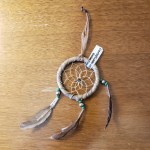
A gift from my friend in South Dakota. It is a dream catcher and it has helped me at times when I’ve had trouble sleeping. It is Native made near the sacred Black Hills. (c)2021
Kateri was from nearby; just west of the Capital District. She was born in the village of Ossernenon, now known as Auriesville. The village is mapped out at the Martyrs Shrine. After a small pox epidemic killed her family and left her scarred, the remaining Mohawk burned the village and moved (as was done when a disease ran rampant through their homes).
They moved further west and to the other side of the river to what is now Fonda, above where the current Kateri Shrine is located in the village called Caughnawaga. The footprint of the village can be seen and can be reached either by car or by walking the trails to the village and the spring.
When I was young, I loved to read about Joan of Arc. It was many years before I discovered she was a saint. It just wasn’t part of my growing up to associate her with religion; not really. I know she talked to G-d; I mean, so did I! I wasn’t Christian so I didn’t grow up attending church. But I knew Joan of Arc. She was a part of my girlhood, like Anne Frank, another young girl, someone I could relate to who also died too young. These were my heroes.
In my recent years of finding Catholicism and spirituality, I’ve added to my “collection” of saints and saintly people. I love hearing that saints are just like us. I’ve also learned that they are an outgrowth of their times. Sometimes their lives are huge and important and sometimes their deaths are, but in a lot of times, they are just ordinary people who do or preach extraordinary things. I know that today is All Saints Day, but I was still taken aback by the number of times I was called by the saints in the last two weeks.
Once I put this topic on my calendar a few weeks ago, I spent a lot of time thinking about it and the saints I look to in my life. They do change depending on the circumstances. I didn’t start reading on any of them in particular, but I looked at the saints for the day, seeing which feast days were coming up and thought a lot of who I felt the closest to.
Throughout October, I had been attending weekly zoom presentations on Diversity in Spirituality. Last week’s lecture was given by Dr. Kim Harris of Loyola Marymount University in Los Angeles, California. Her focus was on Black Americans, their experience, their worship, and their saints (and lack thereof). In addition to music and talk of the ancestors, Dr. Harris also asked the following question:
In our troubled and tumultuous times, what kinds of saints do we need or what kinds of saints do we need to be?
I was stunned into silence. That is very nearly the exact question I put on my calendar, the one that I’ve been contemplating on for the past two weeks, and here it was as our breakout room assignment!
What kinds of saints do we need in our lives right now indeed?
In conjunction to that synchronism and along with all of these thought provoking happenings, yesterday, I also attended a scheduled Day of Reflection centered on walking and praying with the saints. I had been looking forward to this day for several weeks and it did not disappoint. It also led me in my continuation of thinking about the saints and who I feel the closest to.
This was a question that I had been giving a lot of thought to, although in my mind I hadn’t phrased it quite like that at all. I’ll share a few thoughts with you.
I’ve mentioned Joan of Arc earlier. I was always enthralled by her hearing voices and following as well as being able to command an army. Maybe it was because I grew up in the feminist wave of the 70s that it seemed impossible to ignore and easy to admire.
St. Kateri Tekakwitha is a newer, local saint. Her birthplace is in upstate New York at the village where the North American Jesuit Martyrs died although they weren’t there at the same time. The spring where St. Kateri was baptized is there, and I am hoping to be in good enough shape to go through the woods to the spring sometime in 2021.
St. Elen is my personal saint, the patron of travelers and roads. I chose her for my saint’s name for my confirmation in 2014. Upon finding her, I found so many things about her that I could relate to as well as having been in her homeland, literally where she walked the earth although I did not know it at the time. I was fortunate to be able to pilgrimage to one of her holy wells in Wales in 2017, and it still gives me pause when I remember my times there.
Maximilian Kolbe and Edith Stein draw me back to my Jewishness and my Jewish upbringing. I know that Maximilian Kolbe wasn’t Jewish but he was killed in the camps in Nazi Germany as was Edith Stein. It reminds me that others (in Edith Stein’s case) have walked a similar path to mine.
I was drawn to Mary, Untier of Knots through Pope Francis’ devotion, and it has only grown stronger over the years. There is something very familiar about untying knots as a mother from shoelaces to necklaces to yarn and in needlework, not to mention the untying and smoothing that goes along metaphorically.
St. Dafydd is, of course, the patron saint of Wales, a place that I feel connected to since I first set foot there in 1987.
And finally, in this moment at least, Mary Magdalene. I didn’t know much about her; her life was co-opted a bit and confused with others, but what I do know and believe is that she followed Jesus from very early on. She was the first of his disciples to see him after his Resurrection, and she brought the word of his Resurrection to the apostles, becoming the first to bring the Holy Word of Jesus to others after his death. I love that she is the Apostle to the Apostles and that she is in history as someone who can possibly convert hearts to allow women priest and preachers.
Which saints are you drawn to during these difficult times of chaos and uncertainity?
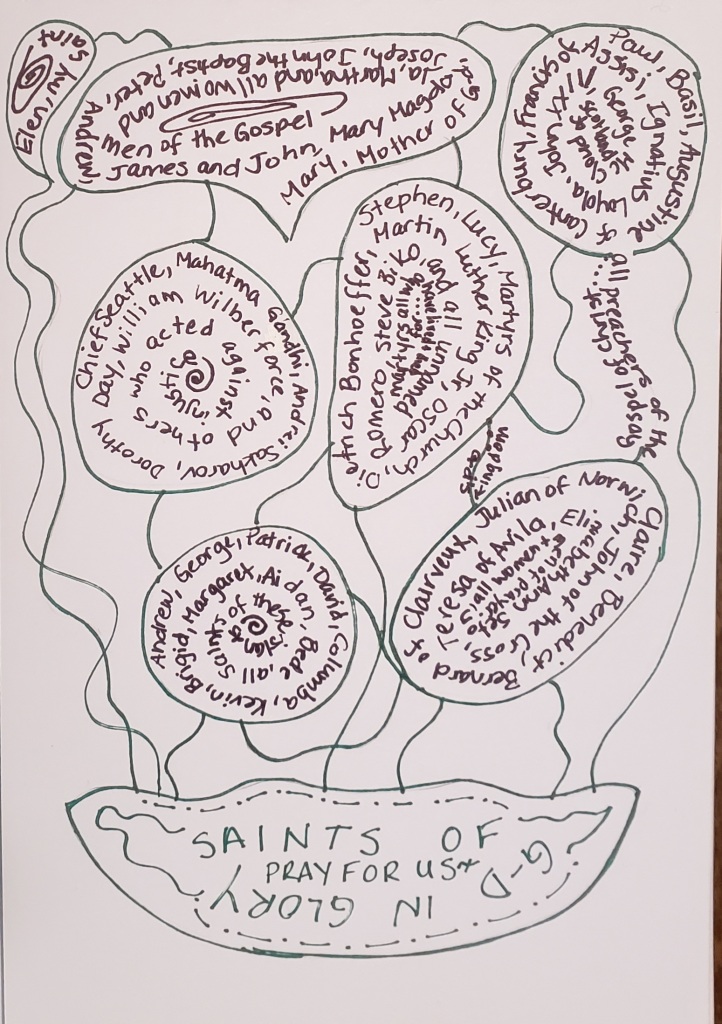
Art is mine based on the song: Saints Of God In Glory Frank Brownstead · Bernadette Farrell · St. Thomas More Group, 1991. (c)2020








 Griffins and Ginger Snaps