Friday Food – Anniversary Edition

Standard

Our anniversary was played out over a few days of really good food! Here are a few of my favorites!

1. Cranberry Cheddar Chicken with French Fries in Lake George.
2. Dragon ice cream (Mr. & Mrs.) at Baskin’ Robbins.
3. Raspberry Shortcake.
4. Hibachi Japanese.
5. Baskin’ Robbins (31st anniversary).
6. Dole Cherry at (famous) Martha’s Dandee in Lake George.
(c)2025

Native American Heritage Month Can Be All Year Long If You Know Where to Go

Standard

I think when it comes to marginalized groups in this country, it is important to remember that even though we attempt to celebrate them and honor them, we can still do that on the other 364 days of the year, and not just on “their” day.

Native American Heritage Month officially ended on November 30th, and Native American Heritage Day was commemorated on November 29th.

In addition to the post last week with links to the American Indian Museum in Washington, DC, I’d like to share the following links and travel recommendations for you to consider over the next 361 days.


The Akwesasne Cultural Center is located on State Route 37 in Akwesasne, New York, near the Canadian Border. They are a museum, library, and cultural center focusing on the history and culture of the Mohawk people as well as protecting Mohawk culture and artifacts. The museum and gift shop are open T – F, 10-6, and Sat, 10-2. The library is open additionally on Monday, 9-5.

The Kanien’keha’:ka Onkwawen:na Raotitiohkwa Language and Cultural Center was established in 1978. Its mission is to preserve and enrich the language and culture of the Kanien’keha:ka (Mohawk) of Kahnawa:ke. They are located in the Mohawk Territory of Kahanwa:ke, south of Montreal, Canada.

You can also find the Welcome Center, the Kateri Interpretive Center, and the St. Francis-Xavier Mission Church (on this site since 1716) in the Mohawk Territory of Kahnawa:ke. I have toured all three of these sites and it is well worth the visit.


From The National Museum of the American Indian at the Smithsonian: The “First Thanksgiving”: How Can We Tell a Better Story?

Bluesky Handle, Puff the Magic Hater has a thread of ways to support Native people, for everything from abortion care, defending voting rights, keeping Native families together, and more. Visit the thread here.

I’d like to close this post with the words of someone smarter than me. On Nov 29, 2024, historian Heather Cox Richardson wrote on Facebook:

Continue reading

Native American Heritage Month

Standard

There is still a long way to go in acknowledging what the governments of the United States and Canada have done to the Native American and First Nations peoples of North America. I’m being naive in thinking that Native American Heritage Month in November when Thanksgiving occurs is completely unrelated. However, it is what it is.

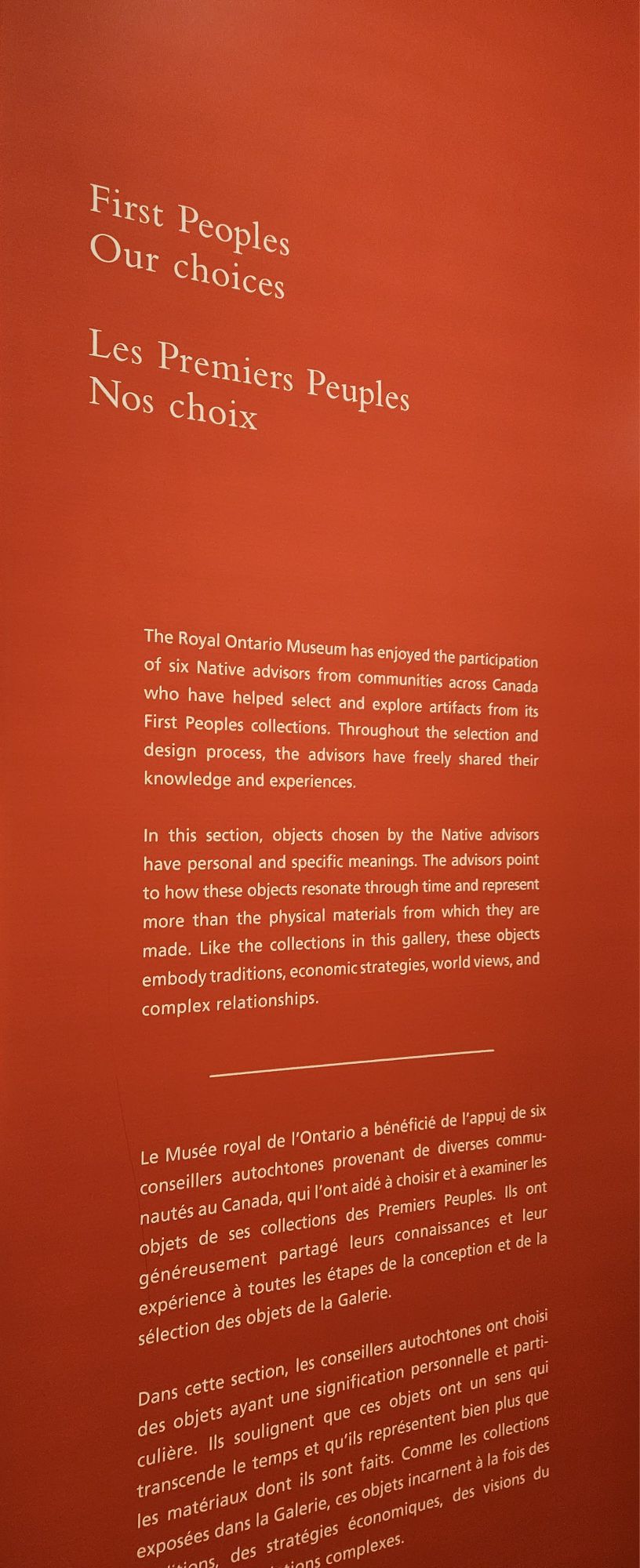
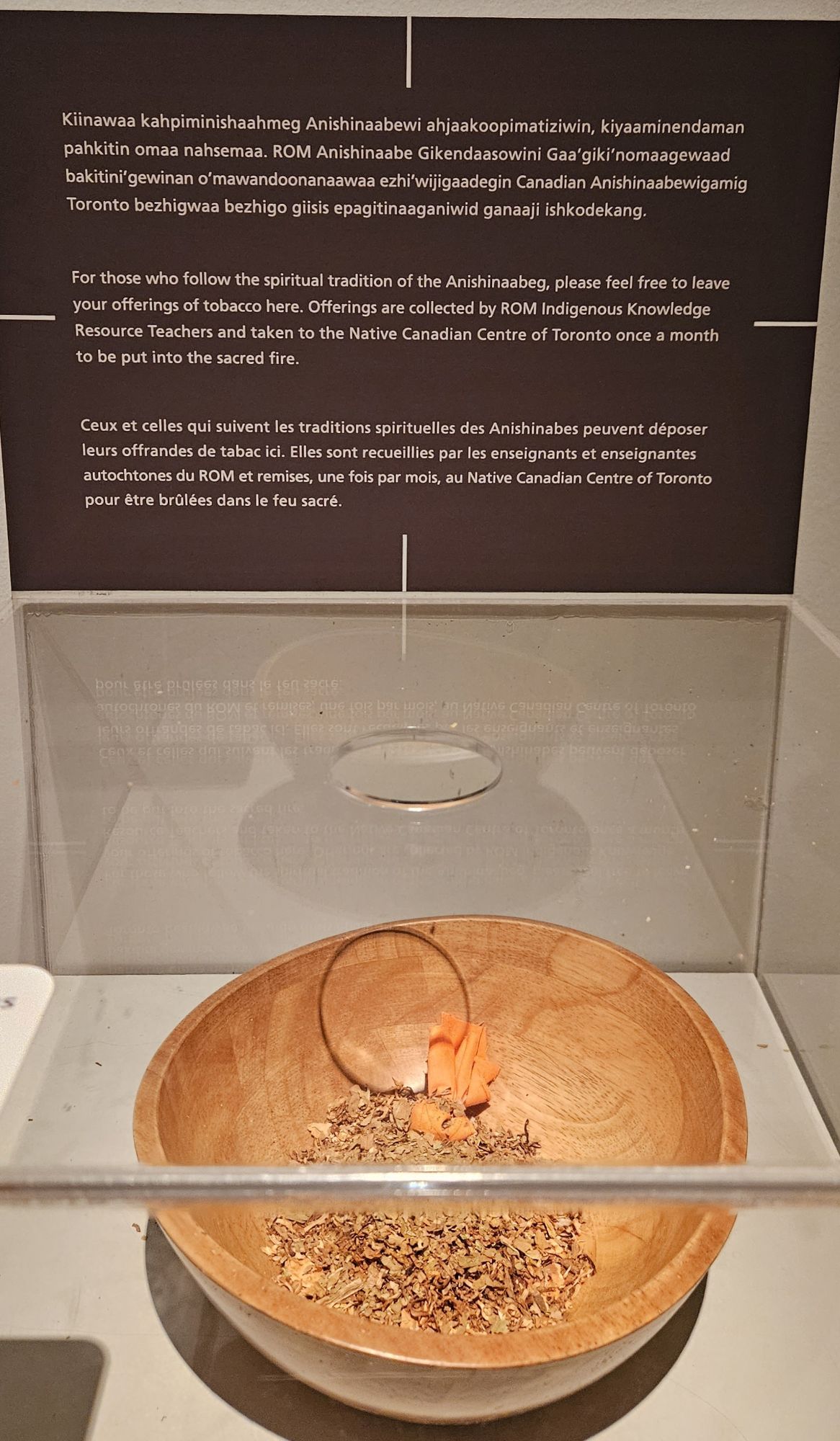
I thought I would share some of the things and signage that I noticed on our recent visits to Canada. The Royal Ontario Museum in Toronto has a large First Nations exhibit. I think it took nearly an hour to get through it and I could have probably stayed longer.

In addition to the following photos, when we visited the Canada Aviation and Space Museum in Ottawa, I noticed a sign at the entrance that said: Ingenium [Canada Aviation & Space Museum] offers free admission to all active Canadian military personnel, Canadian military veterans, Indigenous peoples, including First Nations, Inuit and Métis, and a support leader accompanying a person with disabilities. When available, presentation of an Identification Card is requested.

I noticed this in several museums including the ROM.

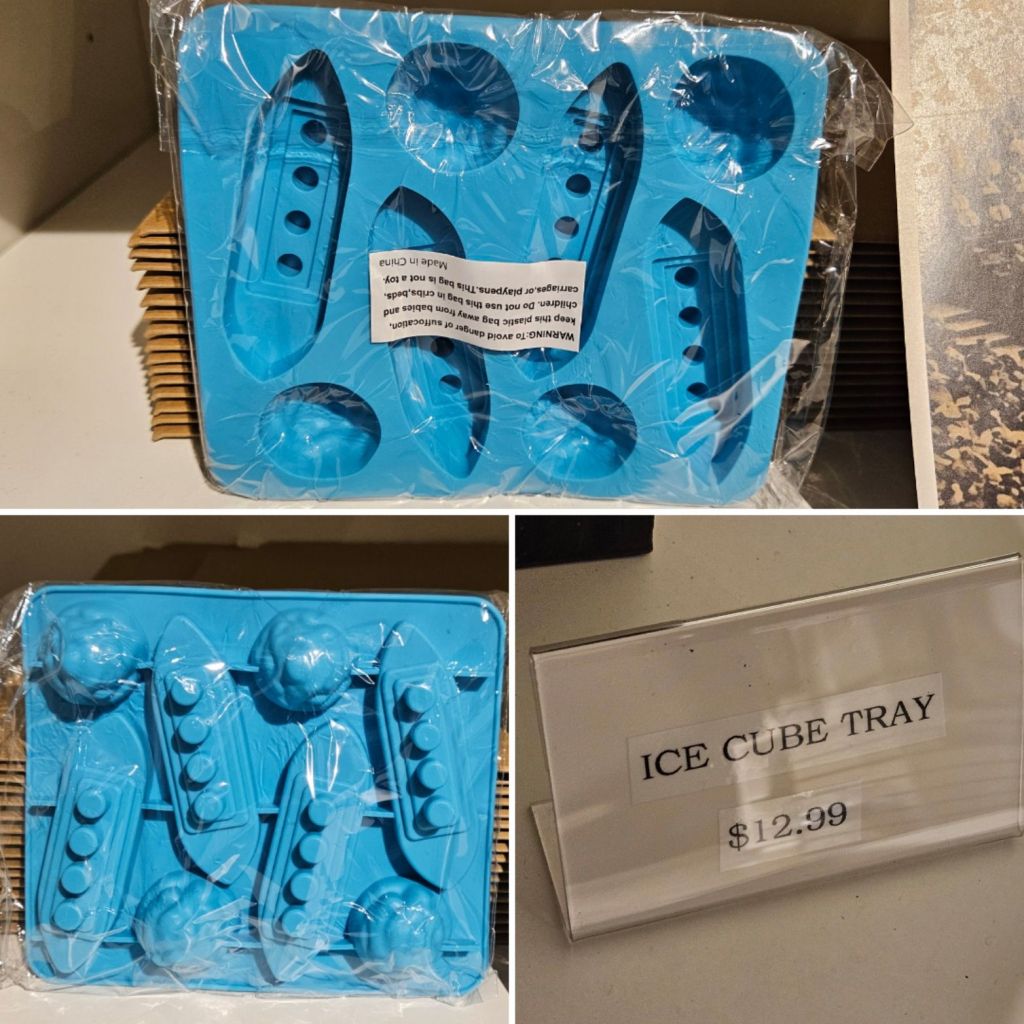
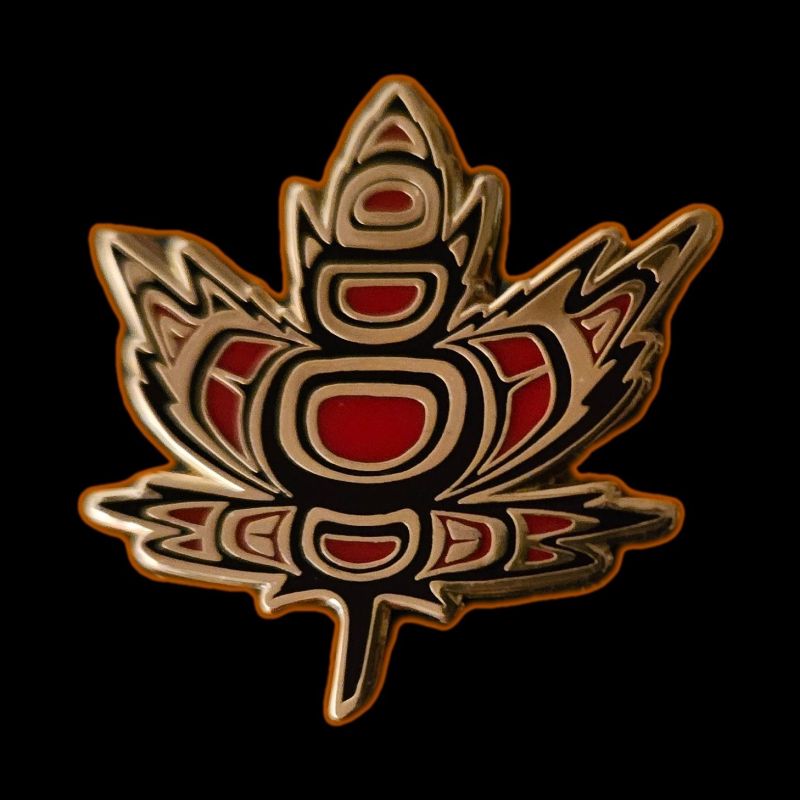
There was also a discount for the gift shop as well as Indigenous pins and souvenirs.

In the United States, it is on my bucket list to visit the American Indian Museum at the Smithsonian in Washington, D.C.. There is also a location in New York City. Check out the website for hours of operation. Admission to both locations are free.


(c)2024
(c)2024
(c)2024
(c)2024


Research and Rabbit Holes

Standard

For my May inspired I thought I would indulge a little. As many know I have been doing a lot of research for my book on St. Kateri, and as I was reminded of in a recent writing class I took, with research you will learn much more than you will actually include in your book, whether that book is fiction or non-fiction, and I have discovered the truth in that. The research that I’ve been doing for this book includes not only St. Kateri’s life before sainthood, but also Mohawk history, the Jesuits in New France, and various aspects of both Catholicism and the longhouse religion as well as many other details that help to inform the writing and the context, something that I’m learning the Jesuits at the time lacked when they spoke of the Native American ways.

I went down one rabbit hole recently that led me to three separate web pages regarding President Ulysses S. Grant’s “Indian Policy,” which was both informative and disheartening. I spent two hours reading, and it will only result in one or two sentences in the entire book.

In discussing 19th century treaties with one of my writing groups, I was sent a recent article on a court case from 2005 that referenced a treaty from 1794. There was also a recent Supreme Court case whose decision was based on a treaty from the 1800s regarding water rights. Another disheartening read as while the Supreme Court agreed that the Native tribe had rights to water, they did not however have the right to have the US government provide said water. Whew! What an acrobatic backflip!

One thing that surprised me in reading about the Jesuit way of converting the Natives to Catholicism was how they dismissed the Haudenosaunee’s spirituality and religious ceremonies when they were already so close to Christianity: a monotheistic society with one Creator, virgin births, miracles, and several other instances of commonalities.

I’ve read five books, two of which had nothing to do with St. Kateri but was wholly about Haudenosaunee Creation and the creation of their confederation and countless journal articles including one comparing the Jesuits’ use of incense to the Native American’s use of sacred fire and smudging. In reading Tom Porter’s book, And Grandma Said…, I have confirmed that we are more alike than we are different. In fact, when he was discussing how he prayed (by talking to his Creator), but was told that was the wrong way to pray by Christians, I was aggravated; that was exactly the way I prayed since childhood – through conversations with my G-d.

As appalled as I’ve been over the years at the treatment of Native Americans by colonialists (and modern people) I have become even more appalled and tell anyone who will listen about these judgments and discrimination foisted upon the Native population here on Turtle Island.

The second time we visited Kahnawake in Quebec, I told our tour guide that I wanted to visit, not only for the St. Kateri information where her tomb was, but also because what my children, who are 27, 19, and 18 have learned of their Iroquois history in 4th grade is the same as I learned in my 4th grade class forty years before that.

I’m reaching out to people with questions. I’m visiting places where Kateri lived both as a child and as a young adult, taking notes, creating lists of questions, looking through land buying archives, borrowing well-worn books out of the library. I’m getting help from places I hadn’t expected and advice on where to look for information. I’ve reached out to an artist for permission to use his art and I’ve signed up for journal access, which fortunately was granted for one month rather than requiring payment for the entire year.

While there is a struggle to find some material, I am reading from Mohawk sources to realize the context and seeing the misunderstandings of the Jesuits towards Kateri’s people. I also believe some of those characterizations were intentional to make Kateri seem more pure, more otherworldly, more worthy of the sainthood they coveted for her future.

My next two research jaunts I’m hoping to make are to the shrines in Fonda, New York and Kahnawake, Quebec to visit their archives. In both cases, I’m hoping the papers are in English rather than French. I also hope to interview one or two people and visit one area’s Strawberry Festival and one area’s Pow-Wow (both of which are open to the public). Those have less to do with Kateri the person and more to do with the Mohawk heritage.

Rabbit holes. They are deep and twisty, and the bucket is often not big enough for what is unearthed.

Travel – Following in Susan B. Anthony’s Footsteps

Standard

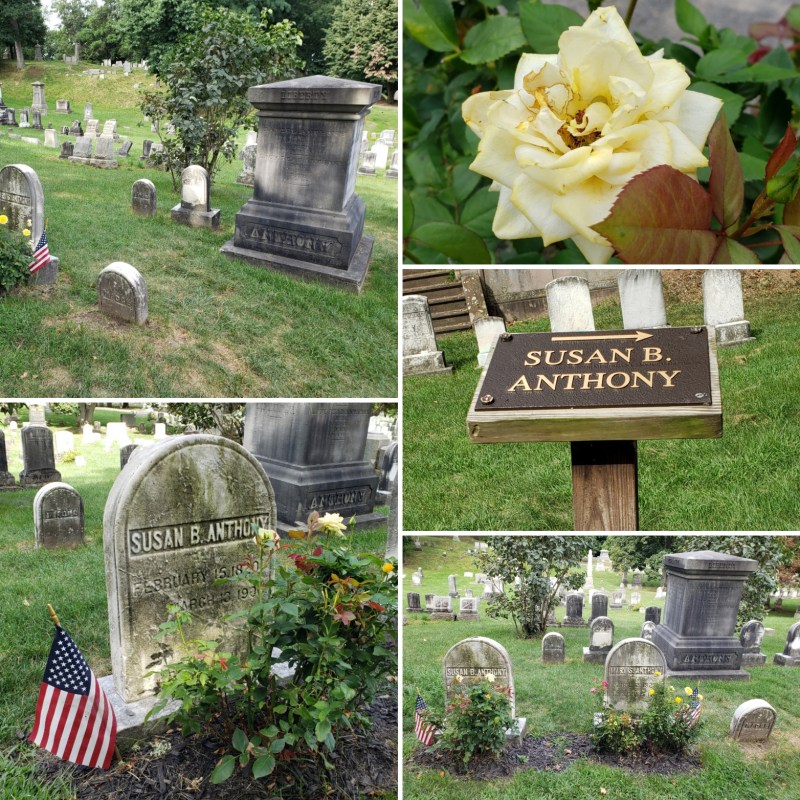
One year, on our way to Canada, we stopped in Rochester, New York. My boys wanted to visit a comic store (of course), and since we were in Rochester, I suggested we visit Susan B. Anthony’s gravesite (Section C, Plot 93). I wanted my daughter to see a symbol of one of the pioneers of suffrage and women’s right to vote. Especially because when I mentioned that she had been on the dollar coin, there was a little confusion and looking up the difference between the Anthony dollar and the Sacajawea one. Driving to Niagara Falls and the Canadian border, west on I-90, there are several signs for women’s history from Seneca Falls, NY (birthplace of women’s rights) to Auburn, NY (home of Harriet Tubman).

I’ve written before about Susan B. Anthony and suffrage. They can be found by searching my tags in the search bar to the left. Below find some places to visit related to Susan B. and women’s rights as well as the surrounding area.


There are no falls in Seneca Falls.

Susan B. Anthony’s gravesite can be found at the Mount Hope Cemetery. Frederick Douglass may also be found in his final resting place here.

National Susan B. Anthony Museum & House

Near her house is the Susan B. Anthony Park.

Women’s Rights National Historical Park

                Things to do there

National Women’s Hall of Fame – reopening in the spring

Spend 48 Hours in Seneca Falls (from the I Love NY site)

Also visit this online, virtual, “museum without walls”: National Women’s History Museum

And this online feature at the New York State Museum: Votes for Women: Celebrating New York’s Suffrage Centennial

Rochester Region Suffrage Timeline

Play Women’s Hall of Fame Solitaire

Finally, use the Freethought Trail to plan your journeys for the following (more available on the website):

                Women’s Rights Sites

                Women’s Suffrage Conventions Trail

     Susan B. Anthony Sites

                Seneca Lake Sites


Mark Twain’s Study

Standard
(c)2023

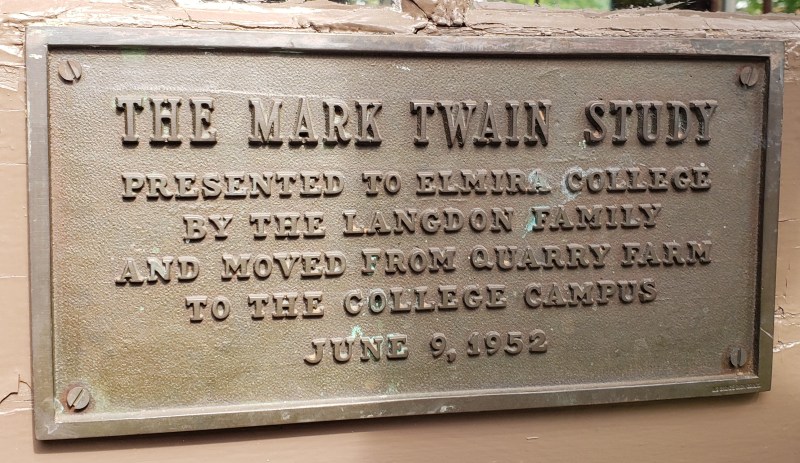
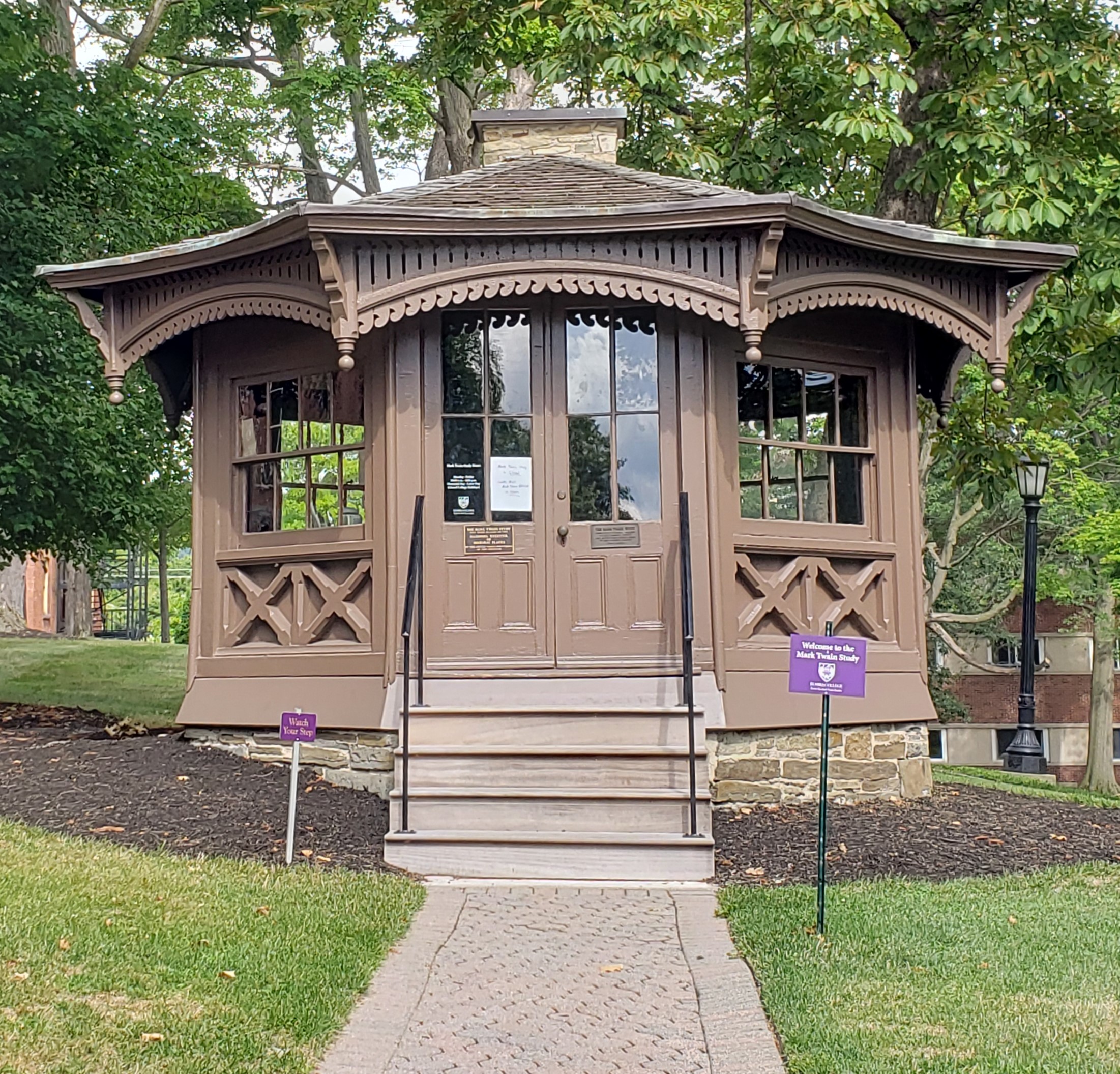
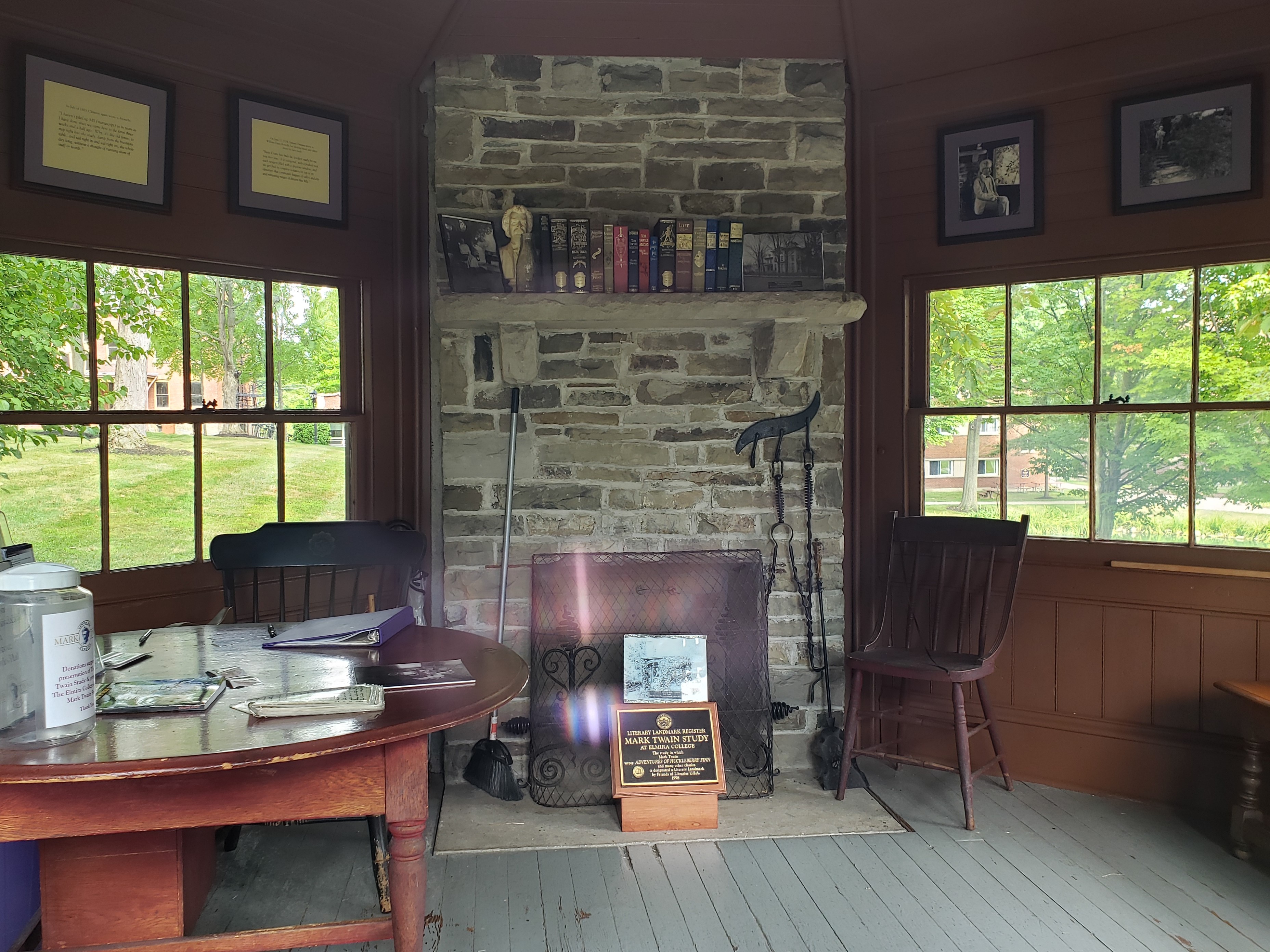
On Mark Twain’s birthday, I wanted to share some of the photos we took when we traveled to his study’s current location at Elmira College in Elmira, New York. The study was originally on the Langdon land where he did his writing in this small building. He wrote many of his classic stories here. I’ve included an information sign from the site.

(c)2023
(c)2023
(c)2023
(c)2023
(c)2023

Native American Heritage Month – Beginnings & Endings

Standard

The photo below represents both the start and the end of the day.

Beginning with the end, I have slept with a Dream Catcher for most of my life. I notice a change in my sleep when I don’t sleep with one. It creates a calm and peaceful rest as it catches the bad and lets the good continue through. This particular dream catcher is one I got in Niagara Falls, Canada. I was drawn to the colors of the beads that represent the four directions as well as the uniqueness of the center stone.

The booklet is something that I was more recently introduced to through Mohawk Elder Tom Porter of the Kanatsiohareke Community in New York. Since then, I’ve seen it in other Haudenosaunee writings and readings. It is called the Thanksgiving Address, but it has nothing to do with the Thanksgiving holiday, but in giving thanks for all that is around us in the natural world, all that we have, all that we see. It is said at the beginning of all important gatherings, ceremonial and/or governmental. The Haudenosaunee call them the Words Before All Else.

I recently used a form of this address for a meditation that I was tasked to share, and it was very well received. I read mine, but most are recited and because of that they are often never the same twice since the words change with the speaker and the timing of the gathering.

As I said at my own (non-Native) gathering, as a shared meditation, I acknowledged the land we were standing on (Mohawk), and reaffirmed that I am a non-Mohawk, non-Native, sharing their wise words.

Travel – Schuylerville, NY

Standard

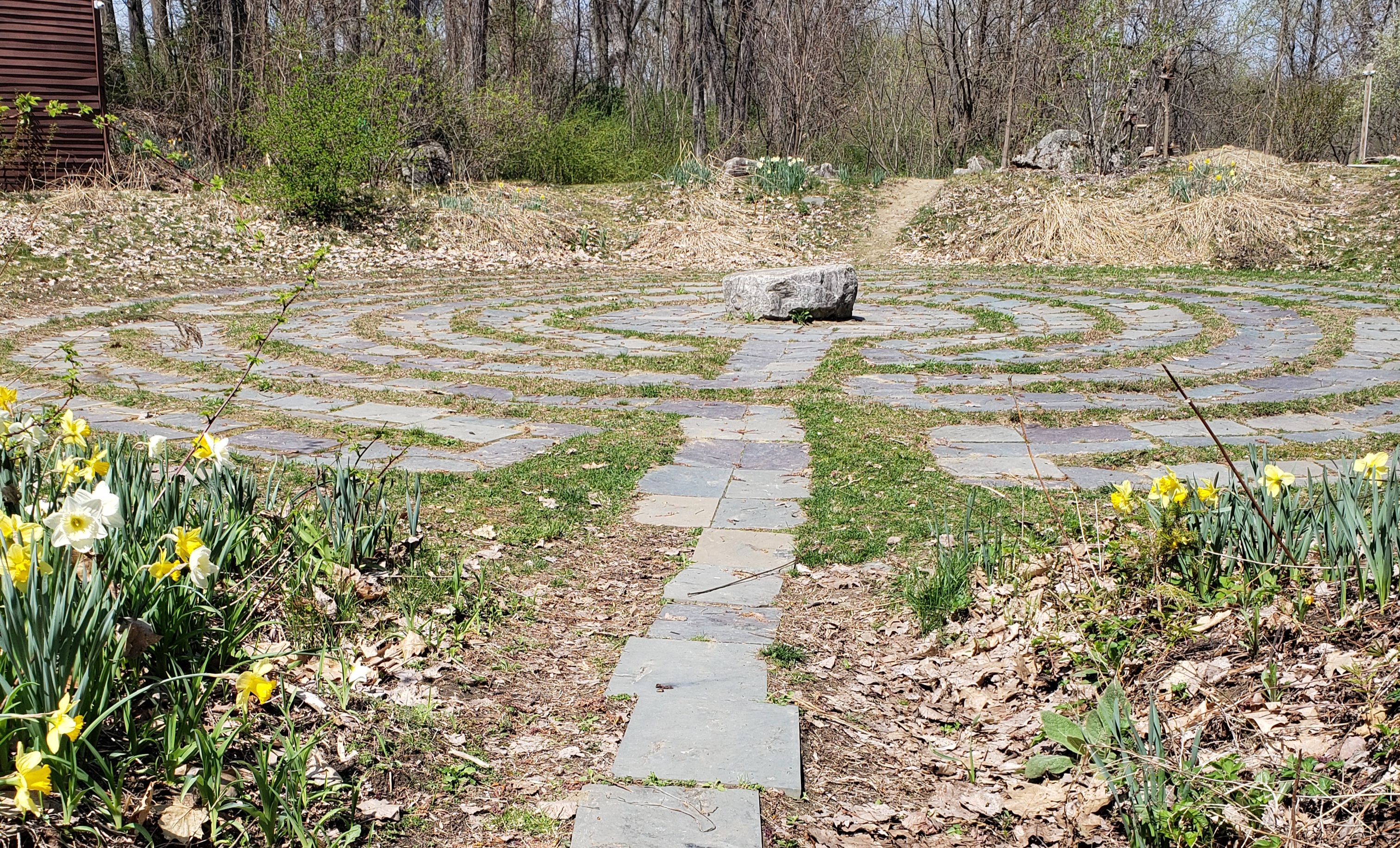
In my ongoing research of labyrinths, as well as an impromptu visit to a gluten free bakery for my students, I discovered that the area of and around the village of Schuylerville, near one of my labyrinths is riddled with little shops, eateries, and a wealth of history that can be explored on a day trip through the area. Combining that with nearby Saratoga Springs (11 miles) and Lake George (about 30 miles), it is easy to make a weekend (or longer) out of it with fun things to do for adults and kids alike.

Hudson River Crossing Park Labyrinth.
Schuylerville, NY.
(c)2023

Schuylerville is located about 45 miles north of the state’s capital of Albany and was originally part of the Iroquois Federation; the land called Haudenosaunee and the Mohawk people.

Continue reading

Travel – National Shrine of the North American Martyrs, Auriesville, NY and St. Kateri Tekakwitha, National Shrine & Historic Site, Fonda, NY

Standard

I hadn’t intended for this series on travel to wholly encompass shrines, but I was asked yesterday about visiting these two later in the summer and thought it would be a good opportunity to share their information with you.

The sites are spiritually connected by both St. Kateri Tekakwitha and the Jesuits. The site in Auriesville has a coliseum, one of the first circular churches built in the US. It holds about 6000 people. Across their 600 acres of land is a museum, one or two chapels, a grotto dedicated to Our Lady of Fatima, and Theresa’s Rosary, a rosary made of rocks embedded in the ground. I have walked and prayed this rosary on one of my visits.

There is also the ravine where Rene Goupil’s body was found. In visiting there, I found it very spiritual and a place of holiness. The way to the ravine is quite steep. On the way there are several statues and grottos to pray at as well as signs that tell the story of the Martyrs.

Prior to his martyrdom, Isaac Jogues had been held in captivity and tortured by the Mohawk (a different group) for over a year. With help he escaped in New Netherland or Albany, NY. He returned to France, where he visited his mother in Orleans (where Joan of Arc led France’s army 219 years before) and was considered a “living martyr” by Pope Urban VIII, but soon again returned to this area, longing for and meeting his martyrdom in what is now Auriesville. It had been the Mohawk village of Ossernenon. He, Jean de Lalande, and Rene Goupil were tortured and killed here. Jogues weighted Goupil’s body and placed it in the water of the ravine in order to return and bury him properly. He did return, but he was gone. He later found some of his body parts, and reverently buried them. I’ve heard others say that the ravine itself is a reliquary. As I said, the spirituality felt here is palpable.

At this same village, ten years after their deaths, Kateri Tekakwitha was born. She became ill with smallpox and both of her parents died. She was scarred, and it was difficult for her to see, needing to put her hands out and feel her way. Her name Tekakwitha translates into she who bumps into things. Her mother had been baptized Catholic and educated by the e missionaries. Her village moved from Ossernenon across the Mohawk River and rebuilt their village, named Caughnawaga, which means place of the rapids. She was bullied for practicing her Catholic faith. She refused to be married, and that did not make her popular within her adoptive family and aunts. She also practiced mortification, praying for the conversion of her family and for forgiveness.

Her name Kateri is for her baptismal name of Catherine, which she received after her baptism at the age of 19. It took me several years, but I was able to walk to the spring (it’s a bit of a steep incline) from the village footprint that archeologists uncovered. Her Native people still felt that the Catholic religious rituals and items were sorcery and opposed her conversion. At some point after her conversion, she was helped to leave and went north to the new Mohawk village where other Native converts had gone. This village was also named Kahnawake (this is the Mohawk spelling), just south of Montreal. She died in 1680.

When I visited her empty tomb (where she was first laid to rest until her relics were removed to the St. Francis Xavier Mission Church on the Mohawk land), the sound of the rushing water nearby was nearly deafening. I have had so many spiritual experiences in visiting the sites of Kateri and her people that it only makes me more in awe of the Holy Spirit.

For those who are not religious, but want to visit a pastoral, serene, place of comfort, both shrines offer that in the beautiful Mohawk valley. The sights and sounds are lovely, and it is easy to get lost in your own thoughts. Of course, that’s until the train comes roaring by, but that is in its own way an affirmation of the space we are in.


National Shrine of the North American Martyrs
Auriesville, NY

Open May 1 – October 19, 2023
Hours:
Grounds: Open daily 9-7
Museum: Open daily 11-3:30
Gift Shop/Visitor Center: Open daily 10-3
There is no fee for admission or parking.
If you are interested in attending mass or other events, visit their website.

National Shrine of the North American Martyrs.
(c)2023

St Kateri Tekakwitha, National Shrine & Historic Site
Fonda, NY

Summer Season: May 1st to October 31st
Hours:
Grounds are open sunrise to sunset daily.
Saint Peter’s Chapel and Native American Museum open daily, 9-5
Gift shop open: Sat, 10-6, Sun – Wed, 9-5, Thurs – Fri, 10-4
Office open daily 9-4
Candle Chapel, Caughnawaga Village Site, Kateri Spring and grotto, outdoor sanctuary, and hiking trails are open sunrise to sunset year-round.
If you are interested in attending mass (scroll down at the link) or other events, visit their website.

St. Kateri Tekakwitha statue with a sign of her last words:
Jesus, I love you!
(c)2023

Travel – Marian Shrine, Stony Point, NY

Standard

I had the privilege of visiting the Marian Shrine in Stony Point, New York, administered by the Salesians of Don Bosco recently, and I couldn’t spend nearly as much time as I had wanted to. As you can see from the photos of that day, the sky was a perfect shade of blue with fluffy white clouds floating. The green grass and leaves were a remarkable shade for early spring, and the cool breeze really made the spirituality tangible and profound.

(c)2023
(c)2023

Driving up the lane and seeing the statue of Mary of the Rosary as if rising from the ground made my jaw drop to the floor. The immensity of the statue (48 feet and 6 1/2 tons) is something I have never seen before. It was huge, but besides its size, there was a feeling of strength resonating from Mary, and once we parked, I just stood in awe and gratitude that I had made the decision to stop on our way to visit with family.

Our Lady of the Rosary, or the Rosary Madonna has been here since 1977. It was created in Italy in 1959 and blessed by Pope Saint John XXIII. From the star-shaped base and surrounding benches is a mesmerizing fountain and beyond this is the Rosary Way, constructed in 1954, during the Marian Year. The rosary way follows a shamrock shaped path through a wooded space. In addition to the mysteries of the rosary, there are also statues depicting the Stations of the Cross on the grounds.

(c)2023

Because of our family visit, I had very little time to explore, so I began with sitting on the benches surrounding Mary and said the Hail Mary. I listened to (and recorded for a short time) the sound of the fountain. The peace was contagious. I slowed my breathing for fear that a normal exhalation would be too loud for this gentle, serene place.

(c)2023

I moved on from there to the statue of St. Francis and his prayer, which is one of my favorite ones, touching on nature and Creation. It lends itself to so many other spiritual experiences. There are several other statues (St. Michael, St. John Bosco, St. Padre Pio, St. Joseph, St. Maria Goretti, and the aforementioned St. Francis of Assisi), and devotional areas, gardens, and grottos outside as well as a wooded path that helps to center the spirit for prayer. There is also an indoor chapel. See below for times for services.

(c)2023

Stopping briefly at the Outdoor Altar (with seating for 1000) and a quick visit to the gift shop where my family picked me up, and I wanted more time. The photos do not do this place justice at all.

If you’re in the area, stopping by for the day is encouraged. The grounds are open from sunrise to sunset, and while there is no food available onsite, there are picnicking areas that you may use when bringing your own food.

In addition to pilgrimages from individuals and families, they also hold retreats here as well as youth retreats and activities in their youth center and regular masses and confession times. Check their website for details or if you wish to bring a larger group of fifteen (you would need to fill out a form).


Mary Help of Christians Chapel
8:00 am – 4:30 pm
Marian Shrine Gift Shop
Monday thru Saturday
11:00 am – 4:00 pm
Sunday
12:00 noon – 4:00 pm
Administration Offices
9:00 am – 3:00 pm
Shrine grounds close at dusk


Links for Information: