
Be peace.
(c)2023
Continue reading


I’ve mentioned earlier in the year about a retreat I went on in June, which had stayed with me for weeks, and now, for many months. It still reverberates in me. I was privileged to be in attendance as it was guided by Terry and Darlene Wildman. Terry and Darlene are known for their music, which ironically, I did not know until they arrived and began playing and singing.
The retreat was primarily centered around the First Nations Version of the New Testament, and the weekend was filled with music, Scripture, prayer, Native American spirituality and ceremony, and really good, deep conversation.
When I awoke on the first morning, I knew that there was something special about this weekend retreat. I was awake early; not drowsy, and ready to start my day. I was reinvigorated. This is very unusual for me. While I’m very comfortable at this retreat house, I can never quiet my mind down enough to sleep at a reasonable time. On this weekend, this retreat gave me the exact opposite experience. I went to sleep every night before midnight (sometimes long before) and woke up refreshed at around seven in the morning, without an alarm, and with the sunrise shining out of my window.
The evening before and again on that first morning, we went into the warm courtyard where a sacred fire was burning. Darlene held an abalone shell with burning sage, smoke rising, guided by a large feather. We prayed in the seven directions, and then each of us had the opportunity to purify ourselves with the smoke, using our hands to bring it in, while the feather helped the smoke. I think we also had the opportunity to add a pinch of tobacco to the fire.

It was a very profound experience, and it enhanced the rest of the prayers that we each would do that day. I found it very natural and complementary to my own rituals. It was a wonderful experience.
In the months since, I’ve immersed myself in local Native American history. I haven’t changed my religion or coopted anyone else’s, but I have found a place in my daily readings for the First Nations version. I read from this Bible every day in June and continue to do so during my weekly prayer time. While I was on vacation, I recorded the daily readings in my notebook, and took photos of those pages to bring with me for my daily prayers.
I spent time with other experiences of Native American spirituality and storytelling, reading a book by Mohawk Elder Tom Porter, and completing a historical account of Wounded Knee. I’ve also spent time in the museum at the St. Kateri Shrine in Fonda, examining the Caughnawaga archaeological site, and touring the Mohawk village of Kahnawake in Quebec. Next year, I plan on attending the Strawberry Festival in Kanatsiohareke, just west of Fonda, New York.
All of this was a direct result of that holy weekend.
I’ve spent weeks listening to the music of RainSong, the music of Terry and Darlene whenever I get into the car. I sing along and it brings me back to that weekend and the feelings of being closer to G-d, and of being uplifted spiritually. My favorite CD so far is Hoop of Life, which has many of the songs that Terry and Darlene shared with us on our weekend.
Use the links throughout this post to meet Terry and Darlene and find your own way to their wonderful sounds.
Indigenous Peoples’ Day was Monday, nearly a week ago, but that doesn’t mean that now we can forget about an entire culture, language, history, or a people. I usually will say that especially in the Northeast, where the Iroquois, more properly known as the Haudenosaunee lived, we should remember them. There are several things wrong with that sentiment though, and I am embarrassed to admit them. For one thing, the Haudenosaunee live, now, among us. They cover the six nations: Mohawk, Onondaga, Oneida, Cayuga, Seneca, and Tuscarora, across all of New York State and the international border with Canada. For another thing, Native tribes have lived on this continent from ocean to ocean, from the time when there were no borders at all. Just like our states, their nations had rivalries with others, they had distinctive cultures separate from one another. It’s important to remember that Native culture, whatever nations are represented, they are a living, breathing group of people, and it is well past time to recognize their contribution and their sacrifices. I’ve had several people (non-Native, I should note) that it was in the past, it’s history, there is nothing I can do, and that attitude disturbs me on many levels. I don’t know if it’s a connection I feel to the people whose land I live and work on. I don’t know if it’s from my childhood admiration and longing to be more involved in the limited Native culture around me as a child. I don’t know if it’s because of my Jewish background where people will say the same sentiment: it’s history, why are you still upset about…? I will call out some by saying that the same people who say that the Trail of Tears and stolen land in the 1880s and 1890s is “ancient history” and we “need to move on” are the same people who insist on the rest of the country worshipping a man who died over two thousand years ago. The continued hypocrisy is staggering in so many ways.
I have a few thoughts and photos that didn’t make it onto the website on Monday, and I hope to share them with you today and in the early part of next week.
I have been fortunate to have visited the village of Kahnawake in Quebec, Canada three times. Kahnawake piqued my interest through my studies and research of St. Kateri Tekakwitha who was born, lived, and was baptized very near to where I sit right now. Each visit was unique in that I saw new things and learned new things each time. The first time during covid was very limited to the outside world and was a superficial encounter. The second time had a decidedly Mohawk perspective, and the third time was more of a Catholic and Mohawk-Catholic perspective. Each visit gave me a new outlook, answering questions and thoughts, and offering insights that raised more questions and contemplations. I expect and look forward to returning next year to do some more research as well as visiting their language and cultural center that we were unable to see previously.
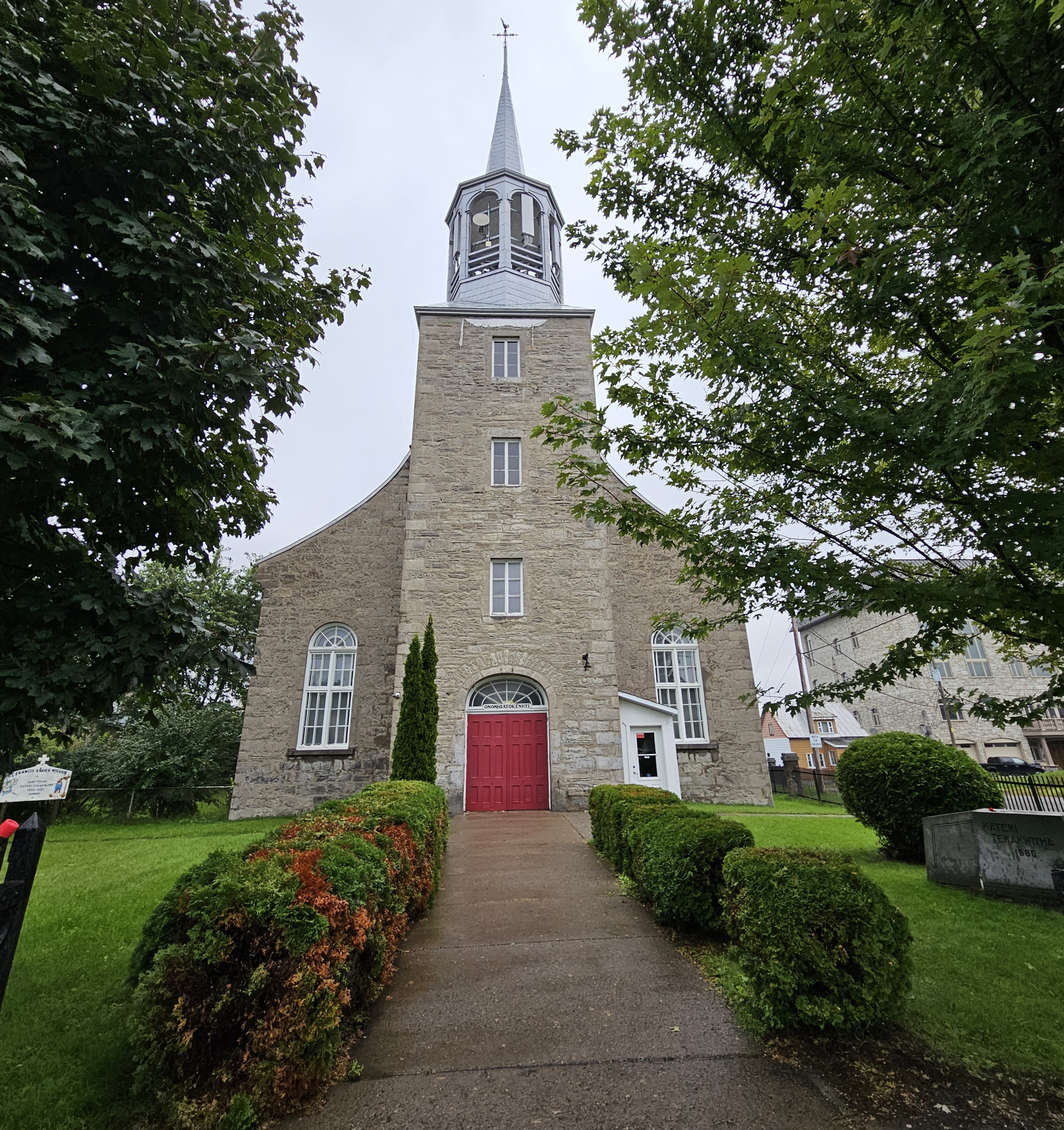
These photos are a little taste of the village. I will also share the one thing that really surprised me. The Mohawk in Kahnawake primarily speak English and Mohawk. Their street signs and stop signs are in those two languages. I thought the second language would be French. As I said, there is always something new to learn.
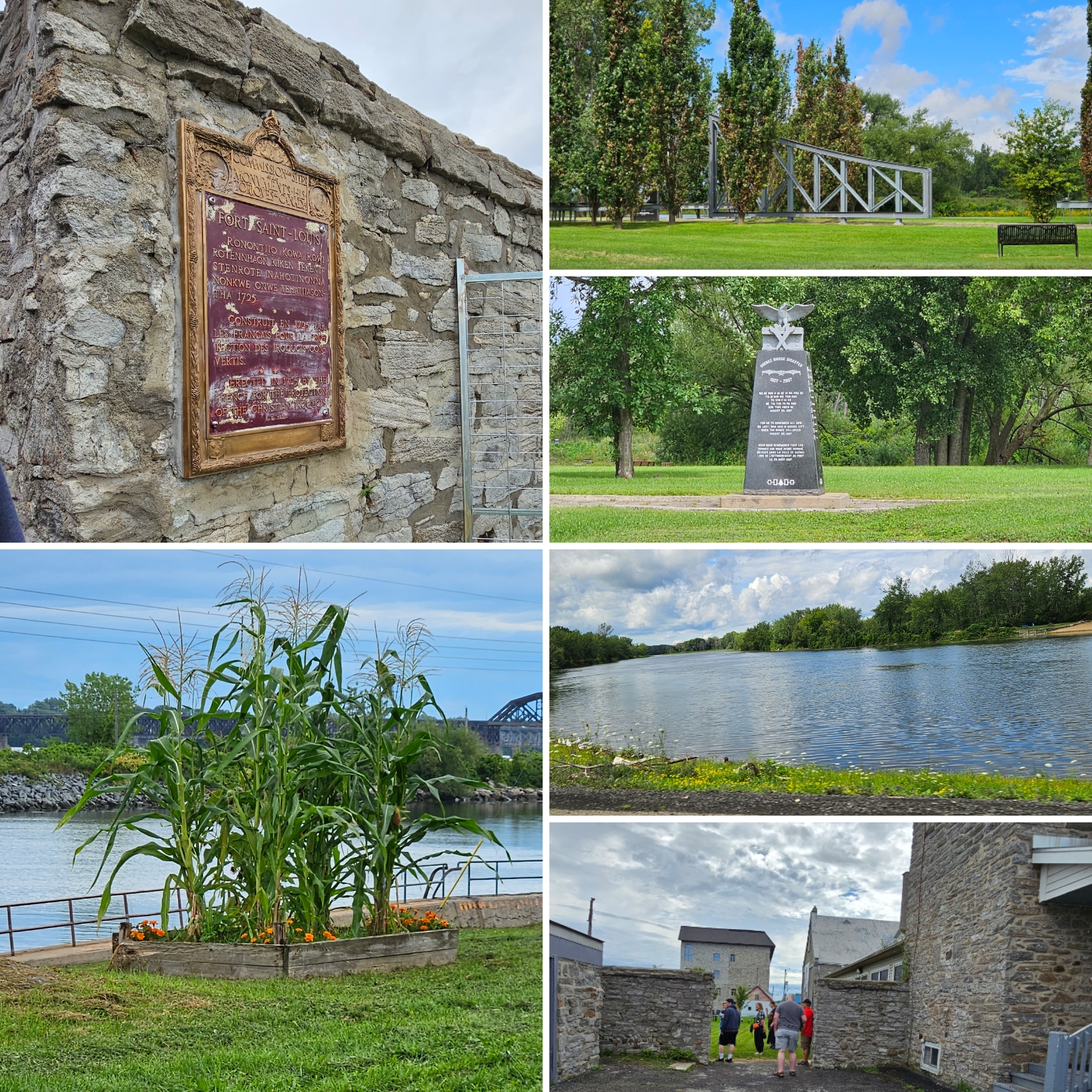
I just wanted to add one or two notes about the above photos:
The St. Francis Xavier Mission Church moved with the Mohawk. It moved four times,
I believe, before it settled permanently here and was built as a permanent structure in 1716. St. Kateri’s relics were moved here in 1973.
The Quebec Bridge Disaster killed 32 Mohawk ironworkers from Kahnawake. This left 25 widows and over fifty children fatherless. The compensation from the Canadian government was negligible. The Clan Mothers decided from then that so many members from one family could not work on such a dangerous job.
The Canadian government changed how the St. Lawrence River flowed, so it moved it away from Kahnawake and left the still St. Lawrence Seaway. The River was more profitable and was able to accommodate boats and fishermen as the Seaway was not. This is still an issue today.
The Three Sisters are known to the Haudenosaunee as the most important crops, sacred, and include corn, beans, and squash. They grow together in the same area and help each other thrive.

On the Coloring Sheets page, there is a new sheet for Indigenous Peoples’ Day which is today. Below I will explain what each square represents. I’m glad that we are beginning to acknowledge the people who were here long before the Europeans arrived and drastically changed things through their way of life, their diseases, their concepts of ownership, and of course, their biases, which for many remain today.
I am determined to remind myself and others that the land I live and work on once belonged to the world, and the Haudenosaunee (in my specific area) were the caretakers. They were willing to help the new settlers, and did. And I’m sure regretted it. The Europeans weren’t exactly grateful in the long run.
Wherever you live look at the names of the towns. Across this country (the US) and Canada you will find many towns and streets are named with Native American names. I like to look into some of those names and see what they mean in the various languages.
Continue readingAn inspiration and a reminder.
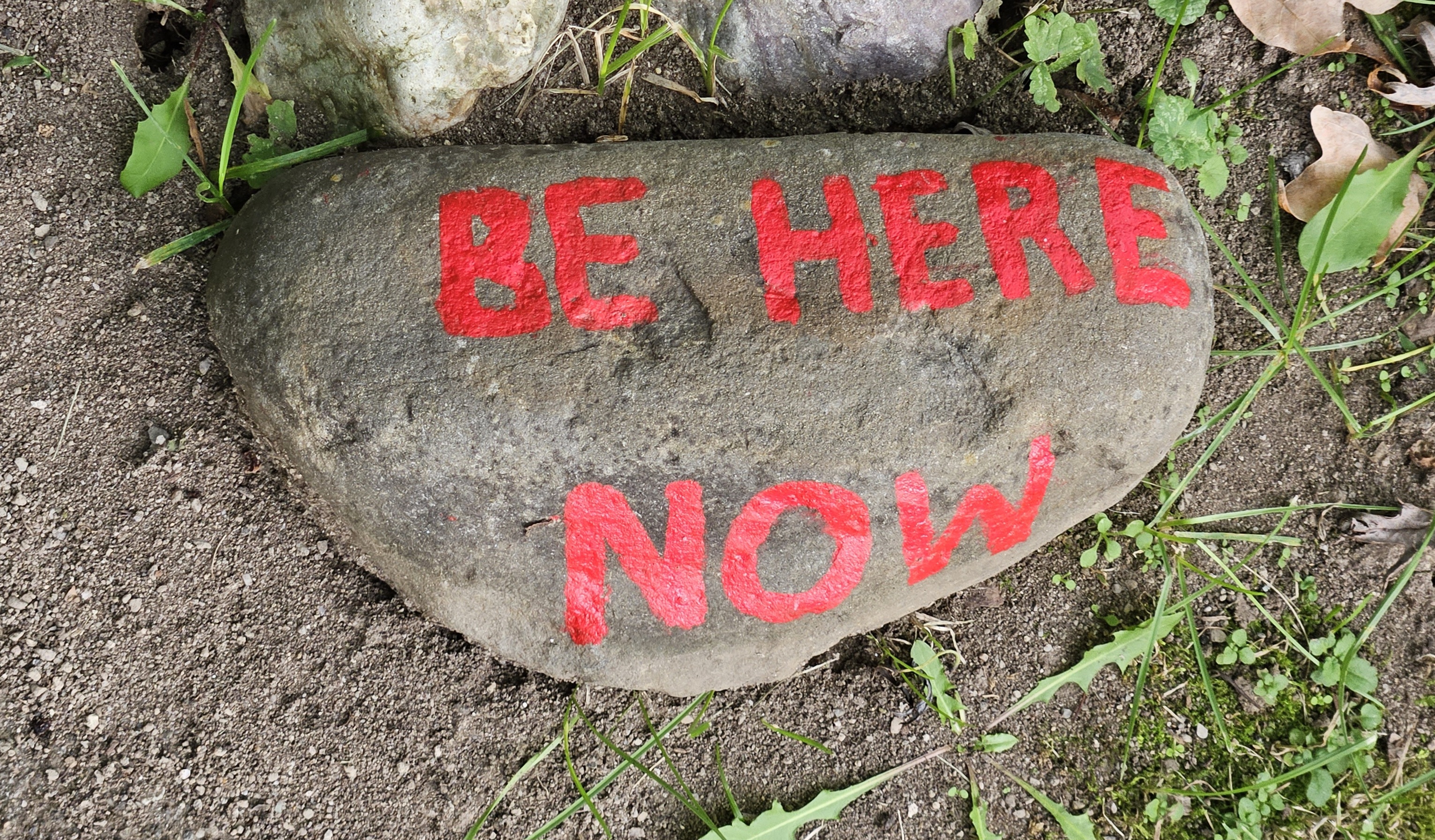
Looking forward is great. Remembering the good things from the past is also great.
But don’t forget that we’re here now.
We live in the now.

I don’t even know where to begin with this bullshit.
The weakest Speaker of the House in US history has been ousted and the Speaker’s position is vacant for the first time in the House of Representative’s 243 years of existence.
Good riddance.
Kevin McCarthy is nothing more than a sycophantic, lying, piece of garbage scraped off the bottom of my shoe. Partisan hack and chaos agent doesn’t begin to cover the contempt I have for this phony.
I haven’t even gotten into his smarmy, self-satisfied, failing up brand, and contemptuous face.
But you may say, tell me how you really feel.
And judging by his recent tantrum, Interim Speaker, Patrick McHenry isn’t much better.
Let me actually begin by answering the media’s pressing question: Why are Democrats to blame for this debacle?
Well…they’re not.
At all.
The Democrats have a speaker. The Minority Leader. His name is Hakeem Jeffries. They voted for him at the same time Republicans voted for Kevin McCarthy. For the Democrats, nothing has changed. They support their speaker 100%.
It is not their job to bail out his weak ass.
It is not their job to create a safe space for the Republicans to continue their attack on the American people by their reverse Robin Hood of taking from the least of us and giving to the wealthiest. This isn’t politics as usual.
Except that for the Republicans, it is.
I am currently reading Wounded Knee: Party Politics and the Road to an American Massacre by historian, Heather Cox Richardson. It is more than the journey taken by the United States government that led directly to the Wounded Knee massacre, but it is the politics of the day that led to.
The greed.
The corruption.
Basically, the Republican way of life.
I don’t say this lightly.
Prior to this book, I finished reading Hear That Lonesome Whistle Blow: The Epic Story of the Transcontinental Railroads by Dee Brown about the building of the transcontinental railroad from the Atlantic to the Pacific, and it is full of the double-dealing, cheating, corrupt railroad tycoons who did everything in their power to steal the land from the Native Americans while committing genocide along the way. (As an aside, Dee Brown also wrote the seminal work, Bury My Heart at Wounded Knee: An Indian History of the American West – I highly recommend it.)
The railroad tycoons did not manage to do this alone. They had help, a lot of help from the US government and the military, all Republican run.
But I diverge from the focus of this writing which for our purposes only touches on the railroads and the Native Americans tangentially to the Republicans’ lying and cheating to win any election.
As I read Cox Richardson’s detailed descriptions of how things went down in the 1890s and beyond, the Republican representatives did everything in their power during the Harrison Administration to retain control of the Congress and the Presidency. They bought off election workers. They kept the Black vote suppressed. They refused to consider Native American citizenship because for some reason, having been born here wasn’t enough to be a voting citizen. Not to mention they weren’t land-owning, a prerequisite for the ability to vote.
They CREATED four new states, and only Montana surprised them by electing a Democratic governor, but other than that, they, as well as Wyoming, North and South Dakota were Republican in every other way. These four NEW REPUBLICAN states received at least four Congressmen and EIGHT senators. This heavily weighted the Electoral College to almost guarantee a Republican victory in 1892.
Which was exactly the point.
Our biggest mistake as a country is letting land vote.
And this was the least duplicitous thing they did to gain votes and money for their personal coffers.
They continually suggested that the land on the Great Plains was great for farming. It wasn’t. And it still isn’t without irrigation which hadn’t been discovered yet as a viable alternative to natural rain. They falsified weather reports, giving the opposite information than the Farmer’s Almanac predicted.
Reading this history, I was becoming incensed. I needed to stop often after I read a paragraph and then highlighted some other Republican misdeed. I was having flash-forwards to modern times and seeing this exact scenario playing out today.
Just look at the last few days of the Speaker vote. One Republican motioned for the speaker to vacate. Eight Republicans voted against Kevin McCarthy. REPUBLICANS. When the interim speaker took over, a small man who thinks smaller, slammed his temporary gavel so hard, he missed the block he’s supposed to hit. His first act as Interim Speaker wasn’t to speak to Democrats, to try to unite the parties or even to unite his own split, petty party, he used that first act to evict Speaker Emerita Pelosi and former Majority Leader Steny Hoyer out of their Capitol offices. Speaker Pelosi wasn’t even in Washington, D.C. She was attending her friend Dianne Feinstein’s funeral in California. Fortunately, her staff had help from Leader Jeffries’ staff to move her office. That’s all you need to know about the parties.
You may not agree with Democratic party policies, but most of the country does. And regardless of even that, when the Democrats are in power, they spend their time trying to make things better for ALL Americans. They’re not out there sabotaging each other and the rest of the country. They’re not holding the debt ceiling and the paychecks of the military hostage. They are working for the people. Always.
What have the Republicans gotten done for the American people?
Nothing.
They’re too busy whining, creating havoc, name-calling, lying, suppressing the vote and everything possible to stay in power.
But when they’re in power, what do they do?
Nothing.
Look back on the last few Republican Administrations. They screw us up so badly and put us deeper into debt, we elect a Democrat who fixes the mess, and then we get collective amnesia.
Remember this on Election Day.
Remember this on every Election Day.
Remember.
Today is the first Monday in October, and that means that Suicide Prevention Awareness month has come to its conclusion. Now that you won’t be inundated with reminders every few tweets or threads to check on your friends, to drink your water, to breathe, it may seem as though you’ve been abandoned at the seashore with friends and neighbors waving you off.
This is not what it is, though.
Without the constant social media buzz, it is still important to remain aware of your mental health. Continue seeing your mental health professionals. Notice if the things you like to do become less fun or you dread starting projects. If you journal, continue writing. If you doodle, continue drawing. If you pray and/or meditate, keep up that practice.
Randomly mark a day on your calendar to see how you’re doing; is your coping toolbox ready for your needs?
Take a mental health inventory on yourself once a week or more if it helps you feel centered.
Check yourself, and check your friends.
The awareness month may have ended, but the awareness doesn’t.
You are not alone.
We are all in this together.
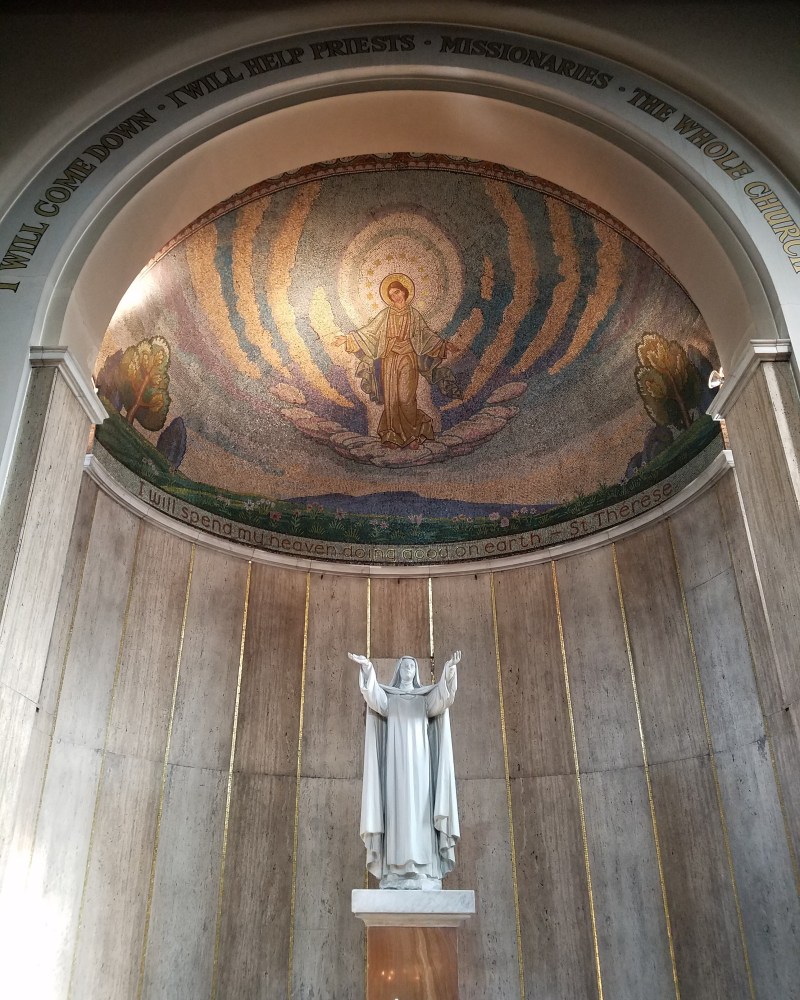
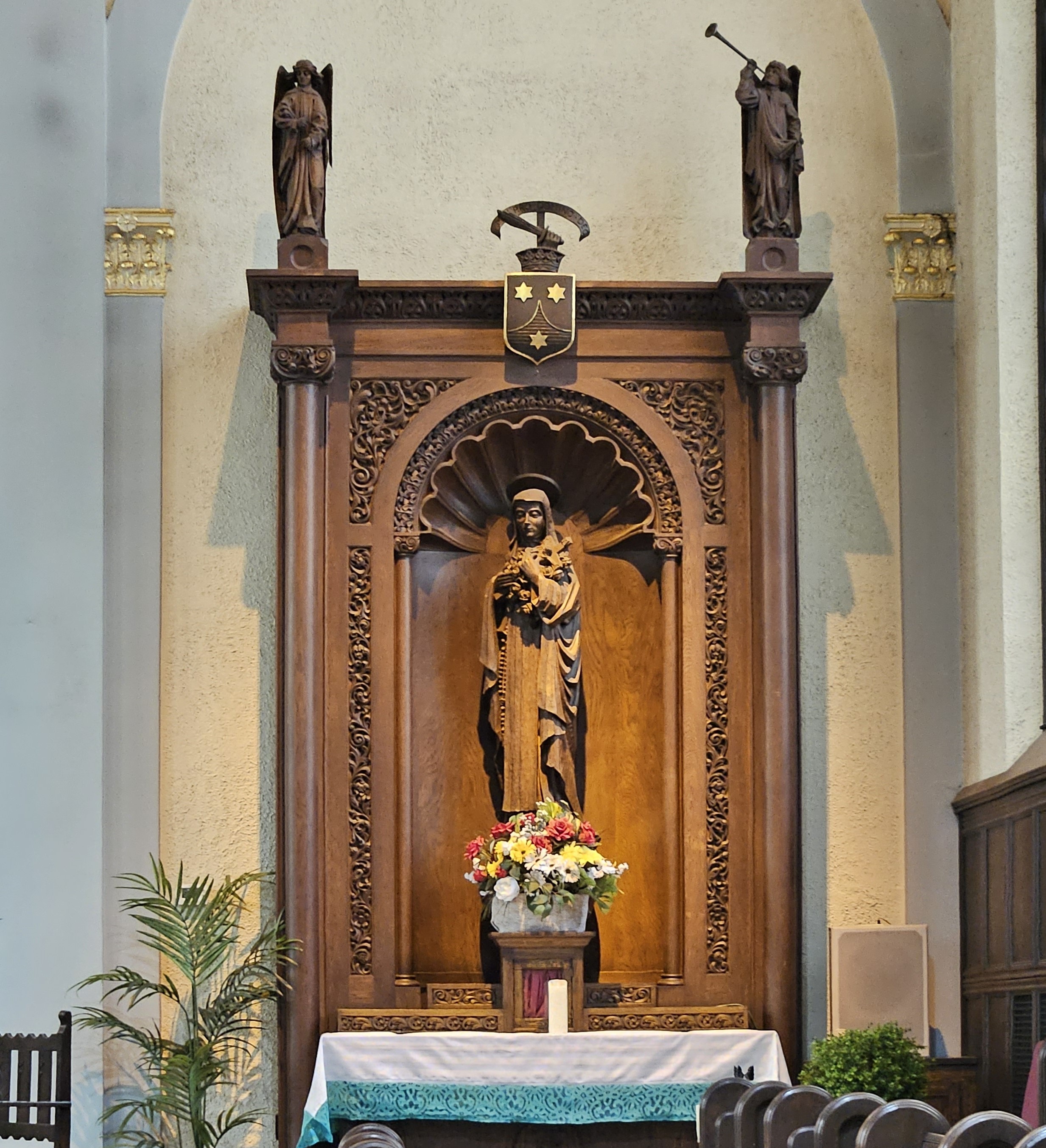
Next weekend marks the second anniversary of the death of my priest. In some ways it feels like yesterday and in others it feels like decades since he’s gone. I don’t know if it’s been a disadvantage or an advantage coming into the church so late in life that I’ve only had one priest up until recently. He was a guiding force in my welcome and acceptance in the parish and the Catholic faith, borne from his being Christ in the world through love, care, and guidance.
This weekend holds two saints’ feast days that I strongly relate to Father Jerry. Yesterday marked Saint Jerome’s feast and today is Saint Therese of Lisieux. Jerome was Father’s given name, so there is the obvious connection, and he held a strong devotion to St. Therese, also known as the little flower. When we visited Northern Ireland for the burial of my mother-in-law’s ashes, we stopped in Dublin, where I had the fortune to visit and pray at a shrine of St. Therese. I brought home a postcard for him, knowing that he was devoted to her. At the time, I hadn’t known that she has a much closer shrine, northwest of here in Niagara Falls, Ontario, just over the border. From that shrine at the Monastery of Mount Carmel, the roaring Falls could be heard and if you could get high enough even see the Horseshoe Falls.
The Monastery of Mount Carmel has two shrines; one inside the chapel where I attended mass, and one outside. The outside one was at the end of a path guided by plaques with many of the things that St. Therese is known for having said, culminating in a round clearing bordered by flowers, several park benches and centered with a statue of St. Therese in white marble, holding a cross and an armful of roses.
Those plaques are shared below. I hope they can be read on their own, or prayed with as you like.
Take some inspiration from her words and life.
Continue reading Griffins and Ginger Snaps