Native American Heritage Month – Beginnings & Endings

Standard

The photo below represents both the start and the end of the day.

Beginning with the end, I have slept with a Dream Catcher for most of my life. I notice a change in my sleep when I don’t sleep with one. It creates a calm and peaceful rest as it catches the bad and lets the good continue through. This particular dream catcher is one I got in Niagara Falls, Canada. I was drawn to the colors of the beads that represent the four directions as well as the uniqueness of the center stone.

The booklet is something that I was more recently introduced to through Mohawk Elder Tom Porter of the Kanatsiohareke Community in New York. Since then, I’ve seen it in other Haudenosaunee writings and readings. It is called the Thanksgiving Address, but it has nothing to do with the Thanksgiving holiday, but in giving thanks for all that is around us in the natural world, all that we have, all that we see. It is said at the beginning of all important gatherings, ceremonial and/or governmental. The Haudenosaunee call them the Words Before All Else.

I recently used a form of this address for a meditation that I was tasked to share, and it was very well received. I read mine, but most are recited and because of that they are often never the same twice since the words change with the speaker and the timing of the gathering.

As I said at my own (non-Native) gathering, as a shared meditation, I acknowledged the land we were standing on (Mohawk), and reaffirmed that I am a non-Mohawk, non-Native, sharing their wise words.

All Saints Day

Standard

I’ve written before about the saints in my spiritual life. The photo below shows the three I considered for my confirmation saint (next Easter it will be ten years!): Joan of Arc, Kateri Tekakwitha, and Elen of Caernarfon as well as a fourth devotion, Mary, Untier of Knots. I had hoped to have a new prayer for the St. Elen card I sketched, but it wasn’t ready for today. I hope to share it in the next week.

Who are the saints you ask to intercede for you in prayer?

(c)2023

Terry and Darlene Wildman and Rain Song

Standard
From their website.
(c)2023

I’ve mentioned earlier in the year about a retreat I went on in June, which had stayed with me for weeks, and now, for many months. It still reverberates in me. I was privileged to be in attendance as it was guided by Terry and Darlene Wildman. Terry and Darlene are known for their music, which ironically, I did not know until they arrived and began playing and singing.

The retreat was primarily centered around the First Nations Version of the New Testament, and the weekend was filled with music, Scripture, prayer, Native American spirituality and ceremony, and really good, deep conversation.

When I awoke on the first morning, I knew that there was something special about this weekend retreat. I was awake early; not drowsy, and ready to start my day. I was reinvigorated. This is very unusual for me. While I’m very comfortable at this retreat house, I can never quiet my mind down enough to sleep at a reasonable time. On this weekend, this retreat gave me the exact opposite experience. I went to sleep every night before midnight (sometimes long before) and woke up refreshed at around seven in the morning, without an alarm, and with the sunrise shining out of my window.

The evening before and again on that first morning, we went into the warm courtyard where a sacred fire was burning. Darlene held an abalone shell with burning sage, smoke rising, guided by a large feather. We prayed in the seven directions, and then each of us had the opportunity to purify ourselves with the smoke, using our hands to bring it in, while the feather helped the smoke. I think we also had the opportunity to add a pinch of tobacco to the fire.

This table held the sacred plants for smudging and purifying: braided sweetgrass, sage, cedar, and tobacco as well as a large feather, traditionally an eagle feather along with an abalone shell to hold the smoking sage.
(c)2023

It was a very profound experience, and it enhanced the rest of the prayers that we each would do that day. I found it very natural and complementary to my own rituals. It was a wonderful experience.

In the months since, I’ve immersed myself in local Native American history. I haven’t changed my religion or coopted anyone else’s, but I have found a place in my daily readings for the First Nations version. I read from this Bible every day in June and continue to do so during my weekly prayer time. While I was on vacation, I recorded the daily readings in my notebook, and took photos of those pages to bring with me for my daily prayers.

I spent time with other experiences of Native American spirituality and storytelling, reading a book by Mohawk Elder Tom Porter, and completing a historical account of Wounded Knee. I’ve also spent time in the museum at the St. Kateri Shrine in Fonda, examining the Caughnawaga archaeological site, and touring the Mohawk village of Kahnawake in Quebec. Next year, I plan on attending the Strawberry Festival in Kanatsiohareke, just west of Fonda, New York.

All of this was a direct result of that holy weekend.

I’ve spent weeks listening to the music of RainSong, the music of Terry and Darlene whenever I get into the car. I sing along and it brings me back to that weekend and the feelings of being closer to G-d, and of being uplifted spiritually. My favorite CD so far is Hoop of Life, which has many of the songs that Terry and Darlene shared with us on our weekend.

Use the links throughout this post to meet Terry and Darlene and find your own way to their wonderful sounds.

Indigenous Peoples’ Day

Standard

On the Coloring Sheets page, there is a new sheet for Indigenous Peoples’ Day which is today. Below I will explain what each square represents. I’m glad that we are beginning to acknowledge the people who were here long before the Europeans arrived and drastically changed things through their way of life, their diseases, their concepts of ownership, and of course, their biases, which for many remain today.

I am determined to remind myself and others that the land I live and work on once belonged to the world, and the Haudenosaunee (in my specific area) were the caretakers. They were willing to help the new settlers, and did. And I’m sure regretted it. The Europeans weren’t exactly grateful in the long run.

Wherever you live look at the names of the towns. Across this country (the US) and Canada you will find many towns and streets are named with Native American names. I like to look into some of those names and see what they mean in the various languages.

Continue reading

Feast Day of St. Jerome (of Stridon)

Standard

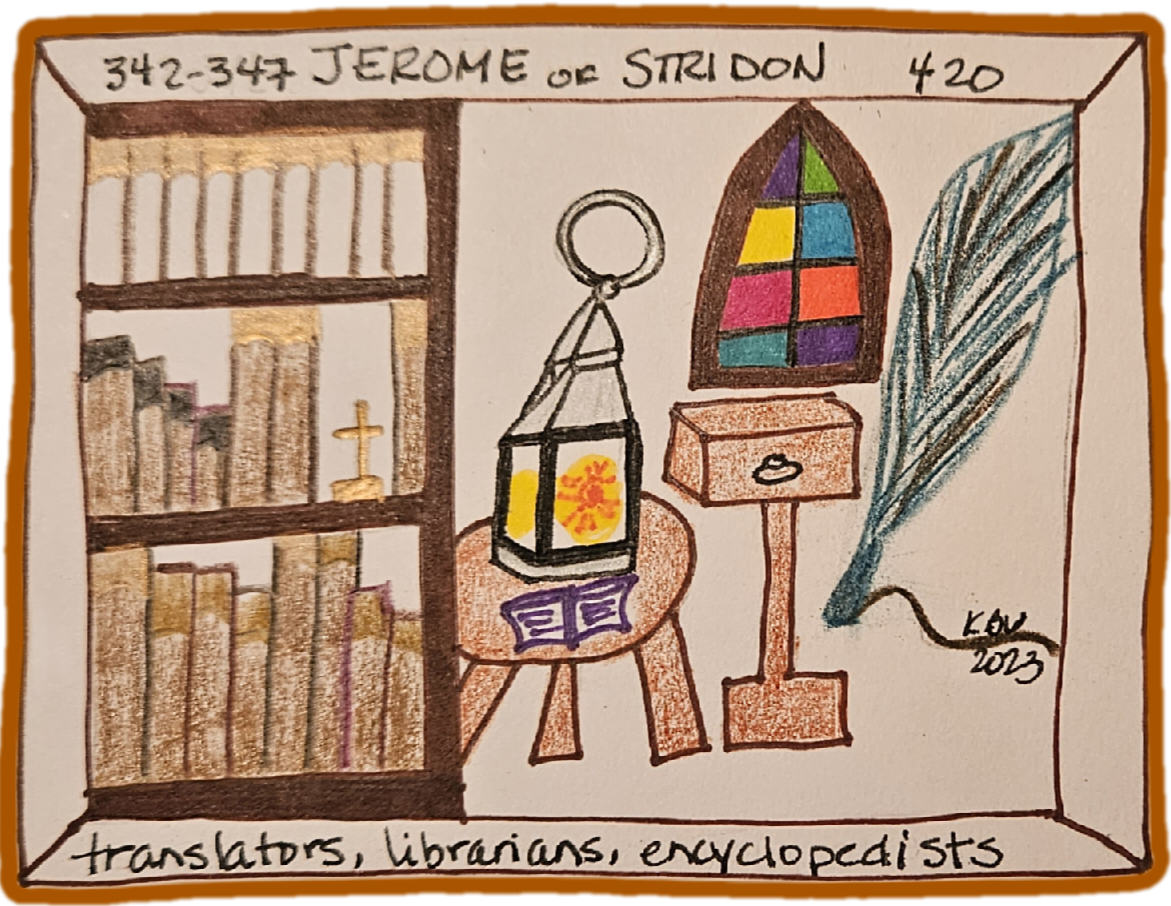
St. Jerome was known for his writing. He translated the Hebrew Scriptures from Hebrew to Latin, which was unusual at the time since most people translated it from a controversial text called the Septuagint, also called The Greek Old Testament. He is the second most prolific writer of in ancient Latin Christianity. The first is Augustine of Hippo, who actually had no problem with the original Septuagint.

As a result, perhaps, he is the patron of translators, librarians, and encyclopedists as well as archaeologists, students, Biblical Scholars, and against anger, the latter of which I believe stems from his widely known bad temper.

As a student in Rome, he indulged his hedonistic side, but also attended the catacombs of Rome to visit the martyrs and Apostles there. There were early inscriptions and wall art that I imagine he studied, although he referred to the place as giving the feeling of the terrors of hell.

To put it simply, Jerome was a person of contradictions, some of which can be sourced as his being a student, a constant learner, and a voracious reader and writer. He had a group of women who surrounded him that read his scholarly works, and several were turned towards a life of consecrated virginity and the ascetic monastic life. This had a negative impact on these wealthy women’s donations, and he became at odds with the Roman clergy.

He is considered a saint in the Catholic Church (and a Doctor of the Church there), Eastern Orthodox, Lutheran, and Anglican.

His iconography is often depicted in libraries and/or scriptoriums surrounded by books, parchment, vellum, and writing implements. He sits at a desk, holding a quill. He is also depicted with a lion having apocryphally removed a thorn from one’s paw.

In my sketch below, I have chosen to leave the lion and the saint outside the view as we look into his small cell of scholarly works.

Providence

Standard

Fate. Coincidence. Providence.

Are they real? Really real?

Thinking about them happening, they might be far off and existential and not as real as touch, but when they happen –

BOOM!

The slight increase in heartbeat, a hitch in breath, the exhilaration of being aware as something remarkable happens right in front of you.

I’ve been aware of the spiritual, the extra-natural, and they are few and far between. Sometimes they travel to my consciousness after the fact, but when they happen within the moment, in the context, they become something special, something extraordinary, something to be held close for all time, and beyond time.

I had two times this week that something like that occurred.

Fate?

Coincidence?

Providence. All the above.

Several months ago, my memoir teacher recommended a book to me – one of many – The Cartographers. I presumed it was about maps or map-making, and I wasn’t able to find it in the library app on my Kindle. In the meantime, I read a bunch of other books. On Monday, I decided it was time to try again, so I checked the library app, and there it was: The Cartographers. I checked it out and began to read. Even in the pre-table of contents pages, I wasn’t sure about it – there was a warning of suicidal ideation and self-harm and to take care reading it. I burrowed on.

The main gist is a high school graduate who is lying to her mother about going to college; she lives in NYC with two roommates, meets an odd boy and just shows us her life and gives us some insight and lessons along the way. This did not seem like a book my memoir teacher would be drawn to, but I was definitely drawn to it. I couldn’t believe how much the main character, Ocean, resonated with me in very familiar and emotional ways, sometimes painful. I really related to her, the existential crisis that was continually her personality – I feel that in my bones. As Queen sings, “Is this the real life; is this just fantasy?” Or a simulation on some alien being’s computer. As Ocean asks, “Are you dead too?” I don’t feel that despondency, but it’s a good question.

Are the fate moments real and everything else is fluff? Or the opposite: all the misery and doldrums are real, and the fate moments are the fluff – the golden fleece, the silver lining, the gold at the end of the rainbow.

About halfway through the book, I suggested to my daughter that she would really like this book. She’s seventeen, and it seemed like her kind of style and subject that she might enjoy. She told me to text her. I searched for the book on Amazon to give her the link, so she’d know the title and the author, and I told her to borrow it from the library. It popped up on Amazon: The Cartographers by Peng Shepherd, but the cover seemed different. I thought it was the difference between hardcover and softcover editions, and then I realized that I was reading The Cartographers by Amy Zhang.

Not the same book at all.

My teacher had recommended a book about maps and murder and mystery – all in my wheelhouse, and I was reading a book about teen angst and friendship (and loving it by the way), and I suddenly realized that I was reading the wrong book.

Although was it really the wrong book?

It was the perfect book for me, at this moment in time.

Is that fate?

I don’t know, but it was perfect.

Then today. This morning, I had time to attend mass. The homily was about the poor. Blessed are the poor. But not just bless them but look at them. See them. We all come to the poor and houseless with preconceived notions and judgments; even me. Some of the things my priest said resonated with me, and tears welled in my eyes – I felt seen. I wasn’t, and haven’t been at a poverty level, but I understand not being able to move up, not being able to break even, being embarrassed and isolated. I was seen, but that’s not why I’m writing this.

While my priest was talking about seeing the poor and understanding how difficult it was for the poor to rise from their circumstances, I was wishing that a friend of mine could have been there to hear this homily. This friend is a good and decent person. They do so much for so many without asking for anything in return; it is just in their nature to give more; to volunteer; to be Christ in the world. I’ve witnessed that and have been the beneficiary of that. But I’ve heard them talk about people helping themselves and wanting to do more to get people back on their feet, and I wished they were there in the church this morning, listening to this homily that I thought was something they should hear.

The mass goes on, we say the Our Father, and offer peace. I turned to acknowledge the parishioners behind me with a hand wave of peace, and there they were – the one person I wanted to be there listening to the homily – they were there in the pew a few feet behind me listening to the homily.

I smiled.

I was pleased with how the world works.

And I guess that’s how the world works: being where you’re supposed to be when you’re supposed to be there.

Providence, maybe.


The Cartographers by Amy Zhang

The Cartographer by Peng Shepherd

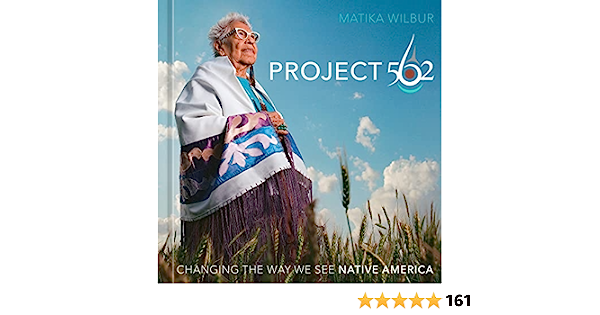
Book Rec (And a Bit More): Project 562: Changing the Way We See Native America by Matika Wilbur

Standard

I’ve been really immersed in Native American spirituality and history. I have always been intrigued and felt kinship with Native American/First Nation people, being drawn to their stories, their history, and their lives since I was a child. It’s been something that has ebbed and flowed throughout my life, even with the insensitive and appropriated costumes of my childhood. I know better now, and I hope that in my past teaching in early childhood, I’ve lessened some of those stereotypical ideas as those children grow up and remember their experiences of the culture as best offered by an outsider and non-Native person.

I’ve recently mentioned attending a weekend retreat with Terry and Darlene Wildman and learning about the First Nations Version of the New Testament. It was enlightening and eye-opening, and I enjoyed the ceremonies we were invited to participate in. I’ve been a visitor and participant at the nearby St. Kateri Shrine when they’ve had those ceremonies open to the public.

I spent all of June reading the Daily Readings from the FNV New Testament; it really highlighted the beauty of Native American storytelling, and I felt that I was hearing some of these Scriptures for the first time and in a completely new way.

Which brings me to the most recent book that I’ve been reading: Project 562: Changing the Way We See Native America by Matika Wilbur. I must say that I started the book in a naive headspace. I was looking forward to her interviews with modern Native people across Turtle Island (North America), hearing about how they keep their culture and religious rituals alive, and while I’m aware (more than the average person) of the history of the US’s forced removal, forced assimilation, and truly what can only be called genocide of the Native Americans, I was still surprised by so many things in this book that took  me by surprise.

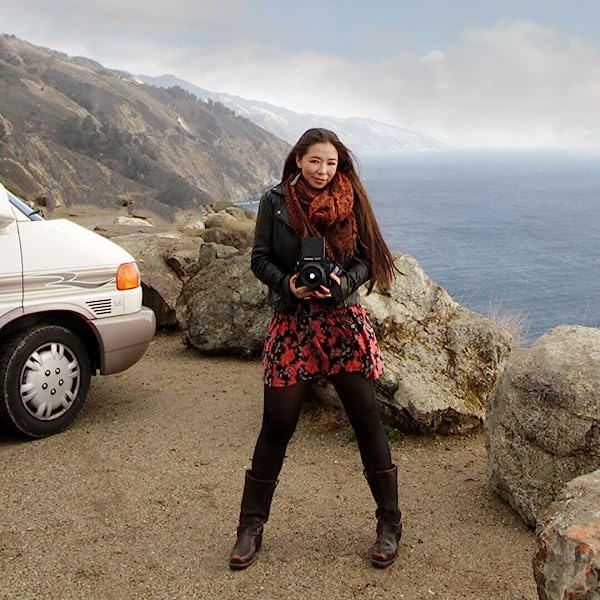
Author/Photographer, Matika Wilbur.
Continue reading

Travel – National Shrine of the North American Martyrs, Auriesville, NY and St. Kateri Tekakwitha, National Shrine & Historic Site, Fonda, NY

Standard

I hadn’t intended for this series on travel to wholly encompass shrines, but I was asked yesterday about visiting these two later in the summer and thought it would be a good opportunity to share their information with you.

The sites are spiritually connected by both St. Kateri Tekakwitha and the Jesuits. The site in Auriesville has a coliseum, one of the first circular churches built in the US. It holds about 6000 people. Across their 600 acres of land is a museum, one or two chapels, a grotto dedicated to Our Lady of Fatima, and Theresa’s Rosary, a rosary made of rocks embedded in the ground. I have walked and prayed this rosary on one of my visits.

There is also the ravine where Rene Goupil’s body was found. In visiting there, I found it very spiritual and a place of holiness. The way to the ravine is quite steep. On the way there are several statues and grottos to pray at as well as signs that tell the story of the Martyrs.

Prior to his martyrdom, Isaac Jogues had been held in captivity and tortured by the Mohawk (a different group) for over a year. With help he escaped in New Netherland or Albany, NY. He returned to France, where he visited his mother in Orleans (where Joan of Arc led France’s army 219 years before) and was considered a “living martyr” by Pope Urban VIII, but soon again returned to this area, longing for and meeting his martyrdom in what is now Auriesville. It had been the Mohawk village of Ossernenon. He, Jean de Lalande, and Rene Goupil were tortured and killed here. Jogues weighted Goupil’s body and placed it in the water of the ravine in order to return and bury him properly. He did return, but he was gone. He later found some of his body parts, and reverently buried them. I’ve heard others say that the ravine itself is a reliquary. As I said, the spirituality felt here is palpable.

At this same village, ten years after their deaths, Kateri Tekakwitha was born. She became ill with smallpox and both of her parents died. She was scarred, and it was difficult for her to see, needing to put her hands out and feel her way. Her name Tekakwitha translates into she who bumps into things. Her mother had been baptized Catholic and educated by the e missionaries. Her village moved from Ossernenon across the Mohawk River and rebuilt their village, named Caughnawaga, which means place of the rapids. She was bullied for practicing her Catholic faith. She refused to be married, and that did not make her popular within her adoptive family and aunts. She also practiced mortification, praying for the conversion of her family and for forgiveness.

Her name Kateri is for her baptismal name of Catherine, which she received after her baptism at the age of 19. It took me several years, but I was able to walk to the spring (it’s a bit of a steep incline) from the village footprint that archeologists uncovered. Her Native people still felt that the Catholic religious rituals and items were sorcery and opposed her conversion. At some point after her conversion, she was helped to leave and went north to the new Mohawk village where other Native converts had gone. This village was also named Kahnawake (this is the Mohawk spelling), just south of Montreal. She died in 1680.

When I visited her empty tomb (where she was first laid to rest until her relics were removed to the St. Francis Xavier Mission Church on the Mohawk land), the sound of the rushing water nearby was nearly deafening. I have had so many spiritual experiences in visiting the sites of Kateri and her people that it only makes me more in awe of the Holy Spirit.

For those who are not religious, but want to visit a pastoral, serene, place of comfort, both shrines offer that in the beautiful Mohawk valley. The sights and sounds are lovely, and it is easy to get lost in your own thoughts. Of course, that’s until the train comes roaring by, but that is in its own way an affirmation of the space we are in.


National Shrine of the North American Martyrs
Auriesville, NY

Open May 1 – October 19, 2023
Hours:
Grounds: Open daily 9-7
Museum: Open daily 11-3:30
Gift Shop/Visitor Center: Open daily 10-3
There is no fee for admission or parking.
If you are interested in attending mass or other events, visit their website.

National Shrine of the North American Martyrs.
(c)2023

St Kateri Tekakwitha, National Shrine & Historic Site
Fonda, NY

Summer Season: May 1st to October 31st
Hours:
Grounds are open sunrise to sunset daily.
Saint Peter’s Chapel and Native American Museum open daily, 9-5
Gift shop open: Sat, 10-6, Sun – Wed, 9-5, Thurs – Fri, 10-4
Office open daily 9-4
Candle Chapel, Caughnawaga Village Site, Kateri Spring and grotto, outdoor sanctuary, and hiking trails are open sunrise to sunset year-round.
If you are interested in attending mass (scroll down at the link) or other events, visit their website.

St. Kateri Tekakwitha statue with a sign of her last words:
Jesus, I love you!
(c)2023

July. Inspire.

Standard

“If you have a garden and a library, you have everything you need.”

Marcus Tullius Cicero

My view on July is that it’s too hot. It’s barely the first week, and it is already too hot. When will fall be here? However, we still need to get through July (and the rest of the months) as we do all the other days. Be in the present. At least, try to be. The photos I’ve shared on bright, colorful, and motivating. Especially the books. The books are my intentions for July: spiritual journaling (and other writing), continuing to read the daily Scriptures in the voice of the Indigenous Peoples of this land (Turtle Island), and participate in a four week personal retreat with the four female Doctors of the Church: Therese of Lisieux, Teresa of Avila, Catherine of Siena, Hildegard of Bingen. Each has a special meaning for me that I hope to share in the next four weeks as I go through the book.

What are your plans for July?

What inspired you this week?

What is making you determined?


My new spiritual journal. PS I found the lost one. 😦
(c)2023
“Library”
(c)2023
Lilacs.
“Garden”
(c)2023
Flowers.
“Garden”
(c)2023
Pineapple Star.
(c)2023

Travel – Marian Shrine, Stony Point, NY

Standard

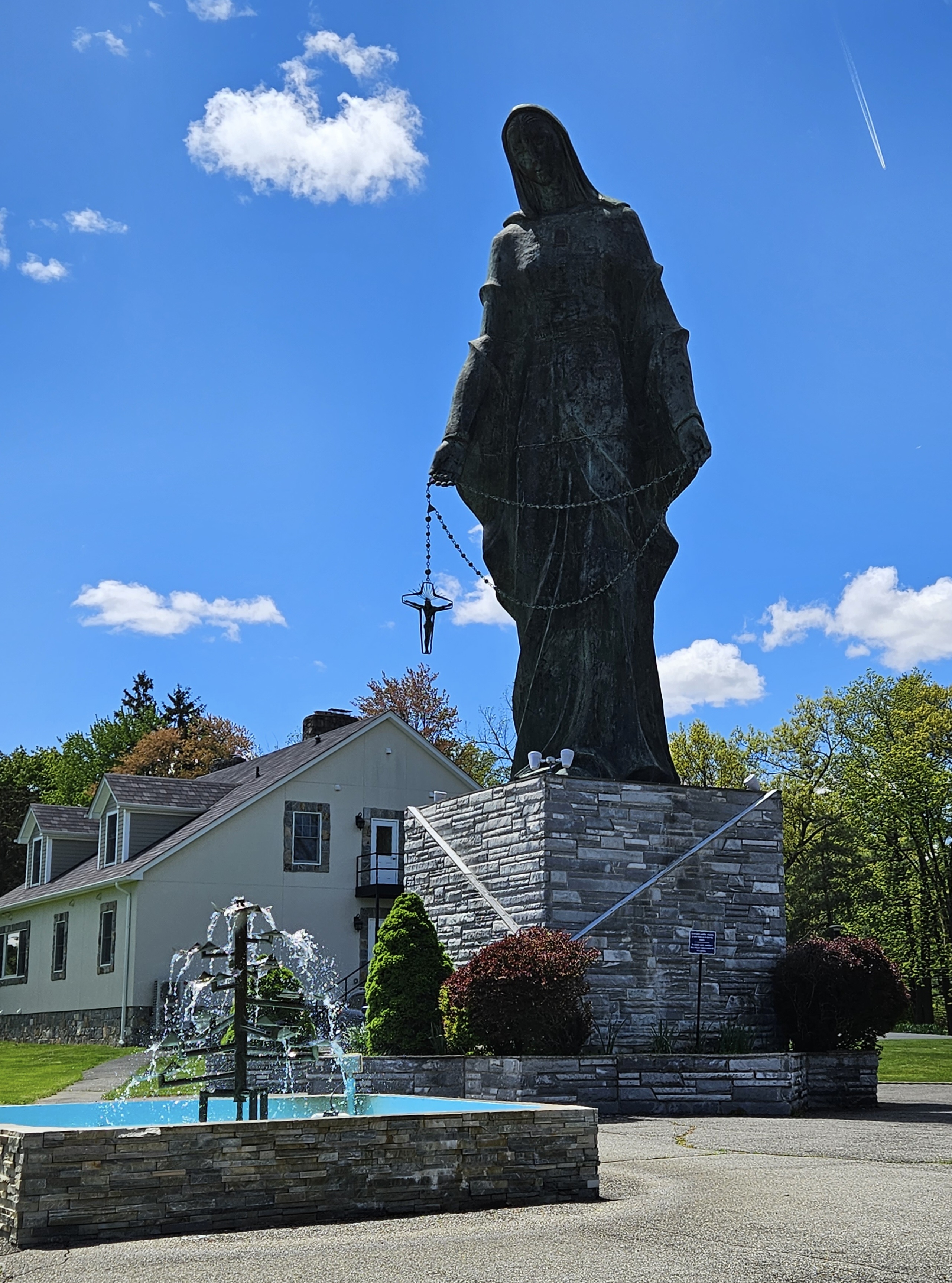
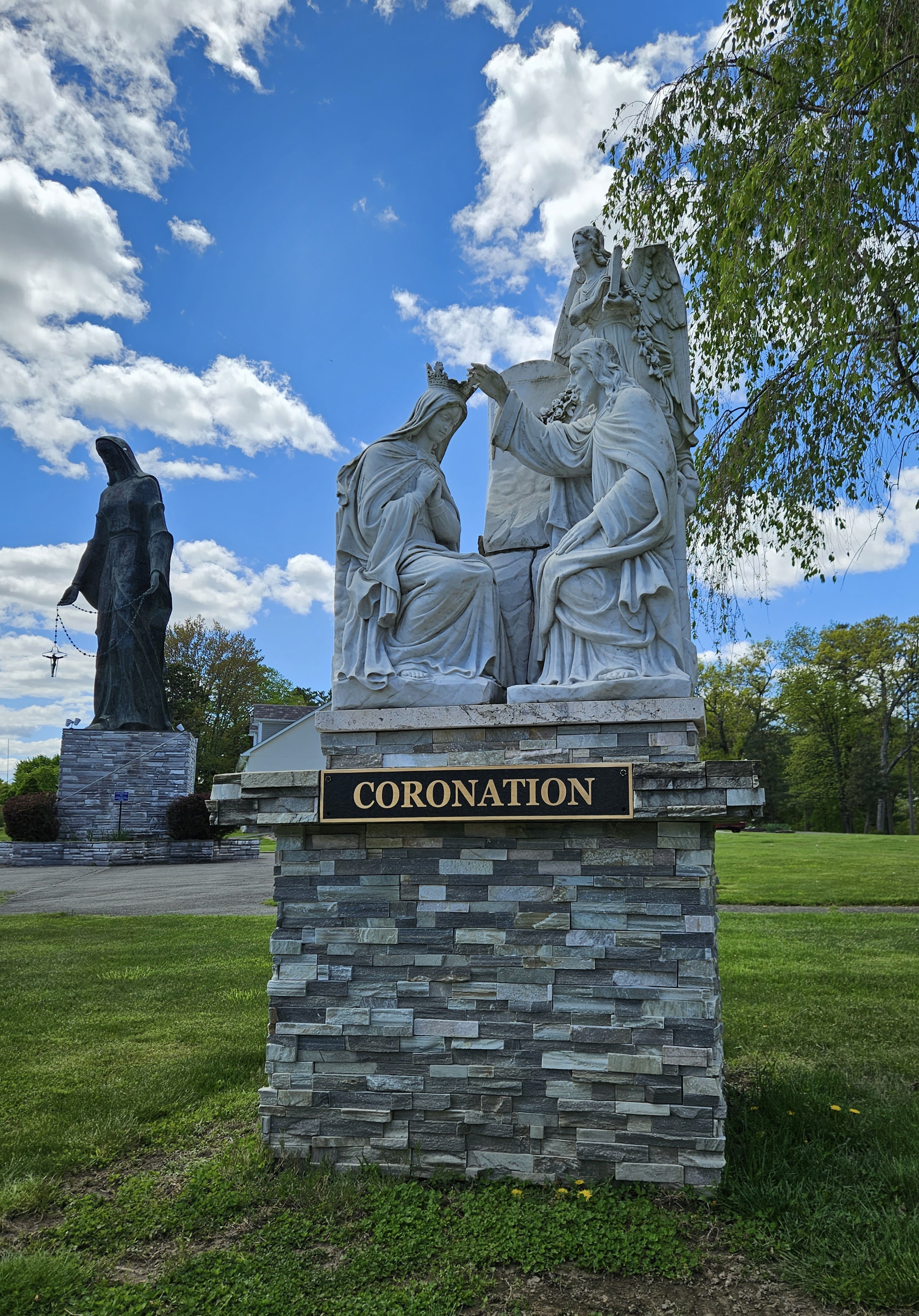
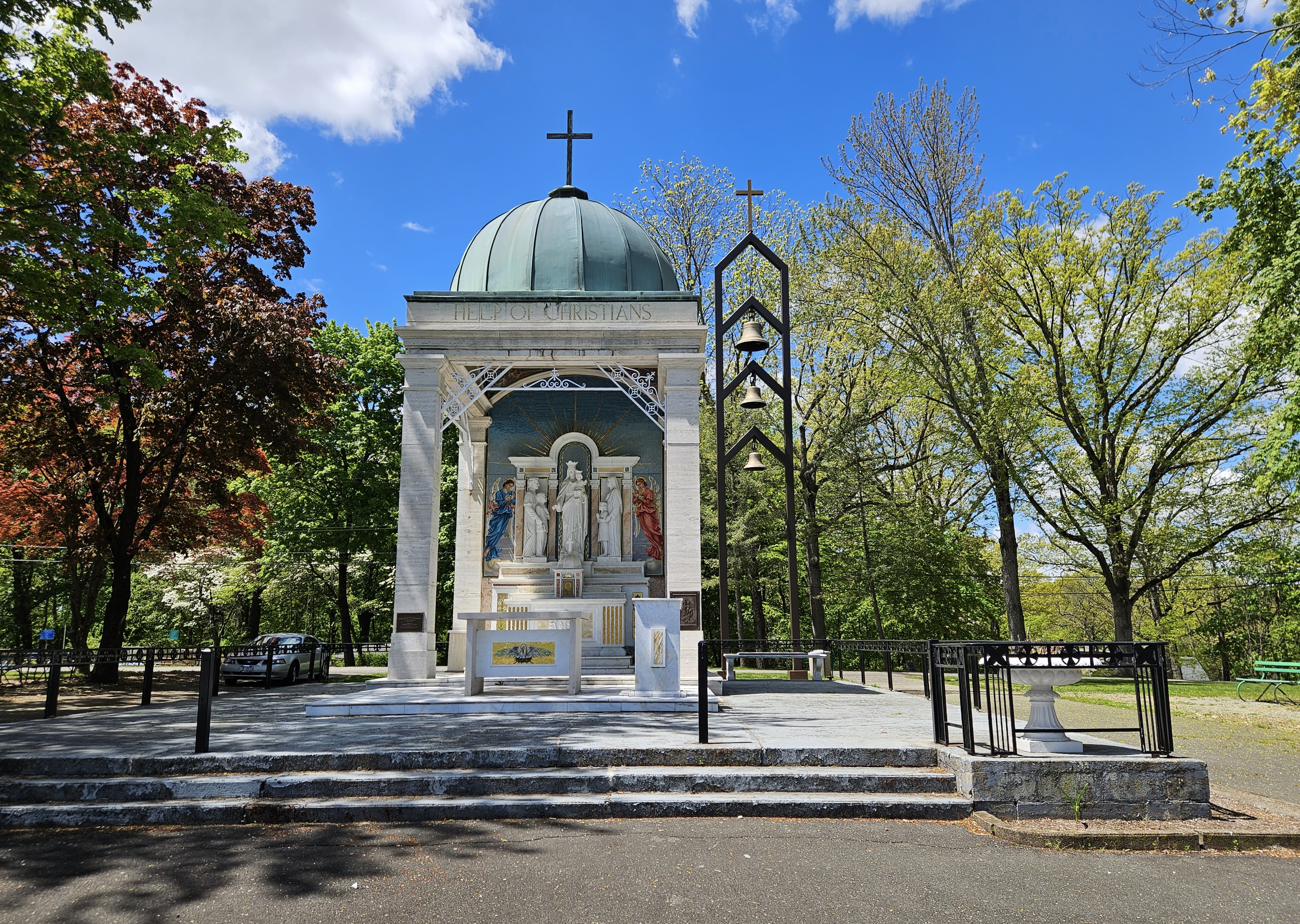
I had the privilege of visiting the Marian Shrine in Stony Point, New York, administered by the Salesians of Don Bosco recently, and I couldn’t spend nearly as much time as I had wanted to. As you can see from the photos of that day, the sky was a perfect shade of blue with fluffy white clouds floating. The green grass and leaves were a remarkable shade for early spring, and the cool breeze really made the spirituality tangible and profound.

(c)2023
(c)2023

Driving up the lane and seeing the statue of Mary of the Rosary as if rising from the ground made my jaw drop to the floor. The immensity of the statue (48 feet and 6 1/2 tons) is something I have never seen before. It was huge, but besides its size, there was a feeling of strength resonating from Mary, and once we parked, I just stood in awe and gratitude that I had made the decision to stop on our way to visit with family.

Our Lady of the Rosary, or the Rosary Madonna has been here since 1977. It was created in Italy in 1959 and blessed by Pope Saint John XXIII. From the star-shaped base and surrounding benches is a mesmerizing fountain and beyond this is the Rosary Way, constructed in 1954, during the Marian Year. The rosary way follows a shamrock shaped path through a wooded space. In addition to the mysteries of the rosary, there are also statues depicting the Stations of the Cross on the grounds.

(c)2023

Because of our family visit, I had very little time to explore, so I began with sitting on the benches surrounding Mary and said the Hail Mary. I listened to (and recorded for a short time) the sound of the fountain. The peace was contagious. I slowed my breathing for fear that a normal exhalation would be too loud for this gentle, serene place.

(c)2023

I moved on from there to the statue of St. Francis and his prayer, which is one of my favorite ones, touching on nature and Creation. It lends itself to so many other spiritual experiences. There are several other statues (St. Michael, St. John Bosco, St. Padre Pio, St. Joseph, St. Maria Goretti, and the aforementioned St. Francis of Assisi), and devotional areas, gardens, and grottos outside as well as a wooded path that helps to center the spirit for prayer. There is also an indoor chapel. See below for times for services.

(c)2023

Stopping briefly at the Outdoor Altar (with seating for 1000) and a quick visit to the gift shop where my family picked me up, and I wanted more time. The photos do not do this place justice at all.

If you’re in the area, stopping by for the day is encouraged. The grounds are open from sunrise to sunset, and while there is no food available onsite, there are picnicking areas that you may use when bringing your own food.

In addition to pilgrimages from individuals and families, they also hold retreats here as well as youth retreats and activities in their youth center and regular masses and confession times. Check their website for details or if you wish to bring a larger group of fifteen (you would need to fill out a form).


Mary Help of Christians Chapel
8:00 am – 4:30 pm
Marian Shrine Gift Shop
Monday thru Saturday
11:00 am – 4:00 pm
Sunday
12:00 noon – 4:00 pm
Administration Offices
9:00 am – 3:00 pm
Shrine grounds close at dusk


Links for Information: