Sybil Ludington’s Ride and the Erasure of Women

Standard

Today, in 1777, two years after Paul Revere’s famous ride, at age 16, Sybil Ludington rode all night on horseback, forty miles to rally militiamen after the Brits burned down Danbury, Connecticut. Whether the ride occurred has been in question since about 1956. The accounts of the ride come from the Ludington family, possibly in an effort to promote tourism.

Last week in talking about Revere, I asked who will warn us this time? I linked to the Alt National Park Service, an invaluable source for what is going on in this administration – clarifications, corrections and call outs of the lies and falsehoods perpetuated since before Election Day.

In reference to Sybil Ludington, I have the same questions. On social media we’re told of the women, so many women who are standing up to the fascism, and yet, when a woman warns us in 1777, we dismiss it as ‘maybe it didn’t really happen.’ And to be honest, I don’t really know if it happened. I do know that when women accomplish anything there is someone there to take the credit, to claim the discovery, and to shush the little lady. We dismissed Kamala Harris, the Vice President for four years, Senator before that. We dismissed Hillary Clinton, First Lady for eight years, Secretary of State for four, Senator before that, and accomplished lawyer before that. At what point, will women be taken at face value, and I don’t mean at pretty face value.

How can the women save us if we won’t listen to or acknowledge them?

Abigail Adams wrote to her husband John, “Don’t forget the ladies.” We are not only forgotten but ignored, blamed, and pushed aside while (many, too many) men crush this country under crippling debt, ruin families, arrest women for biological functions, and allow them to die for those same reasons. We are not less than. We don’t need to apologize for existing.

If we were treated as we should be, as equality requires us to be, we wouldn’t need to constantly put ourselves in the stories to uplift us. We would already be there, and there wouldn’t be a question as to whether it is a true story or a folktale.
Native American Heritage Month

Standard

There is still a long way to go in acknowledging what the governments of the United States and Canada have done to the Native American and First Nations peoples of North America. I’m being naive in thinking that Native American Heritage Month in November when Thanksgiving occurs is completely unrelated. However, it is what it is.

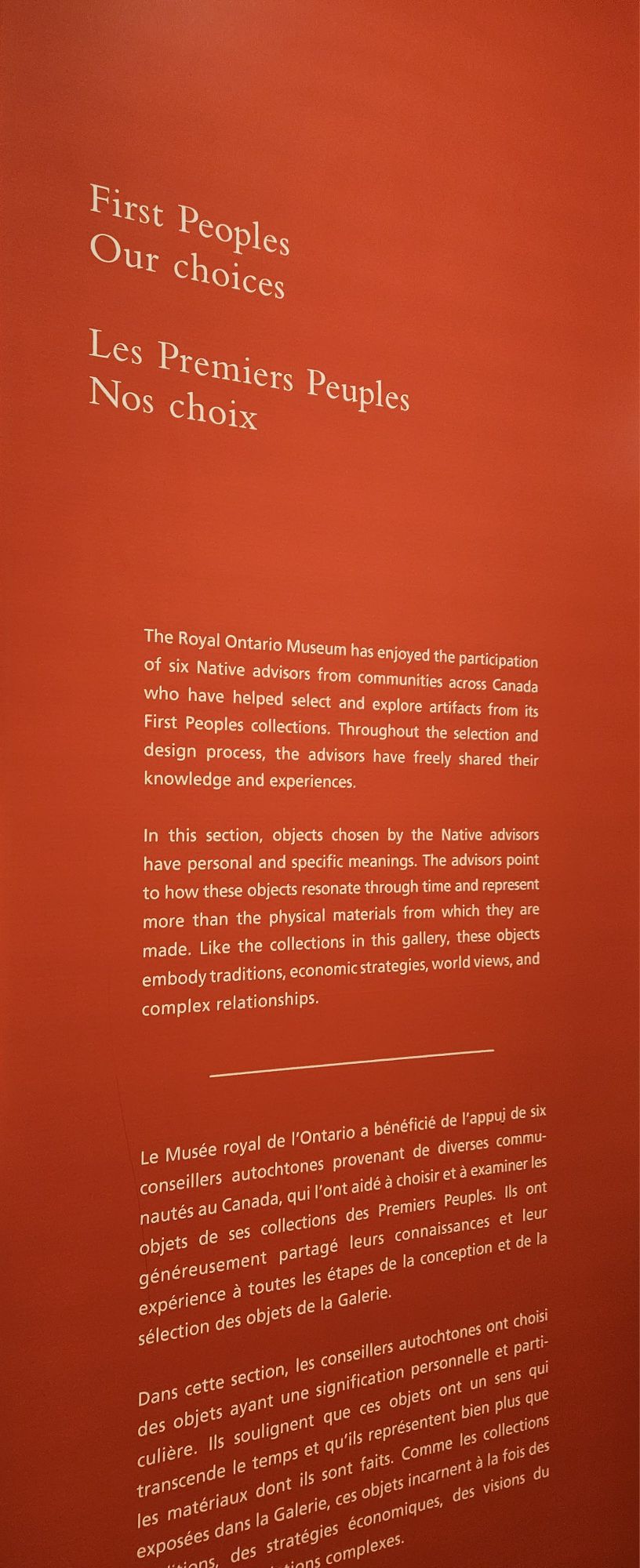
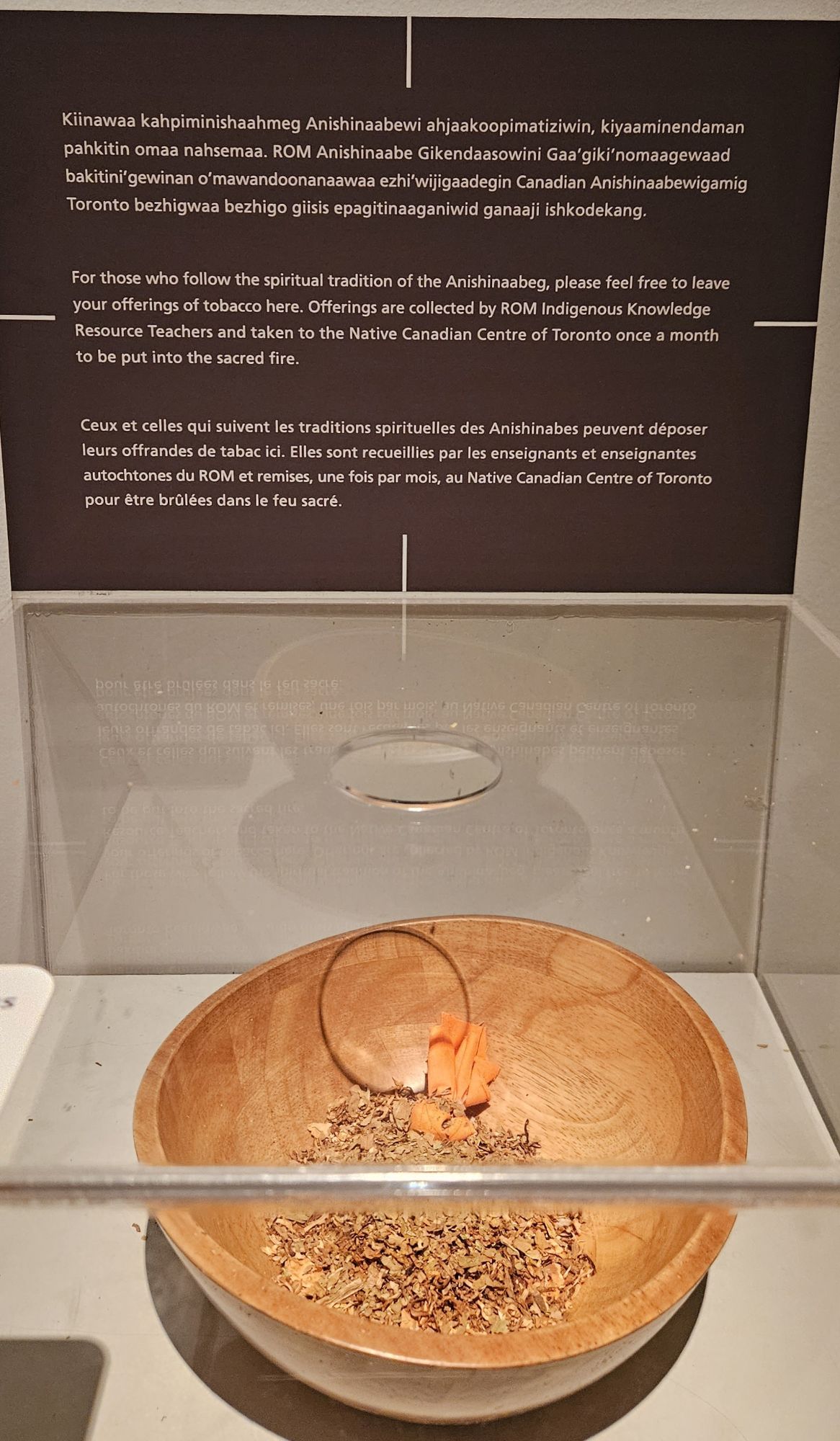
I thought I would share some of the things and signage that I noticed on our recent visits to Canada. The Royal Ontario Museum in Toronto has a large First Nations exhibit. I think it took nearly an hour to get through it and I could have probably stayed longer.

In addition to the following photos, when we visited the Canada Aviation and Space Museum in Ottawa, I noticed a sign at the entrance that said: Ingenium [Canada Aviation & Space Museum] offers free admission to all active Canadian military personnel, Canadian military veterans, Indigenous peoples, including First Nations, Inuit and Métis, and a support leader accompanying a person with disabilities. When available, presentation of an Identification Card is requested.

I noticed this in several museums including the ROM.

There was also a discount for the gift shop as well as Indigenous pins and souvenirs.

In the United States, it is on my bucket list to visit the American Indian Museum at the Smithsonian in Washington, D.C.. There is also a location in New York City. Check out the website for hours of operation. Admission to both locations are free.


(c)2024
(c)2024
(c)2024
(c)2024


White Buffalo Calf and the Summer Solstice

Standard

“Each of us is put here in this time and this place to personally decide the future of humankind. Did you think the Creator would create unnecessary people in a time of such terrible danger? Know that you yourself are essential to this world. Understand both the blessing and the burden of that. You yourself are desperately needed to save the soul of this world. Did you think you were put here for something less? In a Sacred Hoop of Life, there is no beginning and no ending.”

Chief Arvol Looking Horse


Chief Looking Horse is the keeper of the sacred White Buffalo Calf Pipe.

Nearly one year ago, I attended the first of what I hope will be an annual event at the National Shrine and Historic Site of St. Kateri Tekakwitha in Fonda, New York. It was World Peace and Prayer Day and was being held around the world on the same day, the Summer Solstice.

Please watch this video as told by Chief Arvol Looking Horse about how the day came to begin, starting with his own life history and the tragic past and present of the reservation system. The words are weighty, and the music only adds to the chills I felt, and I think you will feel as you watch:


In 1994, Miracle, a rare white buffalo calf was born in Wisconsin. It was the first white buffalo calf born since 1933. White buffalo calves are sacred to many Native American nations in the US and Canada. The World Peace & Prayer Day began in 1996 and for a time, rotated to different sites until expanding to individual events held at sacred sites globally. The Kateri Shrine is one of those sacred sites and why the administration decided to hold this interfaith prayer service. The Shrine is sacred to the Native peoples who lived and nurtured the land and there is a Mohawk community nearby as well, and it is also sacred to Catholics who believe the Saint Kateri Tekakwitha lived there in the village of Caughnawaga throughout her child- and young adult-hood. This village is the only fully excavated Mohawk village in the country. I’ve written before about my experience there and how profound it was for me and others who attended it.

The Shrine is planning a second World Peace & Prayer Day service on the Summer Solstice, June 21.

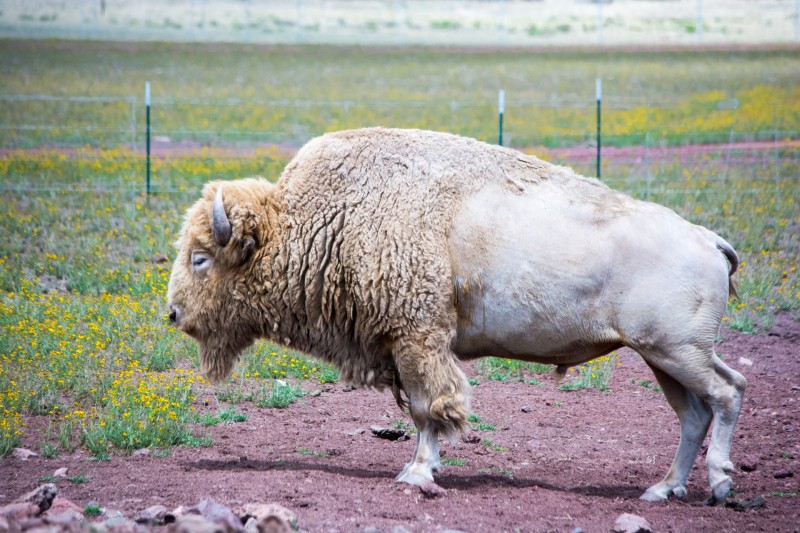
Two days ago, it was revealed that another rare white buffalo was born in Montana, in Yellowstone National Park and according to Lakota prophecy and tradition this foretells better times coming as well as a caution that more must be done to protect the earth. This new calf and Miracle are said to be true white buffalo and not albino – they both have a black nose, hooves, and dark eyes.

Reported birth of rare white buffalo calf in Yellowstone park fulfills Lakota prophecy

In the article I’ve linked about this recent white buffalo calf, there is discussion about the killing and removal of bison every winter to keep the herds at about 5000 animals. There is opposition to increasing the numbers in herds from ranchers and the governor, but I don’t see any input from local tribes or from across the nation. Perhaps because they also oppose transferring the buffalo to the tribes. I wonder why they can’t go back to having the Native tribes participate in their traditional hunting of buffalo which kept the population manageable naturally.

That political segue is important to be aware of, but a digression to this joyous event of another white buffalo calf.

Whatever you’re doing and wherever you are on June 21, take a moment to pray on the continuing vitality of the earth, our home, and all of those who live here. I will be at the Kateri Shrine in Fonda participating in the ceremonies and listening to the prayers both spoken through the participants and in the air swaying the trees.

Travel – Following in Susan B. Anthony’s Footsteps

Standard

One year, on our way to Canada, we stopped in Rochester, New York. My boys wanted to visit a comic store (of course), and since we were in Rochester, I suggested we visit Susan B. Anthony’s gravesite (Section C, Plot 93). I wanted my daughter to see a symbol of one of the pioneers of suffrage and women’s right to vote. Especially because when I mentioned that she had been on the dollar coin, there was a little confusion and looking up the difference between the Anthony dollar and the Sacajawea one. Driving to Niagara Falls and the Canadian border, west on I-90, there are several signs for women’s history from Seneca Falls, NY (birthplace of women’s rights) to Auburn, NY (home of Harriet Tubman).

I’ve written before about Susan B. Anthony and suffrage. They can be found by searching my tags in the search bar to the left. Below find some places to visit related to Susan B. and women’s rights as well as the surrounding area.


There are no falls in Seneca Falls.

Susan B. Anthony’s gravesite can be found at the Mount Hope Cemetery. Frederick Douglass may also be found in his final resting place here.

National Susan B. Anthony Museum & House

Near her house is the Susan B. Anthony Park.

Women’s Rights National Historical Park

                Things to do there

National Women’s Hall of Fame – reopening in the spring

Spend 48 Hours in Seneca Falls (from the I Love NY site)

Also visit this online, virtual, “museum without walls”: National Women’s History Museum

And this online feature at the New York State Museum: Votes for Women: Celebrating New York’s Suffrage Centennial

Rochester Region Suffrage Timeline

Play Women’s Hall of Fame Solitaire

Finally, use the Freethought Trail to plan your journeys for the following (more available on the website):

                Women’s Rights Sites

                Women’s Suffrage Conventions Trail

     Susan B. Anthony Sites

                Seneca Lake Sites


Inspire. November.

Standard

These are a few of the things that have inspired me in the last several months and that keep inspiring me.

The duality of Niagara Falls, Ontario, Canada. Bright and flashy by night; beautiful and awe-inspiring by day (and by night also).
(c)2023
This is the Louis Roy Press, the oldest wooden printing press, and one of two remaining in working order; the second of which is in the US at the Smithsonian Institution.
This press was used to print the 1793 Act to Prevent the further introduction of Slaves and to limit the Term of Contracts for Servitude within this Province [Ontario].
(c)2023
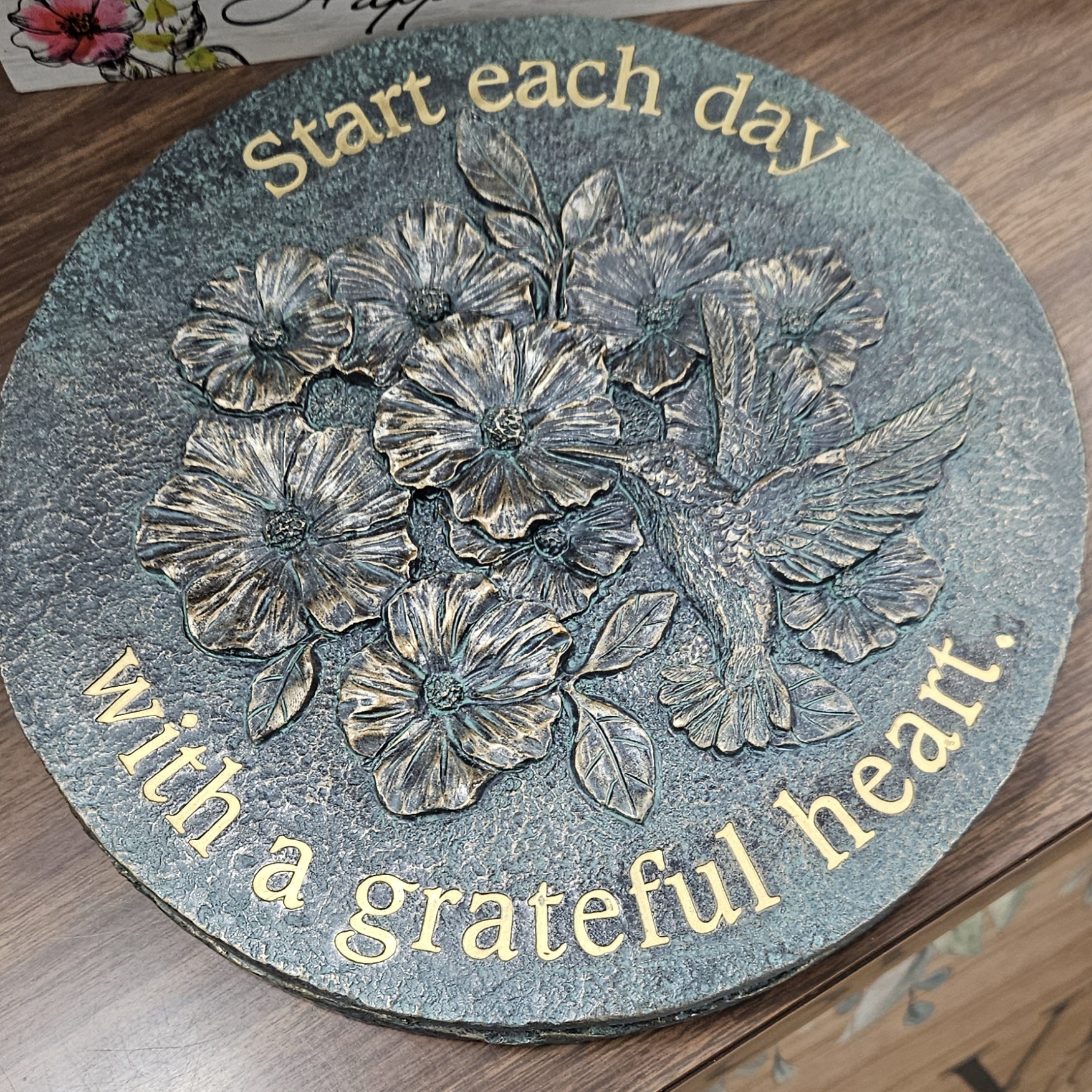
A good motto to follow. Begin the day with thanks, and the rest of the day will follow.
(c)2023

Kahnawake, Quebec

Standard

Indigenous Peoples’ Day was Monday, nearly a week ago, but that doesn’t mean that now we can forget about an entire culture, language, history, or a people. I usually will say that especially in the Northeast, where the Iroquois, more properly known as the Haudenosaunee lived, we should remember them. There are several things wrong with that sentiment though, and I am embarrassed to admit them. For one thing, the Haudenosaunee live, now, among us. They cover the six nations: Mohawk, Onondaga, Oneida, Cayuga, Seneca, and Tuscarora, across all of New York State and the international border with Canada. For another thing, Native tribes have lived on this continent from ocean to ocean, from the time when there were no borders at all. Just like our states, their nations had rivalries with others, they had distinctive cultures separate from one another. It’s important to remember that Native culture, whatever nations are represented, they are a living, breathing group of people, and it is well past time to recognize their contribution and their sacrifices. I’ve had several people (non-Native, I should note) that it was in the past, it’s history, there is nothing I can do, and that attitude disturbs me on many levels. I don’t know if it’s a connection I feel to the people whose land I live and work on. I don’t know if it’s from my childhood admiration and longing to be more involved in the limited Native culture around me as a child. I don’t know if it’s because of my Jewish background where people will say the same sentiment: it’s history, why are you still upset about…? I will call out some by saying that the same people who say that the Trail of Tears and stolen land in the 1880s and 1890s is “ancient history” and we “need to move on” are the same people who insist on the rest of the country worshipping a man who died over two thousand years ago. The continued hypocrisy is staggering in so many ways.

I have a few thoughts and photos that didn’t make it onto the website on Monday, and I hope to share them with you today and in the early part of next week.

I have been fortunate to have visited the village of Kahnawake in Quebec, Canada three times. Kahnawake piqued my interest through my studies and research of St. Kateri Tekakwitha who was born, lived, and was baptized very near to where I sit right now. Each visit was unique in that I saw new things and learned new things each time. The first time during covid was very limited to the outside world and was a superficial encounter. The second time had a decidedly Mohawk perspective, and the third time was more of a Catholic and Mohawk-Catholic perspective. Each visit gave me a new outlook, answering questions and thoughts, and offering insights that raised more questions and contemplations. I expect and look forward to returning next year to do some more research as well as visiting their language and cultural center that we were unable to see previously.

These photos are a little taste of the village. I will also share the one thing that really surprised me. The Mohawk in Kahnawake primarily speak English and Mohawk. Their street signs and stop signs are in those two languages. I thought the second language would be French. As I said, there is always something new to learn.

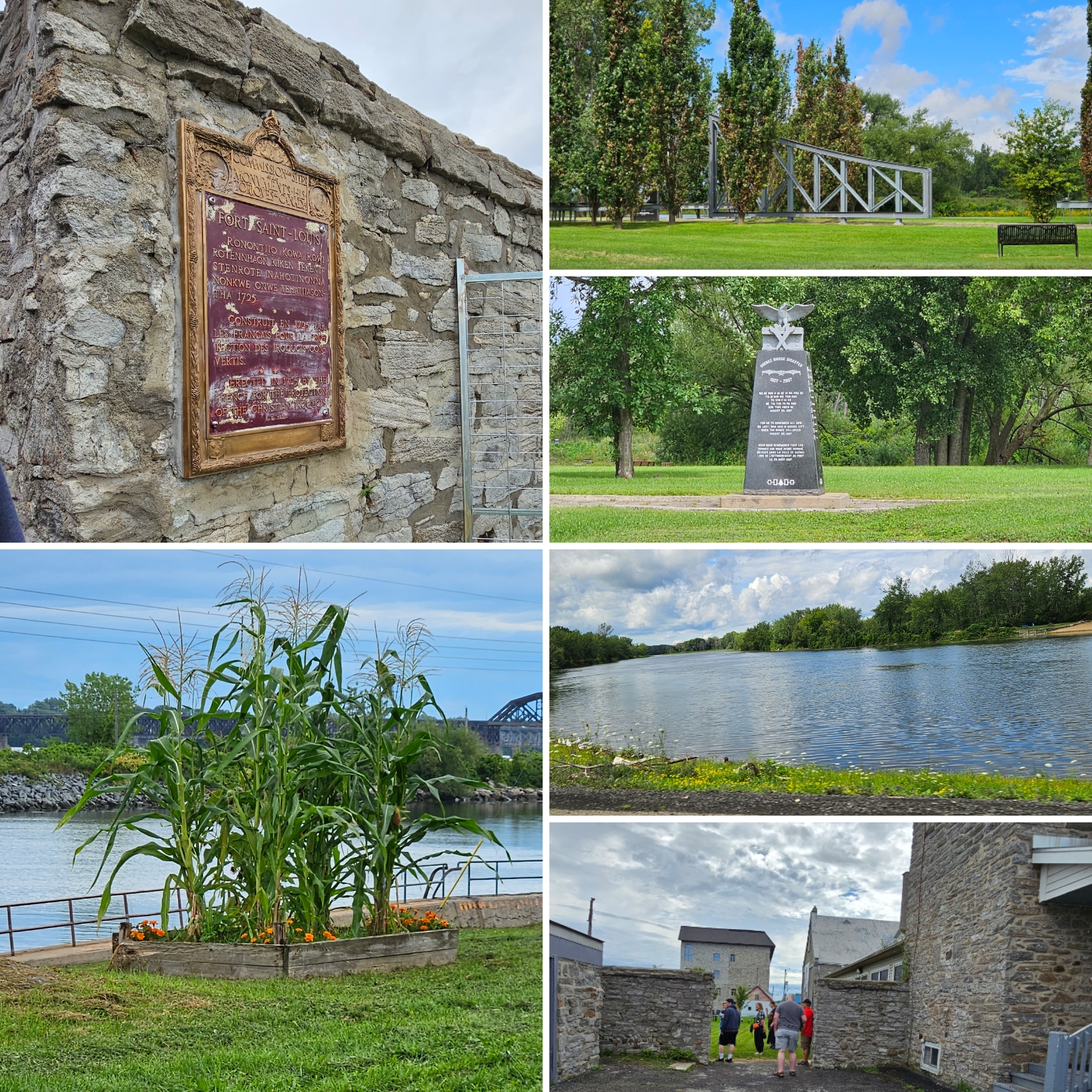
From the top, clockwise: Original wall of the Fort Saint Louis, Replica of the Quebec Bridge, Memorial to those who perished in the Quebec Bridge Disaster, part of the St. Lawrence Seaway, the back of the St. Francis Xavier Mission Church, what I presume are the Three Sisters, which are grown on Mohawk land.
Kahnawake, Quebec.
(c)2023

I just wanted to add one or two notes about the above photos:

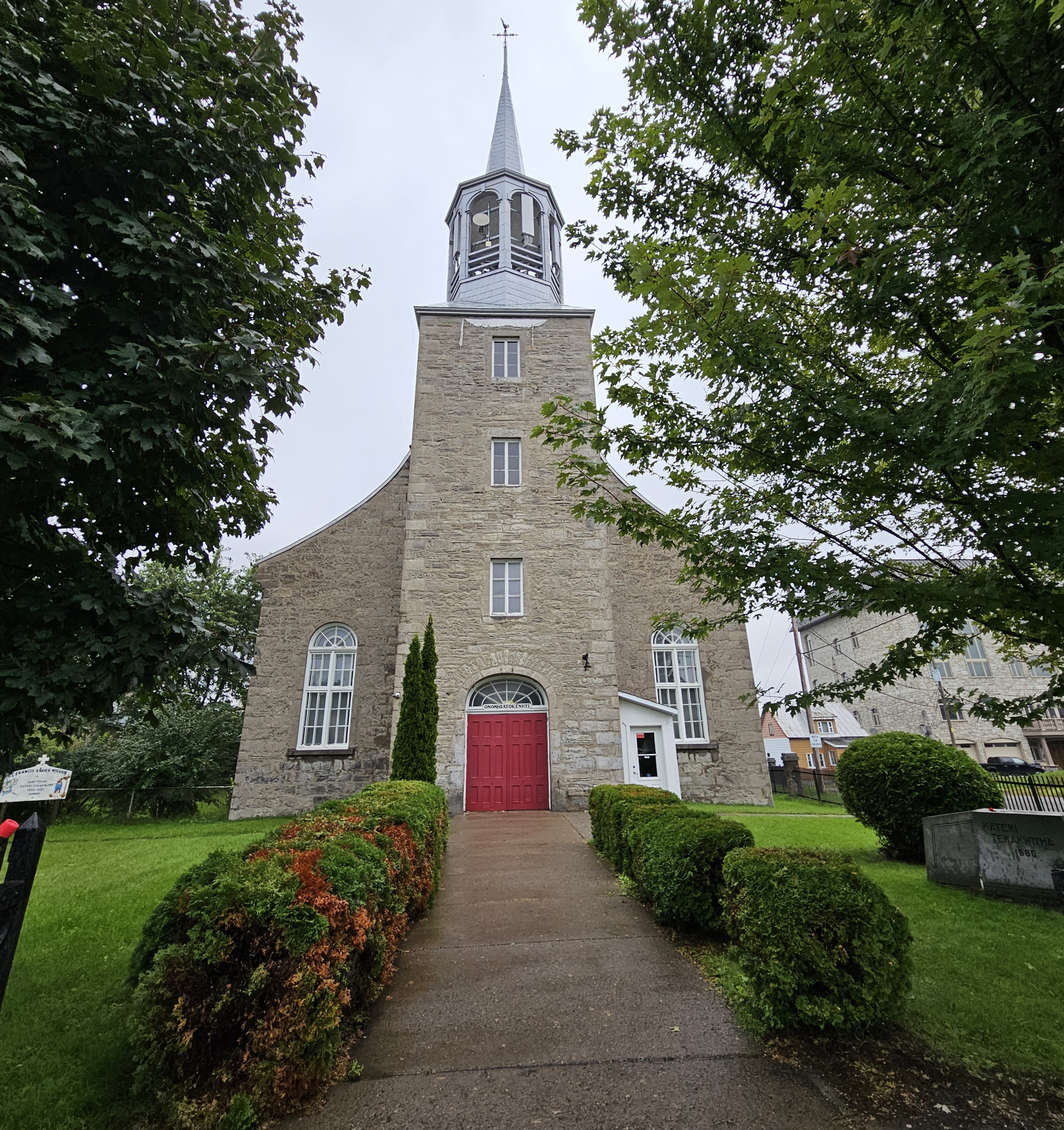
The St. Francis Xavier Mission Church moved with the Mohawk. It moved four times,
I believe, before it settled permanently here and was built as a permanent structure in 1716. St. Kateri’s relics were moved here in 1973.

The Quebec Bridge Disaster killed 32 Mohawk ironworkers from Kahnawake. This left 25 widows and over fifty children fatherless. The compensation from the Canadian government was negligible. The Clan Mothers decided from then that so many members from one family could not work on such a dangerous job.

The Canadian government changed how the St. Lawrence River flowed, so it moved it away from Kahnawake and left the still St. Lawrence Seaway. The River was more profitable and was able to accommodate boats and fishermen as the Seaway was not. This is still an issue today.

The Three Sisters are known to the Haudenosaunee as the most important crops, sacred, and include corn, beans, and squash. They grow together in the same area and help each other thrive.

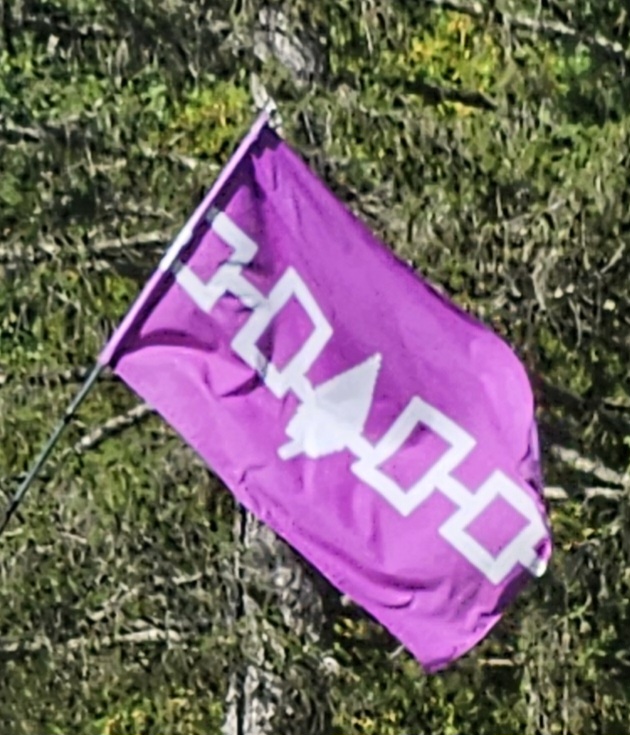
Haudenosaunee Confederacy Flag, which is a depiction of the Hiawatha wampum belt.
(c)2023
Front of the St. Francis Xavier Mission Church.
Kahnawake, Quebec.
(c)2023
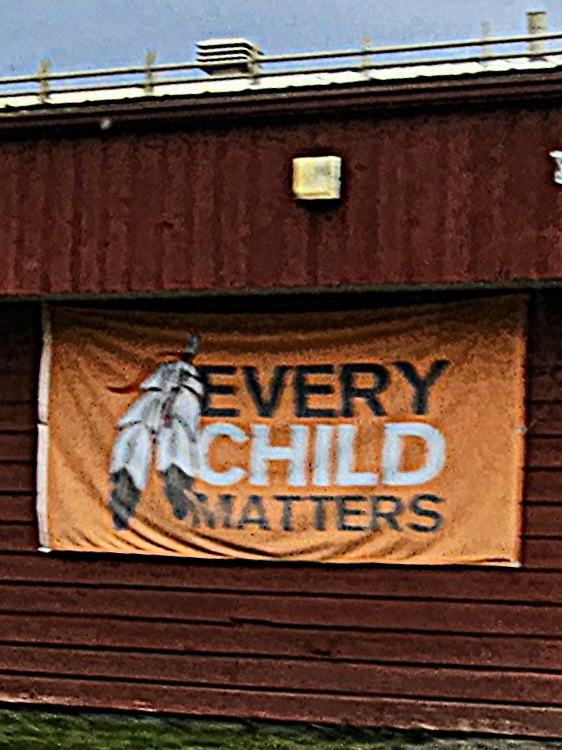
Signs and flags of Every Child Matters on orange are seen in many places. Despite Canada’s Truth and Reconciliation Committee, there is still much to be answered for.
(c)2023

Indigenous Peoples’ Day

Standard

On the Coloring Sheets page, there is a new sheet for Indigenous Peoples’ Day which is today. Below I will explain what each square represents. I’m glad that we are beginning to acknowledge the people who were here long before the Europeans arrived and drastically changed things through their way of life, their diseases, their concepts of ownership, and of course, their biases, which for many remain today.

I am determined to remind myself and others that the land I live and work on once belonged to the world, and the Haudenosaunee (in my specific area) were the caretakers. They were willing to help the new settlers, and did. And I’m sure regretted it. The Europeans weren’t exactly grateful in the long run.

Wherever you live look at the names of the towns. Across this country (the US) and Canada you will find many towns and streets are named with Native American names. I like to look into some of those names and see what they mean in the various languages.

Continue reading

Feast Day of St. Jerome (of Stridon)

Standard

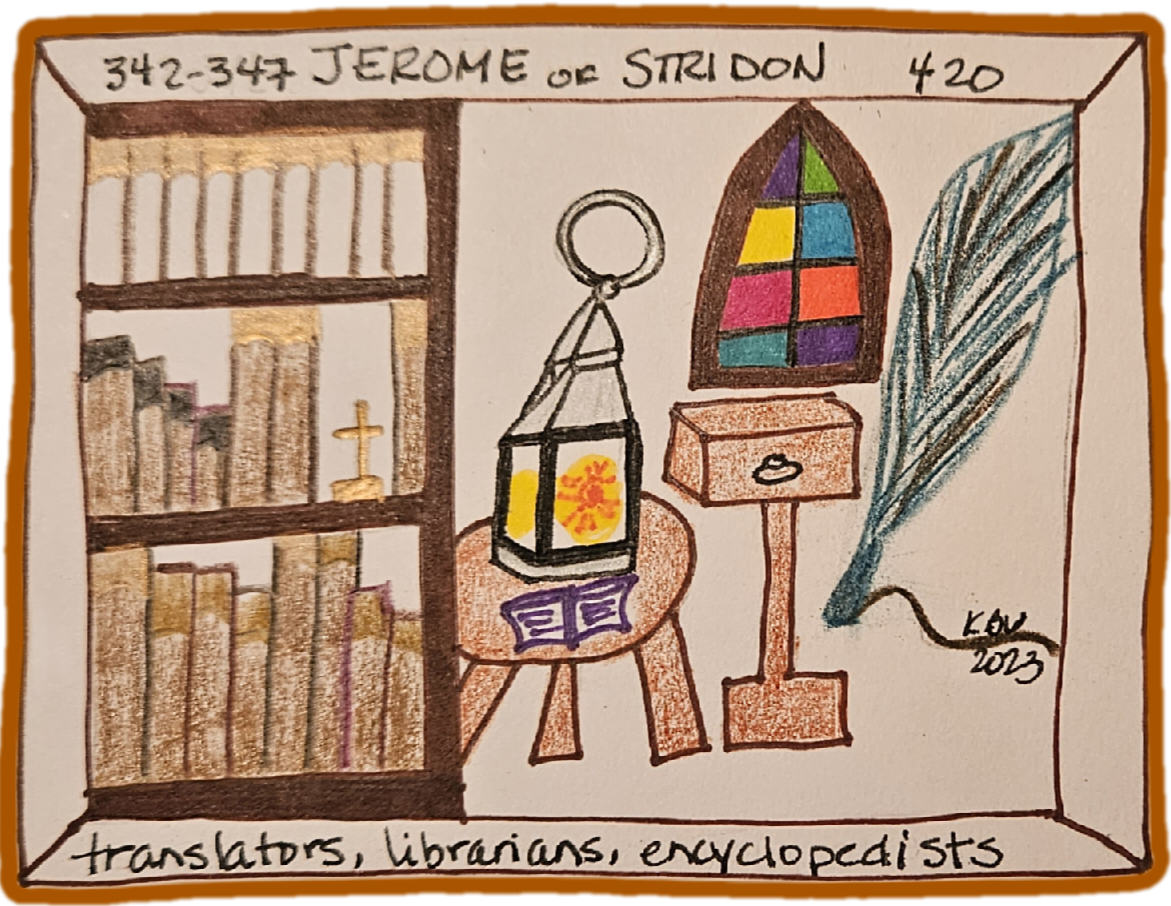
St. Jerome was known for his writing. He translated the Hebrew Scriptures from Hebrew to Latin, which was unusual at the time since most people translated it from a controversial text called the Septuagint, also called The Greek Old Testament. He is the second most prolific writer of in ancient Latin Christianity. The first is Augustine of Hippo, who actually had no problem with the original Septuagint.

As a result, perhaps, he is the patron of translators, librarians, and encyclopedists as well as archaeologists, students, Biblical Scholars, and against anger, the latter of which I believe stems from his widely known bad temper.

As a student in Rome, he indulged his hedonistic side, but also attended the catacombs of Rome to visit the martyrs and Apostles there. There were early inscriptions and wall art that I imagine he studied, although he referred to the place as giving the feeling of the terrors of hell.

To put it simply, Jerome was a person of contradictions, some of which can be sourced as his being a student, a constant learner, and a voracious reader and writer. He had a group of women who surrounded him that read his scholarly works, and several were turned towards a life of consecrated virginity and the ascetic monastic life. This had a negative impact on these wealthy women’s donations, and he became at odds with the Roman clergy.

He is considered a saint in the Catholic Church (and a Doctor of the Church there), Eastern Orthodox, Lutheran, and Anglican.

His iconography is often depicted in libraries and/or scriptoriums surrounded by books, parchment, vellum, and writing implements. He sits at a desk, holding a quill. He is also depicted with a lion having apocryphally removed a thorn from one’s paw.

In my sketch below, I have chosen to leave the lion and the saint outside the view as we look into his small cell of scholarly works.

Pride

Standard

For the next four weeks, I’ll be posting some information, links, art, and photos for Pride and hopefully including some LGBT+ history. I’d like to start by saying that last week I heard some complaints by folks with nothing better to do asking why Pride gets a month and our veterans only get one day. This is obviously meant to create an issue where there is none. First, Memorial Day is not about veterans in that way; it’s about the war dead, which most people are glad to ignore until it suits their agenda. If they really felt this way, they’d spend Memorial Day at the cemetery, at a house of worship, volunteering instead of barbecuing and at baseball games and concerts. Second, there are many, many veterans (and war dead) who are in the LGBT+ community, and Pride is as much for them as any other person. Third, for those who declare that “pride” is a venal sin, I’d like to suggest that those divorced, adulterous, lying, hypocrites stay quiet and/or remove the log from their eye.

I wonder if, when these people see a rainbow in the sky if they shake a fist at it and complain loudly to the Creator about how woke He is.

Pride was born in revolution, even though LGBT+ people were around long before 1969. The ones who are out and open and celebrate Pride are not only celebrating themselves but are celebrating those of the community who are still not out, for personal reasons as well as safety ones.

My friend has a denim vest with the stenciled words: The first pride was a riot. I’ve used that to influence the art I created last night for this post. Sometimes the simplest designs tell a greater story.


Marsha P. Johnson

Sylvia Rivera

Stonewall Riots

Library of Congress Research Guides: 1969: The Stonewall Uprising

(c)2023