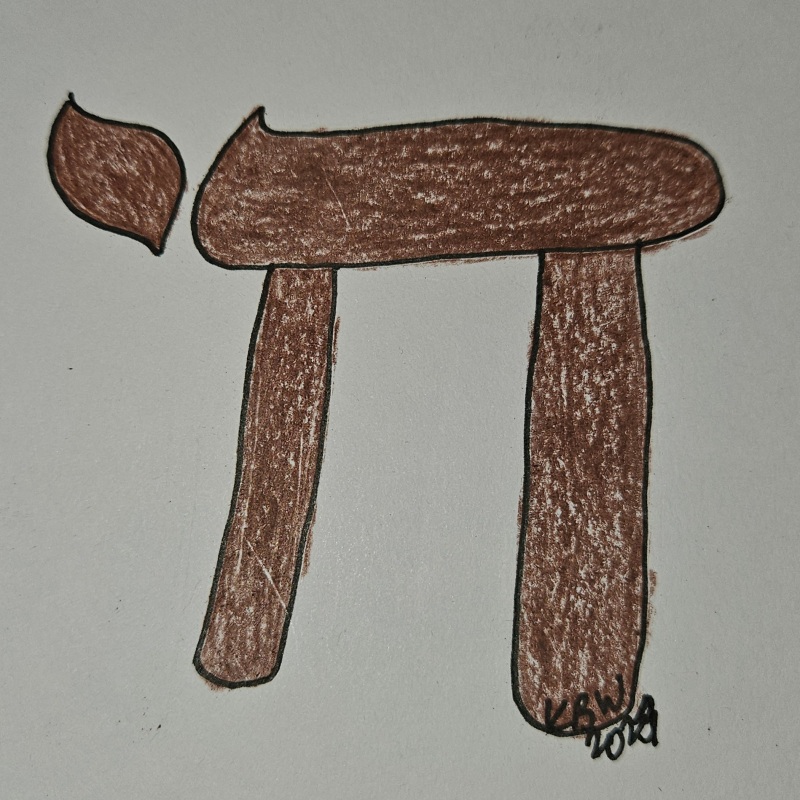
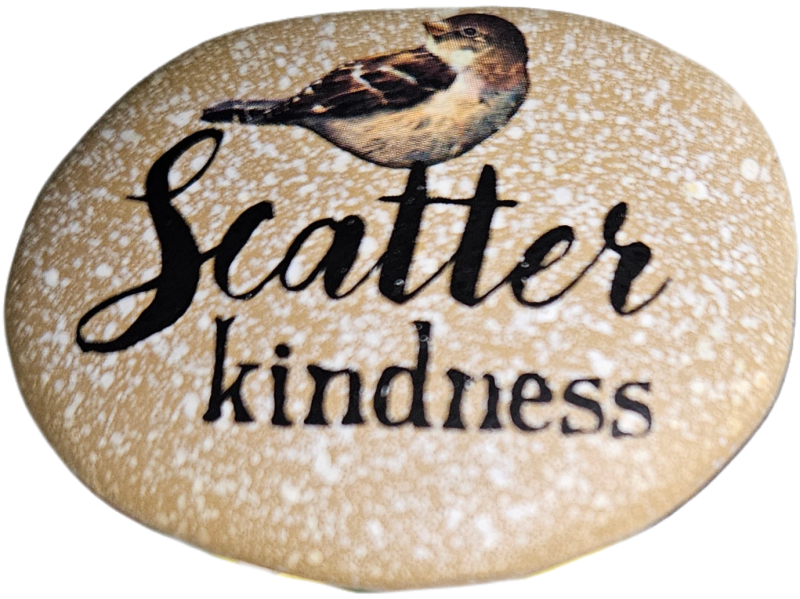
An Easter Vigil, Ten Years

Standard

Easter falls so weirdly on the calendar. Often it is the same week as Passover, which makes sense because Jesus went to Jerusalem for the Passover Festival during what is now Holy Week. But this year, Easter is this Sunday (March 31), and Passover doesn’t begin until nearly a month later, at sundown on April 22. Adding into that is that this is my ten-year anniversary of coming into full communion with the Catholic Church. A decade. So long and so short simultaneously showing truly how the days are long, but the years short.

My Easter Vigil was on April 19, 2014. I’ll celebrate that day as well, attending church, having mass said for special people in my life, and I’ll also be celebrating this week as we welcome new people into the church and our parish. There are two baptisms which I find fraught with emotion. Being able to watch what I went through is both nostalgic and spiritual. I still remember the water being poured over my head, slowly, three times, as the words penetrated my being. I still talk about how my priest used a water pitcher, a small one, but still a pitcher and how in subsequent years it was more like a clam shell. It’s amusing to me until I think about the amount of icy water dripping down my robe, although I guess flowing might be a more apt word. I kneeled in a tub, a literal baby-sized plastic pool while subsequent catechumens were stood over a basin. It is a beautiful, ceramic basin, and I am in part jealous and also awed by watching my own experience play out for others, regardless of the intricacies and the details. My robes were made by my friend. The incense rising on Holy Thursday made the shape of a Jewish star. I pointed it out to my godmother, so I know I didn’t imagine it. The chrism oil from the confirmation smelled of rosemary. I leaned over to my husband and friend and told them to smell my face. It was a pleasant, old-world, feeling of ancestors, and something I’ve only felt a few times, three times during my children’s brises and namings, and on my pilgrimage to Wales and Auriesville. It was doing something as part of something bigger, huge, that often can’t be put into words or even thoughts. It’s not that it’s old, but it’s, as Tevye says in Fiddler on the Roof, “tradition,” where tradition means so much more than the dictionary definition. It’s deeper than the ocean and vaster than the stars. It’s time stood still and it’s time speeding past. A single line or a wibbly-wobbly mush of threads or yarn tightening in some places, loose in others, knotted, and dangling and frayed and worn and strong and sturdy. It is faith, and it is questioning. It is changing and encouragement. It is friendship and relationship and knowing everything and still nothing.

Ten years of prayer, of mass, of rosaries, of devotions, novenas, saints and blessed, seeing beyond and within. When we renew our baptismal vows on Saturday night, I will close my eyes and let the water land where it wills, the cleansing water of G-d, that reminds of the past and prepares for the future.
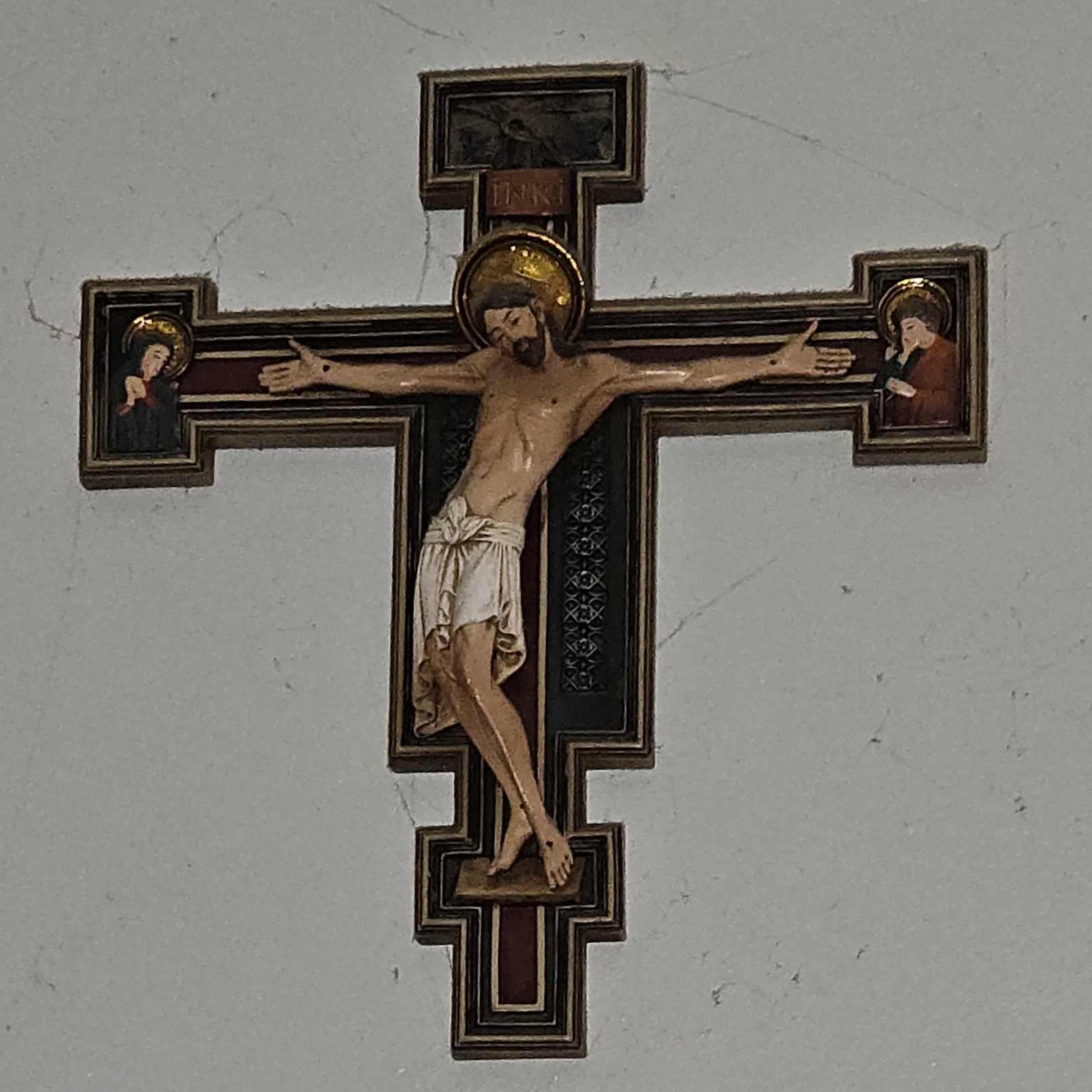
Gift from my Vigil.
(c)2024

My Jewish History, Part 3

Standard

I’ve been thinking a lot about my observances and views especially since coming across the thoughts of Robin Wall Kimmerer in reconciling her own feelings on her family’s rituals, but also since the terror attacks in Israel on October 7th and the rampant antisemitism since then. I wonder if I should be doing more as a Jewish person. I wonder (for the first time) if I should have converted – it’s not that I don’t believe; I do believe wholeheartedly, but am I betraying the Jewish people? Am I still Jewish to others? *I* know I am still Jewish. I just feel on the outside. I have always felt somewhat on the outside. I’m more religious than some; I’m less than most. Does what I do count? Who decides that?

I have many thoughts, but they are not forming cohesively and rationally. They come in screams and anger and heartbreak. And reflection.

Continue reading

My Jewish History, Part Two

Standard

Before I had kids, things seemed so simple. My husband and I combined what we were already doing religiously. On the High Holidays and Passover, he usually went to work, so there was no conflict. At work, he ate what he wanted, and at home, we continued to eat matzo. It was the same when the kids were born. That is, until he began working from home, but we continued to make it work as we blended our two religions with our children.

Our wedding was an interfaith ceremony as well. We were married under a chuppah or canopy. We had a Rabbi and a Priest. We (my spouse) broke the glass, which represents the remembering of the destruction of the temples in Jerusalem. We celebrated Christmas and Easter with my in-laws, and the Jewish holidays and Thanksgiving with my family. This continued after our kids were born.

After we were married, we continued to celebrate the Jewish holidays with my family. We also celebrated Thanksgiving with my family and then went to my husband’s family for Christmas and Easter. Thanksgiving somehow felt Jewish to me. It wasn’t overly religious, especially if your family didn’t go to church. I also felt that it was inclusive of all traditions. No one was left out. Now, I realize today that when I thought that I wasn’t thinking about the Indigenous people who we peripherally celebrate on that day as well, but to me as a Jewish person, it was the one holiday that I wasn’t left out of things. It became a bigger holiday for me, and for my kids.

When my kids were born, I knew that they would be raised in both faiths and celebrating both sets of holidays – Jewish on my side and Catholic on my husband’s side. Even though he and his family weren’t religious, they still celebrated Christmas and Easter in his family, and we continued that with our kids.

We would travel from our home in upstate New York to our families: mine for Thanksgiving, which my in-laws would attend, and his for Christmas. We would still see my parents during that time, but the primary celebration was spending Christmas Eve at my in-laws and spending the night. We didn’t begin to stay at our own home on the holidays until we had a house and wanted the kids to wake up there on Christmas morning.

Continue reading

My Jewish History, Part One

Standard
A family piece that’s come down from my mother. A Rabbi, praying.
(c)2024

This is the first part of a three-part series. The impetus was something I read in Braiding Sweetgrass by Robin Wall Kimmerer, which I will reflect on in the last part. Part One delves into my childhood, growing up Jewish in what I consider a fairly religious household, although it was less religious than my grandparents’ households that my parents grew up in. Looking back, it is certainly more religious than I raised my own kids in, and that will be discussed in Part Two. Part Three, funny enough is the part I wrote first, but then kept expanding and writing and re-writing, and realized there was more backstory than I could fit into that section. I hope you enjoy reading about my past lives, and my reflections and reconciliations with who I am today and how I became that person, at least in this one aspect of my life.

Continue reading

Inspired. January.

Standard

Another year begins.

As I mentioned at the end of 2023, I plan to make more specific goals and follow through on intentions. I also think it’s important to look back and see if there is anything I could have done differently or better. I’m sure that there is, but I’m also proud of the work I’ve done in 2023, especially in my writing and expanding my writing and creativity.

In 2023, I made a total of 210 published writings. Most of these appeared right here, although a few of them were submitted to writing classes. This amounted to a total of 74,626 words. I may not have “won” Nanowrimo this year, but I did do a lot of writing.

I expect to teach a writing class again this spring, this one for eight weeks. I’m finalizing the syllabus and power points.

I’ve fallen into the Doctor Who rabbit hole. That will end this week after I rewatch the last two specials on Disney+ (for the second time). I loved the Christmas special that is starting out Ncuti Gatwa’s run as The Doctor. He returns in May with his first full season. It was brilliant to see David Tennant and Catherine Tate return as The Doctor (the 14th this time) and Donna Noble, my favorite Doctor/Companion pair.

Our tree went up with help from my middle son (he put it up) and my daughter (she put on the lights), and we celebrated Chanukah for a few extra days since we were interrupted by Covid by both myself and my husband. So far, entering the new year healthy.

I’ve expanded my spirituality, attending regular religious services as well as numerous retreats throughout the year. I’ve already scheduled a few for the next three months. I’ve also participated in the Cursillo movement and am currently writing a meditation card that is similar to other groups’ Examens. I am also on the women’s weekend team this fall. I’m looking forward to my presentation.

This is an Election Year (I mean, I guess every year is an Election Year, but this is a Presidential Election Year) and Election Connection will return in the near future, perhaps as early as next week.

Inspire will continue as Inspired as will Friday Food, and other fun series; yes, including Mental Health Monday, also popping up next week and then sporadically throughout the year. Suggestions and questions to address are always welcome, either as comments or as emails. There are also a couple of new pages coming soon! I’m very excited!

Overall, I’m looking forward to 2024, and I hope you’ll visit me here throughout the new year.

Friday Food. Latkes.

Standard

I use a box to make my latkes. I don’t do fancy additives – no basil or chives or any of the other things I’ve seen online. I might consider melba sauce, but I haven’t gone there yet. I always go back to Carmel. I think last night’s were my finest. They were crispy on the outside, none burned. I’m a both kind of person when it comes to latkes: applesauce AND sour cream. My daughter who doesn’t like them grabbed one on her way in the door from work. She still didn’t like them, but I must give her credit – she tried it even without me blackmailing her with gelt.

I don’t know if there’s a reason or requirement, but I always fry my latkes in vegetable oil.
(c)2023
Latkes.
With applesauce and sour cream (not pictured but trust me, it’s there).
First Night of Chanukah.
(c)2023
My favorite brand, although Streit’s and Manischewitz are also good!
(c)2023

As I mentioned in yesterday’s Inspire, I went all out this year. Antisemitism will have that effect on a person. I am halfway between don’t do anything public and do all the things. Over the next week, I’ll share some photos and thoughts each day. Lights, door hangings, multiple menorahs, dreidls, gelt, I even found some Chanukah cookies and a book: I Saw an Old Lady who Swallowed a Dreidel by Caryn Yacowitz, illustrated by David Slonim, and of course, I bought a dreidl stuffy for my new great-niece.

Inspire. December. Chanukah.

Standard

I’ve been searching for the write inspiration for December, and this first night of Chanukah brought things into perspective. A little bit of perspective. While the internet and the news are filled with antisemitism and protests from people intent on gaslighting the Jewish experience and deny Jewish people the indigeneity of their homeland, I have been on a quest to celebrate Chanukah publicly. I’m a little wary about it. I live in a nice neighborhood, but I don’t put my head in the sand and think that it couldn’t happen here. I know it can.

Still….

I went out and bought blue and white lights for outside, something I’ve never done. I have an interactive menorah hanging on my front door, again, something I’ve never done. In fact, since I’ve been on my own (and with my own family) I have not put Chanukah lights in the window. That unfortunately will continue because I know that if I put candles on my windowsill, my mother would come back from the grave and blow them out with a raucous, and loud message of fire safety.

Most people don’t know the story of Chanukah; perhaps some teachers wanting to bring multiculturalism to their classrooms, and now the story of the Maccabees is being co-opted to match the narrative, anything to turn the words of Jews and their history against them. The Festival of Lights isn’t about war. It isn’t about victory. It is about faith. The miracle isn’t that the Maccabees won against their most recent oppressor. The miracle is the lights themselves. When we retook the temple, amid the destruction, they went to light the candelabra to rededicate the temple, the menorah – not the nine-branch one that most are familiar with, but the regular, ordinary menorah that is always lit in the temple. There was only enough oil to keep it lit for one night. There was no other oil. So, what did they do? They lit it anyway.

And it remained lit, not one night, not two, not three or four, not even five or six or seven, but it remained lit for eight days. One day’s oil lasted for eight days. That is the miracle. And that is why we light eight candles on a new type of menorah used just for this holiday: a hanukkiah.

Tonight, I will say the prayers (that I don’t normally say). I will fry the latkes in oil. I will fry the chicken in oil. I will light the first candle on the same menorah that I lit as a child; the one that I grew up watching the candles burn down on the dining room table that was my grandmother’s. It will be placed on that same dining room table in my own house. My kids will see the lights on the same menorah, the same table, and they will be able to see through my eyes, even amidst the clutter that seems to grow multi-generationally on this dining room table.

This year, however, this old menorah has a special, additional meaning. I saw this menorah in Toronto at the Royal Ontario Museum in their Judaica exhibit, in the Chanukah window. A copy/replica of MY Chanukah menorah sits in the largest museum in Canada. The exhibit label states that it is from Gdansk, Poland, brass, from the early 1900s.

Happy Chanukah.

My family menorah.
(c)2023
Royal Ontario Museum Judaica Exhibit.
Hanukkah menorah, “Danzig” type,
Gdansk, Poland, early 1900s.
(c)2023
Ready for sundown.
You can view it lit later tonight on Instagram (link in sidebar).
(c)2023

St. Francis Xavier Mission Church in Kahnawake, Quebec

Standard

When I was studying Catholicism and becoming Catholic, I wanted to know which saint shared my birthday. As it turned out, when I discovered that “my birthday saint” was St. Francis Xavier, I was a little underwhelmed. Every time I said his name I thought of Rufus Xavier Sarsaparilla, and I thought couldn’t I have had a better saint.

I bemoaned and ignored him, later discovering him as a follower of St. Ignatius of Loyola, who’s Spiritual Exercises and Daily Examen I was also looking into. Still, I was unsatisfied. I think I wanted someone like Joan of Arc or Mary Magdalene.

When I became interested in and devotional to St. Kateri Tekakwitha, a very local saint and the first Native American canonized saint, I wanted to visit her homes and her shrines. I’ve often been to Fonda, where she lived for most of her life, and tried to visit her tomb in Quebec. However, it was during covid, and they weren’t allowing non-parishioners or pilgrims to visit the shrine.

Where exactly is her shrine in Canada?

Kahnawake, Mohawk Territory at the, wait for it, St. Francis Xavier Mission Church.

Really. Her earthly bones, her relics are laid to rest in the church dedicated to “my birthday saint”. A truly remarkable and at the same time ordinary coincidence.

I’ve been to Kahnawake three times. The first was during that covid time when we could only explore the outside. And then this past summer, I was able to visit Kahnawake twice. The first time we visited, we knew the church would be closed on the only day we had available, but we did attend a tour of the village through the Kahnawake Tourism Center. We received a very detailed and informational tour about the area, the Mohawks past and present, St. Kateri, and a bit about the mission church. On our next visit at the end of August, we were able to not only visit and see the inside of the church, we were also able to attend mass, see the original and earliest painting of Kateri by Father Claude Chauchetiere (one of the Jesuit missionaries at the time) as well as her relic that was removed from the vault for us to observe and venerate (if we chose to).

This mission church is a permanent building and was erected in 1716. Before that it was a moveable mission that traveled with the Mohawks beginning in La-Prairie-de-la-Madeleine. They moved a total of five times each time their mission church was constructed the same as the other Mohawk buildings until this last time in its permanent location. St. Kateri’s remains were entombed here in 1972.

Inside the church, in addition to St. Kateri’s tomb, are two memorials: the first is to the Mohawk men lost in the Quebec Bridge disaster in 1907, and the second is an ironwork replica of the World Trade Center’s Twin Towers in honor of 9/11. Both are on the main altar. It should be noted that the Mohawk are known for their ironworking skills, and were large parts of crews building not only the World Trade Center, but the Empire State Building as well in addition to many other high-rise buildings and skyscrapers across the area.

[Photos below cut]

Continue reading

Happy Thanksgiving.

Standard

With my ongoing research into St. Kateri’s life, I thought instead of a retelling of the first Thanksgiving today, I would set my table with the First People in mind, sharing with my family the Three Sisters as the Mohawk call these three plants that grow side by side: corn, beans, and squash.

My table setting.
(c)2023
Sign about the Three Sisters at the St. Kateri Shrine in Fonda, NY.
(c)2023
The Three Sisters.
St. Kateri Shrine, Fonda, NY.
(c)2023
The cake plate I used was a wedding gift from a friend who worked at the Jewish Museum in NYC. I like to blend our cultures in our interfaith family, and this was one way to join two ancient peoples and their symbols.
(c)2023