Indigenous Peoples’ Day

Standard

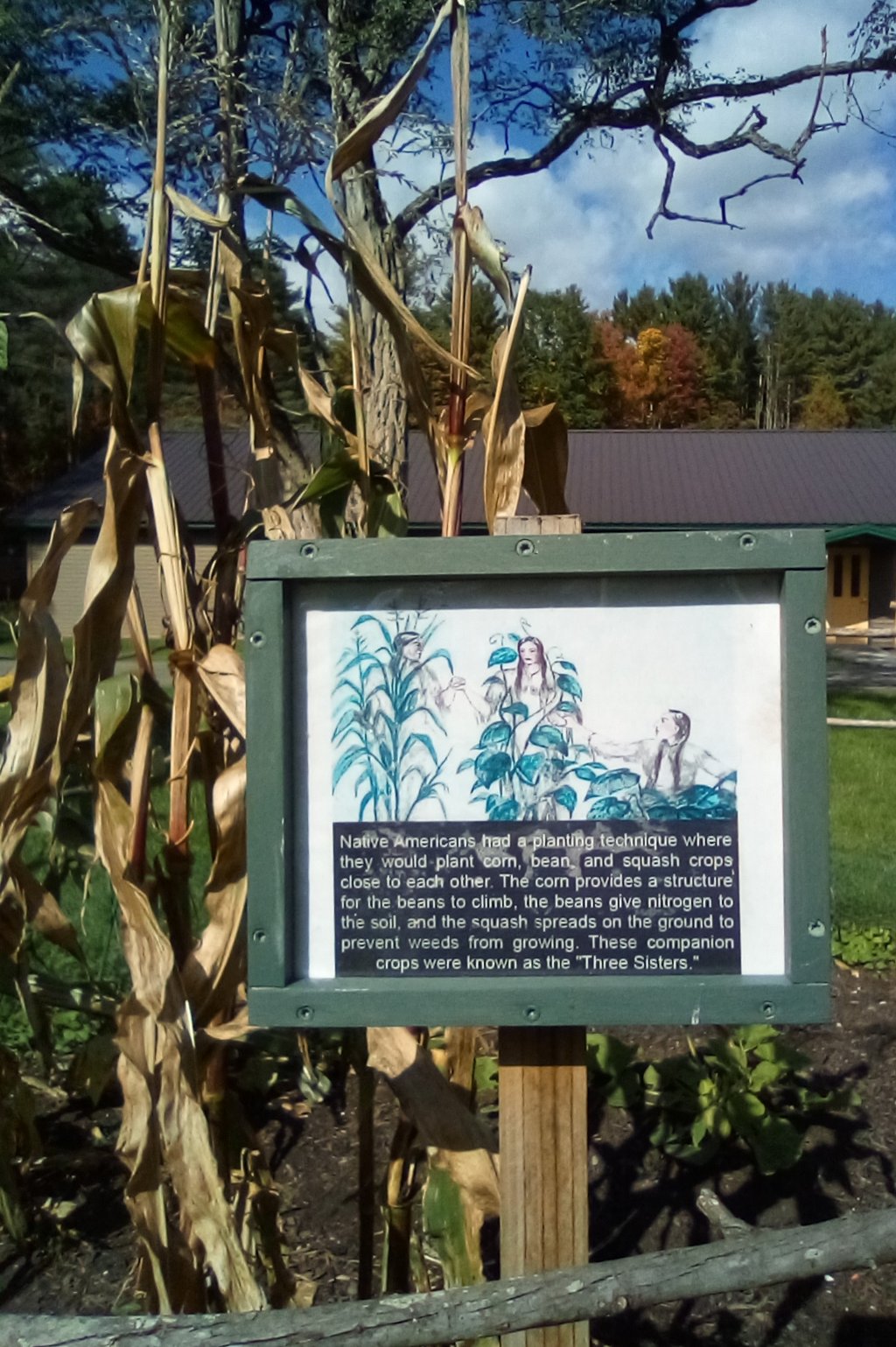
On the Coloring Sheets page, there is a new sheet for Indigenous Peoples’ Day which is today. Below I will explain what each square represents. I’m glad that we are beginning to acknowledge the people who were here long before the Europeans arrived and drastically changed things through their way of life, their diseases, their concepts of ownership, and of course, their biases, which for many remain today.

I am determined to remind myself and others that the land I live and work on once belonged to the world, and the Haudenosaunee (in my specific area) were the caretakers. They were willing to help the new settlers, and did. And I’m sure regretted it. The Europeans weren’t exactly grateful in the long run.

Wherever you live look at the names of the towns. Across this country (the US) and Canada you will find many towns and streets are named with Native American names. I like to look into some of those names and see what they mean in the various languages.

Continue reading

Travel – National Shrine of the North American Martyrs, Auriesville, NY and St. Kateri Tekakwitha, National Shrine & Historic Site, Fonda, NY

Standard

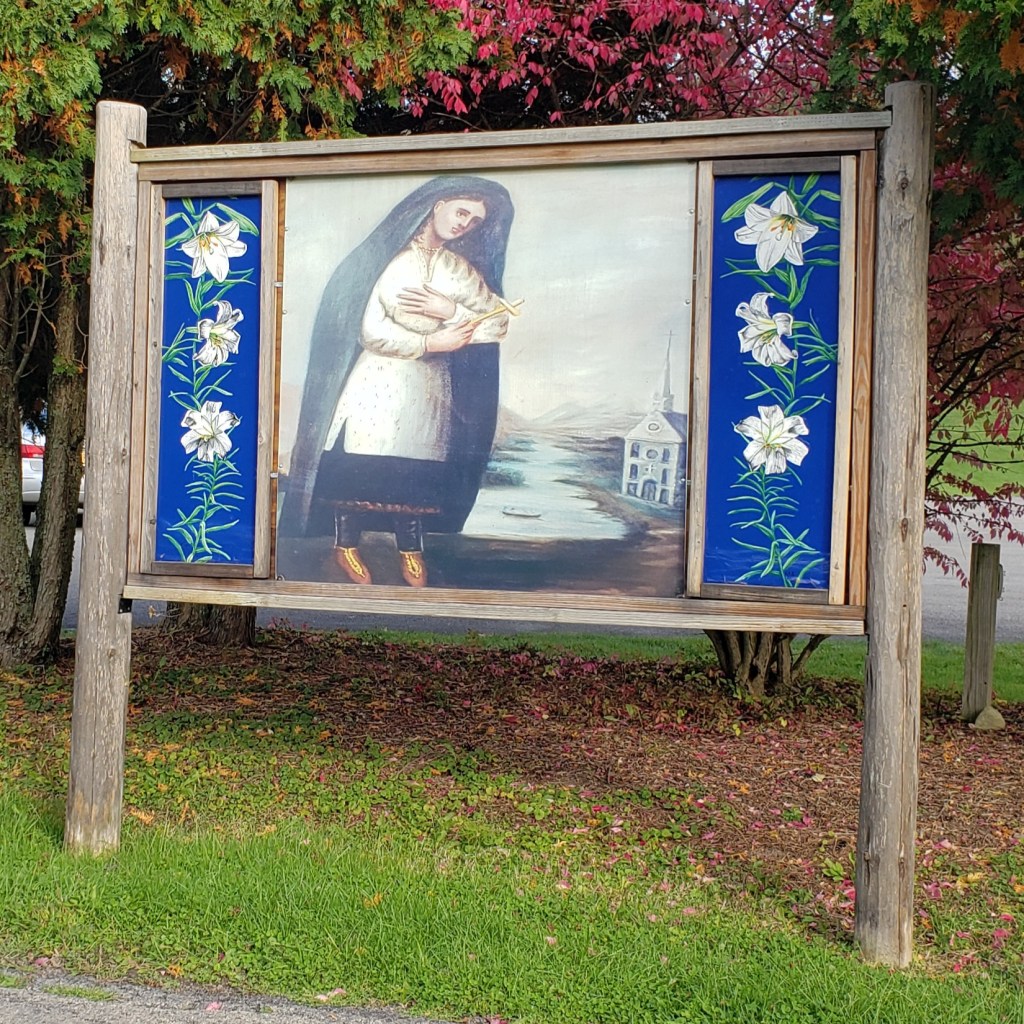
I hadn’t intended for this series on travel to wholly encompass shrines, but I was asked yesterday about visiting these two later in the summer and thought it would be a good opportunity to share their information with you.

The sites are spiritually connected by both St. Kateri Tekakwitha and the Jesuits. The site in Auriesville has a coliseum, one of the first circular churches built in the US. It holds about 6000 people. Across their 600 acres of land is a museum, one or two chapels, a grotto dedicated to Our Lady of Fatima, and Theresa’s Rosary, a rosary made of rocks embedded in the ground. I have walked and prayed this rosary on one of my visits.

There is also the ravine where Rene Goupil’s body was found. In visiting there, I found it very spiritual and a place of holiness. The way to the ravine is quite steep. On the way there are several statues and grottos to pray at as well as signs that tell the story of the Martyrs.

Prior to his martyrdom, Isaac Jogues had been held in captivity and tortured by the Mohawk (a different group) for over a year. With help he escaped in New Netherland or Albany, NY. He returned to France, where he visited his mother in Orleans (where Joan of Arc led France’s army 219 years before) and was considered a “living martyr” by Pope Urban VIII, but soon again returned to this area, longing for and meeting his martyrdom in what is now Auriesville. It had been the Mohawk village of Ossernenon. He, Jean de Lalande, and Rene Goupil were tortured and killed here. Jogues weighted Goupil’s body and placed it in the water of the ravine in order to return and bury him properly. He did return, but he was gone. He later found some of his body parts, and reverently buried them. I’ve heard others say that the ravine itself is a reliquary. As I said, the spirituality felt here is palpable.

At this same village, ten years after their deaths, Kateri Tekakwitha was born. She became ill with smallpox and both of her parents died. She was scarred, and it was difficult for her to see, needing to put her hands out and feel her way. Her name Tekakwitha translates into she who bumps into things. Her mother had been baptized Catholic and educated by the e missionaries. Her village moved from Ossernenon across the Mohawk River and rebuilt their village, named Caughnawaga, which means place of the rapids. She was bullied for practicing her Catholic faith. She refused to be married, and that did not make her popular within her adoptive family and aunts. She also practiced mortification, praying for the conversion of her family and for forgiveness.

Her name Kateri is for her baptismal name of Catherine, which she received after her baptism at the age of 19. It took me several years, but I was able to walk to the spring (it’s a bit of a steep incline) from the village footprint that archeologists uncovered. Her Native people still felt that the Catholic religious rituals and items were sorcery and opposed her conversion. At some point after her conversion, she was helped to leave and went north to the new Mohawk village where other Native converts had gone. This village was also named Kahnawake (this is the Mohawk spelling), just south of Montreal. She died in 1680.

When I visited her empty tomb (where she was first laid to rest until her relics were removed to the St. Francis Xavier Mission Church on the Mohawk land), the sound of the rushing water nearby was nearly deafening. I have had so many spiritual experiences in visiting the sites of Kateri and her people that it only makes me more in awe of the Holy Spirit.

For those who are not religious, but want to visit a pastoral, serene, place of comfort, both shrines offer that in the beautiful Mohawk valley. The sights and sounds are lovely, and it is easy to get lost in your own thoughts. Of course, that’s until the train comes roaring by, but that is in its own way an affirmation of the space we are in.


National Shrine of the North American Martyrs
Auriesville, NY

Open May 1 – October 19, 2023
Hours:
Grounds: Open daily 9-7
Museum: Open daily 11-3:30
Gift Shop/Visitor Center: Open daily 10-3
There is no fee for admission or parking.
If you are interested in attending mass or other events, visit their website.

National Shrine of the North American Martyrs.
(c)2023

St Kateri Tekakwitha, National Shrine & Historic Site
Fonda, NY

Summer Season: May 1st to October 31st
Hours:
Grounds are open sunrise to sunset daily.
Saint Peter’s Chapel and Native American Museum open daily, 9-5
Gift shop open: Sat, 10-6, Sun – Wed, 9-5, Thurs – Fri, 10-4
Office open daily 9-4
Candle Chapel, Caughnawaga Village Site, Kateri Spring and grotto, outdoor sanctuary, and hiking trails are open sunrise to sunset year-round.
If you are interested in attending mass (scroll down at the link) or other events, visit their website.

St. Kateri Tekakwitha statue with a sign of her last words:
Jesus, I love you!
(c)2023

Inspire. June.

Standard

Inspire is a little late this month…okay, it’s a lot late this month. It’s not that I’ve been procrastinating as much as I’ve been absorbing and acting on the plethora of inspiration that I’ve been exposed to in the last several weeks. Sometimes there is a lull or a slight time of unknowing what I’ll write about, but this month was the opposite. How do I choose from the things that inspired me this month, and continue to inspire me? This paragraph formed the introduction to a much longer article on some of the inspirational things I’ve been exposed to throughout June; however, I decided to share some stories from last night’s World Peace & Prayer Day Interfaith Service that I attended at the Historic St. Kateri Tekakwitha Shrine in upstate New York and save the longer writing for another day.

World Peace and Prayer Day was started in 1994 by Avrol Looking Horse to honor the birth two years before of a white buffalo calf, which was a sign of changing times to come as well as the “coming of the mending of the Hoop of All Nations”. She was named Miracle. June 21st was chosen because it is a powerful time to pray for peace as well as being the Summer Solstice and the longest day of the year. It is an offering and hope to heal all of Mother Earth’s gifts that live on the earth, including the Earth herself.


Speak evil of no one. If you can say no good of a person, then be silent..

Let not your tongues betray you into evil,

For these are words of our Creator.

Let all strive to cultivate friendship with those who surround them.

Handsome Lake, Iroquois Prophet

Continue reading

Celebration of St. Kateri Tekakwitha

Standard

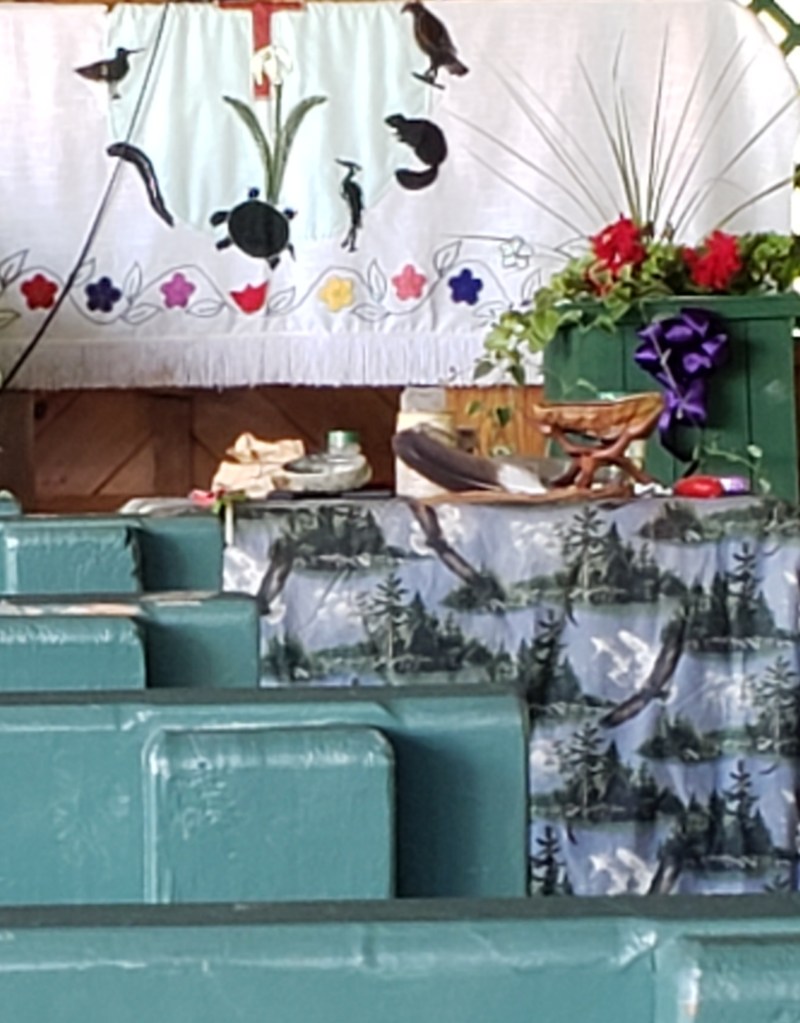
Two weeks ago, I was privileged to attend Mass at the St. Kateri Shrine in Fonda, New York. It was a dual celebration: today is ten years since the canonization of St. Kateri Tekakwitha, the first Native American saint. The celebration on October 9th was held on Indigenous Peoples Weekend, acknowledging the history and legacy of the Native peoples who were already living and thriving in the Americas at the time of Columbus’ landing in what is now the Bahamas.

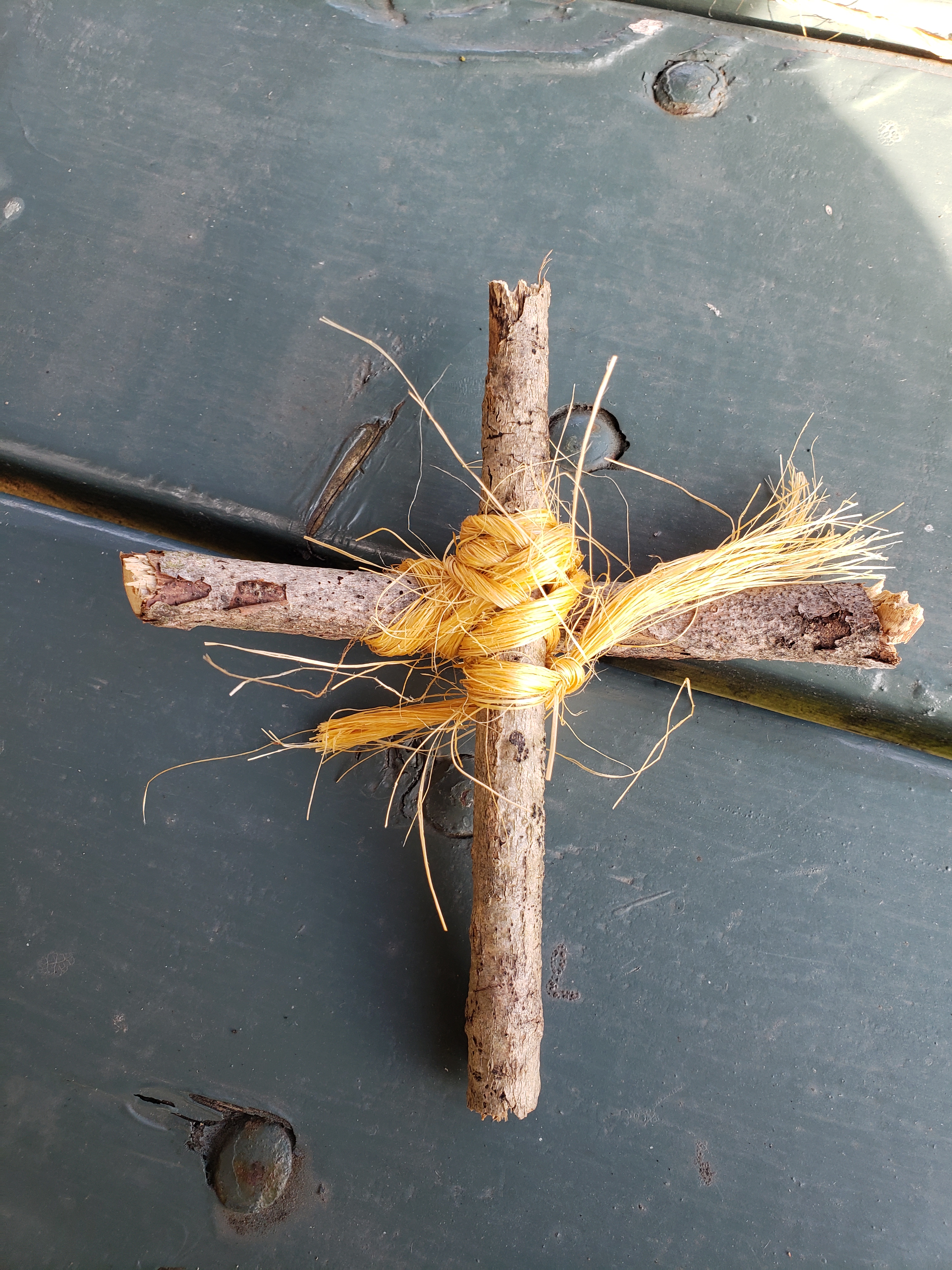
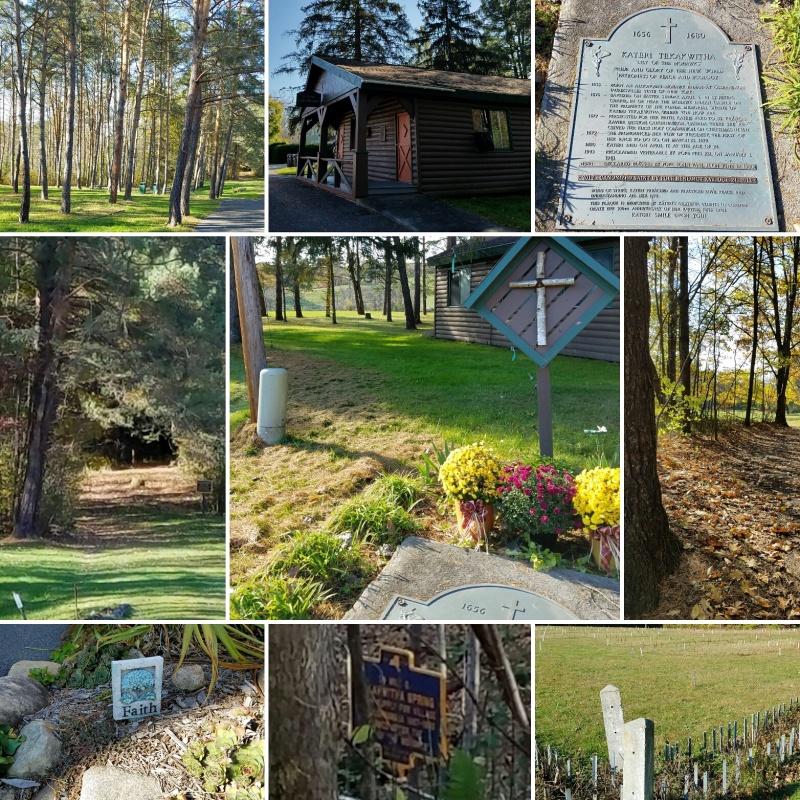
It was a chilly, fall day with bright blue skies and vibrant, colorful leaves, mostly still waving from their branches. Mass was held outdoors in the pavilion, a roof the only cover from the elements. As mass is celebrated, an occasional breeze flutters in, and really reminds you of Creation and the Creator. I had time before the mass and so I wandered the grounds a bit, spent some quiet time in the candle chapel, contemplated the words of Handsome Lake, an Iroquois Prophet whose words appear in the Peace Grove; I made a small cross from sticks and twine, reminiscent of St. Kateri’s own according to the sign on the table.

But mostly, I simply settled in with a subdued awe in the anticipation of the mass, the quiet celebration of Kateri’s canonization and difficult life that she never shunned from nor complained about. My eyes were drawn constantly to the bright colors of the Native dress, the feathers adorning and the large eagle feathers carried and used for the Mohawk rituals.

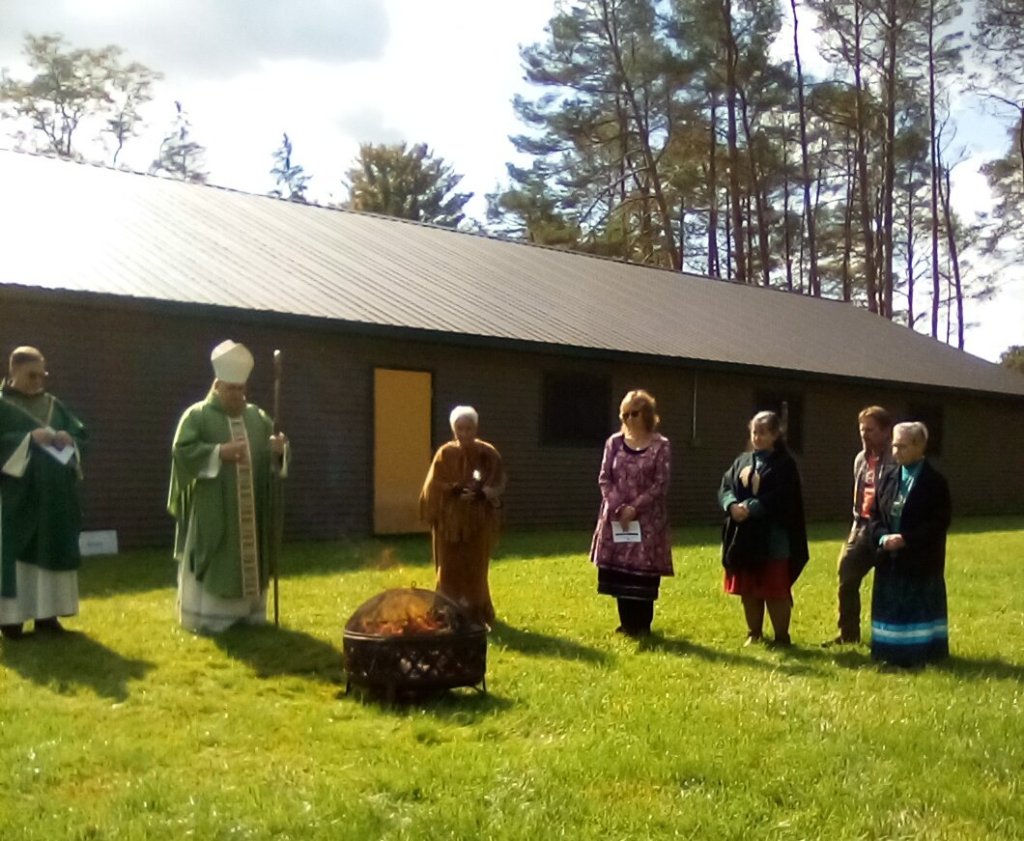
Between the Greeting and the Liturgy of the Word was the Sweetgrass Blessing, the burning of plants and herbs, assisted in its smoking by the motion of the eagle feather. We were invited to proceed up, as if for communion to receive the smoke. I felt as though I was part of something bigger, something ancient, and of course, I was, and I felt honored and humbled to be there. The four sacred plants used in Mohawk ceremonies are cedar, tobacco, sweetgrass, and sage.

Throughout the mass whenever hymns or songs were presented they were by the Mohawk Choir of Akwesasne. I couldn’t understand the words but the meaning was clear. Their voices carried on the wind and through the chapel and transported me far away and very near.

Sister Kateri Mitchell, who played a part in the 2006 miracle for St. Kateri Tekakwitha’s elevation to sainthood was there to share the prayer of the faithful and to talk about the miracles associated with the saint. I have met her before and was happy to see her and talk to her briefly on this day.

Following the mass, there was the annual burning of the prayer petitions. The Bishop said the prayer over them and that concluded this remarkable day.

I have found that attending mass in other cultures deepens my own faith and commitment to my own prayer and meditations. I have included some links throughout this post in the hopes that you will read more about St. Kateri Tekakwitha and her people and their journeys.


The Lord's Prayer in the Mohawk Language

Takwaién:a karonhiá:ke tehsí:teronTakwaién:a karonhiá:ke tehsí:teron
Aiesahsén:naien
Aiesawenniióhstake
Aiesawennaráhkhwake nonhwentsiá:ke
Tsi ní:ioht né karoniá:ke tiesawennaráhkhwa
Takwá:nont né kenwénte
Niationnhéhkwen, nia'tewenhniserá:ke
Sasa'nikónr:hen né ionkwarihwané:ren
Tsi ní:ioht ní:'i tsonkwa'nikór:henhs
Bothé:nen ionkhi'nikonhrasksá:tha nón:kwe.
Nok tóhsa aionkwa'shén:ni né karihwané:ren
Akwé:kon é:ren shá:wiht né io'taksens
Asekenh í:se sáwenhk né io'taksens
Asekenh í:se sáwenhk né kanakeráhsera'
Ka'shatstenhsera, kaia'tanehrakwáhtshera
Tsi nienhén:we e'thó naiá:wen

On This Indigenous Peoples Weekend

Standard

I would like to acknowledge the land where I live is the traditional and historic land of the Haudenosaunee, specifically the Mohican [Eng.] or Lenape and the Mohawk, known as Kanienʼkehá꞉ka in the Mohawk language.

The Haudenosaunee have been known in New York as the Iroquois and the Mohawk are the Keepers of the Eastern Door, traditionally guarding the Iroquois Confederation from eastern invasions.

In acknowledging the land I am on, it is an attempt to come to terms with the violent history of the European settlers and immigrants who did not understand the way the Native peoples viewed the land and in many cases simply did not care.

We, and they are the caretakers, not the owners of the land, and it is important to recognize that and move towards the future with respect and compassion while acknowledging our collective past.

I spent today praying at the St. Kateri Shrine. There was Catholic Mass and a celebration of miracles attributed to St. Kateri. This was also in recognition of Indigeneous Peoples Weekend as well as commemorating the tenth anniversary of the canonization of St. Kateri Tekakwitha.

Tomorrow, I will share some photos from that beautiful time. It was full of Mohawk tradition, language, music, and spirituality and grace. It left me in a better place.

Native American Heritage Month (2)

Standard

When we travel to places with Native American distinction and I plan to buy something to remember my visit, I look to see if the object is Native made. There are so many knock-offs and items appropriated out there that I feel that if I’m going to buy Native crafts, symbols, and jewelry, it should be genuinely made by Native peoples and the income should benefit them.

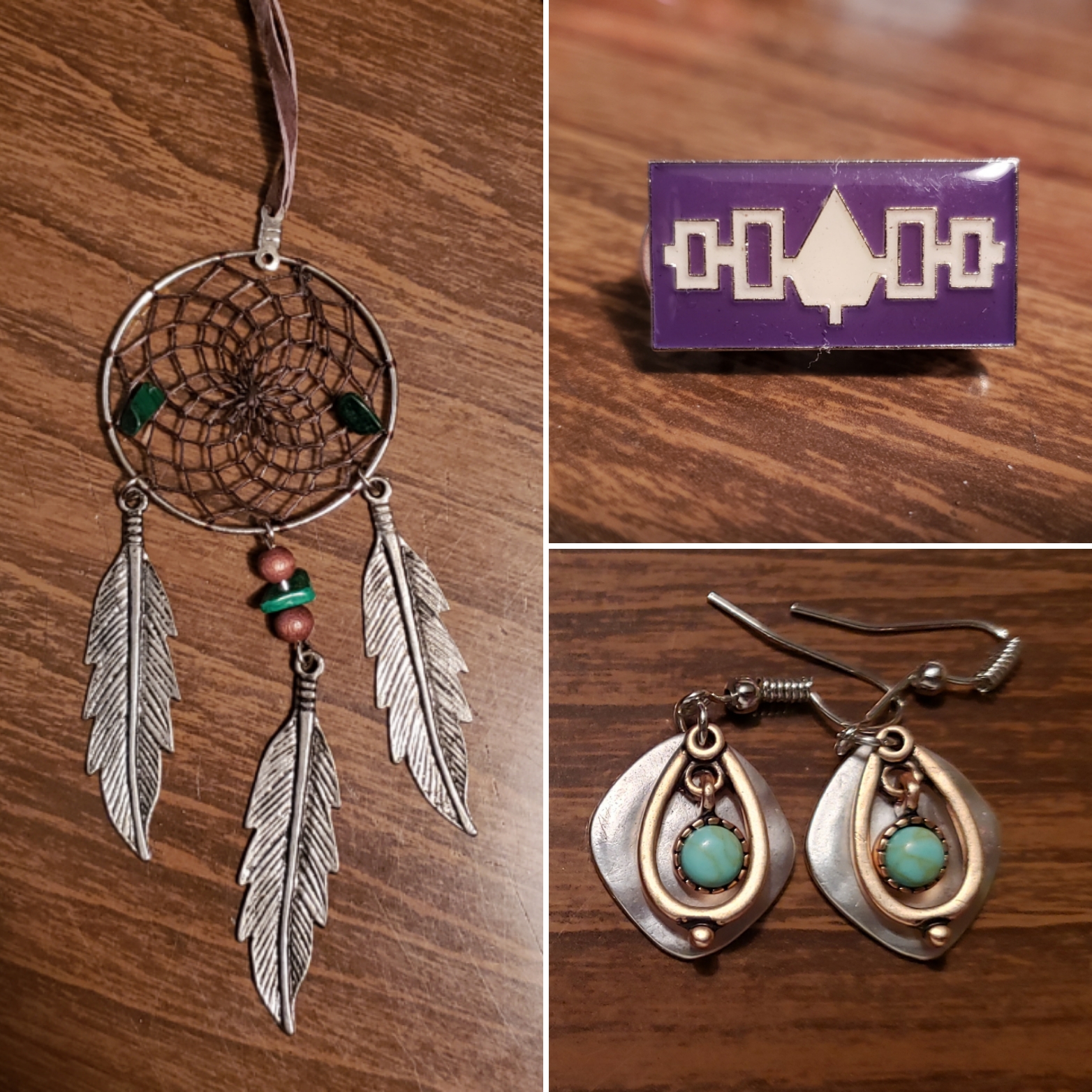
The picture below highlights my three most recent crafts:

(c)2021

The photo on the left is a dream catcher. I have had one in my bedroom for decades. I had received a small one but it has been mislaid. I chose this one while we were in Montreal. I didn’t realize it at first but it is a necklace. I have hung it over the lamp on my bedstand to keep away bad spirits and dreams.

The top right is a simple lapel pin that I purchased at the St. Kateri Shrine in Fonda, New York. It is the flag of the Iroquois Confederation. These flags can be seen flying in many places across New York State and lower Canada.

The bottom right picture is a pair of earrings I discovered in Niagara Falls, Ontario. I was drawn several times to the three colors – the silver, the bronze, and the turquoise. While this design could easily be Native American jewelry or ancient Egyptian, and I was so happy to find that they were indeed Native made. As my birthstone is turquoise, I am often drawn to the stone and color.

We Give Thanks

Standard

The Thanksgiving holiday is full of disharmony as we come to grips with our historic (and recent) treatment of the Native American peoples who were here before we arrived from Europe.

A few personal thoughts:

Growing up Jewish, this was always my favorite holiday. We didn’t need to explain our religious holidays and we weren’t excluded from the mainstream Christian holidays. This was an American holiday, one that everyone could participate in, both as a harvest holiday and as a day of gratitude. It brought our family together as well as allowing us to be a part of the greater family of our community.

This year comemorates the 400th anniversary of that traditional first Thanksgiving hosted by the Pilgrims who survived that first harsh winter. The basics of that first holiday, a gathering in gratitude brought two different communities together to share what each had. The helped each other and maintained a friendship against great odds. In modern days, we have much to be thankful for. I won’t list mine, but take a moment to reflect on your own blessings.

At mass this morning, we continued a tradition at my parish that I have always loved. Instead of a collection, we bring a bag of non-perishable food to the altar (for our food pantry and Christmas baskets), and at the end of mass, each family is given a small loaf of bread that has been blessed to share at our dinner table. We are called to pray and to break bread.

Give us this day, our daily bread…

(I apologize for the blurry picture) (c)2021

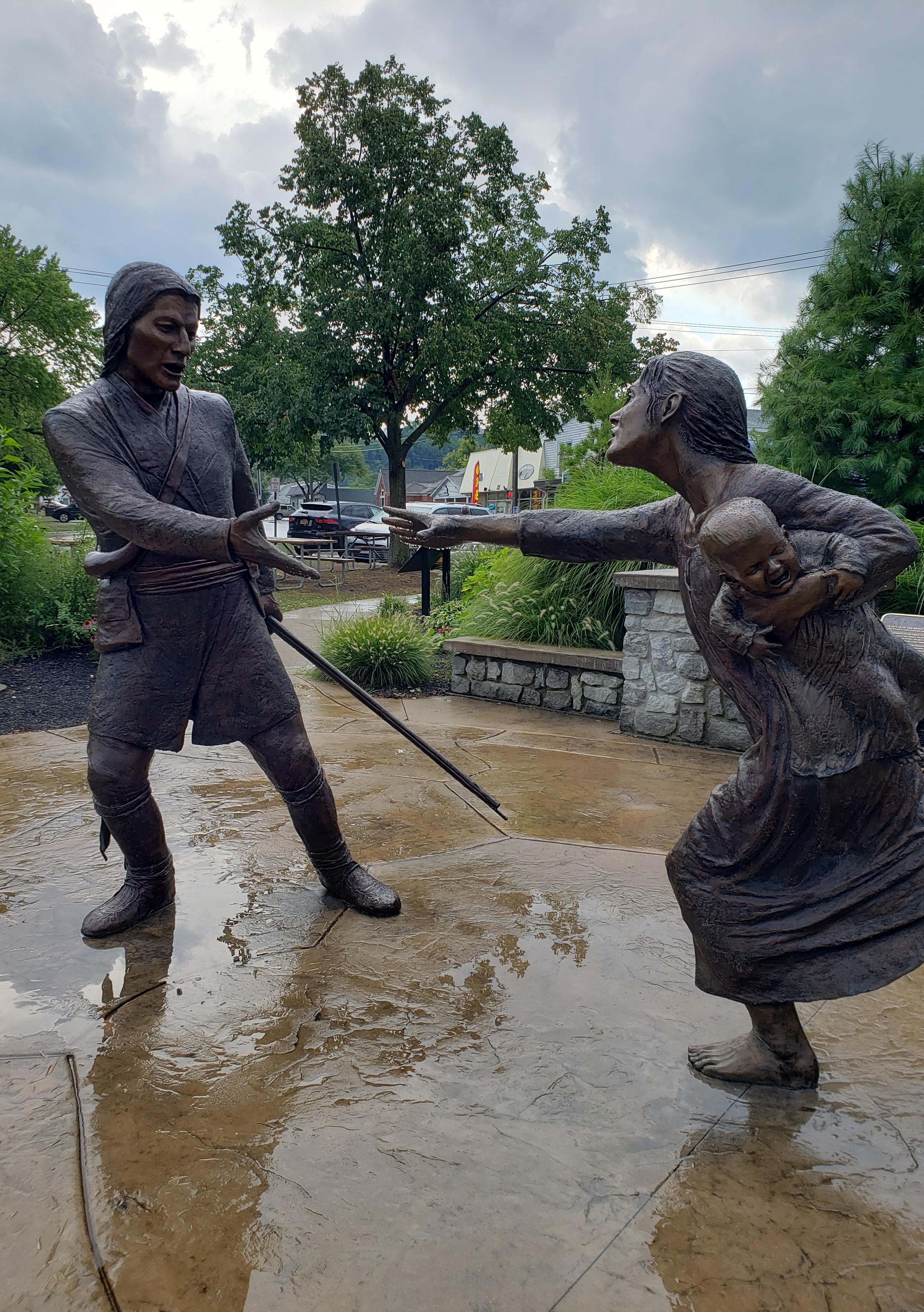
Last year while visiting Niagara Falls, New York, we learned of a nearby monument in Lewiston that commemorates the Tuscarora Indians coming to the rescue of American citizens during the War of 1812. The British invaded from Canada to the north and were mobilizing an attack on the village with their Indian allies. The Tuscarora, being outnumbered gave the appearance of greater numbers and were able to give the Lewiston families time to escape the inevitable horrors of death and watching their loved ones brutally murdered.

This monument is breathtaking in its emotion. The sculpted faces of both the mother and child fleeing and the Tuscarora helping them is so vivid, it tells the story in deeper and more profound ways than reading about it could ever do. I stood in awe of it for several minutes, even though it was pouring rain for much of the time.

Tuscarora Monument, Lewiston, NY. (c)2021
A closer look, Tuscarora Monument, Lewiston, NY. (c)2021

Enjoy the day with family and friends or alone, in peaceful quiet or boisterous noise, with turkey, stuffing, and cranberry sauce or whatever your family traditions call for.

Native American Heritage Month

Standard

I want to acknowledge that my family and I live on the traditional territory of the Haudenosaunee. I grew up knowing them as the Iroquois, which is the French name. Haudenosaunee means People of the Longhouse and they have a rich history in New York State. The map below shows the other tribes traditional to New York. The Haudenosaunee Confederacy is the oldest, participatory Democracy and our US Constitution is said to be modeled on theirs.

Credit: Aaron Carapella (c)2021

Some links to check out about Native American Heritage Month:

Beyond Each November from First Nations

Native American Heritage Month Information and Activities


I’ve mentioned my affinity for our local saint, Saint Kateri Tekawitha (pronounced “gaderi dega-gwita”). She is the first Native American saint to be canonized. Her official elevation was in 2012 and her most recent miracle was in 2006. St. Kateri was Algonquin on her mother’s side and Mohawk on her father’s.

Since I was going to visit her shrine in Quebec, I wanted to have her chaplet to pray with while I was there. I wasn’t able to acquire it until after so I drew one and used that for my prayer. Here is a photo of both of them:

Chaplet of St. Kateri Tekawitha.
(c)2021

Reflection at St. Kateri’s Shrine

Standard

[Note: This reflection ended up encompassing many things: travel, spirituality, prayer, politics, and again part of my year of mercy. I hope you enjoy all that it is, and that you see the National Shrine in Fonda, NY one day yourselves. It is a very peaceful place to visit, to sit, and to pray.]


In the early part of November, just because I was in the neighborhood, I decided to visit the Shrine of St. Kateri Tekakwitha. I had a lot on my mind and in watching what was continually unfolding at Standing Rock in North Dakota, I felt helpless towards a people that had captured my imagination and inspiration since I was a child.

I remember playing cowboys & Indians. That was a thing in the 1970s. I always wanted to be an Indian. In college I chose a class titled North American Indians as my anthropology elective. As a preschool teacher, I changed the curriculum for Thanksgiving to avoid making headdresses. I added Native foods to our school’s Thanksgiving feast. Instead of the headdresses, we made more Native American crafts and listened to the drum beats and chanting of Native American music. I can still hear the cassette in my mind as I write this.

On the hill above the Shrine, I went up to the spring, but when I followed the signs to the spring, and walked through the crunchy leaves carpeting the path, I saw the way down and the supporting handrails. I could hear the water.

But I was alone and the rest of the way was steep and I was afraid I wouldn’t be able to climb back up, so I missed the spring. I chose not to go down on the slippery leaves. I still felt okay, though, because the spring was the cherry.

At the Shrine, I stood by St. Kateri’s plaque which included the dates of her veneration and canonization. I looked out passed the sign of the cross to the rustic looking buildings to the close knit trees, their narrow trunks rising into the sun. The sun was bright that day, coming down in rays through the pines. The green grass was beginning to be covered in their shedding pine needles.

The buildings themselves were closed for the season, but you can’t close the sky or the air or the land.

I stood there and I prayed. I asked St. Kateri for her intercession for North Dakota and the Sioux and their companions and their supporters. Water protectors. An end to DAPL. An end to the violence against them by more people trying to take their land. Again.

There were water protectors in Bismarck – the citizens and politicians. Dogs weren’t sicced on them. They changed the route to the pipeline. Maybe if there were water protectors in Flint, Michigan they wouldn’t have allowed lead to be in the water.

I guess you could call this a kind of pilgrimage; with purpose and spirit. It was spontaneous and it felt right and it fit in with everything I was trying to do in this past Year of Mercy. I was guided to action, something I could actually do and my heart swelled.

I prayed for peace and I prayed for resistance and strength and the outcome that protects the land and the spirit of the land for everyone who comes after us.

At the Shrine, at the Native American Peace Grove, is the following prayer:

Speak evil of no one, if you can say no

Good of a person, then be silent.

Let not your tongues betray you into

evil. For these are words of our Creator.

Let all strive to cultivate friendship

with those who surround them.

-Handsome Lake – Iroquois Prophet

Thursday Travels – Shrine of Our Lady of Martyrs

Standard

These grounds are a reliquary to the North American Martyrs, St. Isaac Jogues and his Companions, St. Rene Goupil and St. John LaLande. In 1642, the same year Rene Goupil was martyred, the first known recitation of the Rosary was prayed here. This was also the birthplace ten years later after St. Jogues and St. Lalande’s martyrdoms, of St. Kateri Tekakwitha.

image

The view of the Mohawk Valley and River from the Shrine Grounds

image

Three Crosses bearing the names of the North American Martyrs at the Entrance, at the edge of what was the Mohawk village.

Continue reading