We Won’t Go Back.
Votes for Women video provided by the Ms. Foundation for Women

The Women’s March on Washington
Go directly to the Women’s March website before Saturday for information about the March in Washington, DC.
Reposted from The Washington Post. Read the whole article for important information.
What can I bring and what should I leave at home? Organizers are asking participants to travel light and expect backpacks and bags to be subject to search. These are some of the restrictions:
- Weapons of any kind are banned.
- Bags/totes/purses for small personal items should be no larger than 8” x 6” x 4”.
- If you require disability accommodations or related equipment, that will not fit into the above bags, enter via the ADA Accessible route: 4th St. SW from C St. to Independence Ave.
- Canes, walking sticks, walkers, and portable seats are allowed for individuals who require them for mobility and accessibility on a regular basis.
- Flags are allowed, but not on a pole. Posters and signs are allowed, but not with the use of wooden sign posts.
- Folding chairs are not permitted.
I will repost this tomorrow, on Inauguration Day, and on Saturday, the morning of the Women’s March.
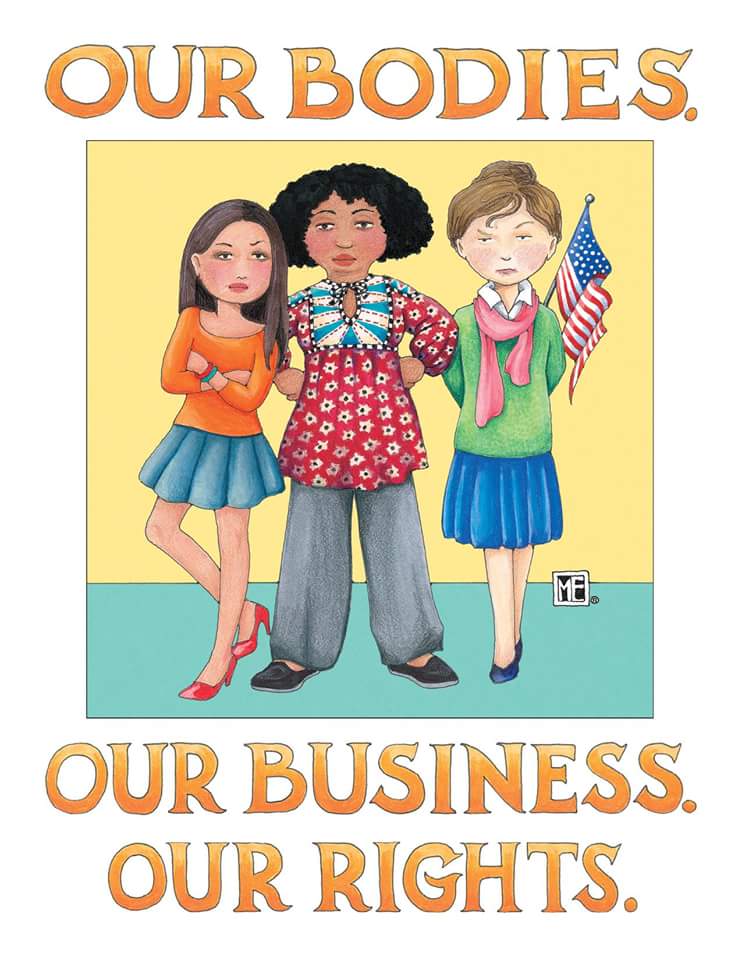
Mary Engelbreit, (c)2017. Used with permission
Mary Engelbreit has provided this graphic to be downloaded and used for free. Permission and download links available here.

Graphic and advice shared from Unitewomen.org. 1/17/17
Resist peacefully and march safely.
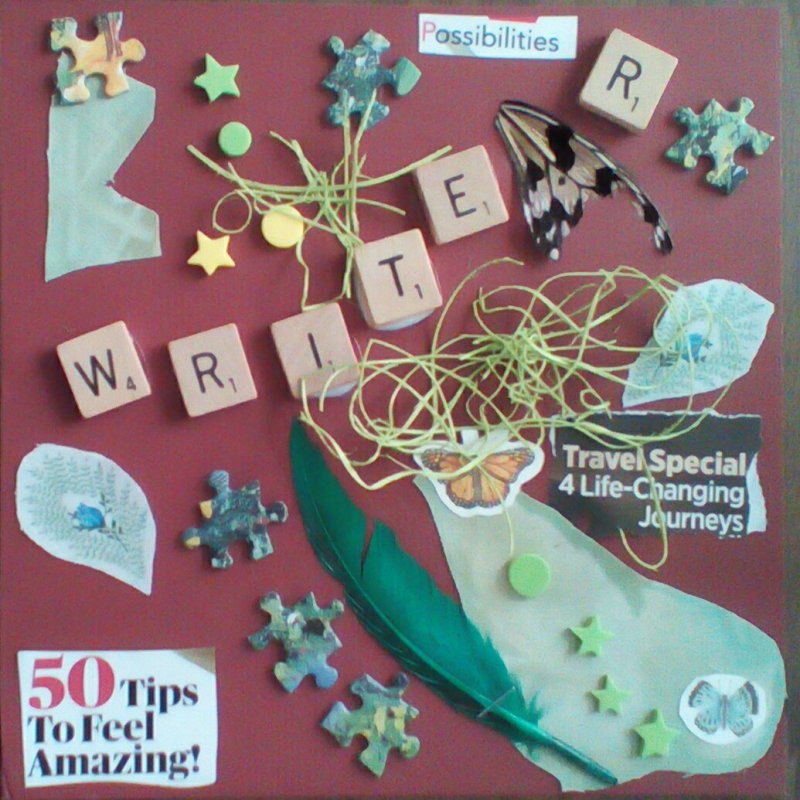
[Note: This is a repost of yesterday’s. I decided to divide it into two posts – one the actual reflection on the readings and the second to come later this week on the art project and what each item means to me and to the overall design.]
Today was the second of four weeks spent reflecting on women in the Gospel and the Gospel Women in our midst. We begin each week with a prayer, and are given a glimpse of the two women we will be reading about and reflecting on as the week goes by. We think about last week’s two women and then create art as reflection of them. Or, as I hash-tagged it on Instagram, #artastheology.
I often talk about how I use writing in many ways, including as therapy, and as theology, reflection, meditation. I would claim myself not to be an artist, but in the few retreats that I’ve been fortunate enough to be a part of led by artist, Brother Mickey McGrath, I’ve discovered a calmness from the act of coloring, and that has led to simple drawings, tracings, and copying. You can see some of my work on the pages of my website. I’ve tried to stop demeaning my art as an example to my son, who has the potential to be a true artist. He has the talent for it.
We’re supposed to reflect on them through the week, but it wasn’t until this morning that I connected to the Bent Over Woman and the Syrophoenician Woman. I sometimes have trouble connecting to parables and the abstract as well as picturing myself in ancient Jerusalem. I can also see things a little too literally. I’m not bent over, so what do I have in common with her? We don’t really know anything else about her.
But I recognized myself in her quiet; her being there, but not there for anyone else, unnoticeable, unimportant. Jesus doesn’t wait until he’s called upon; he takes the initiative, he heals her, and that’s all. It’s done.
With the Syrophoenician woman, she is there for her daughter. Jesus tells her no. She’s not one of his people, and he’s not going to help her. She talks back to him. She tells him, no, you will listen to me. She stays polite, she makes her point, and he rethinks his position. Maybe he admires her persistence, her love for her child; maybe even her impertinence.
This shows me once again that we have the ability to see ourselves in these women. We hear their stories but do we really hear them? How long does it take for us to listen?
There are women throughout the Gospel. Jesus surrounded himself with women; they were his disciples. Mary Magdalene was the first person to report the Good News. Most of the women in the Gospels aren’t named; only a handful of them, and each of them, named and unnamed, have something to teach us, to show, to tell.
These four weeks are opening our group up to us as Gospel women and reminding us of the women in our midst who embody the Gospel, Jesus’ words, His Word, and his example.
When we were “dismissed” to begin our art project, we were introduced to the items we could choose from. How will our art reflect the two readings (The Bent-Over Woman and The Syrophoenician Woman) and how are we reflected in them and with the art items?
Piles of letters, feathers, fabric, words, magazines. All things that look like nothing until we choose what appeals to us, and make it into something of our very own. No formal direction, no preconceptions, just letting the spirit work.
One of the items I chose were puzzle pieces; they were there to represent that everything fits together, it is all connected and interconnected, and after I decided on them, I remembered my words on my prayer bead: Connect, Interconnect.
It really is all connected.
[NOTES: The Bent-Over Woman (Luke 13:10-17), The Syrophoenician Woman (Mark 7:24-30)]
Today was week one of a four week mini-retreat I guess I’d call it. I hadn’t realized that there was an art component, but Brother Mickey and my son’s hesitation to explore his own talent has me stepping out more and more in the artistic realm. It’s not museum quality, but I’ve been pretty happy with what I’ve worked on.
The theme for the four weeks is exploring and meditating on the women of the Gospel as well as the Gospel women in our own lives. We all know them, and this series of exercises will let us dwell on them and ourselves with the guidance of the women mentioned in Scriptures.
Every week we will hear two readings and have the week to think on them. Lecto Divinia was mentioned as a tool which is one that I enjoy. When we return, we’ll talk about our week away and work on some kind of art that reflects our reflections.
Today, being the first day, we reflected on why we’ve come to this type of workshop and we set out to make a prayer bead. It’s not quite a bead. Some of us went long like a rosary. Some of us made necklaces, bracelets, danglies, and whatever else struck our fancy.
Mine is a necklace that i’ll wear the next four weeks, and then I will probably convert it to a danglie.
It’s something tangible to hold onto while I’m reflecting or meditating or sit next to my keyboard while I’m writing.
I anchored mine with a bell. I like d the idea of a little bit of noise in the silence of meditating.
Today’s silence was a bit too relaxing – I think I fell asleep. No one said anything, but I still feel as though I missed some parts of the talking bits.
When mine was finished, it reminded me of an everlasting gobstopper. Watch Willy Wonka making them, and then look at my photos from this morning.


One week ago, Supernatural (Episode 11.5) took the brothers to the site of the grisly 19th century murders of Andrew and Abby Borden, father and step-mother of Lizzie Borden. There is much controversy as to who murdered them in their home, the popular nursery rhyme sing-songing one theory:
Lizzie Borden took an axe
and gave her mother forty whacks,
when the job was finally done
gave her father forty one
Amazing what lurks in the childhood memories and recesses of our minds. It comes unbeckoned as if I were still jumping rope in the grassy courtyard where I grew up far, far away from the murder of her parents. Lizzie was put on trial and acquitted. She died of pneumonia in 1927. Her sister died nine days later. Despite having not seen each other in many years, they are buried side by side. There is a monument that marks Lizzie’s final resting place.
In her will, Lizzie left money to pay for the perpetual care of her father’s cemetery plot.
Lizzie Borden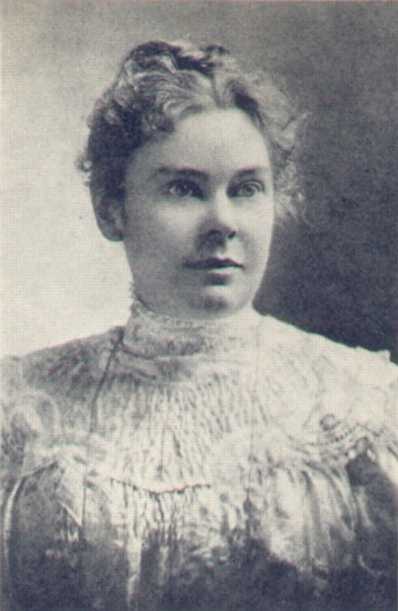
In viewing the previews for this episode, titled Thin Lizzie, they mention the family home in Fall River, Massachusetts, not all that far from where I live. I thought the Bed & Breakfast mentioned was a joke – was there really a place? One Google search and there it was. And before anyone asks, no, I have no desire or intention of visiting, no matter how close it is.
Borden Family Home that is now a Bed & Breakfast & Tourist Attraction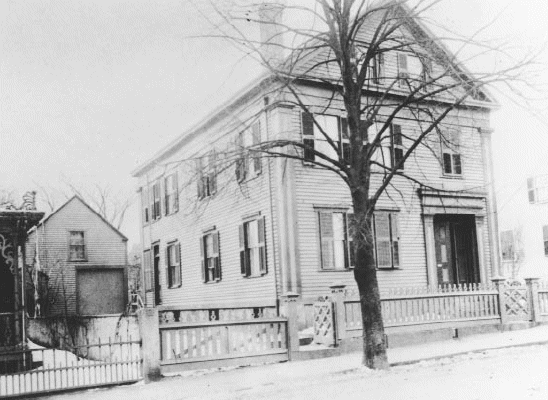
Some things should be left, and this is one of them.
On the morning after the episode aired, the Washington Post had an article, Would you buy a murder house? I personally don’t know, and I hope I don’t find out. I certainly do believe that houses can have spiritual remnants of previous owners, not to mention other places where spirits dwell. I’ve had my own encounters, the most visceral being in Gettysburg, Pennsylvania, both on the battlefield and in the Jennie Wade House, one of the places that is always on my to see list. I had gone as a child, and again while on vacation with my husband, and then went again while on vacation with my three children. There is something compelling about Jennie’s house and her story that calls to me. I’ve been searching for the last week to find the photos that I’ve taken at the house, both in the 70s with my family and again in 2008, I believe with my children. I have a memory in a darkened stone masoned cellar that you had to climb down into from the outside. I’m not sure why that flashed through my head as I’m writing this.
The house where Jennie Wade was killed
The Jennie Wade House is located on a major road in Gettysburg; one that is extremely busy with traffic. It is in a tourist area, and directly across from a Rita’s Italian Ices Shop. My kids sat on the benches eating ices, and I watched the house, seemingly waiting for something to happen. Her death created the name of the landmark, although it is not actually Jennie’s house; it is her sister’s. Her sister had just had a baby, and Jennie and their mother came to help her. Jennie was baking bread, kneading the dough in the kitchen that adjoined the street. A stray bullet came through the front door, lodging in Jennie’s back, severing her spine and killing her.
She is the only civilian casualty in the city during the Battle of Gettysburg.
Jennie Wade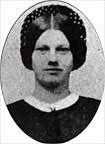
Ever since I was a little girl, I have always felt a presence in this house. Despite the obvious, poor special effects in the kitchen that give the soldier mannequin his face as he narrates the story of that fateful day, there is still something powerful in the “talking walls”. His projected face scared me beyond belief as an adolescent, and I still had that creepy vibe when I went there as an adult. I know much of the sounds and creaks were theatrics, but you couldn’t help but feel something in this house and that some of those “theatrics” weren’t all faked.
In the preview and then last week’s episode, Supernatural showed some artifacts from the house. I don’t know if they were really artifacts of the Borden murders or props made to look like the actual items, but the photo of Lizzie reminded me both of Jennie Wade and Laura Ingalls; possibly because of the camera techniques of the 19th century, the black and white, head and shoulders, the pose, the lace collars and pinned hair. It led me down a rabbit hole of googling and reading various accounts from both times of both of their lives, Lizzie and Jennie. They couldn’t have been more different, and I wondered at what point childhood me decided to devote so much of my time to Jennie rather than the nursery rhyme. Maybe I couldn’t wrap my head around the idea of killing my parents. For a variety of reasons, I would never, but still why was I compelled to ignore her? I almost skipped the episode because the subject matter bothered me. I still wonder why I was never interested in Lizzie’s story – did I think she was guilty? I don’t know. I was much more compelled to the story of poor Jennie, baking bread for the soldiers. Her fiance was killed hours before she was. Neither of them knew the fate of the other.
I do love a good mystery, but I think I might need to not only have compelling characters, but also ones that are easier to feel compassion for, to put myself in their shoes, and I suppose, no, as I’ve said, I know that I could much more easily do that with Jennie Wade.
Today, in 1864, Nellie Bly was born. Visit A Mighty Girl on their Facebook for some reading suggestions about Nellie and travel. Recently I’ve read and recommend Ninety Days: Nellie Bly and Elizabeth Bisland’s History-Making Race Around the World by Matthew Goodman.
I Am Not Your Wife, Sister or Daughter. I Am A Person..
Please read this insightful piece from The Belle Jar in regards to rape culture and the rape conviction in Steubenville, Ohio in recent days.
 Griffins and Ginger Snaps