Native American Heritage Month Can Be All Year Long If You Know Where to Go

Standard

I think when it comes to marginalized groups in this country, it is important to remember that even though we attempt to celebrate them and honor them, we can still do that on the other 364 days of the year, and not just on “their” day.

Native American Heritage Month officially ended on November 30th, and Native American Heritage Day was commemorated on November 29th.

In addition to the post last week with links to the American Indian Museum in Washington, DC, I’d like to share the following links and travel recommendations for you to consider over the next 361 days.


The Akwesasne Cultural Center is located on State Route 37 in Akwesasne, New York, near the Canadian Border. They are a museum, library, and cultural center focusing on the history and culture of the Mohawk people as well as protecting Mohawk culture and artifacts. The museum and gift shop are open T – F, 10-6, and Sat, 10-2. The library is open additionally on Monday, 9-5.

The Kanien’keha’:ka Onkwawen:na Raotitiohkwa Language and Cultural Center was established in 1978. Its mission is to preserve and enrich the language and culture of the Kanien’keha:ka (Mohawk) of Kahnawa:ke. They are located in the Mohawk Territory of Kahanwa:ke, south of Montreal, Canada.

You can also find the Welcome Center, the Kateri Interpretive Center, and the St. Francis-Xavier Mission Church (on this site since 1716) in the Mohawk Territory of Kahnawa:ke. I have toured all three of these sites and it is well worth the visit.


From The National Museum of the American Indian at the Smithsonian: The “First Thanksgiving”: How Can We Tell a Better Story?

Bluesky Handle, Puff the Magic Hater has a thread of ways to support Native people, for everything from abortion care, defending voting rights, keeping Native families together, and more. Visit the thread here.

I’d like to close this post with the words of someone smarter than me. On Nov 29, 2024, historian Heather Cox Richardson wrote on Facebook:

Continue reading
Native American Heritage Month

Standard

There is still a long way to go in acknowledging what the governments of the United States and Canada have done to the Native American and First Nations peoples of North America. I’m being naive in thinking that Native American Heritage Month in November when Thanksgiving occurs is completely unrelated. However, it is what it is.

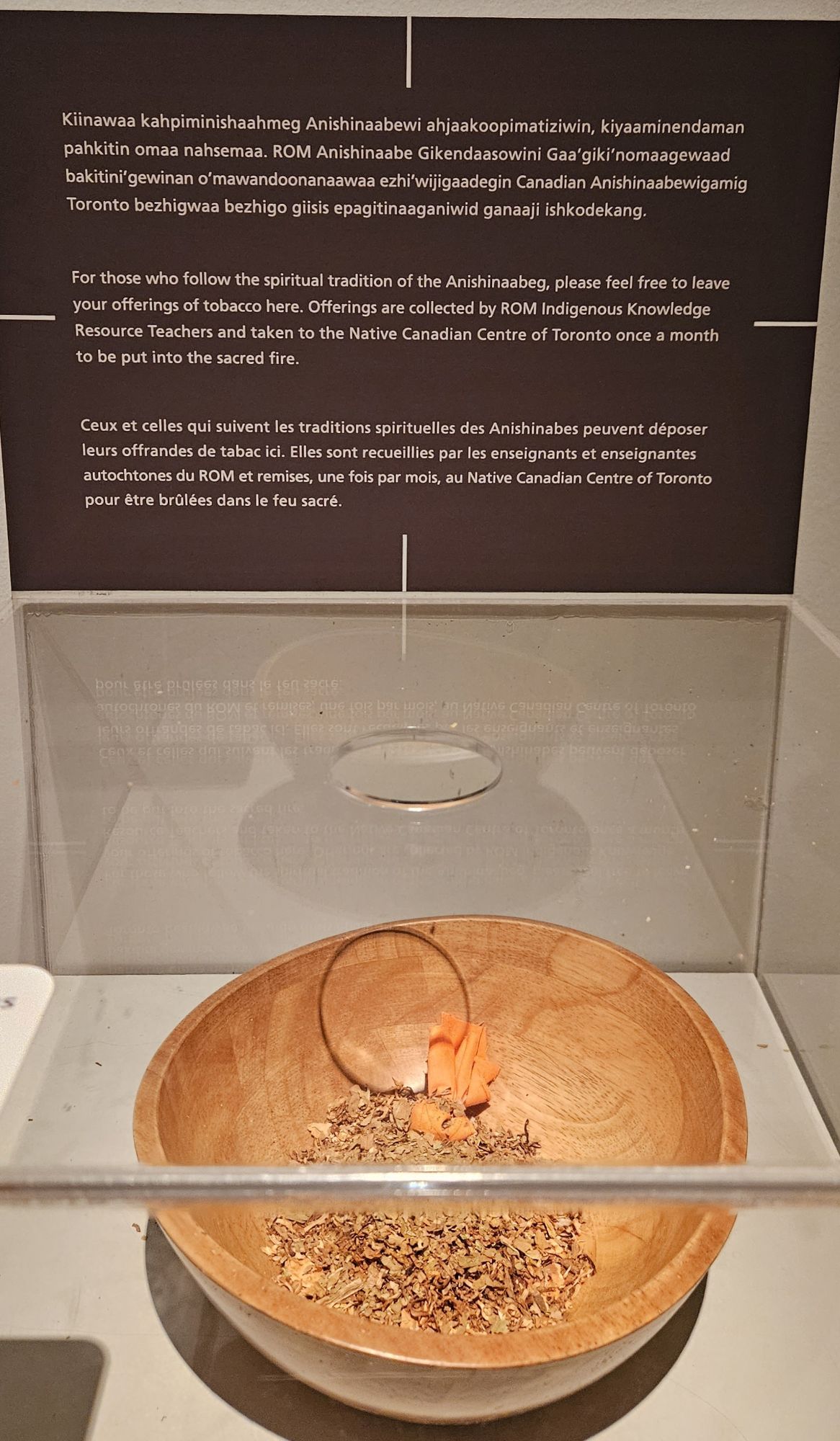
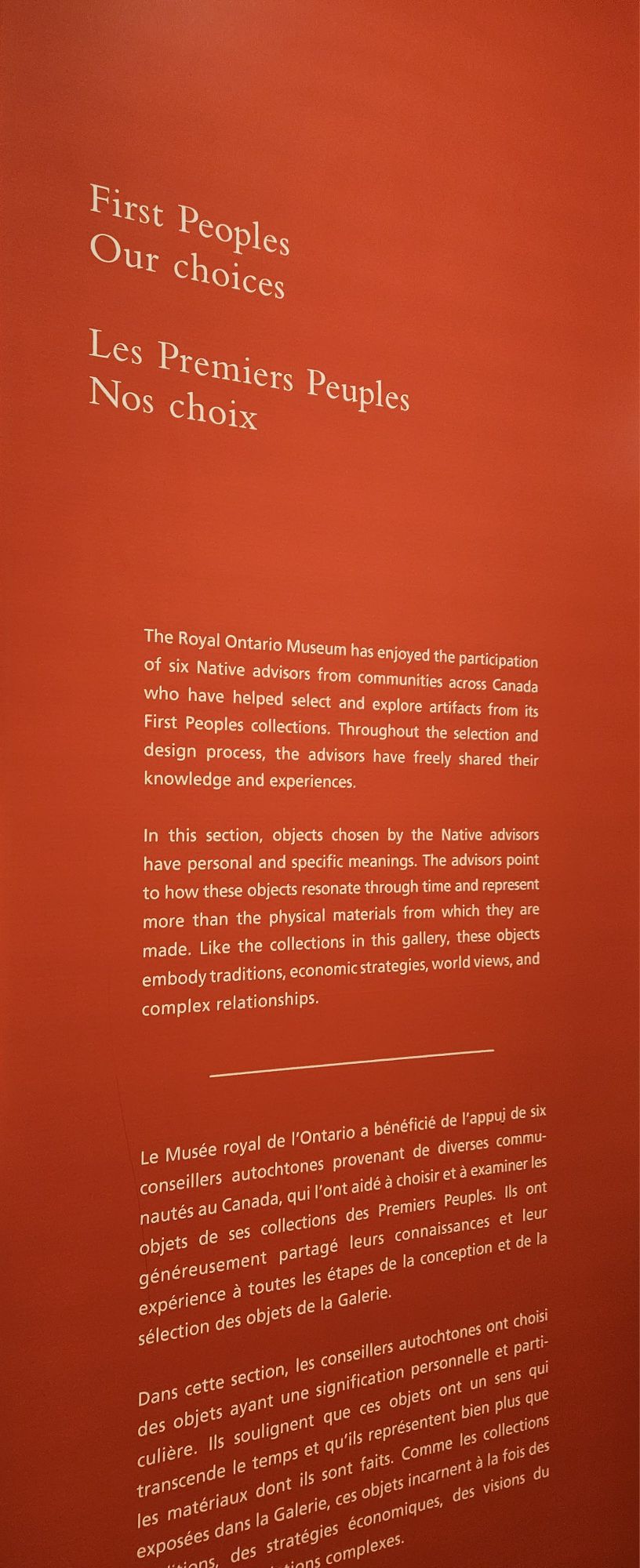
I thought I would share some of the things and signage that I noticed on our recent visits to Canada. The Royal Ontario Museum in Toronto has a large First Nations exhibit. I think it took nearly an hour to get through it and I could have probably stayed longer.

In addition to the following photos, when we visited the Canada Aviation and Space Museum in Ottawa, I noticed a sign at the entrance that said: Ingenium [Canada Aviation & Space Museum] offers free admission to all active Canadian military personnel, Canadian military veterans, Indigenous peoples, including First Nations, Inuit and Métis, and a support leader accompanying a person with disabilities. When available, presentation of an Identification Card is requested.

I noticed this in several museums including the ROM.

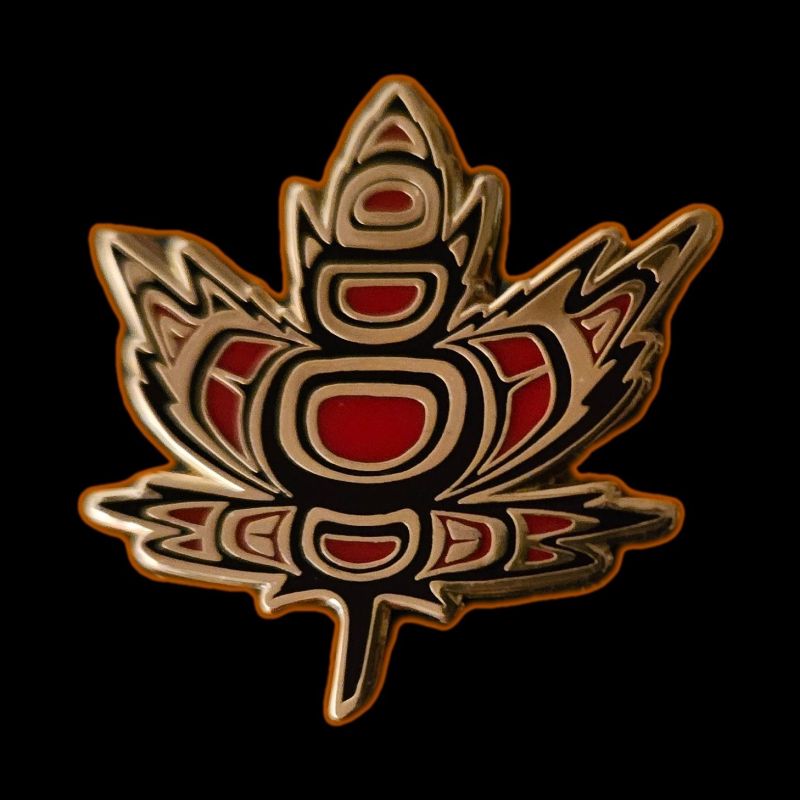
There was also a discount for the gift shop as well as Indigenous pins and souvenirs.

In the United States, it is on my bucket list to visit the American Indian Museum at the Smithsonian in Washington, D.C.. There is also a location in New York City. Check out the website for hours of operation. Admission to both locations are free.


(c)2024
(c)2024
(c)2024
(c)2024


Native American Heritage Month – Beginnings & Endings

Standard

The photo below represents both the start and the end of the day.

Beginning with the end, I have slept with a Dream Catcher for most of my life. I notice a change in my sleep when I don’t sleep with one. It creates a calm and peaceful rest as it catches the bad and lets the good continue through. This particular dream catcher is one I got in Niagara Falls, Canada. I was drawn to the colors of the beads that represent the four directions as well as the uniqueness of the center stone.

The booklet is something that I was more recently introduced to through Mohawk Elder Tom Porter of the Kanatsiohareke Community in New York. Since then, I’ve seen it in other Haudenosaunee writings and readings. It is called the Thanksgiving Address, but it has nothing to do with the Thanksgiving holiday, but in giving thanks for all that is around us in the natural world, all that we have, all that we see. It is said at the beginning of all important gatherings, ceremonial and/or governmental. The Haudenosaunee call them the Words Before All Else.

I recently used a form of this address for a meditation that I was tasked to share, and it was very well received. I read mine, but most are recited and because of that they are often never the same twice since the words change with the speaker and the timing of the gathering.

As I said at my own (non-Native) gathering, as a shared meditation, I acknowledged the land we were standing on (Mohawk), and reaffirmed that I am a non-Mohawk, non-Native, sharing their wise words.

Native American Heritage Month (2)

Standard

When we travel to places with Native American distinction and I plan to buy something to remember my visit, I look to see if the object is Native made. There are so many knock-offs and items appropriated out there that I feel that if I’m going to buy Native crafts, symbols, and jewelry, it should be genuinely made by Native peoples and the income should benefit them.

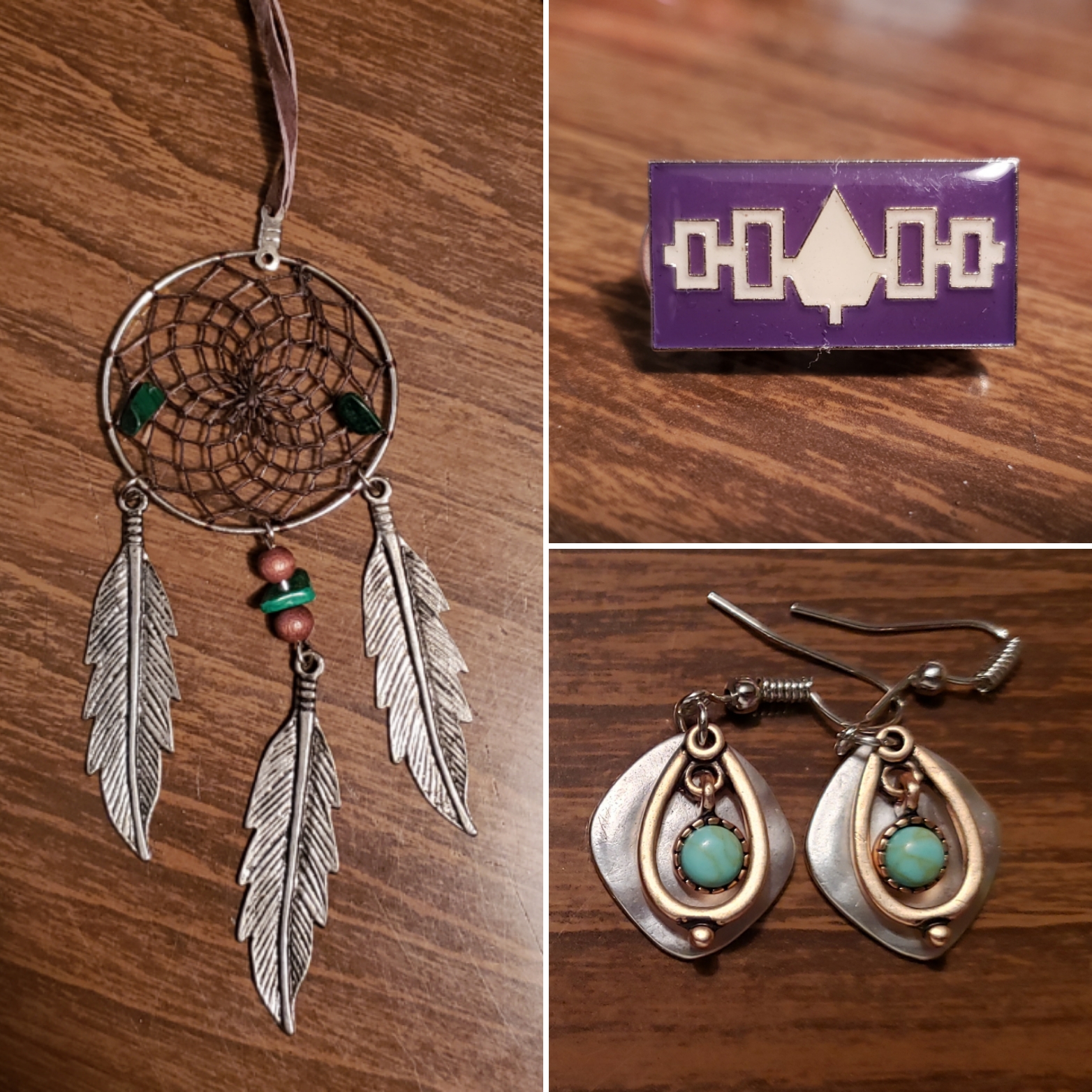
The picture below highlights my three most recent crafts:

(c)2021

The photo on the left is a dream catcher. I have had one in my bedroom for decades. I had received a small one but it has been mislaid. I chose this one while we were in Montreal. I didn’t realize it at first but it is a necklace. I have hung it over the lamp on my bedstand to keep away bad spirits and dreams.

The top right is a simple lapel pin that I purchased at the St. Kateri Shrine in Fonda, New York. It is the flag of the Iroquois Confederation. These flags can be seen flying in many places across New York State and lower Canada.

The bottom right picture is a pair of earrings I discovered in Niagara Falls, Ontario. I was drawn several times to the three colors – the silver, the bronze, and the turquoise. While this design could easily be Native American jewelry or ancient Egyptian, and I was so happy to find that they were indeed Native made. As my birthstone is turquoise, I am often drawn to the stone and color.