Crowdsourcing Travel

Standard

Earlier in the month our family was having some difficulty deciding on a vacation destination. Our original plan was to take nine to ten days, but our son couldn’t get the first day off (or approved yet) and a very close friend is getting married during the second weekend. Consequently, our time away was cut down to five days. That’s still a decent chunk of time, and we are very grateful to be able to take our kids somwhere special.

I made a Facebook post solicitating suggestions from my friends. I gave them three criteria:

1. Nothing south of the Mason-Dixon Line

2. Nothing west of the Mississippi

3. Able to enjoy ourselves for 5 days with no air travel.

I’m sharing what places were suggested along with some links to the area tourism and travel guides.

Fort Wayne, Indiana

     Visit Fort Wayne

Maine

     Visit Maine

Nashville and/or Memphis, Tennessee

     Nashville

     Memphis from Lonely Planet

     Memphis Travel – free map and guide

Pittsburgh, Pennsylvania
     Visit Pittsburgh

Ontario, Canada – Toronto and Niagara Falls (or Niagara Falls, NY)

     Toronto from Lonely Planet

     See Toronot Now

     Niagara Falls, Ontario

     Niagara Falls, NY

General Travel Info

AAA
Lonely Planet

Gun Violence Awareness

Standard

Last weekend were Wear Orange events across the country bringing attention to gun violence in this country. While I was thinking about our gun problem in this country I wasn’t able to post the resources I’ve collected until today.

Some regulation on the 2nd Amendment is consistent with the regulation on every other amendment, including the original Bill of Rights. I don’t understand the controversy.

Organizations and Twitters to Check Out:

Moms Demand Action
Change the Ref
Everytown
Wear Orange
A March for Our Lives
David Hogg 
Emma Gonzalez 
Eric Swalwell (Presidential candidate running on a gun control platform and California Congressman)

Fred Guttenberg
Gabby Giffords (former Congresswoman from Arizona)
Manuel Oliver
Mark Kelly (husband of Gabby Giffords and candidate for Senate from Arizona)

Shannon Watts (who has a new book out, Fight Like a Mother)

Harriet Tubman – Reflection and Opinion (Cash Value: $20)

Standard

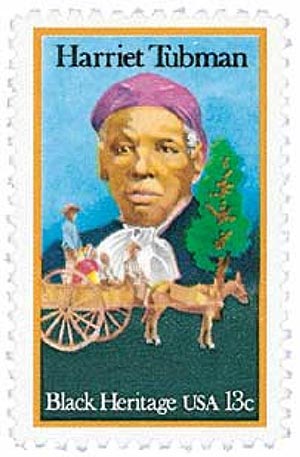
Harriet Tubman postage stamp, 1978. Public Domain. (c)2019

I had intended to share a post about my attendance at the new Tubman-Seward statue dedication in upstate New York, and I will do that later in the week. But then with the announcement that the Tubman twenty dollar bill was postponed, I wanted ot share some of my thoughts o that, and that will follow, however these last two weeks have been noting short of coincidences if there really are such things.

Harriet Tubman was one of those historical figures remembered from childhood, the elementary grade lesson watered down and never addressed again.

When I saw the opportunity to attend the statue dedication, I took it, and I was moved beyond what I could have expected. So much so that the next day, I drove my family there. While we were there we met a woman and I got to share some information with her about Harriet and William Seward. She in turn told us about a food truck gathering with proceeds going to ARC. We went over, had a good lunch, and helped a great coase.

Then, yesterday I attended the last of a four week series at a retreat center. This one was called A Dreamer’s Mind, and the presenter began with the story of Harriet Tubman! I leaned even more than I’d learned at the dedication, and after all of these meetings with Harriet throughout the last few weeks, I know quite a bit more and I feel as though I’m carrying a small piece of her with me. Not a bad companion.

This was what I wrote at the first reflective time:

“Well, well, well, we meet again! LOL!

She’s everywhere for me recently. I have two blog posts that I’m preparing for and having just been to her statue at the library, she’s on my mind quite a lot in the last two weeks.”

And I think this is why when the decision to put Harriet on the $20 was reversed, or postponed or whatever the Secretary of the Treasury called it, it hit me a little harder than it normally would have. In fact, Harriet’s appearance on the $20 bill came up in the group conversation, and no one else had heard about the postponement except for me. It isn’t the same as others’, but sometimes I feel as though being so aware of what’s going on in the world is my cross to bear. It’s one anyway. A topic comes up, and I know something. Do I speak out? Or stay quiet as if this public information is a secret because I’m the only one in the room who’s heard it?

In this case, I spoke up. I usually speak up. I will admit to being snarky and just a little petty where the President’s involvement was concerned, and I apologized to the two women I was speaking to (although they didn’t disagree with my sentiment) and was able to say what I wanted to in a more diplomatic, all audience inclusive way.

I think the President’s a racist; at a minimum a bigot who believes every negative stereotype about minorities. I also think that since the President admires Andrew Jackson, he doesn’t want to replace him with a black woman. It’s really that simple. He could have taken the high road and said, ‘you know what, I didn’t make this decision, it was already set in motion, let it continue,’ but this President’s pettiness knows no bounds.

It’s not just that President Jackson was also a racist or even that he wasn’t a great president or stand out human being, but the fact that he perpetuated the genocide of millions of Native Americans by force marching them west, and not providing for them as promised in the treaties of the Grant Administration should be enough to keep him off the bill in the first place. White Europeans took this land. }That is our legacy. It doesn’t determine our future, but we need to acknowledge it, and at the same time acknowledge the Native Americans, not as a collective, but as individual tribes with different cultural and religious practices. They were here first, and it is our obligation as Americans to never forget their sacrifice. Despite being involuntary, it was still a sacrifice that every American should know.

What does this have to do with Harriet Tubman?

We acknowledge her existence in the way we water down what we deem too controversial. I’ve learned things in the past two weeks that I’ve never heard of about her, and she is taught in every school in America. She lived and died and is buried in my home state of New York. How did I not know these details of her life?

One thing that Harriet Tubman’s face on our money is a step towards recognizing who built this country. Our monies, for the most part represent our founding; our history. We need and should know our history, and having it represented on our money is wholly appropriate. But slaves also built this country. They sacrificed their families and their lives. Once freed, they build their lives from nothing. The pioneered the west. The raised crops. They’ve done everything free Europeans did except they did it under much worse conditions that are still seen in many ways today.

I look forward to Harriet Tubman (and other women and people of color) being included in our country’s public representation, on money, naming streets and buildings, and other ways we express our gratitude for our historical counterparts.

I want to share this conversation on Nicolle Wallace’s show, Deadline: White House about the change in the status of the $20 bill.

For anyone who wishes to have their own (legal tender) Tubman Twenty, here is a link for the stamp. I have not ordered one, so I do not know anything about this seller.

Nellie Bly Interviews Susan B. Anthony (1896)

Standard

​In March, I published a piece on Susan B. Anthony, and while researching some parts of her life and deciding what to include in my post, I came across an in-depth interview that she gave to Nellie Bly, culturing best known for her Jules Verne-esque trip around the world in less than eighty days (72 in point of fact). I bookmarked it for a later post and finding out Nellie Bly’s birthday and then planning this week after that to focus on her work.

I think I was kind of taken with the idea that these two great, pioneering  women not only lived in the same era, but crossed paths in such a way to make an impact one hundred twenty years later. This conversation is the exemplification of a study of women’s history.  In a lot of ways, I can envision myself following in their footsteps through suffrage, journalism (writing), traveling, and it’s amazing. I don’t think I take voting for granted, but I absolutely feel it’s everyone’s right, but also obligation to vote in every election, not just the big ones. They’re all big ones. Nellie Bly sending in that first letter to the editor is just the essence of confidence that I aspire to. When asked, I still respond with a question mark after ‘I’m a writer’. I didn’t feel it at the time I was traveling, but in retrospect I do feel the Nellie Bly adventure vibe in my solo trip to Wales. In the moment, it was an adventure, but it was also scary, and in reading about her trip around the world, I don’t get the scared feeling from her. I will actually begin her own writing of her trip, and I hope to share my thoughts with you towards the end of the week.

In the meantime, these links will take you back to the late nineteenth century and you can fill yourself with our ancestors and inspirations.

Original New York World newspaper article, digitized

Easier to read in The Selected Papers of Elizabeth Cady Stanton and Susan B. Anthony: Volume IV: An Awful Hush 1895-1906, edited by Ann B. Gordon (Nellie Bly interviews Susan B. Anthony)

My Easter Bag

Standard

​It’s hard to believe that Easter was only one week ago. Most of my Holy Week was spent in church between morning prayer services, the parish community dinner, evening prayer and mass. There is a lot going on and a lot packed into the second half of the week following Palm Sunday. The three days of Holy Week prior to Easter Sunday is called the Triduum, which is basically one long service beginning on Holy Thursday with the sign of the Cross and ending at the Easter Vigil on Saturday night the same way. At our parish we have hospitality or receptions on Saturday morning and evening, the former in celebration of the lighting the Easter fire and the latter in celebration of welcoming the new members to the Catholic church through the RCIA program.

It’s very fulfilling and spiritual, but it’s long and it’s tiring. Since my first Vigil, one of my yearly customs is that I will bring a small tote bag along with my usual purse to carry a water, cough drops, tissues. I’ll add my worship booklet so I have it for the entire three days.

At some point during Holy Week, I’ll realize that I don’t really need my pocketbook if I toss my wallet and kindle and phone and other necessities into the tote bag. That way I only have one bag to carry and keep track of.

Genius, right?

Well, every year, I’m surprised by the time Saturday afternoon rolls around at how heavy this tote bag is. I don’t realize it’s getting heavier as I add things one at a time until the very end when I go to grab it out of the car, and it pulls me back in.

Here is a picture of it when I arrived at church for the lighting of the Easter fire on Saturday morning:

The inside of my Easter bag on Holy Saturday morning. (c)2019

It has my large wallet, kindle, hearing aids, extra batteries for the hearing aids, clipboard and pad if the urge to write grabs hold of me, a pen, packet of tissues, bag of cough drops, daily reflection book for Lent, cell phone, rosary, Triduum worship aid, any of the other worship aids that I’ve collected during the week, bottle of cold water, umbrella for the upcoming rain (it wasn’t raining when I arrived but it was raining very hard when we all went outside to light the fire). I think there may have been a few other odds and ends in there. All I know is it was really heavy by the time I pulled it out of the back seat.
Admittedly, and embarrassingly, this one week later, it still has stuff in it, and needs to be completely emptied and put away. It doesn’t have much, but still, it’s long past time.

Writing Advice – Stephen King

Standard

Stephen King is one of the most prolific writers in the world. I’m embarrassed to admit that I have never read any of his fiction. Not one. I’ve also never seen the movies except part of Stand by Me. His genre of horror has never been something in my wheelhouse, but I did admire him as a writer and a person. I follow him on Twitter and he wrote a magnificent essay on JK Rowling for Time magazine.

The one book I did manage to acquire and read was his memoir/advice for writers book, On Writing. I found it engaging, brilliantly written and so beautifully in his voice. Writing this reminds me that I should re-read it just because.

Here are a few of his quotes that I feel drawn to: 

  • The scariest moment is always just before you start. After that, things can only get better.
  • Let me say it again: You must not come lightly to the blank page.
  • You go where the story leads you
  • If you want to be a writer, you must do two things above all others: read a lot and write a lot.

  • I’m convinced that fear is at the root of most bad writing.

Stephen King’s Writing Toolbox is a strategy after my own heart. I love the idea of tools and toolboxes to get us through everyday life – that specialized item that is exactly what we need right at that moment in time.
Two Interviews with Stephen King

with The Independent (from 2017)

with The Atlantic (from 2013)

Ways to Pray with Prayer Cards

Standard

I’ve mentioned my friend, Brother Mickey McGrath often. After one of his retreats I come away with a renewed sense of peace in myself and my faith as well as a renewed energy to expand my creativity. You often see that depicted on these pages with my photography and artistic attempts, some of which are quite good, and others….well, I tried.

One of his new products is a card set called Prayer Starters. Below the cut, you will be able to click on the picture to be taken to his website to purchase them if you are interested in that. Simply, they are a set of about thirty cards with an easel under the theme of Wise and Holy Women featuring the words of the four women Doctors of the Church, Sts. Hildegard of Bingen, Catherine of Siena, Theresa of Avila, and Therese Lisieux plus Dorothy Day and Sister Thea Bowman combined with Brother Mickey’s beautiful art.

I’ve been using them as a daily devotional although I haven’t swapped out the cards every morning. Sometimes I leave them up for a few days and let them speak to me as long as I can feel it. This usually lasts two days. 

I mention this because two cards ago I came across a quotation from St. Hildegard of Bingen:

“Only when we connect misery to our cravings can we begin to solve our dilemma.”

I did not understand its meaning. I read it again, and then went about my work. Whenever I passed by my dining room table, I read it again, paused a moment, thought to myself, again, that I do not understand this; what does this mean?

Some of you may read it the first time and think, of course, this is not hard, what is she not seeing?

Honestly, I didn’t know.

I began to read it a bit more slowly. I’d sit with it and read it out normally, then a bit slower, and then I’d emphasize the punctuation, adding in my own commas, like you would with a poem, each line paused for absorption. I think I did this for two full days. I still did not get it.

Simple words, but they simply weren’t reaching me.

I don’t know how many days passed, each day I’d read the card at least once, more likely twice. I stared at the card on the easel. I held the card between two fingertips. I read it over and over and over again.

One morning, probably about very nearly a week ago, I read it, each word on my tongue, my inserted comma giving pause, and as I reached the period at the end, my eyes opened wide.

It was there!

Right there the whole time.

And now that I’d seen it, I couldn’t unseen it; I couldn’t not understand the meaning, and the most significant part was how much it related to my life, to my cravings of things and thoughts and symbols and signs. Little things and big things, and there in all of it wasn’t misery but the idea that misery could be brought on with too much of the cravings or the opposite that if I think of the cravings as misery perhaps I’d crave less and therefore be satisfied with less. And maybe that’s not it at all, but that was what it was for me.

Because that’s what has happened in my life. I can feel it and I’m living it in some ways. I am not a pious, ascetic, silence seeker, but I also do not crave everything the way I once did. Not only do I prioritize secular, monetary and time things, but I am also prioritizing my faith in relation to my secular life as well as the items of faith that I want to follow and adopt into my lifestyle. That’s not to suggest a change in doctrine, but in a feeling of where I want my faith to bring me, and for me to bring to others.

Only when we connect misery to our cravings can we begin to solve our dilemma.

Card from Prayer Starters Wise and Holy Women Card Pack, Brother Mickey McGrath, All Rights Reserved. Photo mine. (c)2019

Continue reading

Transgender Day of Visibility

Standard

Today is the Trans Day of Visibility.

It is a good time for us who are not trans and are allies or want to spread awareness of trans issues and areas where we can do better to support all transgender people. This day has been celebrated since 2009, started by Rachel Crandell when she saw that there weren’t any trans acknowledgement days apart from the Transgender Day of Remembrance where trans murders from the previous year are memorialized. As an ally, I too was looking for a positive day to explore trans issues and celebrate trans lives.


Links to start off your exploration:

Trans Day of Visibility Facebook

Transgender Law Center

National Center for Transgender Equality

NY’s Gender Expression Non-Discrimination Act (GENDA)

Transgender People and Bathroom Access

Sister Thea Bowman, A Ministry of Joy

Standard

Sister Thea Bowman addressing the USCCB:

Sr. Thea Bowman was born in 1937 on December 29th. This was in Mississippi and her parents named her Bertha. She was the granddaughter of slaves; her parents were a doctor and a teacher. She was raised Methodist, but when she was nine years old, she converted to Roman Catholicism. At 15, she joined the Franciscan Sisters of Perpetual Adoration.

Over the years, she received a B.A., a M.A., and a PhD in English and then went on to teach. She also received an honorary doctorate in theology from Boston College. She was a poet, a preacher, and a teacher, and she used all of those embodiments to bring a light to her calling that couldn’t help but be infectious to her contemporaries and those of us who have come after and continue to read of her works.

“When we understand our history and culture, then we can develop the ritual, the music and the devotional expression that satisfy us in the Church.”

She said this and it illustrates her impact on the development of a particular worship dedicated to and for Black Catholics. She was invaluable in the 1987 publication of the Catholic Hymnal, Lead Me, Guide Me: The Arican-American Catholic Hymnal.

Her essay, The Gift of African-American Sacred Song can be downloaded by clicking on the title.

Her “ministry of joy” led the Diocese of Mississippi to bring her on as a consultant for intercultural awareness. In reading up on Sr. Thea, I really preferred this descriptor of intercultural rather than multi-cultural. It feels more natural to me. A person who knew her called her “the springtime in everyone’s life,” a visual that leaps out in color and light and blue sky.

Imagine what more she could have done and influenced in the past twenty-nine years had she not died at the young age of 52, on today’s date in 1990 of bone cancer.

There are at least twelve institutions named for her from Boston in the east to as far west as Illinois.

The Diocese (of Mississippi) has begun the research into Sr. Thea’s “heroic virtues” after which a cause for canonization can be opened in Rome if warranted.

Two of her written works you could look into for more from Sr. Thea are:

Families, Black and Catholic, Catholic and Black. Washington, D.C.: United States Catholic Conference. Commission on Marriage and Family Life, 1985.

Thea Bowman: In My Own Words. Liguori, Mo.: Liguori Publications, 2009. ISBN 978-0-7648-1782-3. index of Bowman’s speeches, writings, and interviews, with a brief biographical sketch and epilogue (with Maurice J. Nutt)

I will leave you with her own words that spoke to me prayerfully earlier this week:

“Maybe I’m not making big changes in the world, but if I have somehow helped or encouraged somebody along the journey, then I’ve done what I’m called to do.

Writing Memoir: All About the How (Link)

Standard

It’s that time of year for me again – the twice yearly, six week memoir writing workshop returns to my local library. If you’re interested in past prompts, just go to the left sidebar of this page and search the word, prompts, and write away.

Instead of sharing twelve weeks of our prompts with you, I thought this spring I would do something slightly different and share some advice that I’ve found helpful as well as resources and links. I will also be updating my Writer’s Resource Page in the upcoming days.

I discovered this blog from South Africa and writer, Amanda Patterson: Why Writing a Memoir is All About the How. Apart from this article, I do not know anything about any of their services and products that they have for sale.

Two of the things I took away from this was setting and timeline. These are two things that I don’t often think consciously about when writing memoir despite my wonderful teacher mentioning it fairly regularly.