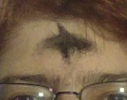
The Easter Fire

Standard

I didn’t know what to expect at my first Easter fire. It was nine years ago, and I still remember it as if it was this morning. I had decided on Tuesday of Holy Week to attend my first mass (thank you Tim for suggesting it), and then my second mass on Wednesday. I thought I was just getting into the groove of daily mass when I turned up on Thursday to what was a prayer service and not a mass. Holy Thursday Mass was at night. The same occurred Friday and Saturday mornings.

But Saturday morning was different. When I arrived there were already several people outside preparing the firewood, the kindling and the tall stone brazier for the lighting of the Easter fire. I didn’t know at the time that the fire is lit in the morning after the prayer service and tended to for the rest of the day by parishioners. This is done regardless to weather and I’ve seen some years in the rain, in the cold, in the wind; sometimes all three simultaneously.

At sundown, after burning all day, the fire is used to light the Paschal candle (this candle represents the light of Christ coming into the world), which is then carried into the church and is used to light all of the individual handheld tapered candles inside the church for the Easter Vigil. As an aside, the entire church is in darkness and as the candles are lit and the people in the pews are illuminated, it is a magnificent visual as well as spiritual to have the darkness overcome in the manifestation of the engulfing light, filling the entire church with the warm glow of hundreds of candles and the quiet singing (three times during the procession) of the light of Christ with the congregation responding, thanks be to G-d. After that, the Exsultet (the Easter Proclamation) is read or rather chanted.

Before any of that happens though, hours before, the priest lights the Easter fire in the presence of parishioners.

I was a few people back from the stone container that first year. I couldn’t see very well. I was wrapped up in a large scarf, trying to brace myself against the wind. It wasn’t strong enough to push anyone over, but it was just enough to be annoying to the priest and his assistants who were attempting to light the fire. It was also very, very cold. I still wasn’t sure if I belonged here.

I knew the moment the fire was lit. I felt something touch me inside. I couldn’t see it, and it was a split second or more before the exclamation of the crowd in the front let the rest of us all know it was lit. I heard the flint and stone, that sharp scraping that has to be done in just such a way to spark, and it took more than once or twice.

When the spark caught the paper and dry sticks I heard a whoosh sound, but it hadn’t come from the fire, and I felt that whoosh inside me. I was startled by it, I was chilled, and not by the cold. Something in me had changed or pulled me one metaphorical step forward. It wasn’t this moment that drew me to conversion, but this moment stands out as one of those unexplainable, miraculous openings to a wellspring of new emotions. Tears came involuntarily to my eyes.

It was deeply moving and as everyone moved back inside to the gathering space sharing coffee, bagels, and donuts, I was lost in my thoughts wondering what I had witnessed, what I was feeling emotionally, savoring the continuing shiver in my soul.

Gratitude by Mary Oliver

Standard

Mary Oliver’s Gratitude Poem came to my notice while I was searching for quotations on gratitude for another project. I am only familiar with Mary Oliver from one of her famous quotations that many religious people use in their meditations and artwork: “Tell me, what is it you plan to do with your one wild and precious life?” and a short book that I borrowed from the library (Upstream: Selected Essays).

As I read this poem, and then read through it again I was distracted how each of Oliver’s stanzas answered a question. It was thought-provoking and contemplative and I immediately thought this would make a great writing exercise; a way to stretch myself whether as poetry or prose. A push like the daffodils poking through the soil.

I still don’t know for sure if her poem should be read prior to the answering of the questions, but I would suggest doing whatever feels right for you at the moment. Obviously you can’t unread the poem so make your choice with care.

I suppose you could answer the questions and then read the poem and perhaps go back a few days later with the questions again. It may be a nice exercise on its own to see if the original answers changed in the ensuing days along with another reading.

For me, I will read the poem and savor it and then I will continue the writing exercise. I plan to come back to the questions next month from a different perspective, perhaps on an outing or after church services. There are many ways to approach something as profound as Mary Oliver’s writings.

Mary Oliver’s poem appears below the highlighted questions and my answers to the questions appear below that.

In doing this exercise, I sat in the quiet, in the stillness and let the questions speak to me. What do you hear them speaking to you?

What did you notice?
What did you hear?
When did you admire?
What astonished you?
What would you like to see again?
What was most tender?
What was most wonderful?
What did you think was happening?


Mary Oliver – Gratitude Poem

What did you notice?

The dew-snail;
the low-flying sparrow;
the bat, on the wind, in the dark;
big-chested geese, in the V of sleekest performance;
the soft toad, patient in the hot sand;
the sweet-hungry ants;
the uproar of mice in the empty house;
the tin music of the cricket’s body;
the blouse of the goldenrod.

What did you hear?

The thrush greeting the morning;
the little bluebirds in their hot box;
the salty talk of the wren,
then the deep cup of the hour of silence.

When did you admire?

The oaks, letting down their dark and hairy fruit;
the carrot, rising in its elongated waist;
the onion, sheet after sheet, curved inward to the pale green wand;
at the end of summer the brassy dust, the almost liquid beauty of the flowers;
then the ferns, scrawned black by the frost.

What astonished you?

The swallows making their dip and turn over the water.

What would you like to see again?

My dog: her energy and exuberance, her willingness,
her language beyond all nimbleness of tongue,
her recklessness, her loyalty, her sweetness,
her strong legs, her curled black lip, her snap.

What was most tender?

Queen Anne’s lace, with its parsnip root;
the everlasting in its bonnets of wool;
the kinks and turns of the tupelo’s body;
the tall, blank banks of sand;
the clam, clamped down.

What was most wonderful?

The sea, and its wide shoulders;
the sea and its triangles;
the sea lying back on its long athlete’s spine.

What did you think was happening?

The green beast of the hummingbird;
the eye of the pond;
the wet face of the lily;
the bright, puckered knee of the broken oak;
the red tulip of the fox’s mouth;
the up-swing, the down-pour, the frayed sleeve of the first snow—

so the gods shake us from our sleep.

[Gratitude is copyrighted to Mary Oliver and her Estate and Publisher. No money is made on the use of this poem.]


I sat for some time and thought about the words in the questions. I decided to go back about one year and contemplate the pandemic in all the ways that the questions made me think about it. Some things have changed – more people out and about, masks (we weren’t wearing them a year ago or we were just starting), vaccinations. It’s good to look back as we begin the real recovery in so many ways – economically, yes, health, yes, but also emotionally. It feels like coming out of a shell or a shelter after a storm.

What did you notice?
the quiet.
my heartbeat.
no cars, no people walking, no dogs.
at the grocery, head down, everyone getting in and getting out.
tension.

What did you hear?
on my excursions to my front yard hearing the breeze,
the birds,
the church bells,
a stray car,
and one kid in a stroller says hi

When did you admire?
my kids doing their schoolwork at home.
the school district keeping it all together.
the grocery store workers.
Zoom.

What astonished you?
the incompetence.
the kindness.
the quiet of all of us at home at the same time.
how frightened I became, especially of the unknown.

What would you like to see again?
the retreat house
Canada
the inside of a Starbucks
church family

What was most tender?
my kids still cuddling just a little.
seeing Onward – the last movie I saw in theatres.
cooperation.

What was most wonderful?
not running out of toilet paper!
livestream masses,
Zoom retreats,
weekly telephone rosary.
information.
Dr. Fauci.
podcasts,
Books.

What did you think was happening?
the end of the world – just a little bit…
a reset,
a chance to re-prioritize,
re-engagement,
reflection.
expect the unexpected.
too much time and not enough.

A Labyrinth for Your Thoughts

Standard

A little over two years ago I discovered labyrinths. I happened upon one at a local church and it immediately drew me in and down the proverbial rabbit hole. I was fascinated by it. It wasn’t just the shape, the circular path, but also in this case the courtyard it was in. There were windows set in stone walls with worn wooden benches separated by narrow walls giving it a medieval structured look. Opposite the entrance to the courtyard were a pair of French doors and around the boundary of the space were a variety of plants and flowers. The first time I was there was a bright sunny day, but on my second visit when I actually prayed with the labyrinth it was much colder and overcast. It didn’t dampen my enthusiasm for my hour in the labyrinth and meditating in the courtyard.

I started reading about them, and in an unexpected coincidence I met a woman in my writing group who used to teach a workshop about labyrinths. She loaned me a few of her books for my reading that semester.

The first thing I learned in my studies is that labyrinths and mazes, though the words are often used interchangeably, are not the same thing. Mazes are meant to be a little confusing, they dead end and may have more than one path to get to the center and the goal or treasure. Labyrinths usually have one path to the center and then either a second path out or a reversal of the original path and the treasure is in the journey through the labyrinth rather than a golden prize.

Continue reading

It’s Only a Coincidence

Standard

There are no such things as coincidences. I was reminded of that on Wednesday while on a Celtic Day of Reflection retreat. Carl Jung called these synchronicity. Some of us refer to fate and destiny. Whatever we call it, the world is interconnected in so many ways and those random occurrences float in and around us from who we sit next to in grade school to joining a book club, and including the world of the internet which has only brought us closer together, gathering with people who share the same hobbies, music, art, and so many other topics and then quietly moving beyond them.

In 1986, I was a college junior. I was dating a boy. Until I wasn’t.

Later that year, my friend who was student teaching in England invited me to join her there for winter break. Other than a lack of money there was no reason to say no. It wasn’t like I had a boyfriend. So I joined her. She made all the plans.

I arrived on the last day of 1986, ringing in the New Year in London’s Trafalgar Square, and we were off. Wednesday’s Celtic retreat talked quite a bit about thin spaces and in a place as old as the island of Britain they are everywhere the eye can see, and more likely beyond the eye’s sight. You will instinctively know them if you’ve ever experienced them. Stonehenge is one of those places. From the first sight of the giant monoliths, I felt something. The past swirls around it and blends with the present, and in the cold dusk of January with my breath visible amongst the stones, it was almost as if I was in another time long, long ago but also right now. It was visceral, and it defies description. Indeed that is another story for another time.

From there our itinerary had us traveling west to Wales. All of it was wonderful. Adventurous, thrilling, exciting with newness around every corner. I took it all in, and enjoyed every moment in every space.

And soon we arrived in Wales. Up until that moment I thought of Wales as an extension of England – don’t tell that to the Welsh – the thought is an unforgivable sin. The sun was setting, we were walking, trying to arrive at the youth hostel before it got really dark. However, something changed. The air? The sky? The way my foot fell on the pavement? All of the above?

From the minute I set foot in Wales, I felt something beyond anything I’d ever experienced before, including that recent excursion at Stonehenge. I’ve always believed in the supernatural, the spiritual, I’ve seen ghosts and Wales was…I don’t know what Wales was, but it changed my life completely in those few moments.

The road between Pen-y-Pass and Llanberis, North Wales, 1987.
(c)1987-2021

It was piercing, this strong feeling that permeated every fiber of my being. I felt an ache, a calling to me as if I’d returned to a home I never knew. There was something special and the word special wasn’t enough to describe the wonder. In that moment, I became Welsh in my own way. Something mystical changed in me. Magical.

It set me on a path of a mental immersion into Wales, the Welsh people, the land, the culture, even the language. It was through the language many years later that I met a native speaker who helped me translate some fiction I was writing and through that friendship that he was able to guide me where to go when the sudden opportunity to travel appeared, and this was a key in one of those not-coincidences. He recommended Caernarfon and visiting its castle. This suggestion shaped my whole trip. I stayed at a hostel within the remaining walls of the walled town. Emerging out from under the stone arch onto the Promenade, sniffing the sea air of the Menai Strait, turning just a tiny bit left, and there, right there in front of me was the huge stone wall of one of the towers of the Castle. It was spectacular.

While Caernarfon Castle is in Wales, it is not a Welsh castle; it was not built by the medieval Welsh. A few days later, upon leaving Caernarfon I went to a truly Welsh castle, Dolwyddelan. While the castle wasn’t there at the time, this was the land where Llywelyn the Great was born and grew up in the 11th century. This was one of his many strongholds where he commanded most of Gwynedd, in the North of Wales. He built the castle in the 13th century and over the years it has been added to and restored until finally falling into disrepair.

The mist and the rain of that day only added to the mystery and the mystical. Everything is green and there are gatherings of sheep in every corner of every field or so it seems. Some were so close to the road that I thought the car would hit one or two and I honestly don’t know how they were missed. They were close enough to touch their wool from the window.

In the interim, between this solo adventure in 2009 and our family visit in 2017, I went through some emotional upheaval and through that (a much longer story than what will fit here) I joined the Catholic Church, going through the RCIA program and receiving all the sacraments of to become fully joined with the church. Like the 2009 trip to Wales, my path as a Catholic was filled with an open mind and no regrets; no second thoughts about my conversion. It is the only thing I’ve done in my life that did not foster second thoughts and questions of my conviction. That in itself was an important sign in support of my choice.

But the coincidences were not through with me yet.

While going through the RCIA process, I had need to choose a saint for confirmation. It became my predisposition to find a Welsh saint. There are not that many but I felt strongly about my Welsh connection. I had narrowed my decision down to three saints (one of whom was Welsh) and in choosing St. Elen, her patronage of travelers and introducing the monastic church to Wales were both high on my list to affirming that she was who I wanted the connection through my confirmation. There were two things that really sealed it for me. The first was something that should have stood out to me from the start and that is that Ellen is my mother’s middle name. How I didn’t see it from the beginning is beyond me. The second is how the saint is known in Wales: as St. Elen of Caernarfon.

Caernarfon.

That place I’d never heard of before my friend suggested it seemingly out of the blue.

It only cemented my choice.

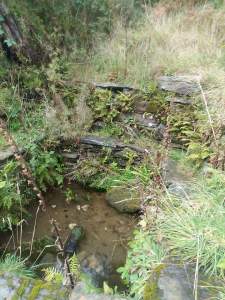
I tried to do research about St. Elen, but sadly there is very little. She is often conflated with St. Helena of Constantinople, mainly because of their similar names and their sons’ similar names, Cystennin and Constantine the Great. In this research I discovered a holy well named for St. Elen and was shocked and astounded to find out that its location was in Dolwyddelan, just down the road, walking distance from Dolwyddelan Castle where I’d actually been five years before.

When we made our family trip to Northern Ireland in 2017 I decided that we would add in a pilgrimage for me to visit St. Elen’s holy well in Dolwyddelan.

Holy Well of St. Elen of Caernarfon, Dolwyddelan, North Wales, 2017.
(c)2017-2021

It had come full circle. Arriving for the first time in Wales in 1987 at Betws-y-Coed by train and taking the pilgrimage to St. Elen’s Holy Well in Dolwyddelan in 2017, thirty years in between and a mere six miles apart reveals that coincidences do not exist, but providence does.

Inspire. March.

Standard

“Gratitude bestows reverence, allowing us to encounter everyday epiphanies, those transcendent moments of awe that change forever how we experience life and the world.”

— John Milton, English philosopher

Original. (c)2021
Inspired by the following art:
Ruth the Gleaner, Suzanne Moore, Copyright 2010, The Saint John’s Bible, Saint John’s University, Collegeville, Minnesota, USA. 

I was too sick last week to publish this month’s Inspire post. I didn’t have anything come to me for inspiration, which to be honest, is usually how it goes. Either a quotation or a picture – something starts the post off in my mind, but not this time.

As I kept staring at the continually postponed space in the planner, nothing came, and as I recovered a few days later, I spent time catching up on everything I’d missed.

And still, the idea of gratefulness kept returning to mind. Lent has a way of turning thoughts inward. More praying, more meditating, more contemplation, and yes, more gratitude. It is a quieter few weeks as we think on the journey to Easter and the Resurrection, and in the quiet, we are able to be with our thoughts and see the blessings and the gratitude that we often miss along the way in our cluttered minds.

Was it not doom-scrolling on Twitter, checking each morning that the world was still intact? I was certainly grateful for that.

Was it the covid relief money that our family received this weekend? I am very grateful for that. I paid all of my bills on Sunday. We’re even considering a home improvement, although that will take more discussion.

Was it teacher friends getting their vaccines?

Was it new Press Secretary, Jen Psaki, a brilliant, direct, honest representative of the Biden Admnistration? Watch her daily briefings and see what I mean.

Was it just the very idea of the Biden Administration being in charge? Waking up this morning to a quiet Twitter, the President visiting with his grandchildren at his family home and attending Sunday Mass? It’s certainly different.

This week, I’m filled with gratitude. For the researchers, the scientists, the doctors, the ongoing competence with the vaccine roll-out, and on a personal note for everyone I will encounter tomorrow at the vaccine site where I will be receiving my first dose!

With credit to the gratitude I feel to those who have gone before me, I will publish pictures and a listing of side effects (if any) that I encounter.

I feel very strongly that everyone who can get vaccinated should get vaccinated, and I also feel that everyone should have all of the information available to them. Side effects are individual and not everyone gets them. Knowing what you may expect before you go is the first step in moving past the pandemic year. It may sound cliche, but knowledge is power. I hope to add to your knowledge and I’d be grateful for your good thoughts and prayers.

Praying the Stations of the Cross

Standard

I committed to praying the Stations of the Cross every Friday. during Lent I have a few different ones that I’ve found and wanted to share today’s with you.

This was originally presented last year, early in the pandemic and parts of the talk reflect that. It is my friend Brother Mickey, and in the video he shares three different versions of the Stations.

The first version is the art from his book, A Light for My Path: Praying the Psalms on the Way to the Cross.

The second version is based on his trip to Kenya, and the third is a set of stained glass windows in a Vienna, Virginia church. There are also other pieces of art that he relates to the Stations.

Between each station, there is a momentary prayer that can be prayed along with him:

LORD, BY YOUR CROSS
AND RESURRECTION,
YOU HAVE SET US FREE.....

YOU ARE THE SAVIOR OF THE WORLD.

Presbyters

Standard

Here we are in the first full week of Lent. I think we’re all getting used to the idea of what this year’s Lent entails. As I mentioned last week, I am trying to organize my thoughts around the Lenten pillars of prayer, fasting, and almsgiving and incorporating those pillars with the tripod of my way through Cursillo of piety, study, and action. Something the priest said at Monday’s mass stood out to me, and that was that we are all presbyters, as opposed to proselytizers. Public prayer, not conversion. That was the word [presbyter] used in that day’s Reading from the First Letter of Peter, and defined in Father’s homily as someone who prays in public. We may recognize that word as the basis for Presbyterian, a Protestant sect of Christianity.

If we are all called to be presbyters as Peter exalts us to “tend the flock of G-d in [our] midst” [1 Peter 5: 1-4], how do we reconcile that with Jesus’ call to not be like the hypocrites and go to our rooms and pray in private [Matt 6.6]?

How should, how can we pray in public and not become like those hypocrites?

As I set this aside earlier in the week, I thought about the ways in which I was praying in public and yet hoping to avoid hypocrisy. I am definitely thinking more about prayer and ways to be closer to G-d during these forty days leading up to the Easter Vigil. I spent time discerning what actions and tasks were important to me and which ones I needed to give up to make my time more effective and positive, not only for me, but for those people I would be working with.

Sometimes prayer is a conversation between yourself and G-d and sometimes it is contemplative, thinking on a scripture passage or meditation. We ask for things – petitions, we ask for things for others – intercessory prayer and sometimes we just sit in the quiet and hope G-d can understand what it is we’re seeking even if we don’t necessarily know.

On Wednesday night, I participated in a centering prayer group. We met on Zoom. I had been to a workshop on centering prayer last month, and this was a good opportunity to put what I learned into practice with others.
While we were each in our own spaces and muted, we were also all together, hearing the same reading, listening to the bell that started off our quiet, contemplative time, the screen sharing a single candle if we chose to keep our eyes open to see it. Solitary and in group at the same time.

Private and public.

Admittedly, I had some trouble focusing. My house was empty and silent. The group was silent, not even a buzz from the lights or clock in the room, no airplanes flying low overhead like they’d done all morning. And still, I needed to continue to draw on my sacred word to bring me back to my prayer. By the time, I felt settled, the bell rang and it was the end of the twenty minute sit (what the prayer time is called).

It reminded me of those early days of the pandemic, when the sun was out, the snow was gone, and the cold was bearable. I would take out my camp chair to the front lawn and just sit. On occasion I took a photo of the trees or the sky. I’d write in my journal. I’d pray the rosary.

But often, I would just sit, noticing each flutter of a breeze, each chirp of a bird, and before I even realized it, an hour had passed. I’d unconsciously been doing centering prayer a year ago, but didn’t have the language to name it then.

One way I can be a presbyter is to take my chair outside (when my lawn doesn’t have the mounds of snow that it currently has) with my prayer book and journal, my pashmina and just sit. Let myself be drawn into G-d’s world and let the nearby church bells lift me from my reverie and gently bring me back to this world refreshed.

Time to Reflect

Standard

Ash Wednesday has arrived. It feels so early this year, but I suppose everything feels a bit jumbled during this pandemic year. As my priest said at mass this morning, things are different, but they’re also the same. Less people allowed at mass. Ashes distributed with a cotton swab (my parish) or sprinkled over your head (others). I didn’t make this morning’s mass in person although I planned to, and registered to attend. The ice on my car made different plans. I was able to watch the mass livestreamed and stopped by the church later in the afternoon to pick up a small vial of ashes. It was a do it yourself for me today.

I would have thought a year into the pandemic that I’d be an expert on reflections on any subject that came to mind, but when I went to write this on Tuesday, there was nothing. Sometimes reflections feel like journal entries, and I’ve been not great at journaling this past year. I’ve tried to keep checklists – masses attended, rosaries said, writing accomplished, but even that little bit has been a failing.

I hadn’t even decided what I’d be giving up, and then I gave myself an extension. Not anything canonical, but I think sometimes when we force ourselves to do things without the impetus of why we’re doing them, they lose something in the translation.

I spend a lot of time worrying about what I’m going to give up as if forty days without chocolate or soda is a hardship in the big picture of things, but on the other hand, I think that sacrifice should also be a sacrifice of time. What can I do to grow in my relationship with G-d? What are things that I can do for these forty days that will stay with me for the next forty? And then the next?

To begin for the readers waiting with bated breath, I’m not going to make my decision on what I”ll be offering to G-d for Lent until the first Sunday of Lent although I have a good idea what it will be and it wasn’t even on my original brainstorm list. By Sunday, I will have had some time to discern what I can accomplish from giving something up or trading it for something that is more positive and/or spiritual.

Lent is a forty day period where prayer, fasting, and almsgiving take the center of spiritual life. Despite being given dispensation from holy days and Sunday masses during the pandemic, I have still gone almost every week to the livestream mass. I was happily surprised to find it just as rewarding as going in person. In the summer, I began to attend Monday’s daily mass in person and I will continue to do that. Our church has done a great job of keeping things safe. I am very lucky with both my church and my children’s school.

In addition to the three pillars of prayer, fasting, and almsgiving since I’ve become a Cursillista, I try to incorporate the tripod of piety, study, and action into my everyday life, but moreso during Lent when our time is spent in communion with Jesus, and of course, ourselves.

I have some tools and links that I’d like to share with you to assist with your own Lenten journey. The first three I will be doing throughout Lent.

Daily Reflections for Lent: Not By Bread Alone 2021 by Mary DeTurris Poust

A Stranger and You Welcomed Me from Clear Faith Publishing

Along the Way: A Jesuit Prayer Pod – a weekly Lenten podcast from two Jesuit brothers

The Examen with Father James Martin, SJ – daily podcast with Fr. Jim Martin, SJ

Prayer of Spiritual Communion (this is what my parish uses for communion during their livestream masses for those of us participating at home):

I wish, my Lord, to receive you with the purity, humility, and devotion with which your most holy Mother received you, with the spirit and fervor of the saints. Amen

In addition to some of these, I am also going to praying the Rosary on Mondays and the Stations of the Cross on Fridays as well as committing to submit a reflection to my Cursillo group’s weekly digest. I will also (finally) begin reading A Pilgrimage to Eternity: From Canterbury to Rome in Search of a Faith by Timothy Egan. This was recommended a couple of years ago and I bought it then, but haven’t found the right time to start it. I’ve decided to make that time now.

I also intend to recommit to my writing, both spiritual and secular. Throughout the pandemic, I’ve kept consistent with this website, but my other writings have fallen on the wayside. I hope to rectify that over the next forty days.

I hope to bring you more in the coming days. Have a meaningful Lent.