Opening Day at Saratoga Race Track

Standard
image

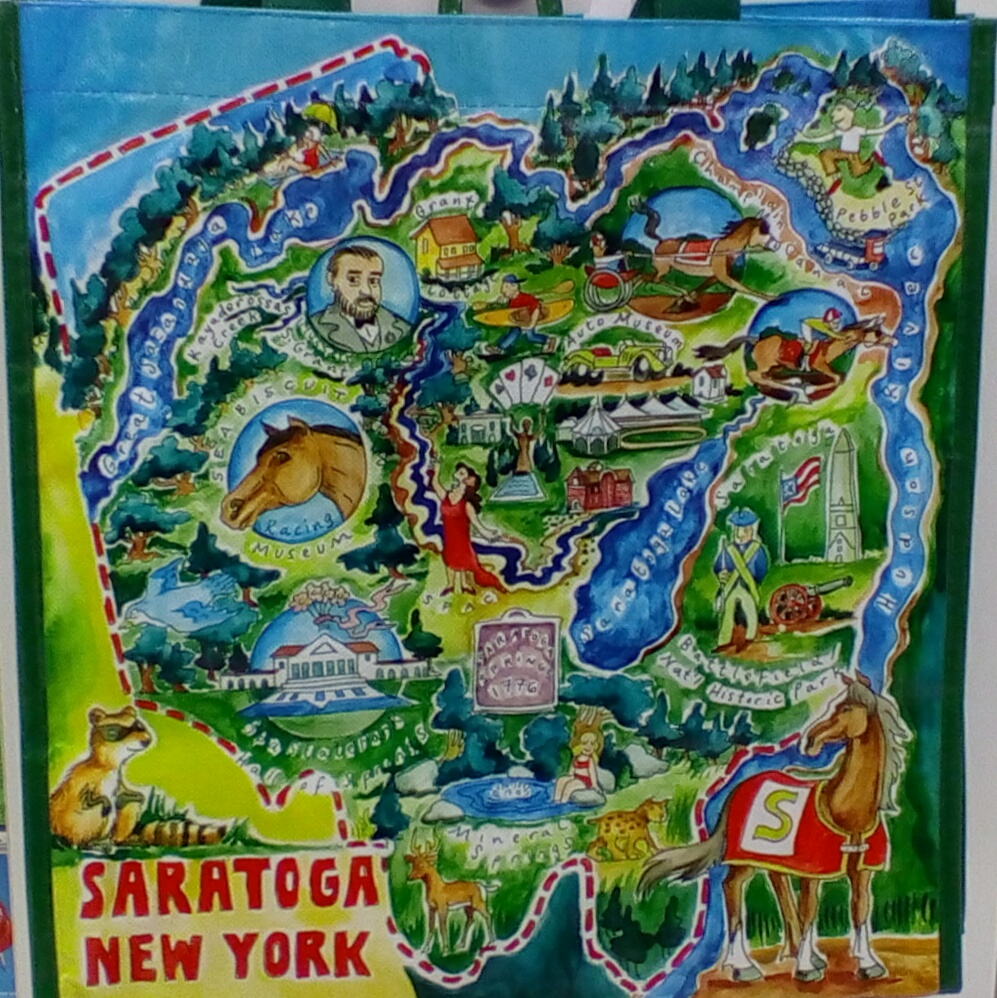
Took this photo at my local grocery store. It is a reusable bag that they sell.

Considered to be the oldest sports venue in the US (there was racing there as early as 1847), the Saratoga Race Track was officially opened in 1863 and has been in continuous operation since.*

The original meet was four days. Now the season goes from the last week in July through Labor Day. This year’s meet begins today and ends on September 7th. There is no racing on Tuesdays, and the Travers Stakes will be held August 29th.

There is an opportunity to watch the horses work out in the mornings at Breakfast at Saratoga, a buffet held from 7 – 9:30am. The cost is $17.95 for adults, $9.95 for kids, 3-12. Follow the link for detailed information and about seeing the workouts without the buffet breakfast.

There is a dress code for certain areas of the track. Click here for more information on attire.
No pets are allowed. Coolers are allowed (no grills) in certain areas but there is a size restriction during Travers Day.

Start here to get to know the track and to plan your outing in the Saratoga Springs area.

*Exceptions to this are: in 1896 when it wasn’t viable to hold the meet because of other thoroughbred racing; in 1911 and 1912 because of a ban on gambling in aNew York state; a ban on travel during World War II caused them to close in 1943-1945 and races were held at Belmont instead.

Collections

Standard

There’s the largest ball of twine and dryer lint, Coke bottles, and spectacles, but for most people collecting is a little more subdued. For each of us collectors we all have our origin stories, how we began collecting our treasures, our first whatever. We get all excited and starry eyed talking about our things and hope in our reverie that our audience’s eyes haven’t glazed over while they go over their shopping list in their heads.

For me, I’ve had several collections over the years for a multitude of reasons. When I did historical re-enactment, I collected all manner of books on the Middle Ages: art, children’s history, fiction. When I was a teacher, I collected children’s cooks. I’m always on the lookout for Jewish stories for children. After my first visit to Wales. I’ve collected both history books and travel ones. Books are big in our family. My husband and middle son collect comic books (and action figures). My daughter’s love is fashion – reading about it, wearing it, and designing it.

When I travel, I still collect pins and postcards and foreign money, especially coins, and ask friends to collect it for me since I travel so infrequently. I also collect griffins and pewter pieces.

My mother collected stamps. My brother has her collection, and she started getting my son some when he was a baby, like dinosaurs, comic strips, super heroes, etc. We still do that, but we’re more selective as they relate to our interests (Batman, Star Wars, and the like. I recently bought a sheet of Harvey Milk.) There is something for everyone.

I have a couple of church friends who collect Mary (the Blessed Mother) statues from their world travels.

In an informal poll on my Facebook, I was surprised by the diversity of people’s collections, some I’d heard of, but many I had not even considered. Demographically speaking, not including myself, respondents were ten female and two male, ages between 21 and 71. Orientation was evenly split for those that identify publicly and all but two were the same race. Most religious practices were unknown to me, but two are Jewish and five are practicing Christians with various degrees of devotion. All but one are college educated with four still in college. Jobs include administrative assistant, nurse/LPN, teacher, nanny, EMT, with two in the insurance industry.

Here is a rundown of the collections; maybe you’ll find one of your collections on this list:

Continue reading

Traveling

Standard

Sometimes, travel is little more than a series of random occurrences that culminate into an unexpected travel experience. That’s why journeys and paths are often used as metaphors. We understand the underlying meanings of undertaking a journey be it physical or spiritual. Even on a meticulously planned trip, there is still inevitable randomness that is simply out of your control.

The weather.

Traffic and Car Problems.

Construction and Renovation.

Companions’ temperament.

In 1986, I went to the U.K. My boyfriend broke up with me, we shared a dorm and he had a new girlfriend. If we were still dating, would I have gone anyway? It’s doubtful. I had nothing or no one holding me back. So I went, and it changed my life and my outlook on life.

Last Fall, I discovered a saint’s shrine within driving distance and so I went. My family was out of town. I doubt I would have made the effort if they were home. There is another shrine nearby. I’m going to spend some time there this Fall.

I’ve had the opportunity to travel by trains, planes, and automobiles. No boats though. Boats are not for me. I’ve been able to experience day trips, two week long holidays, and one week adventures. Hostels, hotels, campgrounds. Sightseeing, business travel, retreats. Family and solo. So many ways to go and so many places to stay.

As exhausting as traveling can be I find that there is nothing like the feeling of exhilaration and energy that recharges my batteries.

Seeing new things and seeing old things with new eyes are only two of the benefits of traveling.

As much as I like the convenience of traveling by car, a couple of years ago I took the train from New York to southern Virginia. I was nervous at first, that mode of travel being new to me and traveling alone, but I loved it. I loved everything about it. I loved watching the countryside out the window. I loved how much more room there was than on an airplane. I loved the wide variety of people and characters I ran into. I took notes and I eavesdropped discreetly. I read and I snacked. It was confirmation that it’s not the destination, but the journey that makes the traveling worth the trip.

Eleanor Roosevelt’s Home at Val-Kill

Standard

On a recent road trip to see the in-laws I began to read Eleanor Roosevelt’s autobiography. I never remember that she and President Roosevelt were from New York, and so while reading it many of the places she mentioned were familiar to me: the capital of Albany, of course, GE in Schenectady, etc. I also never remember much about her other than that she was a strong, independent woman with a life apart from her husband’s. What struck me as unexpected was her description of herself as painfully shy, introverted and lacking in initiative and self-confidence. I think I literally laughed out loud. Even in my ignorance, I would never describe Eleanor Roosevelt as shy or lacking self-confidence.

Quite suddenly while we were heading back north I realized how close we’d be to Hyde Park, President Franklin D. Roosevelt’s family home (and now Presidential Library and Museum). I mentioned that I wanted to drive by, maybe walk around a bit and take pictures. It’s not far from our route, so it was no problem to divert for an hour or so on the way home.

When we arrived in the hamlet of Hyde Park, I looked for signs to guide us to the President’s home. I was excited, diverging from our planned itinerary for some local history. We followed the main road and then I saw something that would change our intended destination: a sign for the historic site of Eleanor Roosevelt’s home. The autobiography hadn’t gotten to talking about Val-Kill until after we left, but I’ve always admired Mrs. Roosevelt and decided that I would like to see the home of one of the smartest, independent, and inspirational heroes of the twentieth century.

I had already decided that I wouldn’t take the time to take the guided tour (the only way to see the inside of the cottage); it would take more time than I was willing to sacrifice, and I didn’t want to spend the money for so short a visit. My daughter wanted to accompany me, and I was really excited to include her. My daughter is her own independent, speak-her-mind, interesting, spirited young lady and Eleanor Roosevelt’s name is one that I’d like her to remember.

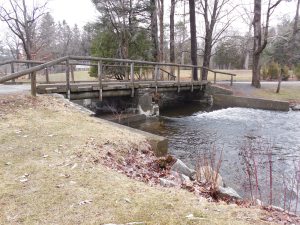
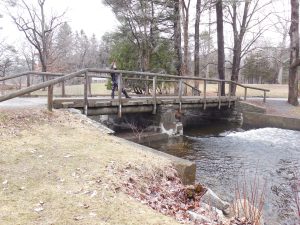
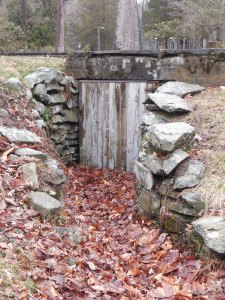
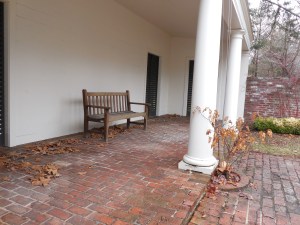
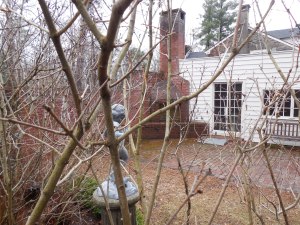
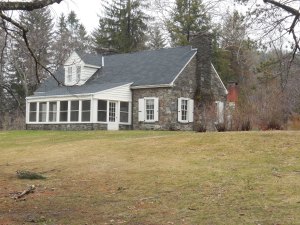
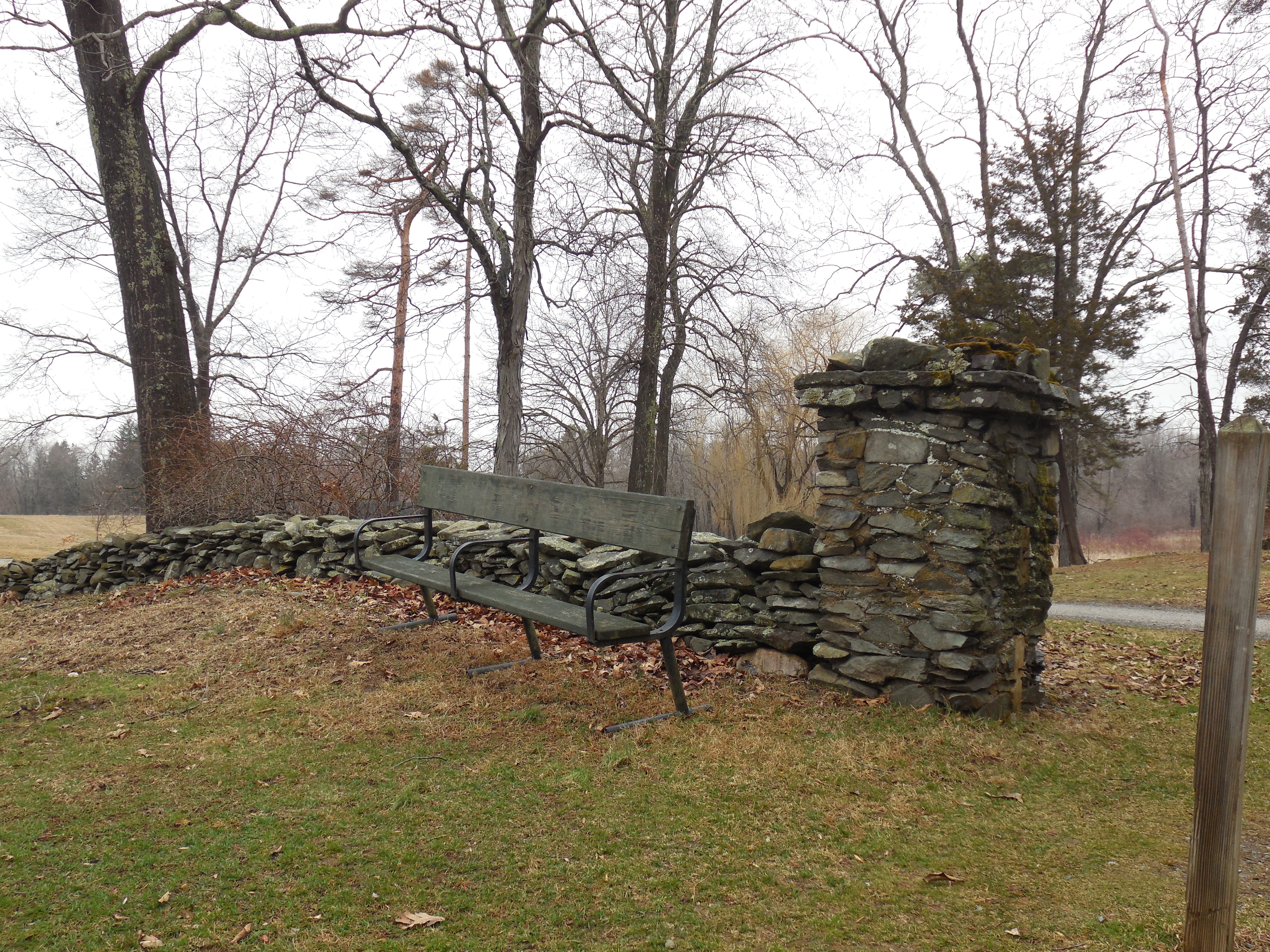
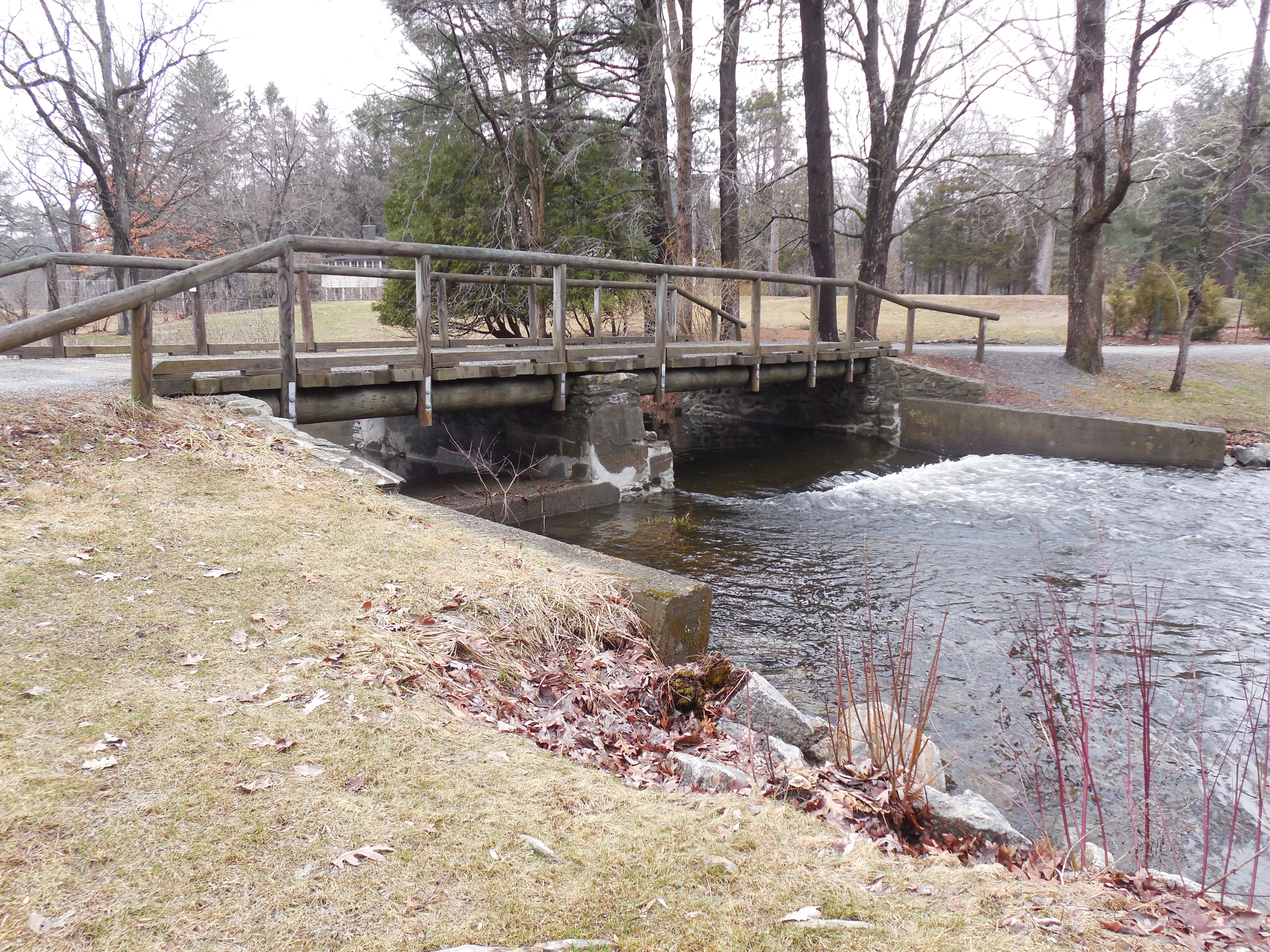
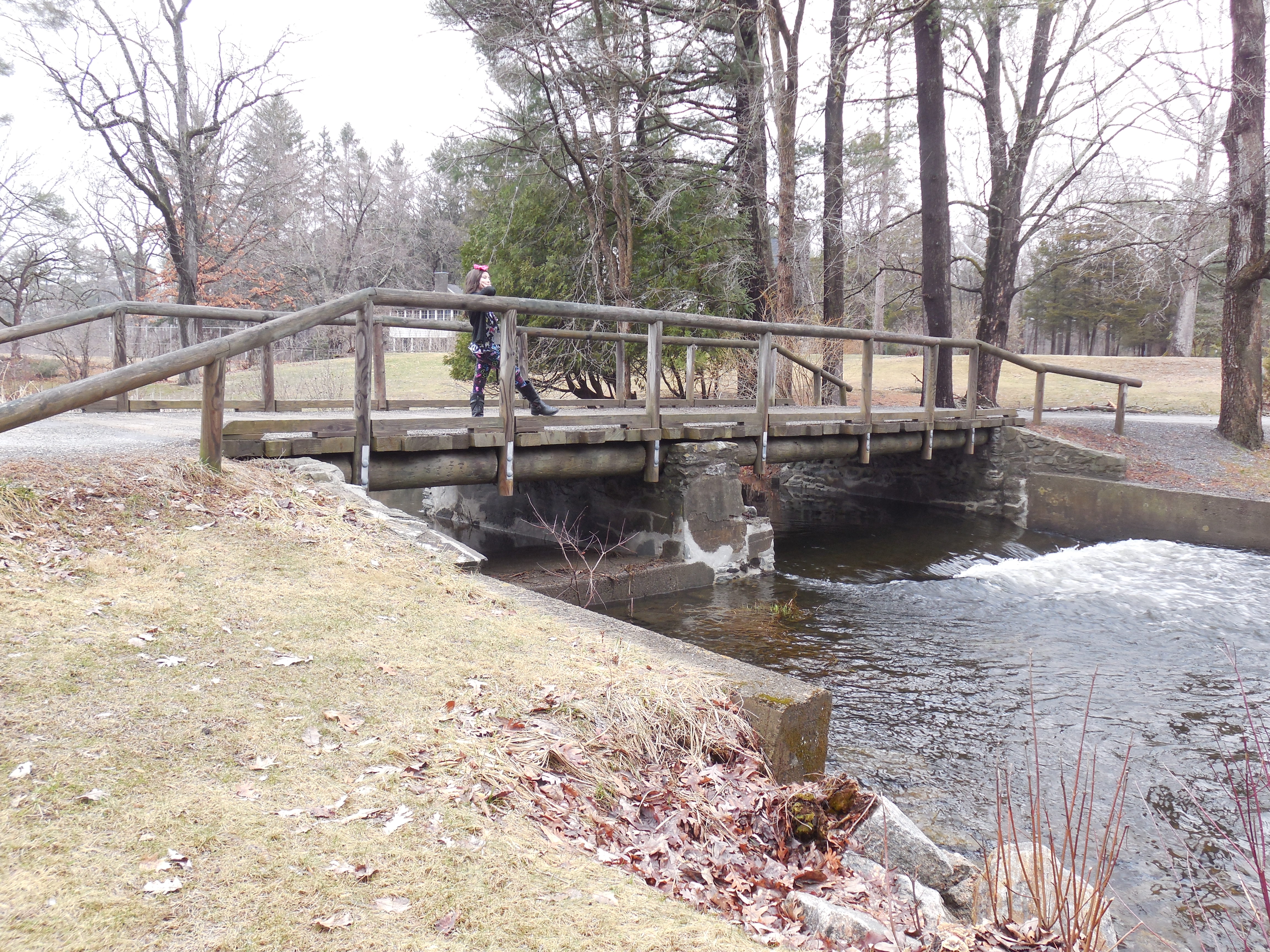
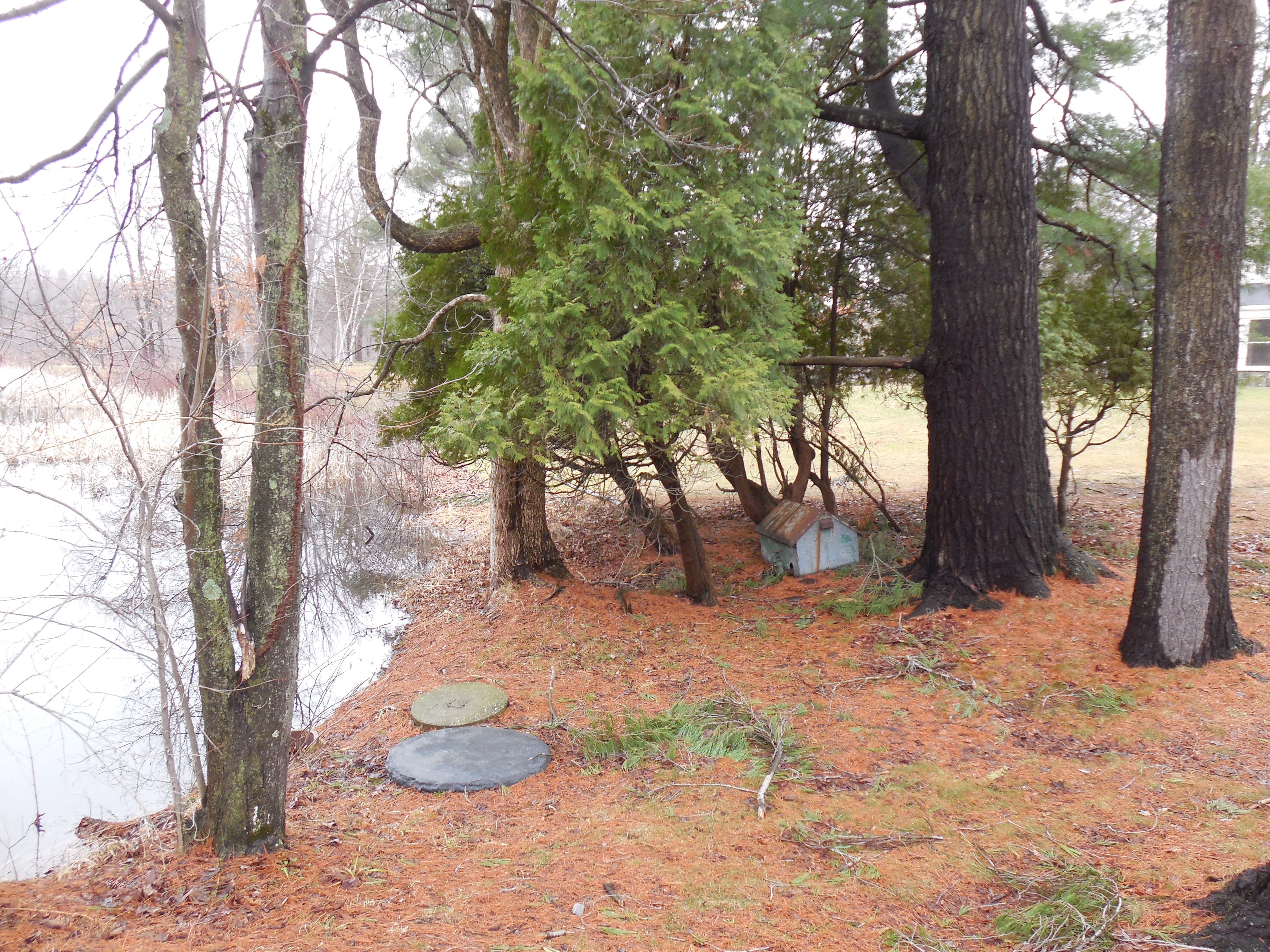
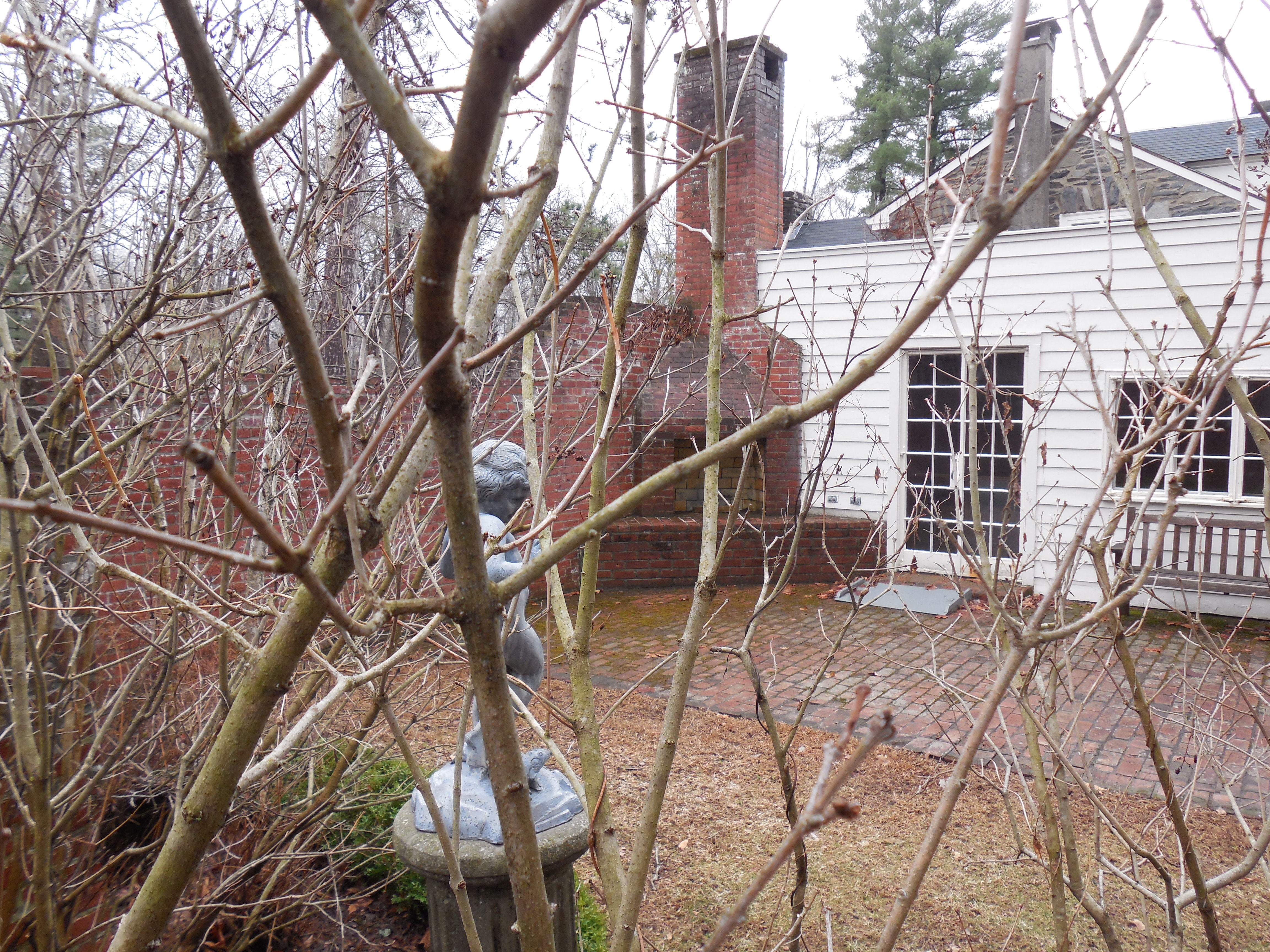
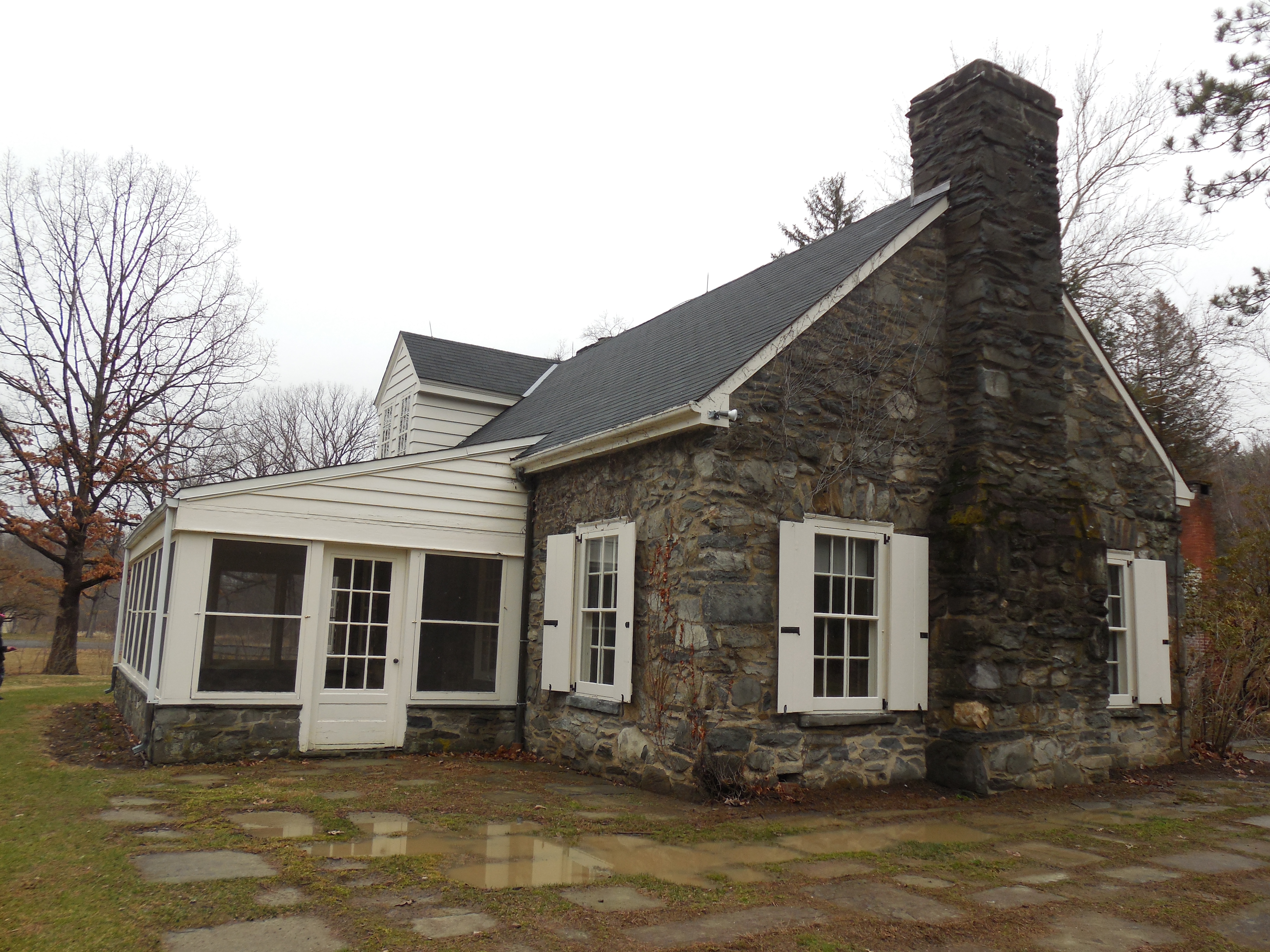
We wandered down the path (1, 2) and over the wooden bridge (3) taking photos along the way. There was a little door in the side of the hill with rock walls as tall as my daughter bordering it. (4) We took some more photos and she stood on top of the wooden deck slats.(5) She peeked between the slats and said that it was deep and empty. We walked around the cottage and down into what I presumed would be a very pretty fenced garden come summer time. (6) There was an outdoor fireplace. Coming around the back of the stone cottage there was a white wooden fence surrounding a courtyard with another outdoor fireplace and a cherub statue that might be a fountain when it’s not so cold as to freeze. (7, 8, 9)

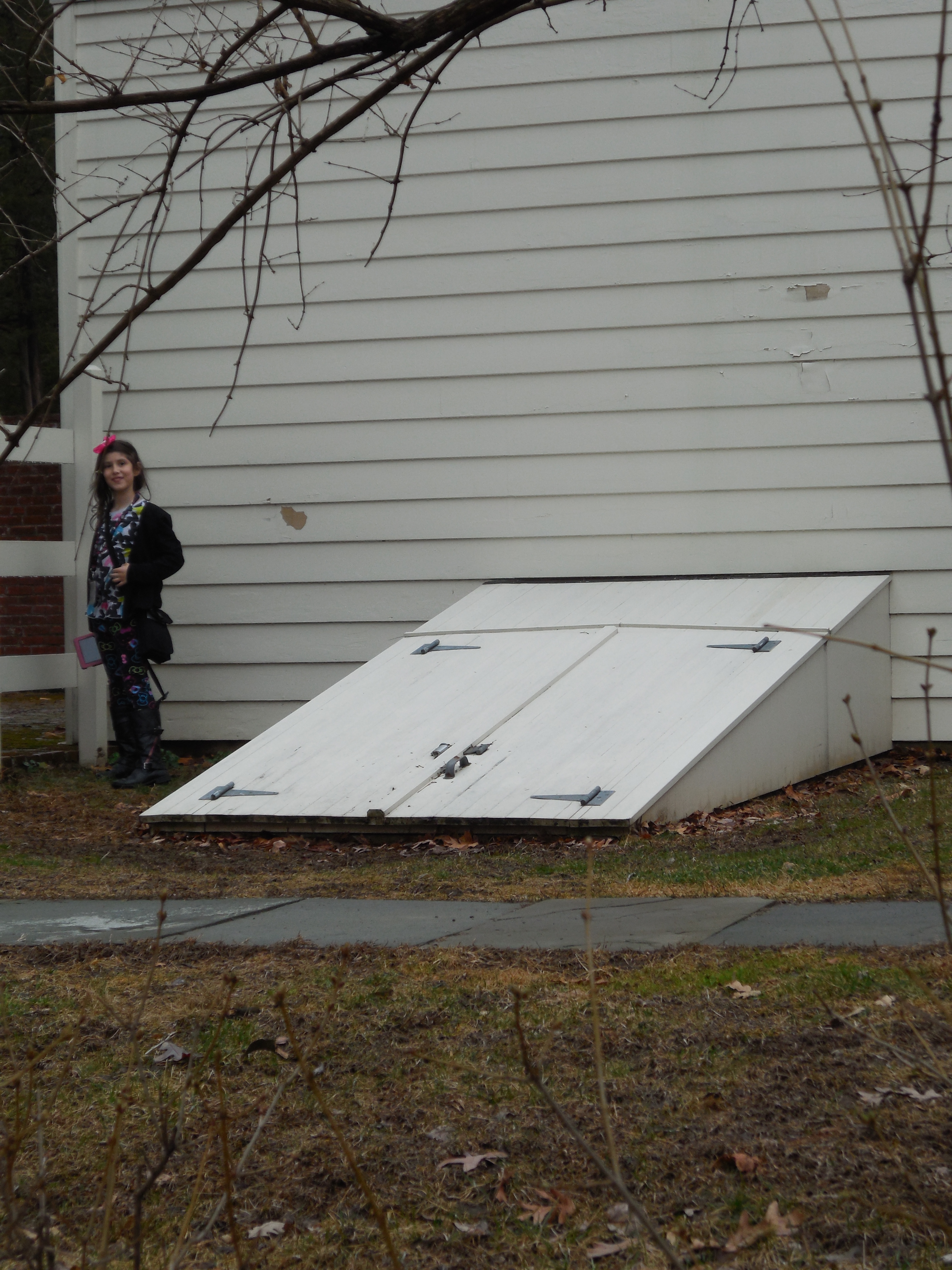
We looked in windows and over walls. We wandered through puddles and muddy paths, kicking rocks and listening to the water as it rushed under the bridge. My daughter tried to tug open the locked cellar as she imagined what treasures might be hidden down there. (10)

This was a unique travel moment that one can only hope for. Not only was I surprised that I thought of it before we had traveled past it, I was surprised that I followed through. It’s not as though I would have driven the two hours on just any weekday, although now that I’ve been to the place I might want to go back and take the actual tour.

Continuing to read the book after we left Val-Kill, I discovered through Eleanor’s words that she came here to live after Franklin died; subsequently giving their Hyde Park home to the government for the historical site, library and museum. This became her year round home, not the vacation retreat she enjoyed with her husband, and she did much of her work from here. She also spent time with her family and enjoying the solitude of the surrounding woods as she continued her writing and political work. I loved finding out that Franklin Roosevelt had contributed to the design and the building of this cottage. I put two and two together and found that the wooden slats that my daughter had been standing on was the swimming pool that the President enjoyed as part of his visits to Val-Kill and as part of his therapy and exercise for his legs after contracting polio. (5) Recognizing things there and from photos that I looked into from her autobiography really made this site come alive for me.

One of the best things about travel is the parts that come alive. I can picture Eleanor sitting in a chair with the stone cottage in the background behind her, the windows of the house open to let in the cool air from the stream and the wooded areas. I can hear the birds whisling, the water rushing, and the bees buzzing from flower to flower. I look around at her home and special place and I think iof how to maintain my own places and keep them special and where I can surround myself with the sounds and the scenery that will continue to inspire and give me that sense of stillness that I often seek.

Other Roosevelt items of interest include:

Marist College

The Culinary Institute of America, where the burial site of Pierre Teilhard de Chardin is

Town of Hyde Park

Franklin D. Roosevelt State Park

Franklin D. Roosevelt Presidential Library and Museum

A Tour of the Roosevelt Family’s New York

DSCN2297

(1)

DSCN2299

(2)

DSCN2305

(3)

DSCN2309

(3)

DSCN2320

DSCN2322 (4)

DSCN2324

(5)

DSCN2326

(6)

DSCN2332

(7)

DSCN2333

(8)

DSCN2335

(9)

DSCN2321   DSCN2325 DSCN2336

DSCN2329

(10)

\

Travel Recs

Standard

This is a small and non-inclusive list. Please add your own favorites in the comments.

Fugu Revolutionary Suitcase – goes from carry-on to check in suitcase and more. I’ve never used this, but the video was so cool, I wanted to share it!

Rothco Canvas Travel Portfolio Bag – comes in black, brown, olive drab, camo, and khaki. I got mine at the local Army-Navy Store, but you can get them at retailers, Amazon and directly from Rothco.

Lonely Planet – travel advice, supplies and publications

AAA – great for their roadside service, but also a great travel agent and members enjoy free maps and tour books. I’ve been a member since 1990, but my parents were always members when I was a kid. Well worth the modest investment.

Eagle Creek – travel and packing accessories and luggage

Smartphone with GPS or MapQuest