As I was walking into my house a couple of days ago, my eye caught this feather sticking out of the grass. I can’t imagine what kind of bird it came from; I’ve never seen those colors around here before, but I really thought it was beautiful.
I stopped to take a picture.
I’ve always been told not to pick up feathers because they’re often dirty – the feathers are shed when the bird defecates, so I left it there, figuring that maybe another bird will collect it to feather their nest.
When I went out the next morning, it was still there.
I decided that I should take it after all. I picked it up with a napkin, and when I got to work washed it off, and let it dry on my desk.
I’m going to add it to my new journal as part of my new project of “gathering the fragments” that came up during my recent retreat.
St. Ignatius was well born and privileged. He was a soldier and loved the women. How does that kind of a person become a saint? Well, you’d be surprised to read about the backgrounds and beginnings of most saints.
During his military career, he was wounded in Pamplona when a cannonball ricocheted and broke his leg. He returned to the family castle in Loyola where he underwent several surgeries, setting and rebreaking of his leg, and all of this without anesthetic. While he recovered, he would walk with a limp for the rest of his life.
During his recuperation, Inigo as he was called then had visions and felt the call to the priesthood after his sister gave him books on the lives of Christ and the saints when the chivalric romances he requested could not be found.
When he was able, he went on pilgrimage to the Holy Land to walk in the footsteps of Jesus. He returned to Europe and eventually wnt to France and attended university.
He and six of his companions there swore vows to their lifelong work. He, along with Peter Faber and Franicis Xavier went on to found the Society of Jesus or The Jesuits as they are also known. In 1540, they were approved by Pope Paul III. Pope Francis is a Jesuit, the first Jesuit to be elected Pope.
Ignatius was the first Superior General of the Order and was called the Father General.
One of their practices is called The Daily Examen, which I like to pray in the evening. It is a quiet way to go over your day, see where G-d and Jesus were part of your day, and how you can make tomorrow better. (These are my interpretations of the examen.)
They also practice a contemplation known as the Lectio Divina or sacred reading, in which you put yourself in the Scripture stories, and pray on what you see there. There are five steps to this contemplation technique: prepare, read, meditate, pray, contemplate.
The last few weeks have been nothing short of active, and I hope I’ve gotten through it with less scathing than would be normal for this kind of busyness. This post will be part mental health check-in, part inspired, part goal-setting.
Mental Health Check-in for Week 3 of July
I went back to my original post to see what the goals were that I thought I needed to focus on, and this was less than helpful. Goals and goalposts are constantly being adjusted. Looking at the biggest priorities, it’s still been iffy. Although to be fair to myself, I’ve been busy and not wasting time and opportunities, so while it’s been slow-going, it has still been going.
This is very much a positive.
Where are we this week?
I was working on my presentation until about 7pm the night before. I realized there comes a point when it just needs to be done. I laid everything out on index cards, and did my thing. It was fantastic. I think everyone liked it and learned something new about St. Kateri Tekakwitha. I was able to constructively see things that I would change. I did a little improvisation and even though I finished later than planned, I was able to end on a decent note, and skipped a few slides at the end, and no one was the wiser. All in all, a good experience. I’m willing to do another powerpoint, although I’m hoping someone else presents it.
Work. July 8th, I began working full-time. I haven’t worked full-time (outside the house) since my now-twenty-eight year old was two. It is a big adjustment for everyone, but my family is being supportive and picking up some tasks, and my co-workers and colleagues are amazing.
Cursillo needs attention.
I mentioned that I was going to avoid snoozing my alarms. I’ve still snoozed, but not as much and it’s made me more aware of what I need to do in the mornings to get out the door more efficiently.
I’m disappointed in how our government is being run. I’m disgusted and repulsed by the Republican party, their hypocrisy, and their hatred. I don’t know how we come back from this precipice or how we survive.
Mental health check-in = EH.
And now for some inspiration!
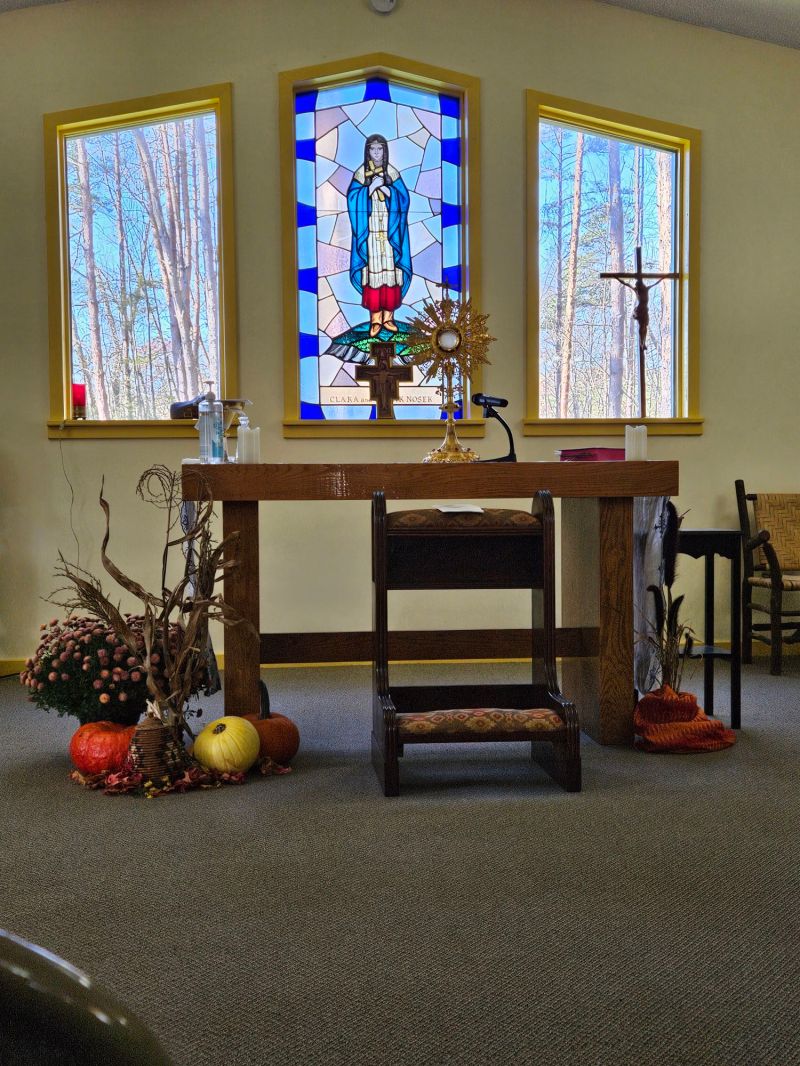
I’m looking forward to taking my presentation and using it to push my book in the right direction. Below the cut are some of my inspiring and inspired photos from St. Kateri Tekakwitha’s feast day weekend.
As I mengtioned on Thursday, May is Mental Health Awareness Month. There’s also May Day, and May the Fourth, and Cinco de Mayo. Plus college graduations, Memorial Day, and the “official” start of summer.
Today is three spcial days that should be acknowleged and observed, each with their own reverences.
We haven’t gotten through the first week of January, and our potential is still out there. Still within us, ready to break forth. Our ambition. Our motivation. Our inspiration. How will we keep it at the forefront in the coming months?
I’ll share five ways that I plan on being inspired this year.
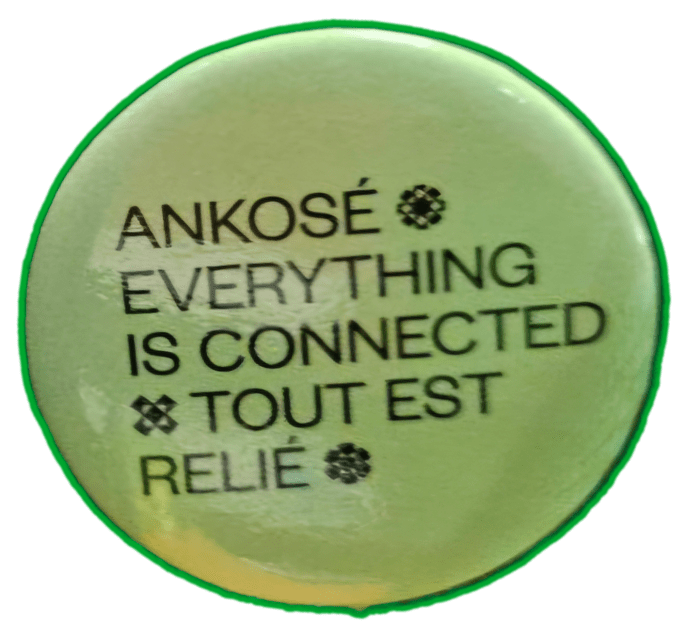
Remember that everything *is* connected, and look at the world that way. How is what I’m doing affecting the people and spaces around me? Be aware. Be present. And sometimes, be still.
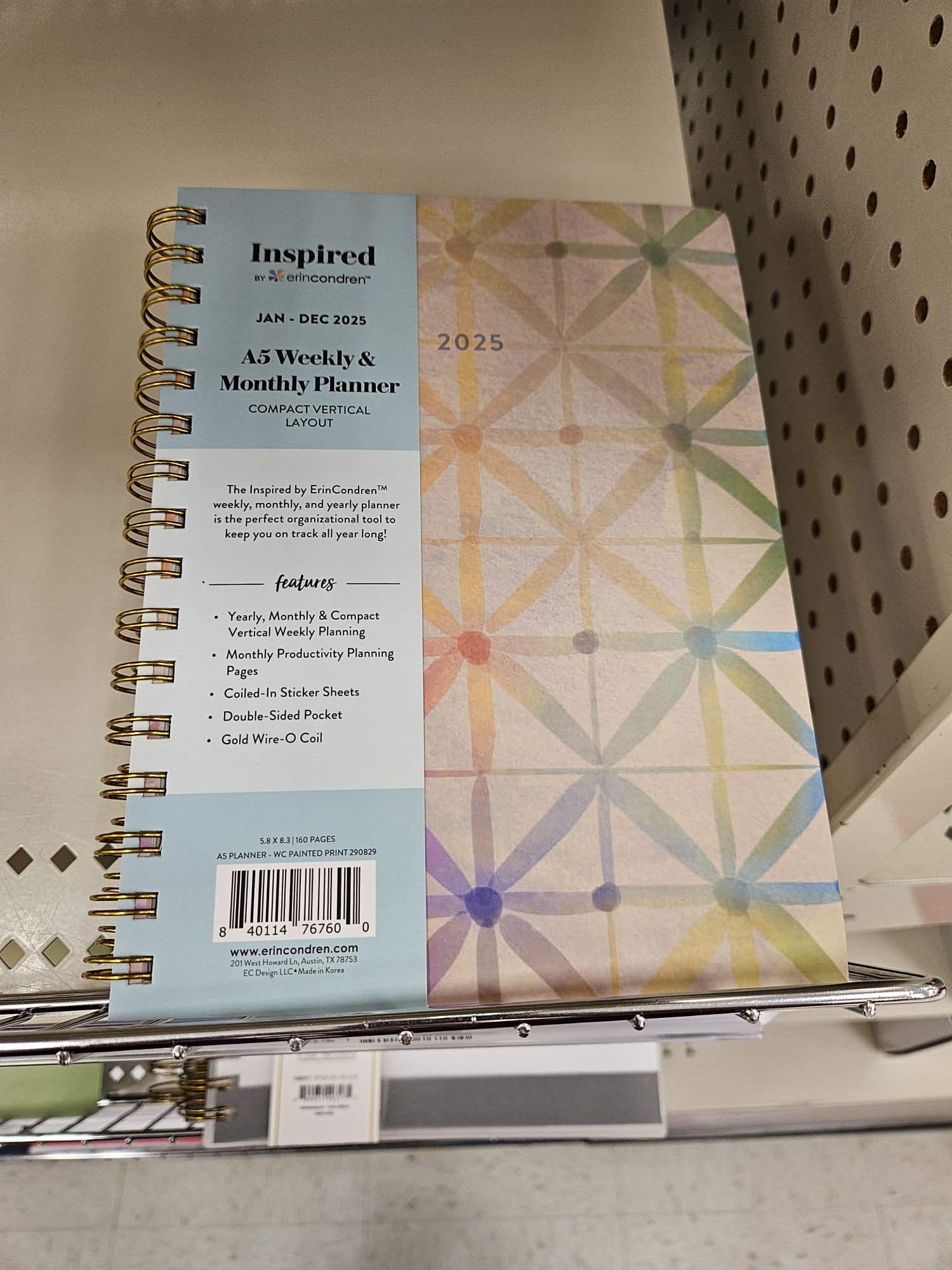
Setting Intentions. I have a great new planner for the year and it has space for weekly and monthly planning/goals/ progression, and I’m hoping to stick with it all year.
My writing group and their encouragement, their feedback, their continuing friendship.
Taking what I need and leaving the rest. Good advice in any situation and hopefully will maintain lower stress even as the world becomes more stressful.
Carry an umbrella, bring a sweater or hoodie, tuck a notebook and a pen in a bag, and go. Go forward. And take notes.
Inspired. (c)2025
Intentionality. (c)2025
Inclusivity. (c)2025
Interconnectedness. (c)2025
My four words for the beginning of the year. They may stay all year; they may transform; they may be added to or replaced. And that will be okay because it will be what I need at that moment. Follow along and let’s see how it goes.
This past Tuesday was the feast day of Hildegard of Bingen and below I share two links to her music on Spotify. The first is her music sung from her abbey in Bingen, and the second is her music as arranged by Richard Souther. They are both unique in how they sound, but convey the depth of Hildegard’s mysticism and faith journey.
Hildegard of Bingen was a Benedictine Abbess in Germany in the Middle Ages, living from 1098 to 1179. In addition to her role as abbess, she was a polymath, writer, composer, visionary, medical practitioner, and is considered the founder of scientific natural history in Germany. Her writings include theology, botanicals, and medical works as well as letters, hymns, antiphons, and poems.
She has more chants surviving the Middle Ages than any other composer in the Middle Ages. She is also the writer of both the lyrics and the music of her works.
The Eucharist is the highway to heaven – Carlo Acutis
I had heard about Carlo Acutis several years before his relics and Eucharistic Exhibition came to my church. I was intrigued not only by such a young man who was venerated and declared Blessed, but by how recently he had died (in 2006) of acute promyelocytic leukemia. He was near enough to my kids’ ages that it was something that pulled at me. I had seen photos of him and read brief snippets, but when I was told that this exhibition and his relics were coming to our church for nearly a week during Lent, I began to read more. I volunteered to help during the exhibition, and I attended the talks given by the woman, Eileen Wood at Catholic Quest, who was custodian of this display and his relics as well as several of the liturgies held during that week. We also had our own resident expert give a couple of talks about relics in general as well as Eucharistic miracles in particular. It was a busy time at our church, and we had over 1500 visitors in the time we held the exhibit.
“Each of us is put here in this time and this place to personally decide the future of humankind. Did you think the Creator would create unnecessary people in a time of such terrible danger? Know that you yourself are essential to this world. Understand both the blessing and the burden of that. You yourself are desperately needed to save the soul of this world. Did you think you were put here for something less? In a Sacred Hoop of Life, there is no beginning and no ending.”
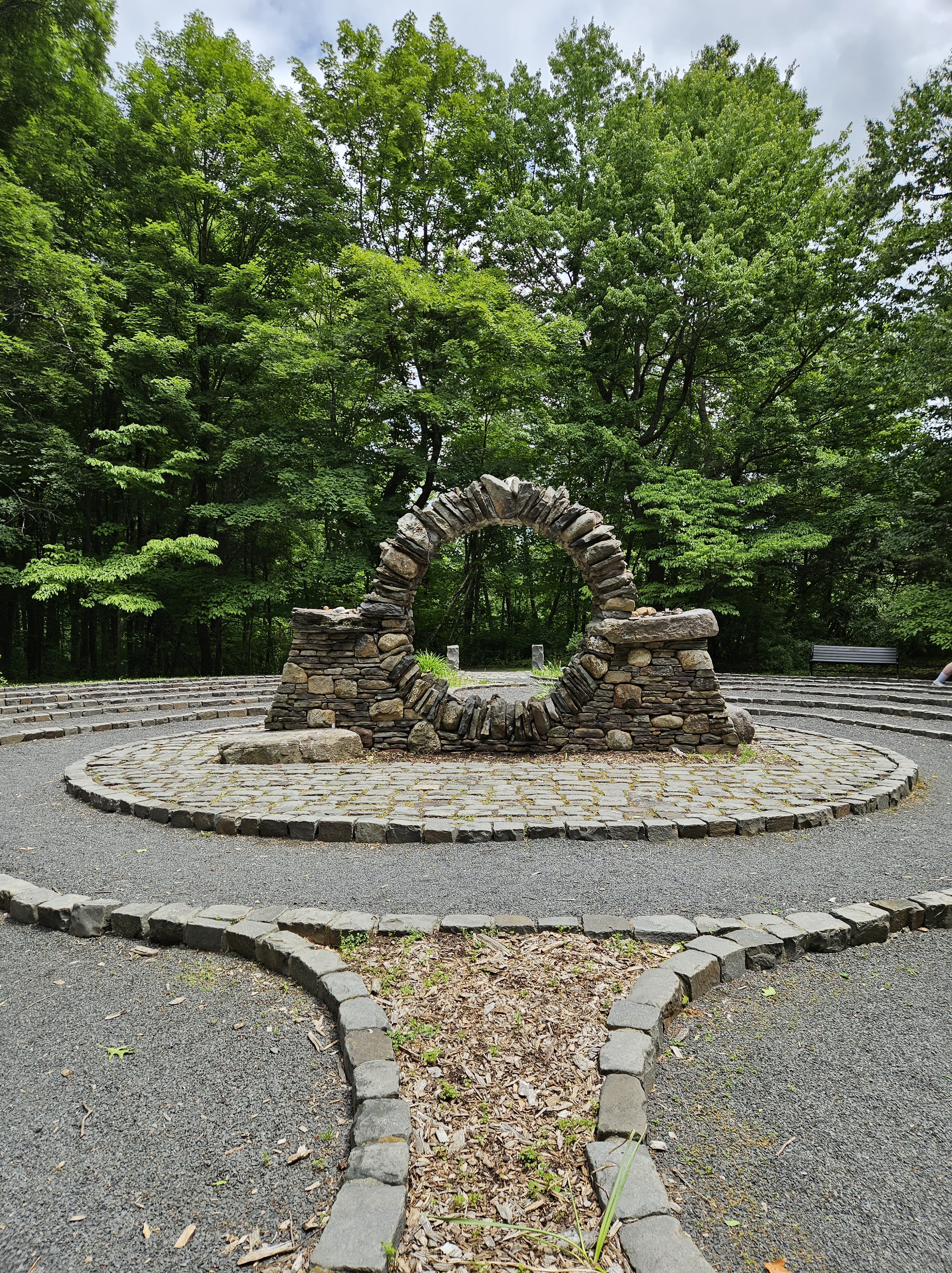
Nearly one year ago, I attended the first of what I hope will be an annual event at the National Shrine and Historic Site of St. Kateri Tekakwitha in Fonda, New York. It was World Peace and Prayer Day and was being held around the world on the same day, the Summer Solstice.
Please watch this video as told by Chief Arvol Looking Horse about how the day came to begin, starting with his own life history and the tragic past and present of the reservation system. The words are weighty, and the music only adds to the chills I felt, and I think you will feel as you watch:
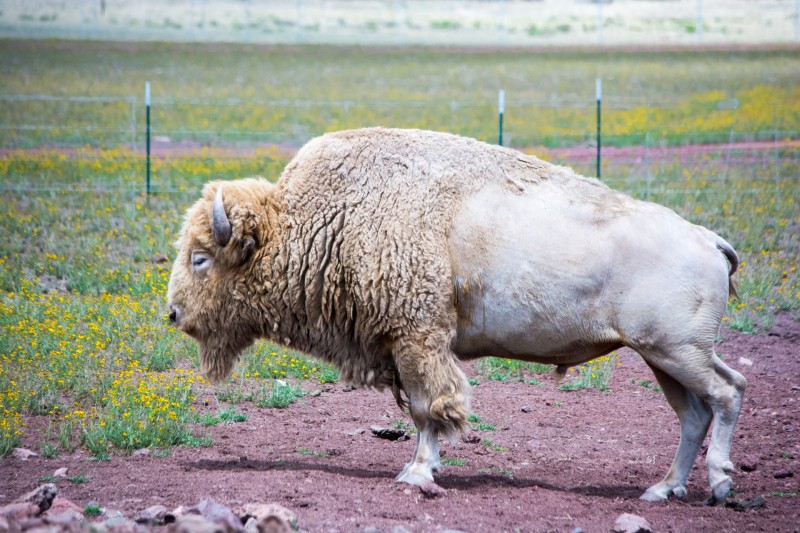
In 1994, Miracle, a rare white buffalo calf was born in Wisconsin. It was the first white buffalo calf born since 1933. White buffalo calves are sacred to many Native American nations in the US and Canada. The World Peace & Prayer Day began in 1996 and for a time, rotated to different sites until expanding to individual events held at sacred sites globally. The Kateri Shrine is one of those sacred sites and why the administration decided to hold this interfaith prayer service. The Shrine is sacred to the Native peoples who lived and nurtured the land and there is a Mohawk community nearby as well, and it is also sacred to Catholics who believe the Saint Kateri Tekakwitha lived there in the village of Caughnawaga throughout her child- and young adult-hood. This village is the only fully excavated Mohawk village in the country. I’ve written before about my experience there and how profound it was for me and others who attended it.
The Shrine is planning a second World Peace & Prayer Day service on the Summer Solstice, June 21.
Two days ago, it was revealed that another rare white buffalo was born in Montana, in Yellowstone National Park and according to Lakota prophecy and tradition this foretells better times coming as well as a caution that more must be done to protect the earth. This new calf and Miracle are said to be true white buffalo and not albino – they both have a black nose, hooves, and dark eyes.
In the article I’ve linked about this recent white buffalo calf, there is discussion about the killing and removal of bison every winter to keep the herds at about 5000 animals. There is opposition to increasing the numbers in herds from ranchers and the governor, but I don’t see any input from local tribes or from across the nation. Perhaps because they also oppose transferring the buffalo to the tribes. I wonder why they can’t go back to having the Native tribes participate in their traditional hunting of buffalo which kept the population manageable naturally.
That political segue is important to be aware of, but a digression to this joyous event of another white buffalo calf.
Whatever you’re doing and wherever you are on June 21, take a moment to pray on the continuing vitality of the earth, our home, and all of those who live here. I will be at the Kateri Shrine in Fonda participating in the ceremonies and listening to the prayers both spoken through the participants and in the air swaying the trees.






 Griffins and Ginger Snaps