Reflection

Standard
(c)2025

I had the opportunity a few days ago to spend a couple of hours at Starbucks. I don’t know if the best part was the free breakfast or the writing I got done. It may have been the moment of Zen and bonding between the barista and me when we both agreed that this day was the fifth Monday in a row.

I typed and I scribbled – keyboard and paper both. I set my alarm for PT and didn’t worry one minute about the time. Whenever my rant became too vocal inside my head, I took a metaphorical step back and people-watched for a minute and I was able to step back from the edge and regain my focus. And I wrote some more.

Since I started working full time (which I am not complaining about), I have not been able to take my writing time on the road so to speak. I miss taking myself to a quiet meal, pulling out my notebook and jotting down some thoughts that eventually expand into something else; something more.

My witchy ghost straw and I enjoyed this quiet time, and it reminded me that I need to schedule these moments into my month. It doesn’t need to be a long time; it can be on one of my lunch hours, but it is so important to recharge the creativity.

I had another wonderful day the Friday before, joining a pilgrimage at the St. Kateri Shrine in Fonda. I was able to meet new people, hear their reactions to the shrine, sit and listen and absorb the spirituality, the music, the moments in mass, and with the Sister who is part of St. Kateri’s story and miracle. The only word that comes close to describing it is glorious. It truly was that.

That one day there, and these couple of hours at the coffee shop will stay with me for the next few weeks, possibly a month or so, and carry me, push me, and let me move my book, as well as other writing, forward into the new year.

It’s a wonderful feeling.

Glorious.

Feast Day of St. Kateri Tekakwitha (in Canada)

Standard
(c)2025

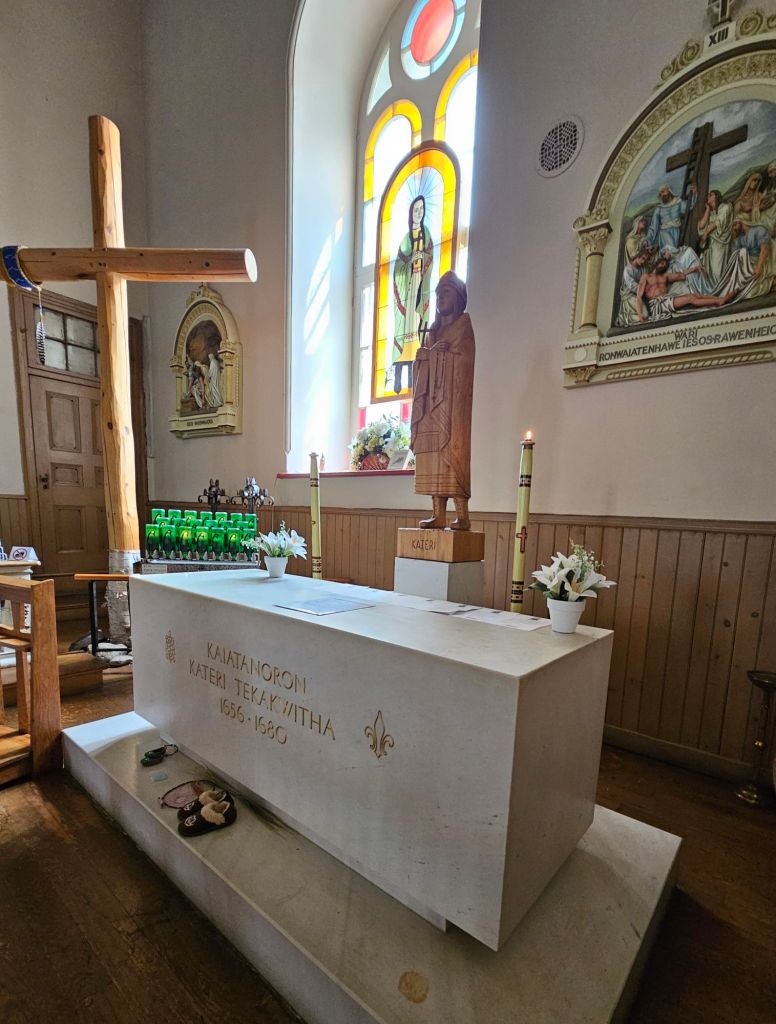
This is the feast day of St. Kateri Tekakwitha. She died on this day in 1680 at twenty-four years of age. Since that time, miracles have known to have occurred through her intercession. In two more days, is the anniversary of my own conversion.

The photo above is at her tomb where her earthly remains rest at the St. Francis Xavier Mission Church in Kahnawake, Quebec. This is at the National Canadian Shrine of St. Kateri Tekakwitha.

I’m looking forward to the celebration of her feast day in the US in July, and my visit to this shrine and her tomb in June, partly for intensive research, but also hopefully to attend mass while we’re there.

St. Kateri, pray for us.

Research and Rabbit Holes

Standard

For my May inspired I thought I would indulge a little. As many know I have been doing a lot of research for my book on St. Kateri, and as I was reminded of in a recent writing class I took, with research you will learn much more than you will actually include in your book, whether that book is fiction or non-fiction, and I have discovered the truth in that. The research that I’ve been doing for this book includes not only St. Kateri’s life before sainthood, but also Mohawk history, the Jesuits in New France, and various aspects of both Catholicism and the longhouse religion as well as many other details that help to inform the writing and the context, something that I’m learning the Jesuits at the time lacked when they spoke of the Native American ways.

I went down one rabbit hole recently that led me to three separate web pages regarding President Ulysses S. Grant’s “Indian Policy,” which was both informative and disheartening. I spent two hours reading, and it will only result in one or two sentences in the entire book.

In discussing 19th century treaties with one of my writing groups, I was sent a recent article on a court case from 2005 that referenced a treaty from 1794. There was also a recent Supreme Court case whose decision was based on a treaty from the 1800s regarding water rights. Another disheartening read as while the Supreme Court agreed that the Native tribe had rights to water, they did not however have the right to have the US government provide said water. Whew! What an acrobatic backflip!

One thing that surprised me in reading about the Jesuit way of converting the Natives to Catholicism was how they dismissed the Haudenosaunee’s spirituality and religious ceremonies when they were already so close to Christianity: a monotheistic society with one Creator, virgin births, miracles, and several other instances of commonalities.

I’ve read five books, two of which had nothing to do with St. Kateri but was wholly about Haudenosaunee Creation and the creation of their confederation and countless journal articles including one comparing the Jesuits’ use of incense to the Native American’s use of sacred fire and smudging. In reading Tom Porter’s book, And Grandma Said…, I have confirmed that we are more alike than we are different. In fact, when he was discussing how he prayed (by talking to his Creator), but was told that was the wrong way to pray by Christians, I was aggravated; that was exactly the way I prayed since childhood – through conversations with my G-d.

As appalled as I’ve been over the years at the treatment of Native Americans by colonialists (and modern people) I have become even more appalled and tell anyone who will listen about these judgments and discrimination foisted upon the Native population here on Turtle Island.

The second time we visited Kahnawake in Quebec, I told our tour guide that I wanted to visit, not only for the St. Kateri information where her tomb was, but also because what my children, who are 27, 19, and 18 have learned of their Iroquois history in 4th grade is the same as I learned in my 4th grade class forty years before that.

I’m reaching out to people with questions. I’m visiting places where Kateri lived both as a child and as a young adult, taking notes, creating lists of questions, looking through land buying archives, borrowing well-worn books out of the library. I’m getting help from places I hadn’t expected and advice on where to look for information. I’ve reached out to an artist for permission to use his art and I’ve signed up for journal access, which fortunately was granted for one month rather than requiring payment for the entire year.

While there is a struggle to find some material, I am reading from Mohawk sources to realize the context and seeing the misunderstandings of the Jesuits towards Kateri’s people. I also believe some of those characterizations were intentional to make Kateri seem more pure, more otherworldly, more worthy of the sainthood they coveted for her future.

My next two research jaunts I’m hoping to make are to the shrines in Fonda, New York and Kahnawake, Quebec to visit their archives. In both cases, I’m hoping the papers are in English rather than French. I also hope to interview one or two people and visit one area’s Strawberry Festival and one area’s Pow-Wow (both of which are open to the public). Those have less to do with Kateri the person and more to do with the Mohawk heritage.

Rabbit holes. They are deep and twisty, and the bucket is often not big enough for what is unearthed.

Celebration of St. Kateri Tekakwitha

Standard

Two weeks ago, I was privileged to attend Mass at the St. Kateri Shrine in Fonda, New York. It was a dual celebration: today is ten years since the canonization of St. Kateri Tekakwitha, the first Native American saint. The celebration on October 9th was held on Indigenous Peoples Weekend, acknowledging the history and legacy of the Native peoples who were already living and thriving in the Americas at the time of Columbus’ landing in what is now the Bahamas.

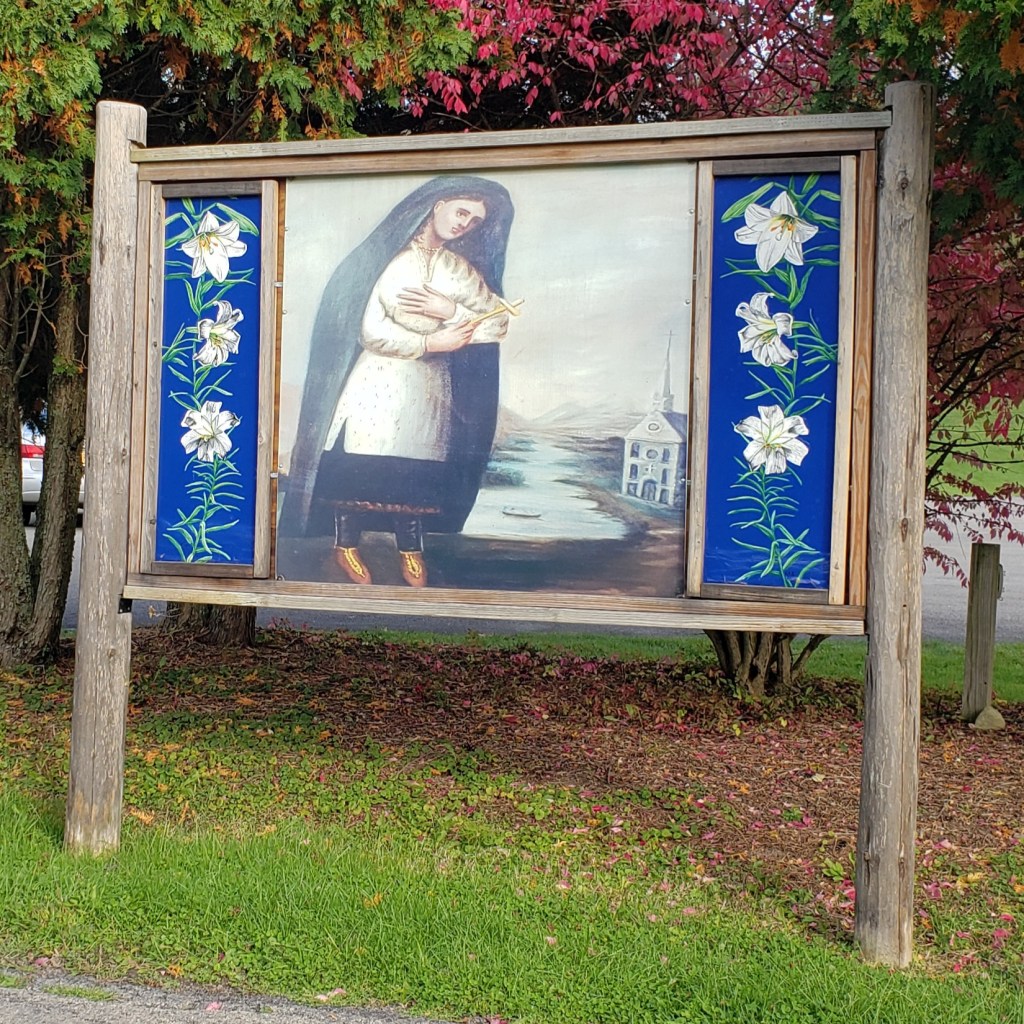
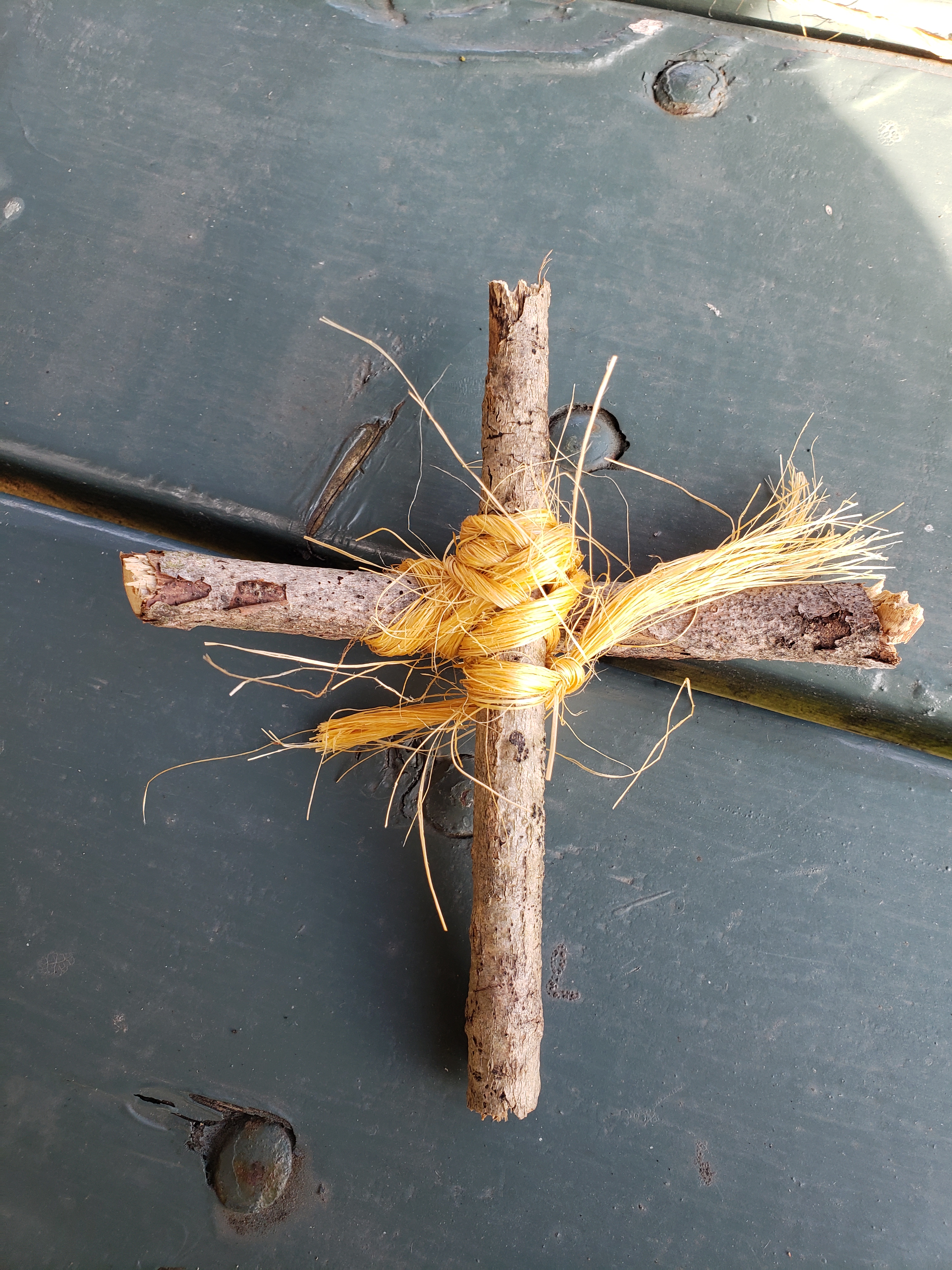
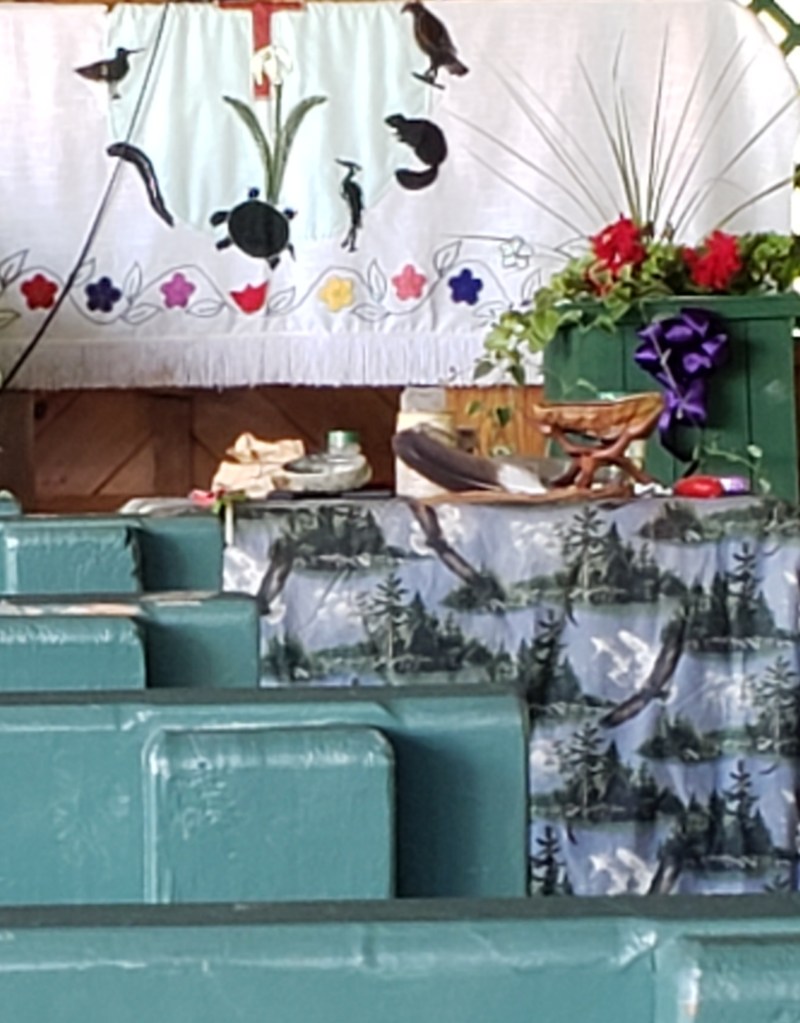
It was a chilly, fall day with bright blue skies and vibrant, colorful leaves, mostly still waving from their branches. Mass was held outdoors in the pavilion, a roof the only cover from the elements. As mass is celebrated, an occasional breeze flutters in, and really reminds you of Creation and the Creator. I had time before the mass and so I wandered the grounds a bit, spent some quiet time in the candle chapel, contemplated the words of Handsome Lake, an Iroquois Prophet whose words appear in the Peace Grove; I made a small cross from sticks and twine, reminiscent of St. Kateri’s own according to the sign on the table.

But mostly, I simply settled in with a subdued awe in the anticipation of the mass, the quiet celebration of Kateri’s canonization and difficult life that she never shunned from nor complained about. My eyes were drawn constantly to the bright colors of the Native dress, the feathers adorning and the large eagle feathers carried and used for the Mohawk rituals.

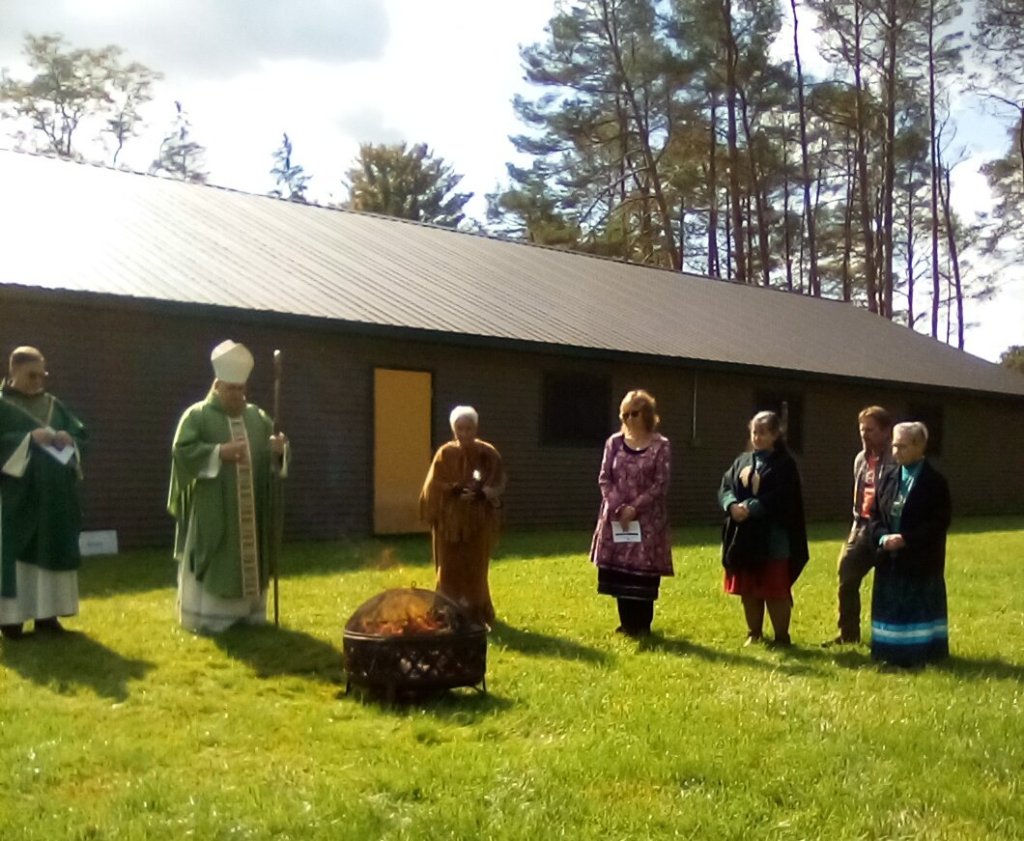
Between the Greeting and the Liturgy of the Word was the Sweetgrass Blessing, the burning of plants and herbs, assisted in its smoking by the motion of the eagle feather. We were invited to proceed up, as if for communion to receive the smoke. I felt as though I was part of something bigger, something ancient, and of course, I was, and I felt honored and humbled to be there. The four sacred plants used in Mohawk ceremonies are cedar, tobacco, sweetgrass, and sage.

Throughout the mass whenever hymns or songs were presented they were by the Mohawk Choir of Akwesasne. I couldn’t understand the words but the meaning was clear. Their voices carried on the wind and through the chapel and transported me far away and very near.

Sister Kateri Mitchell, who played a part in the 2006 miracle for St. Kateri Tekakwitha’s elevation to sainthood was there to share the prayer of the faithful and to talk about the miracles associated with the saint. I have met her before and was happy to see her and talk to her briefly on this day.

Following the mass, there was the annual burning of the prayer petitions. The Bishop said the prayer over them and that concluded this remarkable day.

I have found that attending mass in other cultures deepens my own faith and commitment to my own prayer and meditations. I have included some links throughout this post in the hopes that you will read more about St. Kateri Tekakwitha and her people and their journeys.


The Lord's Prayer in the Mohawk Language

Takwaién:a karonhiá:ke tehsí:teronTakwaién:a karonhiá:ke tehsí:teron
Aiesahsén:naien
Aiesawenniióhstake
Aiesawennaráhkhwake nonhwentsiá:ke
Tsi ní:ioht né karoniá:ke tiesawennaráhkhwa
Takwá:nont né kenwénte
Niationnhéhkwen, nia'tewenhniserá:ke
Sasa'nikónr:hen né ionkwarihwané:ren
Tsi ní:ioht ní:'i tsonkwa'nikór:henhs
Bothé:nen ionkhi'nikonhrasksá:tha nón:kwe.
Nok tóhsa aionkwa'shén:ni né karihwané:ren
Akwé:kon é:ren shá:wiht né io'taksens
Asekenh í:se sáwenhk né io'taksens
Asekenh í:se sáwenhk né kanakeráhsera'
Ka'shatstenhsera, kaia'tanehrakwáhtshera
Tsi nienhén:we e'thó naiá:wen