St. Ignatius Feast Day

Standard

St. Ignatius was well born and privileged. He was a soldier and loved the women. How does that kind of a person become a saint? Well, you’d be surprised to read about the backgrounds and beginnings of most saints.

During his military career, he was wounded in Pamplona when a cannonball ricocheted and broke his leg. He returned to the family castle in Loyola where he underwent several surgeries, setting and rebreaking of his leg, and all of this without anesthetic. While he recovered, he would walk with a limp for the rest of his life.

During his recuperation, Inigo as he was called then had visions and felt the call to the priesthood after his sister gave him books on the lives of Christ and the saints when the chivalric romances he requested could not be found.

When he was able, he went on pilgrimage to the Holy Land to walk in the footsteps of Jesus. He returned to Europe and eventually wnt to France and attended university.

He and six of his companions there swore vows to their lifelong work. He, along with Peter Faber and Franicis Xavier went on to found the Society of Jesus or The Jesuits as they are also known. In 1540, they were approved by Pope Paul III. Pope Francis is a Jesuit, the first Jesuit to be elected Pope.

Ignatius was the first Superior General of the Order and was called the Father General.

One of their practices is called The Daily Examen, which I like to pray in the evening. It is a quiet way to go over your day, see where G-d and Jesus were part of your day, and how you can make tomorrow better. (These are my interpretations of the examen.)

They also practice a contemplation known as the Lectio Divina or sacred reading, in which you put yourself in the Scripture stories, and pray on what you see there. There are five steps to this contemplation technique: prepare, read, meditate, pray, contemplate.

This article from the Jesuits’ website is a nice introduction: Everyday Ignatian: Patience and Lectio Divina.

Celebrating Mary Magdalene

Standard

Today is the Feast Day of Mary Magdalene.

I am not going to talk about her “reputation” which is based in sexism and misogyny, but I’d like to remind people that she is now called the Apostle to the Apostles. She was the first to announce the resurrection of Jesus Christ, and she deserves to be called out for her willingness to tell the Good News to the men (and others) in hiding. (Parenthetically, I am not suggesting that there was no danger to his male disciples; of course, there was, but dismissing her for so long has really bothered me (and many others).)

This was one of my very first Tiny Saints. It was important for me to have that visual and tactile representation of St. Mary Magdalene.

I treasure her independence, her leadership, her bravery. I appreciate how she stepped out of her comfort zone, and can still, after all these years influence us in all the good ways that she was influencing Jesus and all the people surrounding Him.


Think of the ways and the people who have influenced you in the Gospel, the Good News, and how you can use Mary Magdalene’s example of independence, leadership, and bravery. What other ways can you meditate on these values and bring ourselves forward in our best and brave way?

St. Julian of Norwich

Standard

Today is the Feast Day of Julian of Norwich. I first became familiar with her when my new-to-me parish priest quoted her, and I found that it was eerily similar to my own mantra, “It’ll be okay.”

All shall be well, and all shall be well, and all manner of thing be well.

She was an anchoress and mystic, locked in a cell for prayer and contemplation. Her writings are the earliest surviving works in English and attributed to a woman.

Two years before I learned of her, Pope Benedict XVI spoke of her in his General Audience in Paul VI Hall on the 1st of December, 2010. It can be read here.

You can also visit her shrine in Norwich, England.


In Our Time – Julian of Norwich from the BBC:

Blessed Carlo Acutis to become Saint Carlo Acutis

Standard

The Eucharist is the highway to heavenCarlo Acutis


I had heard about Carlo Acutis several years before his relics and Eucharistic Exhibition came to my church. I was intrigued not only by such a young man who was venerated and declared Blessed, but by how recently he had died (in 2006) of acute promyelocytic leukemia. He was near enough to my kids’ ages that it was something that pulled at me. I had seen photos of him and read brief snippets, but when I was told that this exhibition and his relics were coming to our church for nearly a week during Lent, I began to read more. I volunteered to help during the exhibition, and I attended the talks given by the woman, Eileen Wood at Catholic Quest, who was custodian of this display and his relics as well as several of the liturgies held during that week. We also had our own resident expert give a couple of talks about relics in general as well as Eucharistic miracles in particular. It was a busy time at our church, and we had over 1500 visitors in the time we held the exhibit.

Eucharistic Miracles Exhibit.
New York.
(c)2024
Continue reading

All Saints Day

Standard

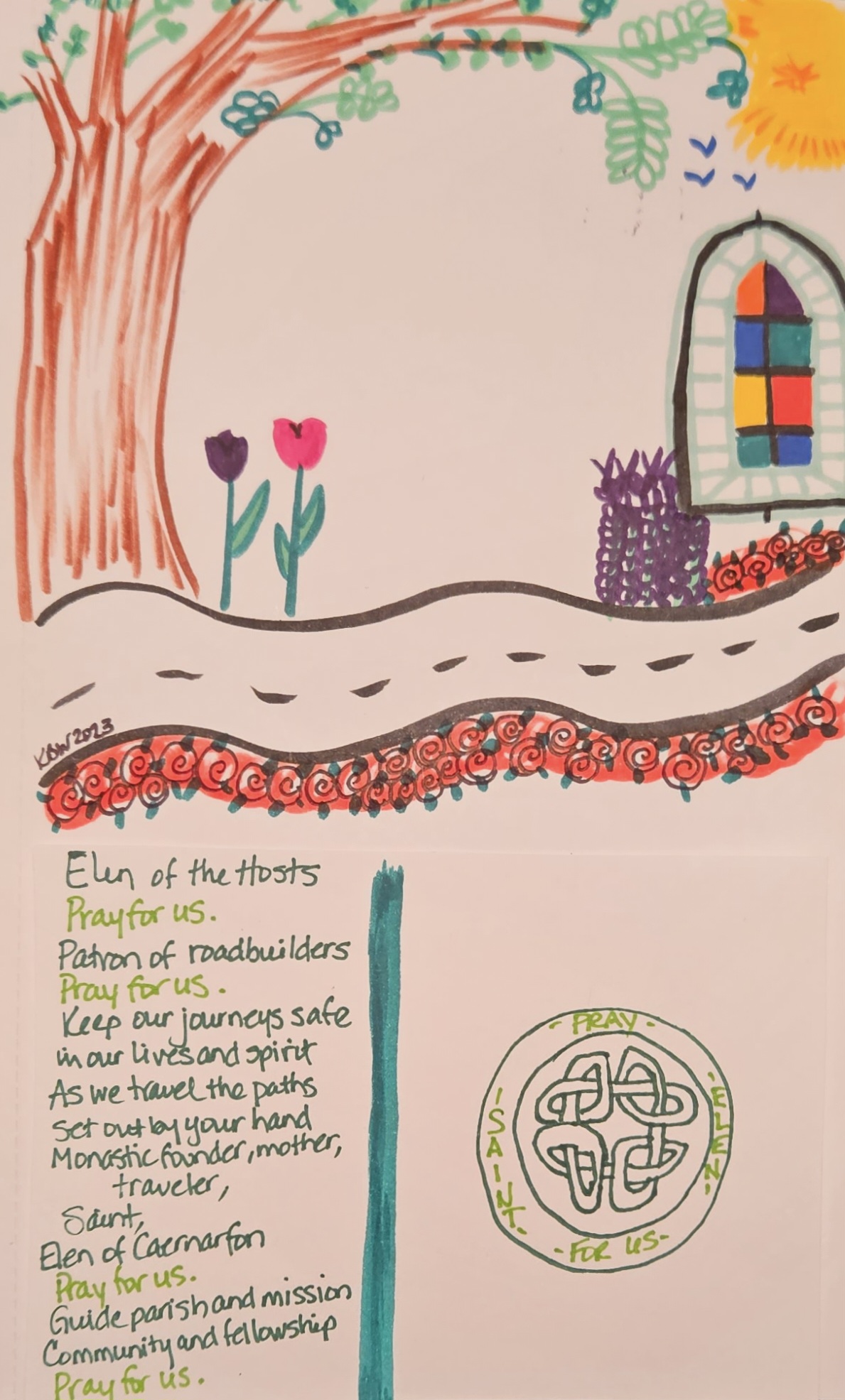
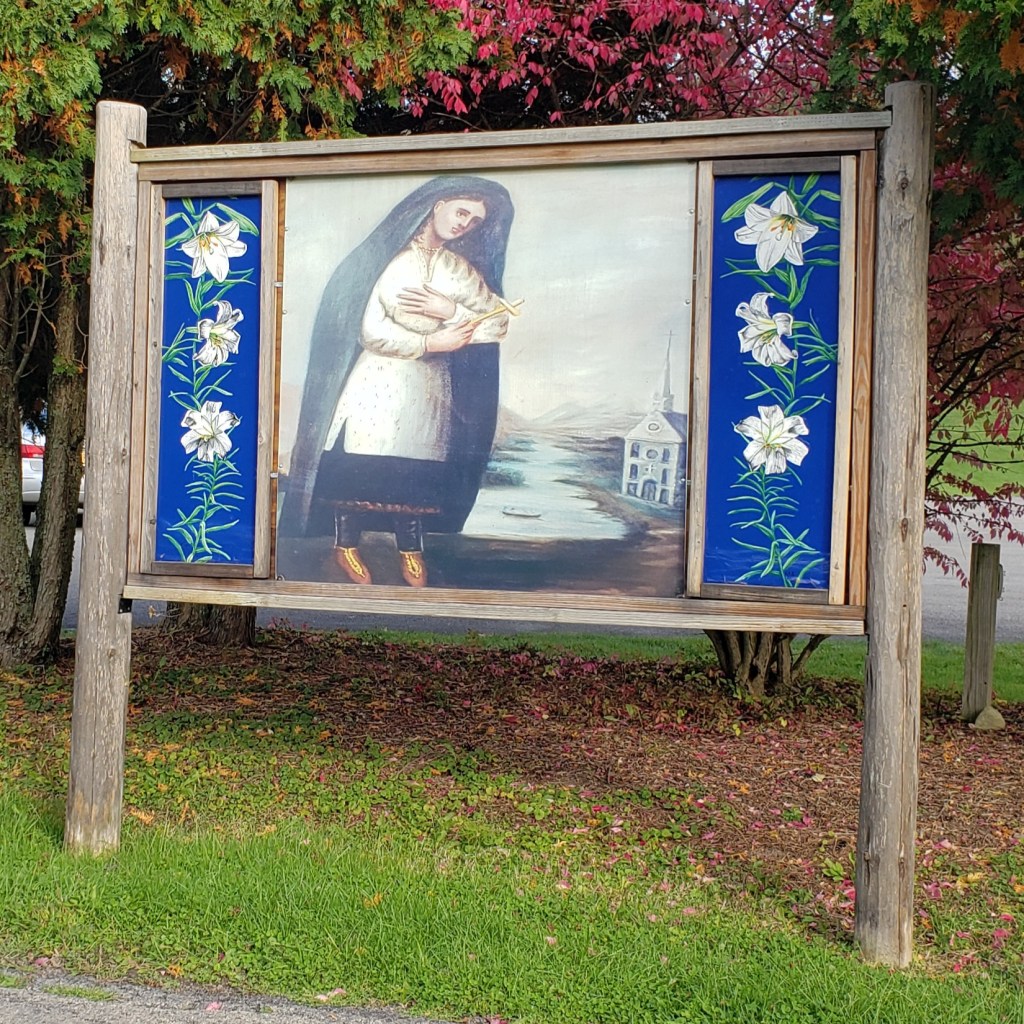
I’ve written before about the saints in my spiritual life. The photo below shows the three I considered for my confirmation saint (next Easter it will be ten years!): Joan of Arc, Kateri Tekakwitha, and Elen of Caernarfon as well as a fourth devotion, Mary, Untier of Knots. I had hoped to have a new prayer for the St. Elen card I sketched, but it wasn’t ready for today. I hope to share it in the next week.

Who are the saints you ask to intercede for you in prayer?

(c)2023

Feast Day of St. Jerome (of Stridon)

Standard

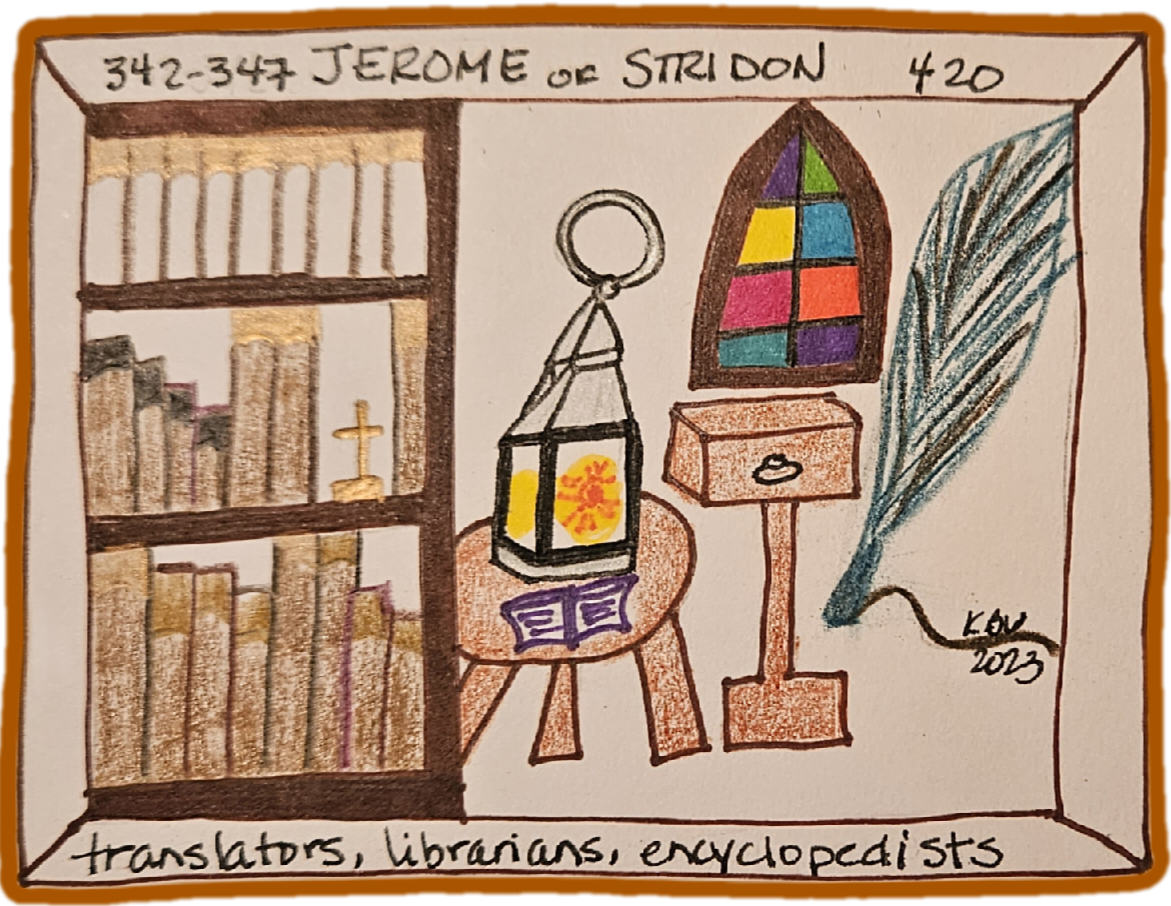
St. Jerome was known for his writing. He translated the Hebrew Scriptures from Hebrew to Latin, which was unusual at the time since most people translated it from a controversial text called the Septuagint, also called The Greek Old Testament. He is the second most prolific writer of in ancient Latin Christianity. The first is Augustine of Hippo, who actually had no problem with the original Septuagint.

As a result, perhaps, he is the patron of translators, librarians, and encyclopedists as well as archaeologists, students, Biblical Scholars, and against anger, the latter of which I believe stems from his widely known bad temper.

As a student in Rome, he indulged his hedonistic side, but also attended the catacombs of Rome to visit the martyrs and Apostles there. There were early inscriptions and wall art that I imagine he studied, although he referred to the place as giving the feeling of the terrors of hell.

To put it simply, Jerome was a person of contradictions, some of which can be sourced as his being a student, a constant learner, and a voracious reader and writer. He had a group of women who surrounded him that read his scholarly works, and several were turned towards a life of consecrated virginity and the ascetic monastic life. This had a negative impact on these wealthy women’s donations, and he became at odds with the Roman clergy.

He is considered a saint in the Catholic Church (and a Doctor of the Church there), Eastern Orthodox, Lutheran, and Anglican.

His iconography is often depicted in libraries and/or scriptoriums surrounded by books, parchment, vellum, and writing implements. He sits at a desk, holding a quill. He is also depicted with a lion having apocryphally removed a thorn from one’s paw.

In my sketch below, I have chosen to leave the lion and the saint outside the view as we look into his small cell of scholarly works.

Feast of St. Kateri Tekakwitha

Standard
Chaplet of St. Kateri Tekakwitha.
(c)2023

Since I’ve been sharing quite a lot about Kateri Tekakwitha, I thought I’d share this older picture from when I tried to visit her shrine in Quebec at the Kahnawake Village of the Mohawk Community. I had been searching for a chaplet of St. Kateri and was unsuccessful before my trip. I had planned to pray the chaplet for my Cursillo friend who was living his Cursillo weekend while I was away. Since I didn’t have a beaded chaplet, I drew one (left side), and brought that with me to pray at Kateri’s empty tomb, located across the street from the church of St. Catherine of Alexandria.

It was a very emotional and spiritual site, and just like in New York near the Mohawk River, I could hear the rapids from behind the empty, marble coffin, a sound similar to the sound near her baptismal spring at her Fonda shrine. I was there in contemplation for some time and prayed the chaplet from my sketchbook. Upon arriving home, I was able to locate a beaded chaplet, which I will pray today for St. Kateri’s feast day.

Kateri is the patron of the environment, fitting as Indigenous people are the caretakers of the land, as well as a patron of others including Indigenous People and ecology and people in exile.

St. Brigid’s Day

Standard

As promised on Instagram, a list of St. Brigid‘s symbols in the above sketch.

  1. St. Brigid’s Cloak – she is said to have been at the birth of Jesus and wrapped him in her cloak. Her cloak has also been told to have grown when offered land for her monastery the size of her cloak. I seem to recall that I’ve also heard her cloak referred to as the night sky with constellations shining on or through it. (I will need to search out my notes and return later this week when I find it – I need it to be true!)
  2. A mug of beer. St. Brigid is known to have turned water into beer, including a lake.
  3. The Triskele. Not only a symbol of Brigid, but the triskele is a triple spiral, often meaning the three roads of life: past, present, future. It may also reference the Holy Trinity.
  4. A Shepherd’s Crook or Bishop’s Crozier. Brigid is considered to have done the works of a Bishop in her position as Abbess of the monastery at Kildare. She led masses and preached.
  5. Medieval-style Goose. She is often depicted with geese as well as cows.

One of my favorite books about St. Brigid is: Brigid’s Cloak: An Ancient Irish Story by Bryce Milligan, illustrated by Helen Cann

Celebration of St. Kateri Tekakwitha

Standard

Two weeks ago, I was privileged to attend Mass at the St. Kateri Shrine in Fonda, New York. It was a dual celebration: today is ten years since the canonization of St. Kateri Tekakwitha, the first Native American saint. The celebration on October 9th was held on Indigenous Peoples Weekend, acknowledging the history and legacy of the Native peoples who were already living and thriving in the Americas at the time of Columbus’ landing in what is now the Bahamas.

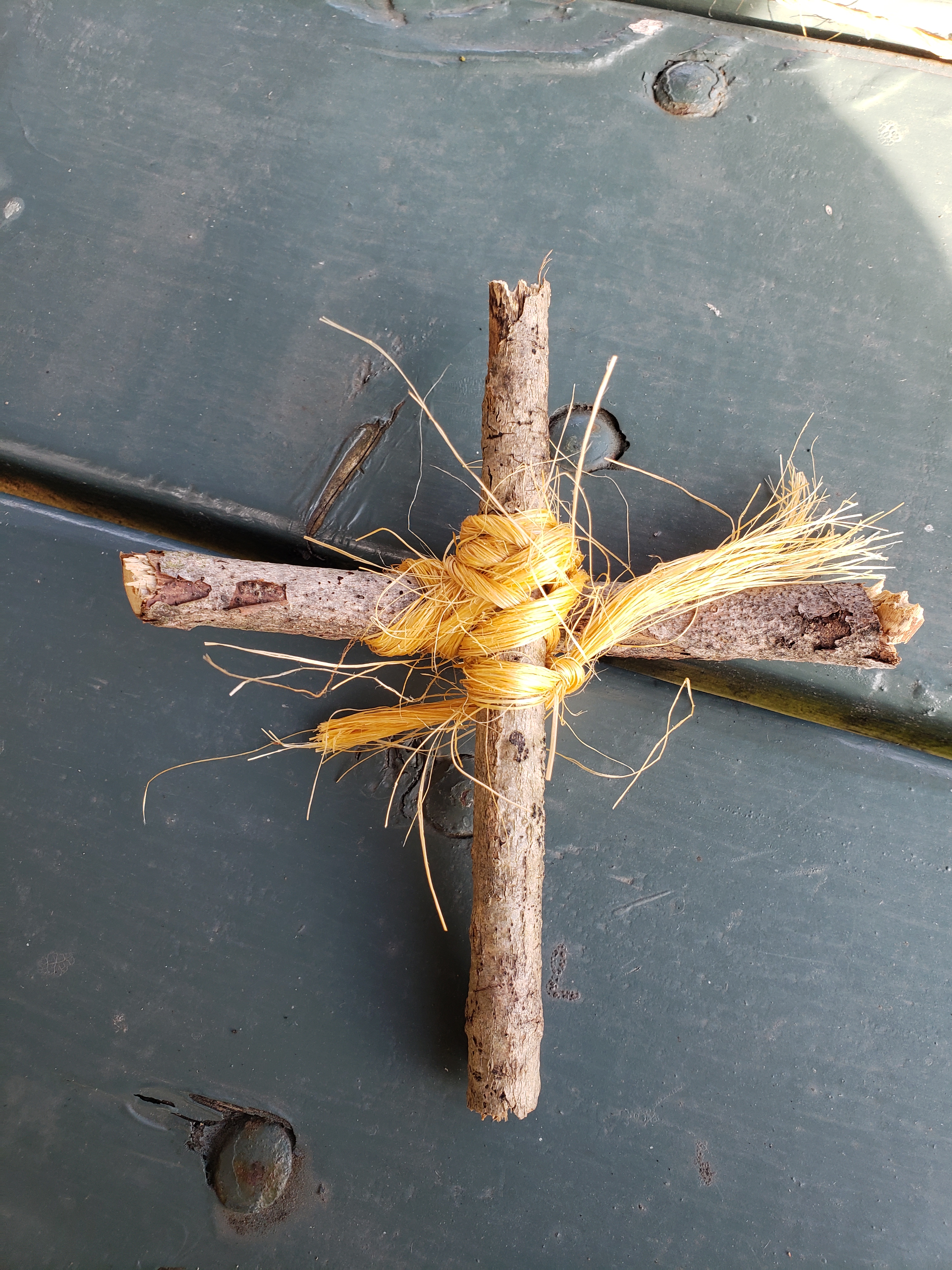
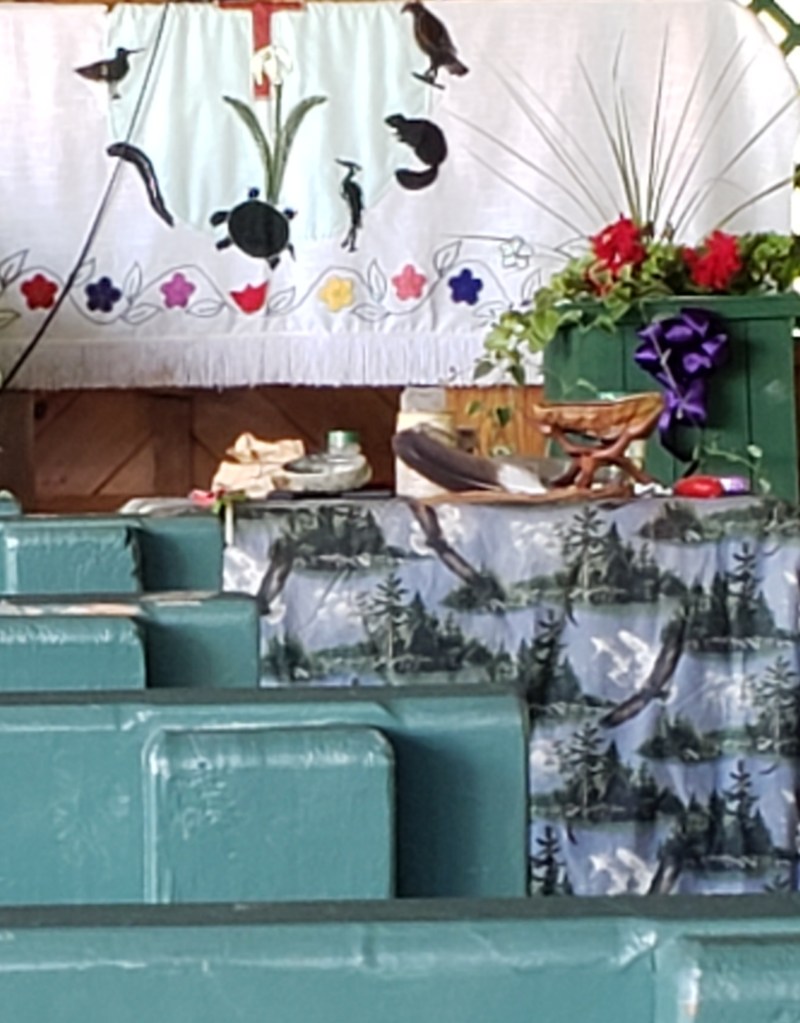
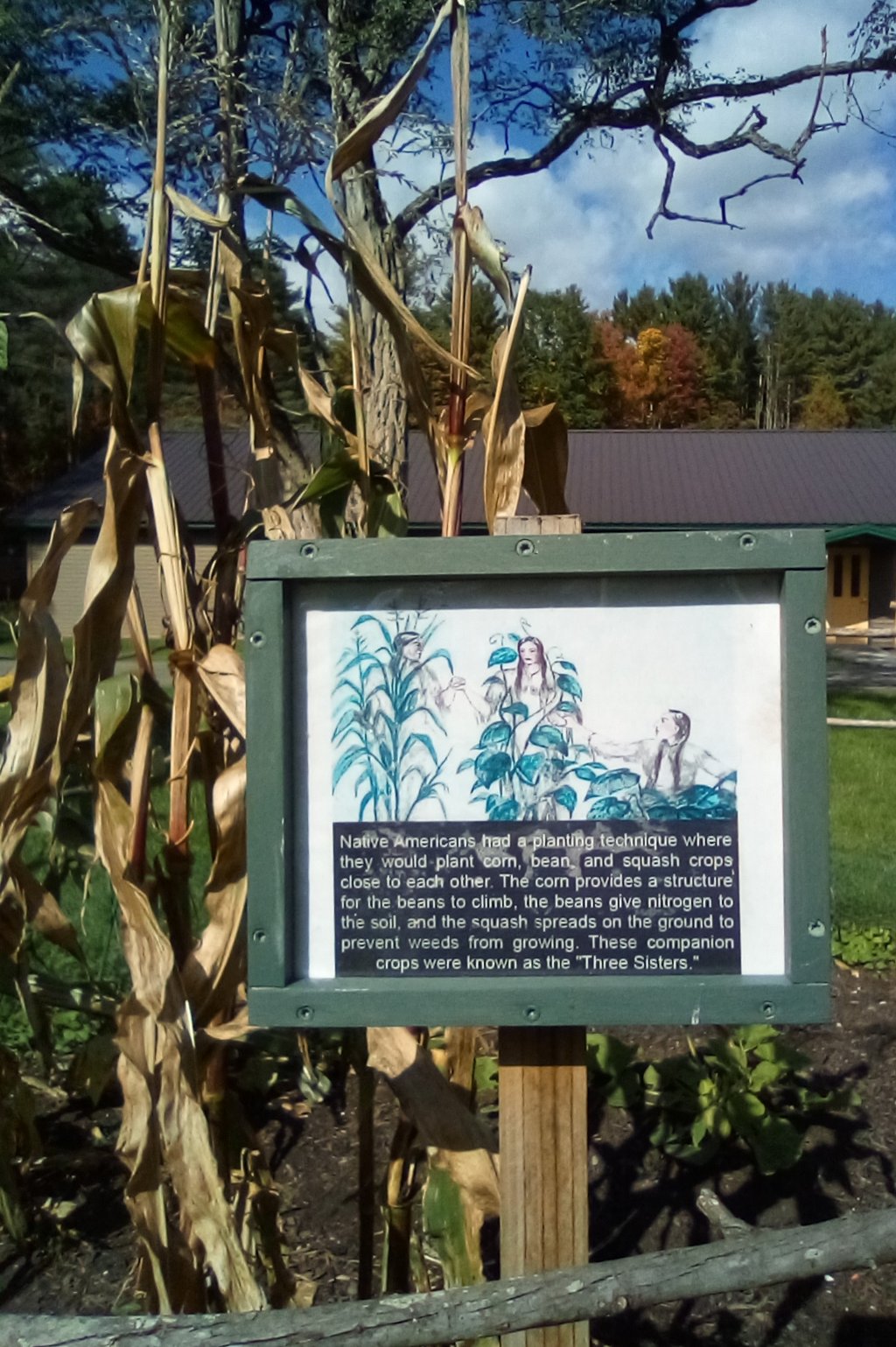
It was a chilly, fall day with bright blue skies and vibrant, colorful leaves, mostly still waving from their branches. Mass was held outdoors in the pavilion, a roof the only cover from the elements. As mass is celebrated, an occasional breeze flutters in, and really reminds you of Creation and the Creator. I had time before the mass and so I wandered the grounds a bit, spent some quiet time in the candle chapel, contemplated the words of Handsome Lake, an Iroquois Prophet whose words appear in the Peace Grove; I made a small cross from sticks and twine, reminiscent of St. Kateri’s own according to the sign on the table.

But mostly, I simply settled in with a subdued awe in the anticipation of the mass, the quiet celebration of Kateri’s canonization and difficult life that she never shunned from nor complained about. My eyes were drawn constantly to the bright colors of the Native dress, the feathers adorning and the large eagle feathers carried and used for the Mohawk rituals.

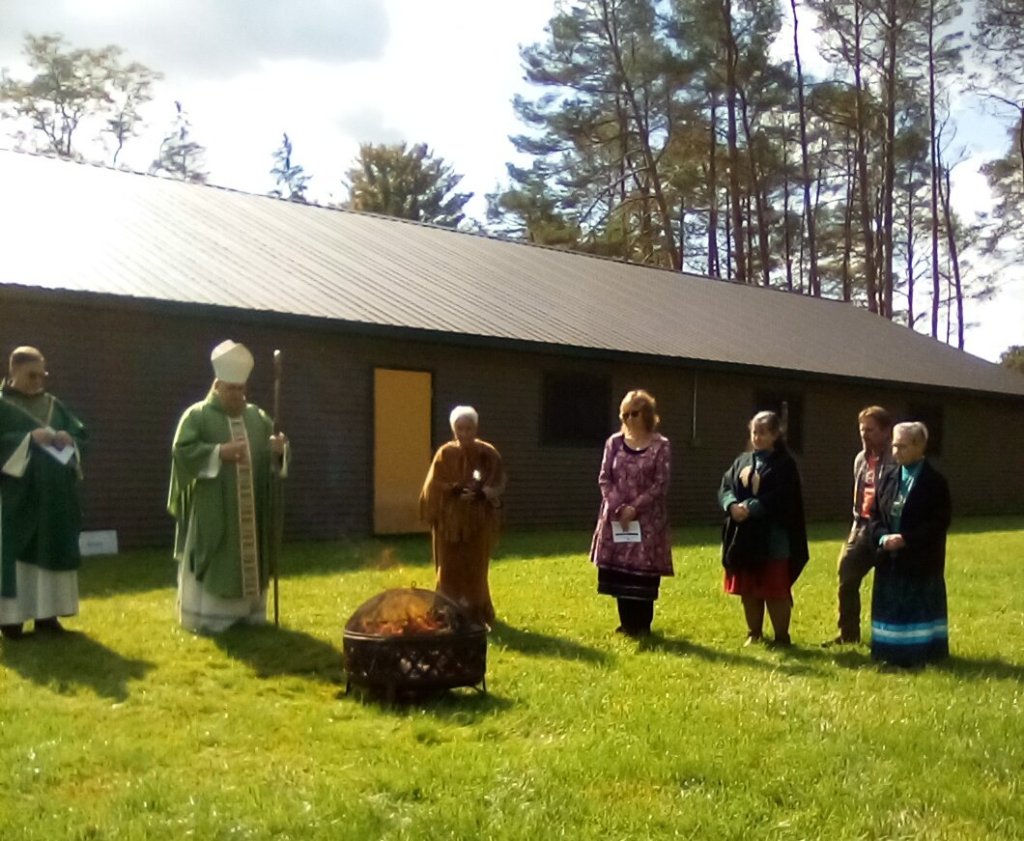
Between the Greeting and the Liturgy of the Word was the Sweetgrass Blessing, the burning of plants and herbs, assisted in its smoking by the motion of the eagle feather. We were invited to proceed up, as if for communion to receive the smoke. I felt as though I was part of something bigger, something ancient, and of course, I was, and I felt honored and humbled to be there. The four sacred plants used in Mohawk ceremonies are cedar, tobacco, sweetgrass, and sage.

Throughout the mass whenever hymns or songs were presented they were by the Mohawk Choir of Akwesasne. I couldn’t understand the words but the meaning was clear. Their voices carried on the wind and through the chapel and transported me far away and very near.

Sister Kateri Mitchell, who played a part in the 2006 miracle for St. Kateri Tekakwitha’s elevation to sainthood was there to share the prayer of the faithful and to talk about the miracles associated with the saint. I have met her before and was happy to see her and talk to her briefly on this day.

Following the mass, there was the annual burning of the prayer petitions. The Bishop said the prayer over them and that concluded this remarkable day.

I have found that attending mass in other cultures deepens my own faith and commitment to my own prayer and meditations. I have included some links throughout this post in the hopes that you will read more about St. Kateri Tekakwitha and her people and their journeys.


The Lord's Prayer in the Mohawk Language

Takwaién:a karonhiá:ke tehsí:teronTakwaién:a karonhiá:ke tehsí:teron
Aiesahsén:naien
Aiesawenniióhstake
Aiesawennaráhkhwake nonhwentsiá:ke
Tsi ní:ioht né karoniá:ke tiesawennaráhkhwa
Takwá:nont né kenwénte
Niationnhéhkwen, nia'tewenhniserá:ke
Sasa'nikónr:hen né ionkwarihwané:ren
Tsi ní:ioht ní:'i tsonkwa'nikór:henhs
Bothé:nen ionkhi'nikonhrasksá:tha nón:kwe.
Nok tóhsa aionkwa'shén:ni né karihwané:ren
Akwé:kon é:ren shá:wiht né io'taksens
Asekenh í:se sáwenhk né io'taksens
Asekenh í:se sáwenhk né kanakeráhsera'
Ka'shatstenhsera, kaia'tanehrakwáhtshera
Tsi nienhén:we e'thó naiá:wen