I didn’t want to let this one day go by without sharing some of my photographs from our Canada holiday. When we travel, we may have different objectives. Each trip is different, and it is only in looking back at journals and photos that a theme sometimes emerges. Sometimes it’s just family time, tourist time, foodie fun, and relaxation, and other times it fleshes out into something a little different.
In looking for photos to share as part of National Photography Day, I saw a theme of history; not only a historical perspective, but a focus on First Nations, ancient land, and my own personal history. I hope that the captions will tell a story.
Many people question why we need to focus on the diversity of our nation and celebrate heritage days and months; why can’t we simply celebrate our sameness as Americans.Also questioned is why we look back on the way we treated the indigenous peoples who were already here at our country’s very beginnings.
People want to forget the bad parts of our history.
The racist parts. The genocide. The meanness and the bigotry.
We can’t let those memories fade. They are a part of our history, and as we saw earlier in the year in British Columbia, Canada, it is part of the collective history of this continent.
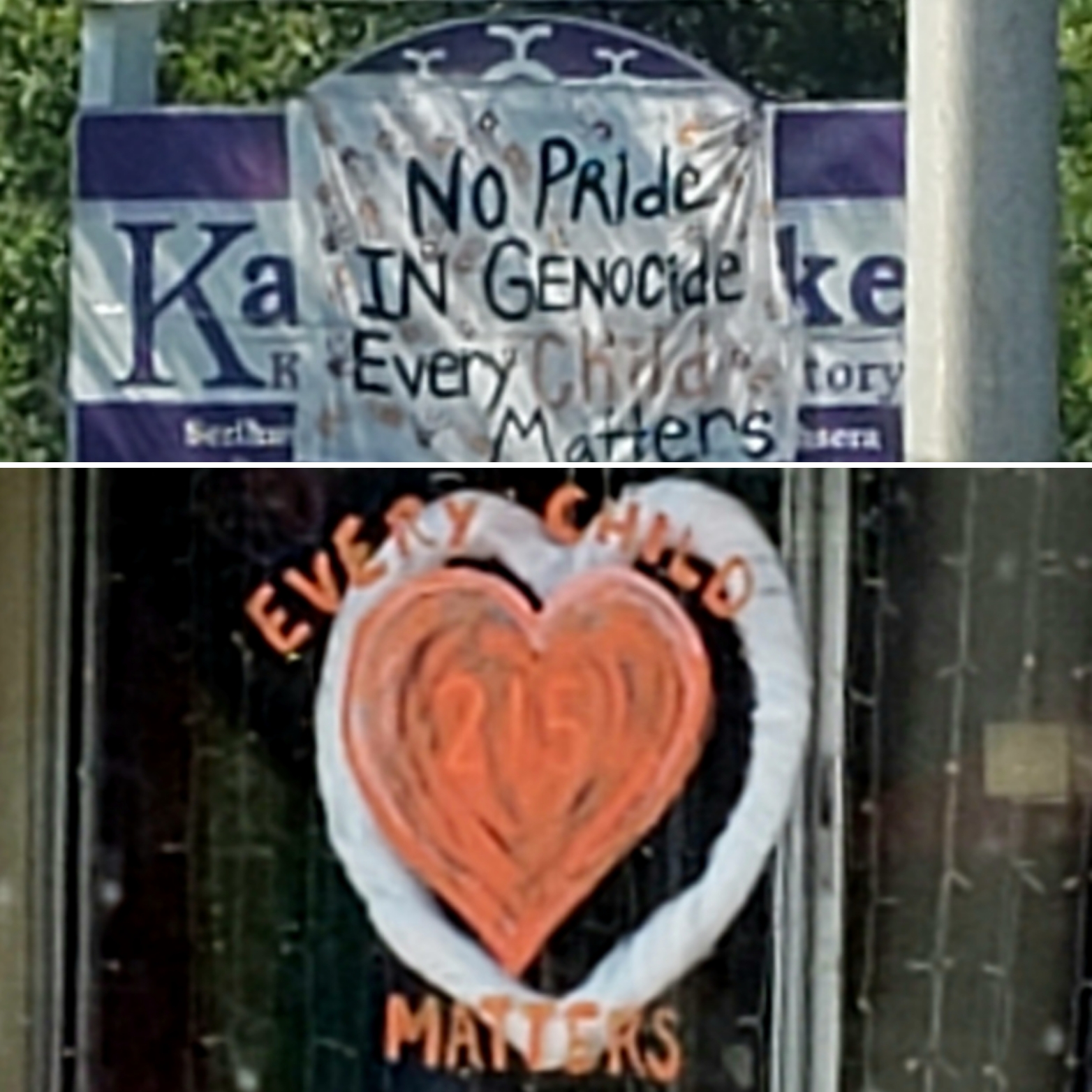
While we were on vacation in August, we couldn’t help but notice the signs, the memorials for the two hundred fifteen First Nations children found in unmarked graves in Kamloops, British Columbia.
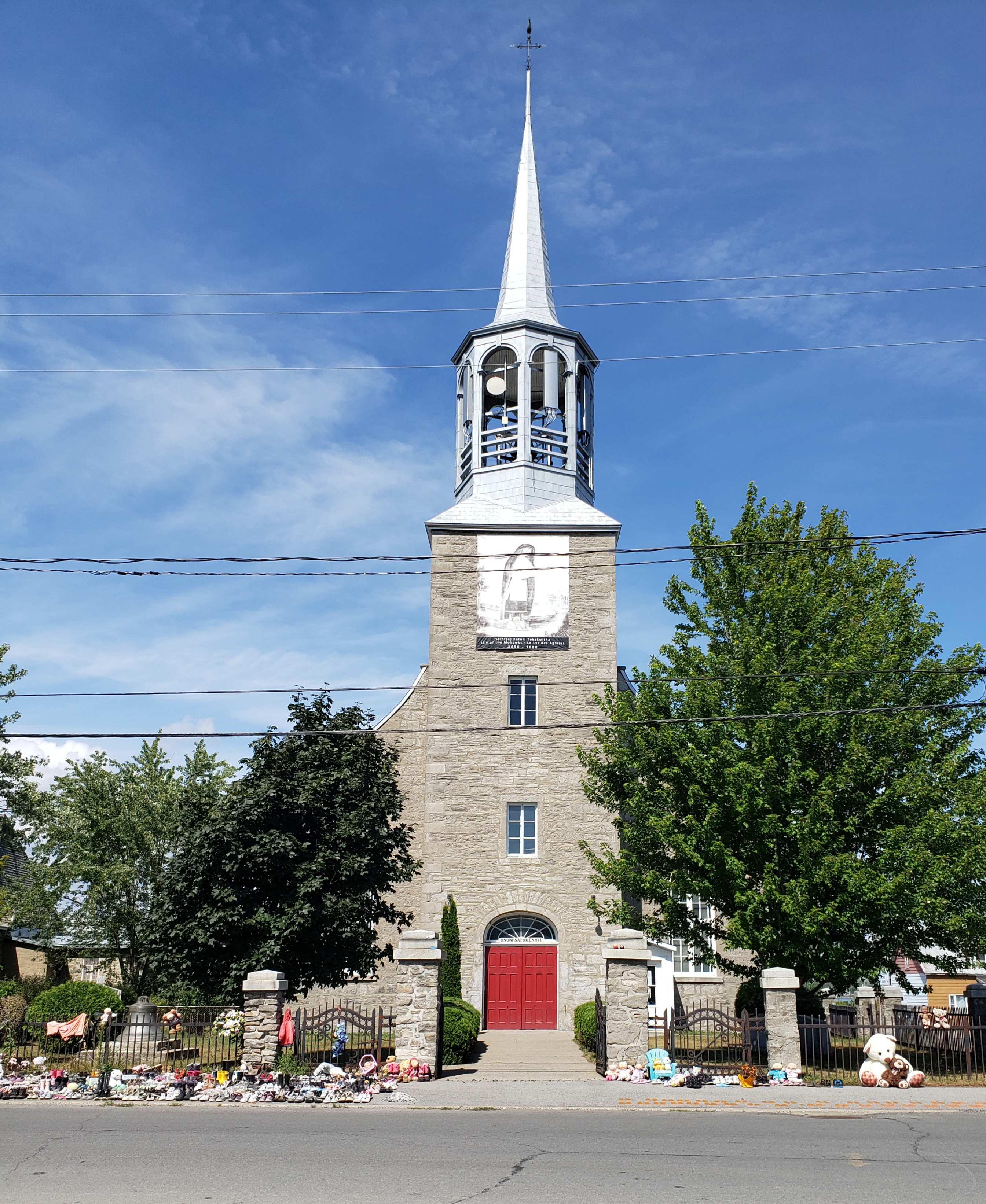
The articles read and linked below, as well as others were difficult enough to accept and they are still being processed emotionally by Native and non-Native peoples alike. However, happening upon one such memorial in Kanawake, the Mohawk tribal lands in southern Quebec tugged at emotions I was unaware of. The sight of the small shoes, representing the dead and unremembered 215 children, some as young as 3 was a lot to take in. It left me with a profound sadness, but also an emptiness that even the sadness couldn’t fill.
I leave you with links to read and photos to meditate on.
The emtpy shoes representing the 215 Indigenous children found in Kamloops. My presumption is that the ashes are from a First Nations religious ceremony in memory of the children. (c)2021
The above shoes can be seen at the St. Francis Xavier Mission in Kanawake, Quebec. This is also the site of the St. Kateri Tekakwitha Shrine where her body was brought. She is the first Native American Catholic saint. (c)2021
Signs we saw at various places across Quebec and Ontario, Canada. (c)2021


 Griffins and Ginger Snaps