This is the first part of a three-part series. The impetus was something I read in Braiding Sweetgrass by Robin Wall Kimmerer, which I will reflect on in the last part. Part One delves into my childhood, growing up Jewish in what I consider a fairly religious household, although it was less religious than my grandparents’ households that my parents grew up in. Looking back, it is certainly more religious than I raised my own kids in, and that will be discussed in Part Two. Part Three, funny enough is the part I wrote first, but then kept expanding and writing and re-writing, and realized there was more backstory than I could fit into that section. I hope you enjoy reading about my past lives, and my reflections and reconciliations with who I am today and how I became that person, at least in this one aspect of my life.
Continue readinganecdotes
50 – 11 – Five Dollars
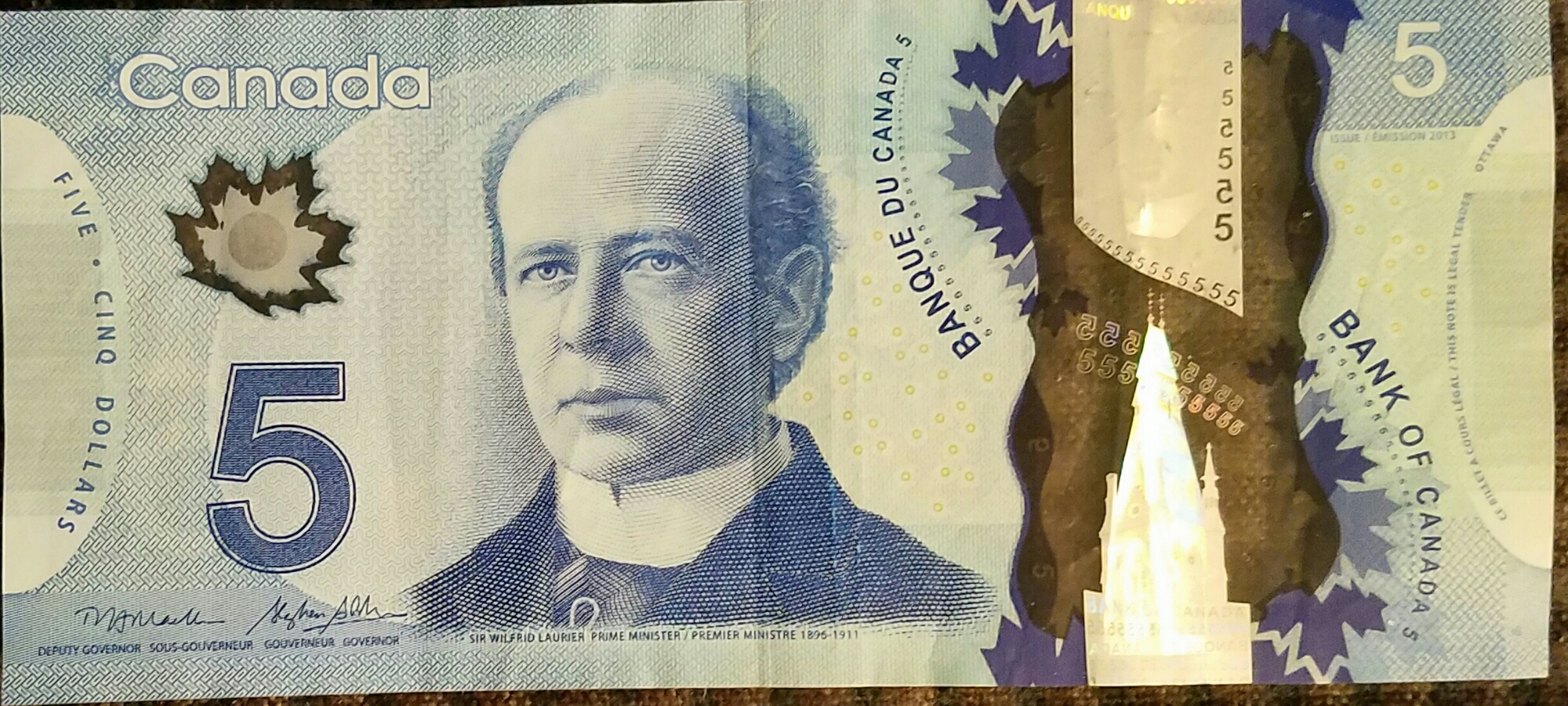
StandardWhen I was a child, we traveled to Canada often; more often than most kids living in NYC and on Long Island. Our grandfather was born and raised there, so we would visit his sisters and their families as well as going on a summer vacation before returning to school in the fall. Not every year, but almost every other.
Every visit always included dinner at Old Ed’s Warehouse in Toronto. We’d all meet there – aunts, uncles, cousins. It was a fancy restaurant, and men had to wear jackets and ties. It was a steakhouse, and it was misery for my brother, sister, and I. Steaks. No hamburgers, even less chance of cheeseburgers, and absolutely no ketchup. I can still see my sister’s face when we found that out.
My husband and I continued that tradition when we visited Toronto before we got married. We visited my Aunt Goldie, and had dinner at Old Ed’s. It was different since I was ten – they had several sections of the restaurant – steaks, pasta, casual dining, etc. No jackets either. They are closed now, but they were a place that was part of my childhood traditions.
When I was a kid, everyone would gather on the street outside the restaurant in front of Ed’s. You needed reservations. We parked and waited for the rest of the family to arrive.
My aunts, Goldie and Janet were my grandfather’s sisters. He also had a brother, but we didn’t see him very often. I can only remember one time distinctly. Both of them had husbands named Joe. We found this funny. Two Uncle Joe’s. We also had two Aunt Shirleys, two cousin Sharons and more Davids than you could shake a stick at.
When Uncle Joe (Goldie’s husband) arrived he took each of us kids aside, gave us $5 in Canadian money for our own and told us not to tell our parents.
About five minutes later, Uncle Joe (Janet’s husband) took each of us aside, gave us $5 in Canadian money for our own and told us not to tell our parents.
The two of them shared a look and a wink, and the three of us each got $10 to spend on our vacation. I don’t know if my parents ever knew. We were Gerry’s kids, and he was there so often he was a favorite of the family and in addition to all the other ways, we reaped the reward of having a great Dad.
I Remember…Chanukah
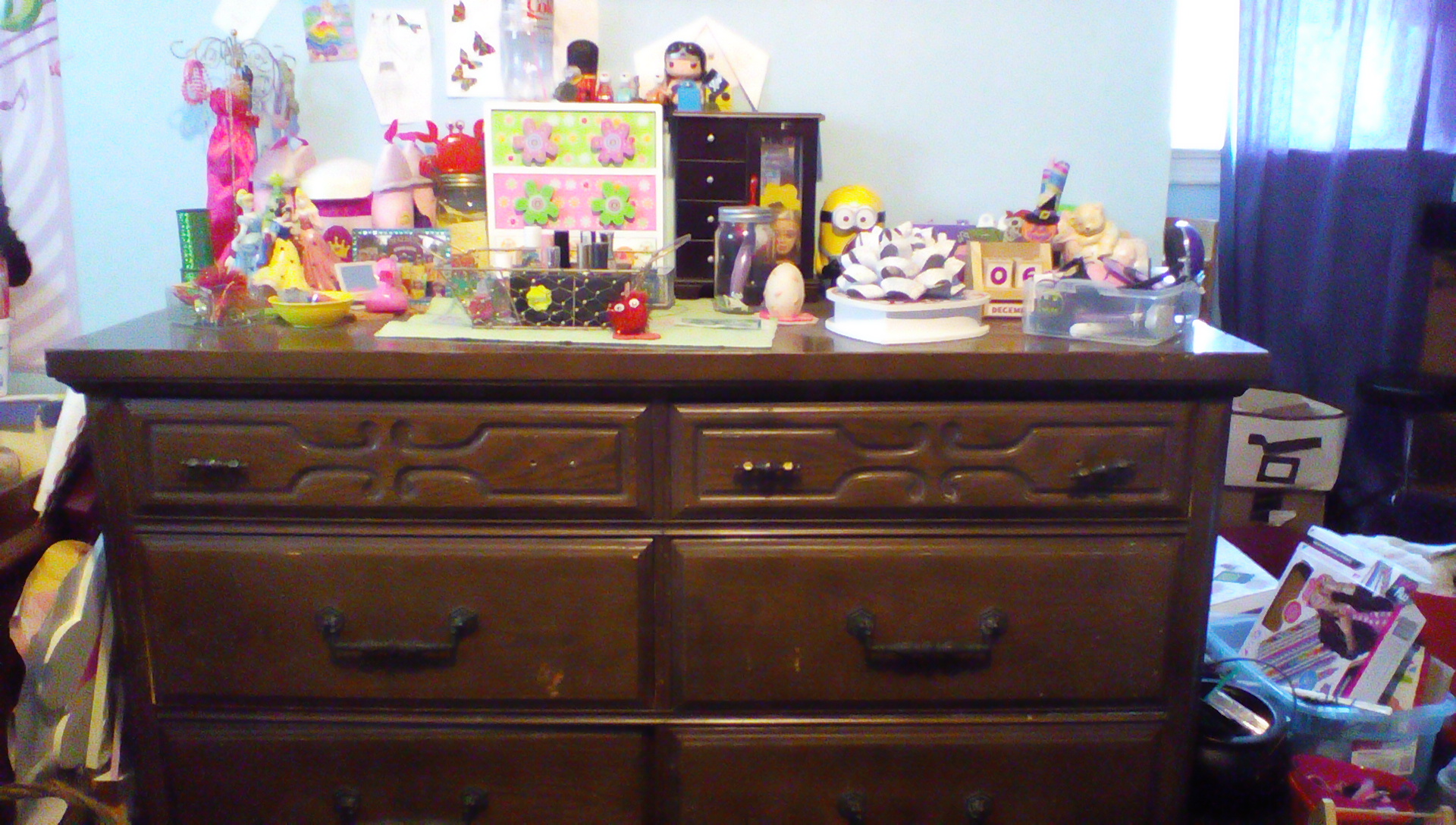
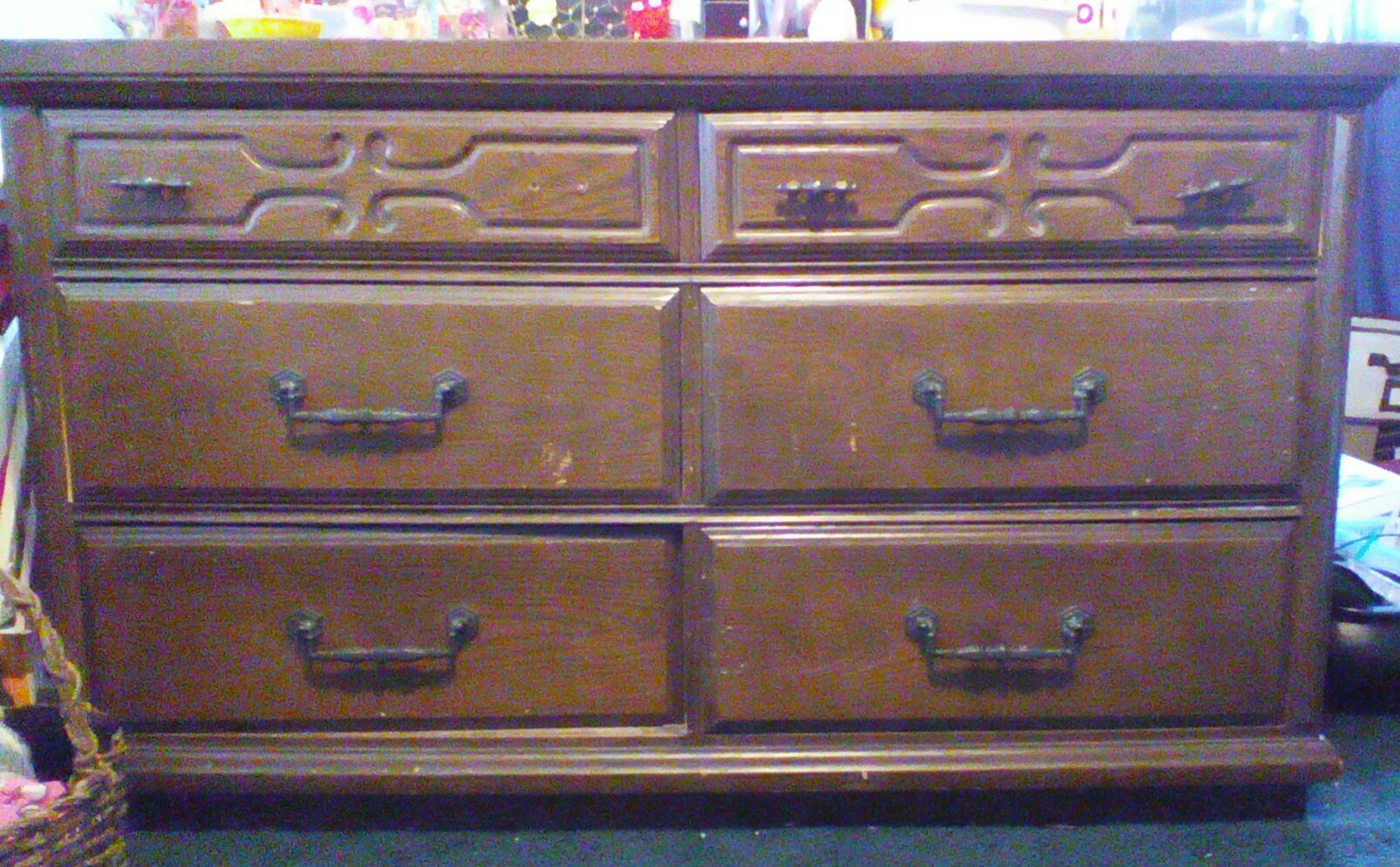
StandardThis is my daughter’s dresser. I don’t know how her clothes fit in here. With the closet and the pjs under her bed, sweaters in the basket next to the dresser, she manages to get it all in. Mostly. This was my dresser when I was a baby, but what I remember this dresser most for was hat it sat in the living room of our NYC apartment (and later of our suburban house). In our two bedroom apartment it was placed against one long wall directly across from our green patterned sofa. During Passover, we’d walk along it on our way to leave a glass of wine for Elijah on the radiator.
In front of the radiator was a television stand, one of those carts with wheels that our television sat on. I remember sitting on that sofa watching Fonzie jump over a shark on Happy Days (although I think that it’s the sofa I’m remembering and not the apartment.) I also remember spending a day or two curled up there, under a warm blanket when I was sick and stayed home from school. It is a comforting memory of warm soup or mashed sweet potatoes with butter and the television.
Behind the television cart is a medium sized picture window that I can still see my brother and I looking out of while we were home with the chicken pox. When we recovered, my sister got them. Some things we didn’t mind sharing more than others.
What I remember most about that dresser, though is the three little piles of Chanukah presents on the floor in front of it, waiting to be opened each night after we lit the candles on the menorah. The menorah was placed on the dining room table on a small sheet of aluminum foil. My mother would never put the burning candles on the dresser; they might start a fire. As the oldest and the only one attending Hebrew school as it were, it was probably my job to do most of the lighting. The candles came in a box of forty-four, different colors that were randomly chosen each night and lit, reading the prayer from the side of the box. We might sing a song and play dreidl. My cousins lived in the same garden apartment complex so they were probably around more often then not. We went to the same shul where we learned the songs and traditions of the holidays. I thought I remembered it differently but when I saw those cousins recently they had the same memories of music in the school basement and we kids not being allowed into the temple on the High Holidays. We used to play in the parking lot, which seems a ludicrous idea today.
Describing the gifts as a pile makes it seem much bigger than it actually was. Yes, there were eight gifts, but they were all small things. Each one wrapped carefully in white paper adorned with multi-hued blue Stars of David and dreidls. We would of course get dreidls and gelt, probably on the first night. One of my favorite things about celebrating Chanukah today is the taste of the gelt. It’s not anything fancy or special but it tastes exactly the same as it did when I was a schoolgirl. My kids wonder why I won’t share mine with them. After all, they each get their own bag of gelt.
Choosing which gift to open was a several minute decision making process. Picking each package up, shaking it slightly, bringing it to my ear as if I would hear something or smell something underneath the packaging and the paper. Nothing was hidden; it was all wrapped around whatever the shape of the package was. Shake the rectangular box. Should I open the Barbie doll shaped package? Or the Barbie doll clothes shaped package? There might have been puzzles and books too. No Nintendo. No tablets. No smartphones. What a simple, beautiful time that holiday was. Everyone in our court had an electric menorah in their windows or their curtains were open and we could see the candles burning deep inside their apartments.
There were also latkes to look forward to. They came from a box, but after mixing and refrigerating and then frying them in the pan, they were as homemade as they could be. The house smelled of the oil, and they were eaten hot with applesauce and sour cream. Back then, they were the only thing that I ate sour cream with. When I cook them today for my family, I still use vegetable oil. They are the only things that I cook in vegetable oil. I tried olive once, but the smell didn’t work for me, so I went back to the usual vegetable oil and they were perfect. Applesauce and sour cream could give any kind of potato pancake that latkes taste, even frozen or those triangles from Arby’s, but there is nothing like the real thing, frying them alongside the burning candles on the dining room table.
For the holiday we celebrate in our family with my children, we keep Chanukah separate from Christmas. That is my personal thing; pet peeve if you will; the one tradition I don’t want to share. I’m fine with families that celebrate both Chanukah and Christmas; we’re one of them, but I prefer to keep the two separate even when they fall in the same week. My personal feeling is that it keeps their significance and their importance significant, and important. For Chanukah, we don’t give eight presents anymore. Some years they might get one larger gift on the first night, but most years they get a new dreidl and a bag of gelt. Some years they get stickers or pencils or an extra something, but we still keep it a little simpler.
Simple, minimalist, centered on the eight candles burning like they kept the fire burning in the temple for eight days until the oil could get there. Just like Christmas, it is a reminder of a time long ago, a history that we forget too often, and the simplicity of working together and taking care of each other.
That’s what this dresser reminds me of – my family and all the special things they taught me, especially when they weren’t trying to teach me anything at all.
Better to light a candle than curse the darkness.
Happy Chanukah.
Vintage Supernatural
StandardOne week ago, Supernatural (Episode 11.5) took the brothers to the site of the grisly 19th century murders of Andrew and Abby Borden, father and step-mother of Lizzie Borden. There is much controversy as to who murdered them in their home, the popular nursery rhyme sing-songing one theory:
Lizzie Borden took an axe
and gave her mother forty whacks,
when the job was finally done
gave her father forty one
Amazing what lurks in the childhood memories and recesses of our minds. It comes unbeckoned as if I were still jumping rope in the grassy courtyard where I grew up far, far away from the murder of her parents. Lizzie was put on trial and acquitted. She died of pneumonia in 1927. Her sister died nine days later. Despite having not seen each other in many years, they are buried side by side. There is a monument that marks Lizzie’s final resting place.
In her will, Lizzie left money to pay for the perpetual care of her father’s cemetery plot.
In viewing the previews for this episode, titled Thin Lizzie, they mention the family home in Fall River, Massachusetts, not all that far from where I live. I thought the Bed & Breakfast mentioned was a joke – was there really a place? One Google search and there it was. And before anyone asks, no, I have no desire or intention of visiting, no matter how close it is.
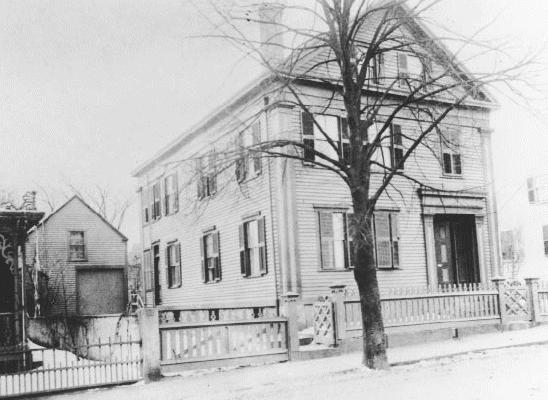
Some things should be left, and this is one of them.
On the morning after the episode aired, the Washington Post had an article, Would you buy a murder house? I personally don’t know, and I hope I don’t find out. I certainly do believe that houses can have spiritual remnants of previous owners, not to mention other places where spirits dwell. I’ve had my own encounters, the most visceral being in Gettysburg, Pennsylvania, both on the battlefield and in the Jennie Wade House, one of the places that is always on my to see list. I had gone as a child, and again while on vacation with my husband, and then went again while on vacation with my three children. There is something compelling about Jennie’s house and her story that calls to me. I’ve been searching for the last week to find the photos that I’ve taken at the house, both in the 70s with my family and again in 2008, I believe with my children. I have a memory in a darkened stone masoned cellar that you had to climb down into from the outside. I’m not sure why that flashed through my head as I’m writing this.
The Jennie Wade House is located on a major road in Gettysburg; one that is extremely busy with traffic. It is in a tourist area, and directly across from a Rita’s Italian Ices Shop. My kids sat on the benches eating ices, and I watched the house, seemingly waiting for something to happen. Her death created the name of the landmark, although it is not actually Jennie’s house; it is her sister’s. Her sister had just had a baby, and Jennie and their mother came to help her. Jennie was baking bread, kneading the dough in the kitchen that adjoined the street. A stray bullet came through the front door, lodging in Jennie’s back, severing her spine and killing her.
She is the only civilian casualty in the city during the Battle of Gettysburg.
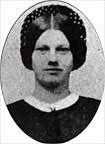
Ever since I was a little girl, I have always felt a presence in this house. Despite the obvious, poor special effects in the kitchen that give the soldier mannequin his face as he narrates the story of that fateful day, there is still something powerful in the “talking walls”. His projected face scared me beyond belief as an adolescent, and I still had that creepy vibe when I went there as an adult. I know much of the sounds and creaks were theatrics, but you couldn’t help but feel something in this house and that some of those “theatrics” weren’t all faked.
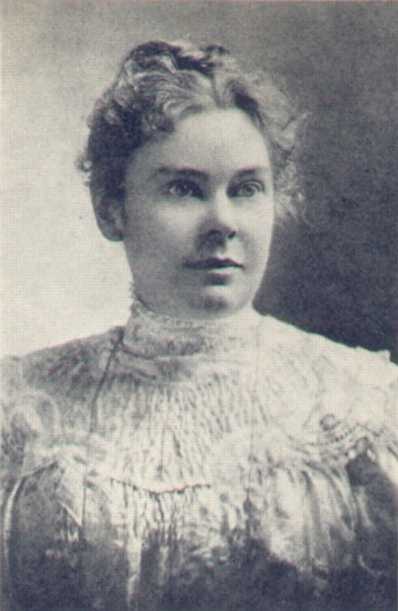
In the preview and then last week’s episode, Supernatural showed some artifacts from the house. I don’t know if they were really artifacts of the Borden murders or props made to look like the actual items, but the photo of Lizzie reminded me both of Jennie Wade and Laura Ingalls; possibly because of the camera techniques of the 19th century, the black and white, head and shoulders, the pose, the lace collars and pinned hair. It led me down a rabbit hole of googling and reading various accounts from both times of both of their lives, Lizzie and Jennie. They couldn’t have been more different, and I wondered at what point childhood me decided to devote so much of my time to Jennie rather than the nursery rhyme. Maybe I couldn’t wrap my head around the idea of killing my parents. For a variety of reasons, I would never, but still why was I compelled to ignore her? I almost skipped the episode because the subject matter bothered me. I still wonder why I was never interested in Lizzie’s story – did I think she was guilty? I don’t know. I was much more compelled to the story of poor Jennie, baking bread for the soldiers. Her fiance was killed hours before she was. Neither of them knew the fate of the other.
I do love a good mystery, but I think I might need to not only have compelling characters, but also ones that are easier to feel compassion for, to put myself in their shoes, and I suppose, no, as I’ve said, I know that I could much more easily do that with Jennie Wade.