Halloween and Political Statement

Standard

​As Walter Cronkite said, “Freedom of the press is not just important to democracy, it is democracy.”

My Halloween costume this year is a political statement. I’ve been shocked and appalled by the number of attacks, both verbally and physically on journalists in the past year and throughout this election cycle, mainly from one side in particular.

There is a reason that freedom of the press is in the first amendment; it is that important.

We can’t let serious presidential candidates mock journalists for their disabilities.

We can’t let candidates refuse press credentials to mainstream, reliable, longstanding investigative journalistic newspapers like The Washington Post, the paper that broke the Watergate scandal.

At the same time, we can’t let them issue credentials to their friends.

We can’t let campaign employees (Lewandowski) assault journalists (from Breitbart no less).

We can’t let journalists (like Amy Goodman) be arrested for inciting and disorderly conduct when she is working as a journalist (and has been for more than 20 years) and covering an important news story that you just don’t like (ND pipeline).

I’m certain that I’ve left out at least half a dozen incidents that I can’t recall at this moment.

This is for every journalist kidnapped while doing their job. At the most recent White House Correspondents’ Dinner, President Obama honored Jason Rezaian, journalist released from an Iranian prison. He stated, in part, “This year, we see that courage [Jason Rezaian] in the flesh and it’s a living testament to the very idea of a free press, and a reminder of the rising level of danger, and political intimidation, and physical threats faced by reporters overseas.” [And I would add, here at home as well.]

This is for David Bloom who died doing his job.

This is for Daniel Pearl who was murdered for his religion.

This is for Bob Woodruff who got a traumatic brain injury doing his job.
This is for Spotlight, the Academy Award’s Best Picture for 2016.

This is for every journalist who went to jail for protecting a source.

This is for the First Amendment and the freedom of the press.

50-31 – The Magic Tunnel

Standard

The Magic Tunnel by Caroline D. Emerson was one of my favorite books as a child, and it still resides on my bookshelf. I will take it out on occasion and thumb through it, reading bits and pieces and remembering what I loved about it.

It was multi-genre, taking on adventure, history and historical fiction, and time travel, and it probably influenced the direction of my interests more than I would have thought at the time. It had everything a voracious reader in elementary school could ask for.

I spent my elementary years in NYC – Queens with grandparents in both Queens and the Bronx. The brother and sister in The Magic Tunnel also lived in New York City, and in taking the subway, something I did with my uncle and on class trips, they found adventure in the past before NYC became New York. It was originally New Amsterdam, and in their travels, they met the original Dutch colonialists, the Native Americans already living in the area, and Peter Stuyvesant.

They explored the Dutch settlement and saw other aspects of Dutch colonial life and recognized much as what they had been learning in school as well as straightening out some misconceptions from that time period.

In the years after reading this, I immersed myself into history and science-fiction, still two of my loves. I also continue to have an unfinished novel from college in the same multi-genre way, combining time travel, adventure, and history. Without realizing it, I’m certain that The Magic Tunnel was a strong influence to begin and continue that story. Even today, I still come back to it and try to tweak and add elements, thinking maybe the story is relevant and can still go somewhere.

After college, I joined a re-enactment group to study and fully immerse myself in The Middle Ages.

I still love train travel, and am thinking of how to take a train trip for a writing excursion, although I’m not sure that I want to travel to another dimension or plane.

Published in 1964, it may certainly be dated and somewhat stereotypical, but it is still worth a look to see how our past was perceived and may have been perceived by two elementary age siblings just trying to get home.

50-30 – The Post Office

Standard

I grew up in the post office. Sort of. Both of my parents worked for the post office, and I’d visit them often from when I was young, in elementary school right up to college and after.

I knew where the employee only door was to visit my mother, and I’d walk on through even though it said, No Admittance, Employees Only. This was also my way of bypassing the line and I would give my mother my mail and she’d dump it into the sorting tray.

I used to send a lot of letters and cards to friends and pen pals. I didn’t realize that stamps had to be paid for; that thyey cost money. My parents never asked me for money for stamps.I thought they were a benefit of working for the post office.

I’d leave my mail sticking out of the medicine cabinet mirror in the bathroom at night, and the next morning they’d be gone and on their way to the addressee.

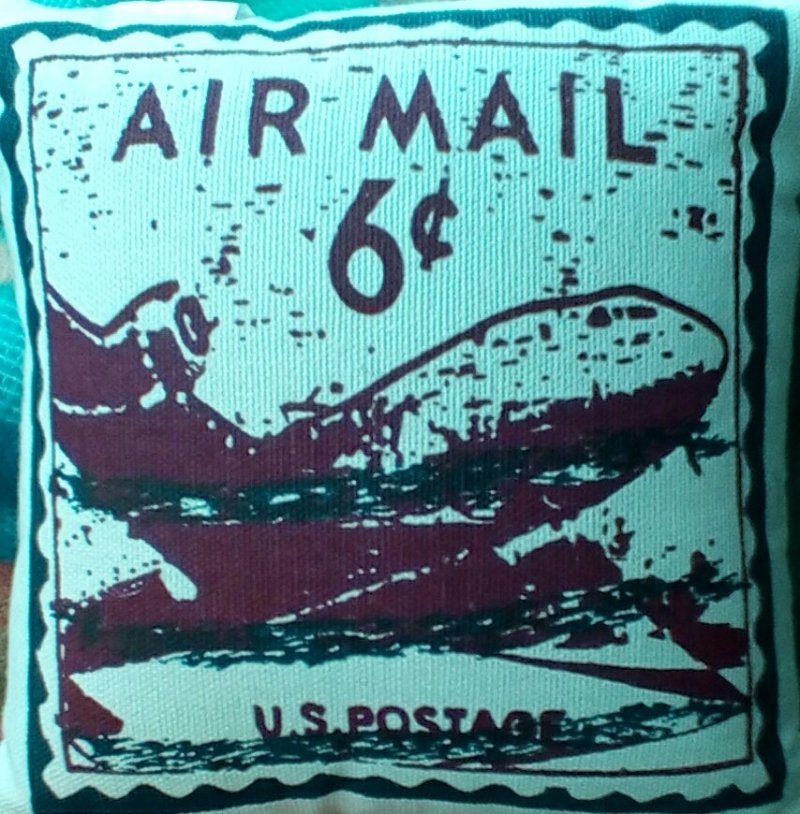
I sat at Gloria’s desk, twirling in her chair, pushing around the cigarette butts in the ashtray with a pencil. I’d use the stampers on blank pieces of routing paper: First Class, Air Mail, Fragile.

On ocassion, I’d sort the mail into the carrier’s trays by zip code.

I would address letters to my grandmother by simply writing Grandma and her address.

I knew the importance of the return address and using a zip code. I rebelled against the zip plus four.

For a long time, I could identify a state by its zip code, and I was one of the only kids in class who knew all the postal abbreviations for all of the states.

Even today, two hundred fifty miles away from those childhood post offices, I still feel at home sending out my letters and packages. I sneak behind the second counter to build my boxes, pack them, address them and tape them closed. This isn’t an official counter where the stamps and money are kept. It is alongside the retail section. It might have had a cash register a long time ago for just the retail items, but it’s just a great space to pack up and get my Christmas presents ready for mailing. I do get asked a lot of questions, though because everyone thinks I work there. I can almost always answer the questions, which makes me feel good too.

As a kid, I knew not to put any mail in the blue neighborhood boxes. I still don’t although the problems that happened in the 70s don’t really happen too much anymore – fireworks in July, eggs at Halloween.I do hand my already stamped mail to the clerk about ninety-nine percent of the time.

Fragile, liquid, perishable, or potentially hazardous? My clerk knows I know it, and he has to say it anyway, so I just smile and wait patiently to answer him. Usually it’s the first three, especially around the holiday season.

I automatically hand over my credit card, knowing the clerk needs it for the credit transaction.

I’ve asked for tape and markers and staplers.

I almost always use priority mail. I remember when priority mail was guaranteed like express mail is.

The price of stamps almost always goes up right after Mother’s Day, at least it did two or three times in a row.

I remember when computers came into the station, and at my parents’ first station together, we could walk to the pizza place and back. Joe’s Pizza.

As an adult they kind of frown on you spinning the chairs around, but there was not a chair that I didn’t spin when I was a kid.

The Post Office, Part 2

Standard

First Day Issues and in the center a cancellation from the Benjamin Franklin Post Office in Philadelphia, a real post office in the coloinial style commemorating Franklin as the first postmaster general. (c)2016

Elvis Presley stamps

[All photos of stamps copyrighted to kbwriting and griffinsandgingernaps.wordpress.com]

4/8 – Making Time for G-d

Standard

​Entrance Antiphon

To you I call; for you will surely heed me, O God; turn your ear to me; hear my words. Guard me as the apple of your eye; in the shadow of your wings protect me. Cf. Ps 17 (16):6, 8

Luke 18:1-8 

Jesus told his disciples a parable about the necessity for them to pray always without becoming weary [1]. He said, “There was a judge in a certain town who neither feared God nor respected any human being. And a widow in that town used to come to him and say, ‘Render a just decision for me against my adversary.’ For a long time the judge was unwilling, but eventually he thought, ‘While it is true that I neither fear God nor respect any human being, because this widow keeps bothering me I shall deliver a just decision for her lest she finally come and strike me.’” The Lord said, “Pay attention to what the dishonest judge says. Will not God then secure the rights of his chosen ones who call out to him day and night? Will he be slow to answer them? I tell you, he will see to it that justice is done for them speedily. But when the Son of Man comes, will he find faith on earth?”

[1] Emphasis mine.
In my priest’s homily on this most recent Sunday, he asked for us to make time for G-d in our daily lives. Like the widow in going to the dishonest judge, we should go to G-d with a consistency and persistency that can’t be ignored, but more than that, our consistency and persistency isn’t only for G-d to hear, but for us to project.

Looking at our everyday lives, some weeks, and days, it’s easier to find time for G-d, but how often do we make time for G-d?

Some weeks have a built in time and space for G-d and for our prayer and meditation. For me, this week, I have three times already built in. Sunday’s weekly mass, Monday’s anointing or healing mass, and Tuesday night’s Living Rosary.

As I write this, it is after that night of the Living Rosary. I went last year as well, and it is a very beautiful event. It is 56 people holding candles in a circle reciting the rosary. I sat down, said hello to my Sunday seatmate who was also there when one of the choir came over and asked if I wanted to participate. Um…no. I blinked and turned around. “What exactly would. I need to do?” That is how I became a Hail Mary bead and part of the living rosary. I will probably volunteer next year.

It’s not just time for G-d, but keeping an open heart when He calls us to Him.

What other ways can I make the time to include G-d in my day?

One way is this piece of writing. I have four more after this post until we reach the end of the Extraordinary Jubilee Yea of Mercy. I will continue to think about mercy and meditate on the past year, but in these next five posts (including this one) I have a weekly session thinking about G-d’s mercy and love.

I can choose two days at home to pray the rosary. This month is the month of the rosary, a time that we can feel closer to Mary and consequently her son and His Father.

Looking out of the window at the brightness of the leaves, holding tight to the branches even in the breeze; the reds and oranges glowing like fire, the ones that have fallen spreading a carpet across the front yard. How can I not think of G-d in those simple moments?

He is all around me, and the more consistently that I think on Him, search for Him, and see Him in all the spaces that I inhabit, the more persistently He comes to me and spreads his mercy on my like a blanket of leaves, nature and warmth and His love.

50-29 – Wales, The First Time

Standard

​When I first arrived in Wales many years ago, I didn’t know how profoundly it would affect me and change my viewpoint of everything. It wasn’t until years later that I discovered the word for what I was feeling: hiraeth. Hiraeth isn’t homesickness, but a longing, a yearning for one’s homeland, and it is not so much that you know it when you feel it, but the emotion of hiraeth is so much more than its literal definition. In fact, it doesn’t really have a literal definition, but a broad emotional meaning. It’s spiritual.

Wales, that first time, was in so many ways, a surprise. I wanted to visit a castle, not realizing that the castles I associated with Wales were English castles used to subjugate the Welsh people rather than built by the Welsh to protect them and their interests.

Wales is a surprise, and never what you’d expect. If you expect rain, the sun will shine. If they say hill, they mean mountain. Their lifeblood is slate and coal, daffodils and leeks, but most of all the people. It’s palpable. No matter where you are in North Wales it seems that you can see the mountains. The English call it Snowdon, but it is Eriyi in Welsh – the haunt of eagles. So much more evocative, isn’t it? So much more poetic like the Welsh lilt and cadence.

That cadence of the Welsh tongue is much like the valleys and peaks of Wales itself. They know their history and remember their independence, although that mostly ended in 1282 with the beheading of Llywelyn the Last and the drawing and quartering of his brother, Dafydd, their blood as much a part of the land as the craggly rocks and the rivers.

My first trip to Wales came about by accident. Luck. Fate even. I was asked to join my college roommate in England. Sure, why not? Of course, there was more to it than that, but that’s the gist of it. I borrowed the money from my brother, who was better at keeping his than I was with mine and off I went.

My roommate asked me what I wanted to do. My only response was, “I don’t care. I want to see Stonehenge and a castle; I don’t care about the rest. I’ll follow you.” She planned it all through trains and buses and hitchhiking, hostels and B&Bs. I followed along, collecting pictures and memories.

We made our way from London at this first day of 1987, a new year. We went westward and south and west again, and eventually entered Wales. I don’t remember crossing the border but Wales was different. Welsh had made a resurgence so all the signs were bilingual. I began keeping a little dictionary in my journal although no one made us speak in consonants. W is a vowel by the way, but that’s another memory.

Wales was different.

The air was different.

The sky was different.

The sheep were different.

It didn’t rain in Wales; at least not the Wales I was in. This was January, and Britain was grey; very grey. It held the first patch of blue sky I’d seen in the two weeks I’d been on this island. It was that perfect cloud peppered Crayola sky blue color that exists nowhere else, its reflection off the quarries deepening it and the snow evening out its perfection. It must be special.

But the sky wasn’t all that made it special. There was a feeling I’d never experienced before, not deja vu, but I had been here before. I don’t know how or if, but physically I’d never, but I was.

How can everyone not feel it?

It was overpowering. I needed to be here, high in the mountains, midnight hikes, counting the stars, not having an historical clue, but knowing that I walked in the footsteps of ancestors, of family, of specialness, feeling as though I’d taken these steps before. This wasn’t restless spirits like I’ve felt at other historical holy places; these were memories, memories of feelings.

Crazy, I know.

There was a weightlessness, a joyful singing in my soul that nothing else compares to. I only imagine this is something of the feeling that people get when they travel to Israel, but I don’t actually know.

It is my spiritual home, an ancestry I wasn’t born to, but I was called on to feel, to be a part of,  to let inside and settle into my soul. It is always there, this feeling of Wales and the Welsh, the people as much a part of the land, and as much a part of me as my own children.

When I went back almost twenty-three years later, I found the feelings still strong with only my research and readings that gave me more context and made it more tangible to breathe in. My footsteps following Welsh princes, understanding how remote a castle stronghold really was breathing the same air, wondering if I would ever understand these feelings.

Even home, I get fleeting glimpses through a looking glass – the wet colored leaves on a rural road and I forget that I’m not in Wales. The hesitation at a roundabout, confused about which way to enter it. The tree outside my church’s window when it rains – it is always a surprise and always a physical reaction and then I realize it’s through a window and I’m not in Wales. These come upon me through no special thought, but there is the realization that Wales is a part of me and who I am, and maybe one day I’ll find out why and maybe even how I have this connection.

50-28 – Like a Birthday or a Pretty View

Standard

High school was a time for friends and music and concerts. I still feel the ramifications of standing too close to a speaker in a closed building listening to The Stray Cats. Now that was an experience and an amazing memory.

There was Berlin, the Thompson Twins and others, but none more important to my life as the five Brits known (and still known) as Duran Duran. Named for Doctor Duran in Barbarella. With their hair and their makeup, their synth pop. The three unrelated Taylors, Nick Rhodes, and Simon LeBon creating music that was danceable and singable, but also moving and inspirational, a creative catalyst for my writing and exploring what was barely in my mind’s eye, but that wanted to come out in ways.

My friends and I would go to the park, climb up on the big stage at the amphitheatre. They would play their air instruments, and I would take their pictures using my air camera.

Click, whirr is the sound a camera makes, and I was the paparazzi following them on tour.

We were 100 Club, and we opened for Duran Duran. We wrote creative fiction, not song fic, maybe closer to fan fiction. Mine was a murder mystery – Murder at the Odeon. and it was my second moment of fandom and writing colliding.

Duran Duran also contributed to our creativity with their videos – The Chauffer, Night Boat. Their videos told stories that encouraged us to tell our own stories.

My current text notification is Late Bar, one of my favorite songs from them, conjuring up holes in walls, drinking, and mystey. It influenced a poem I wrote for the yearbook called Spies, which in turn encouraged a new Dungeons and Dragons game that was called Top Secret that was role playing for secret agents and government spies.

Their Hungry Like the Wolf was very much like Indiana Jones and New Moon on Monday reminded me of those undercover agents sneaking around foreign lands.

Thirty odd years later and I still listen to them. They remind me of high school, and college but they also fill me with new bouts of creativity and writing inspiration.