Entering the Holy Door

Standard

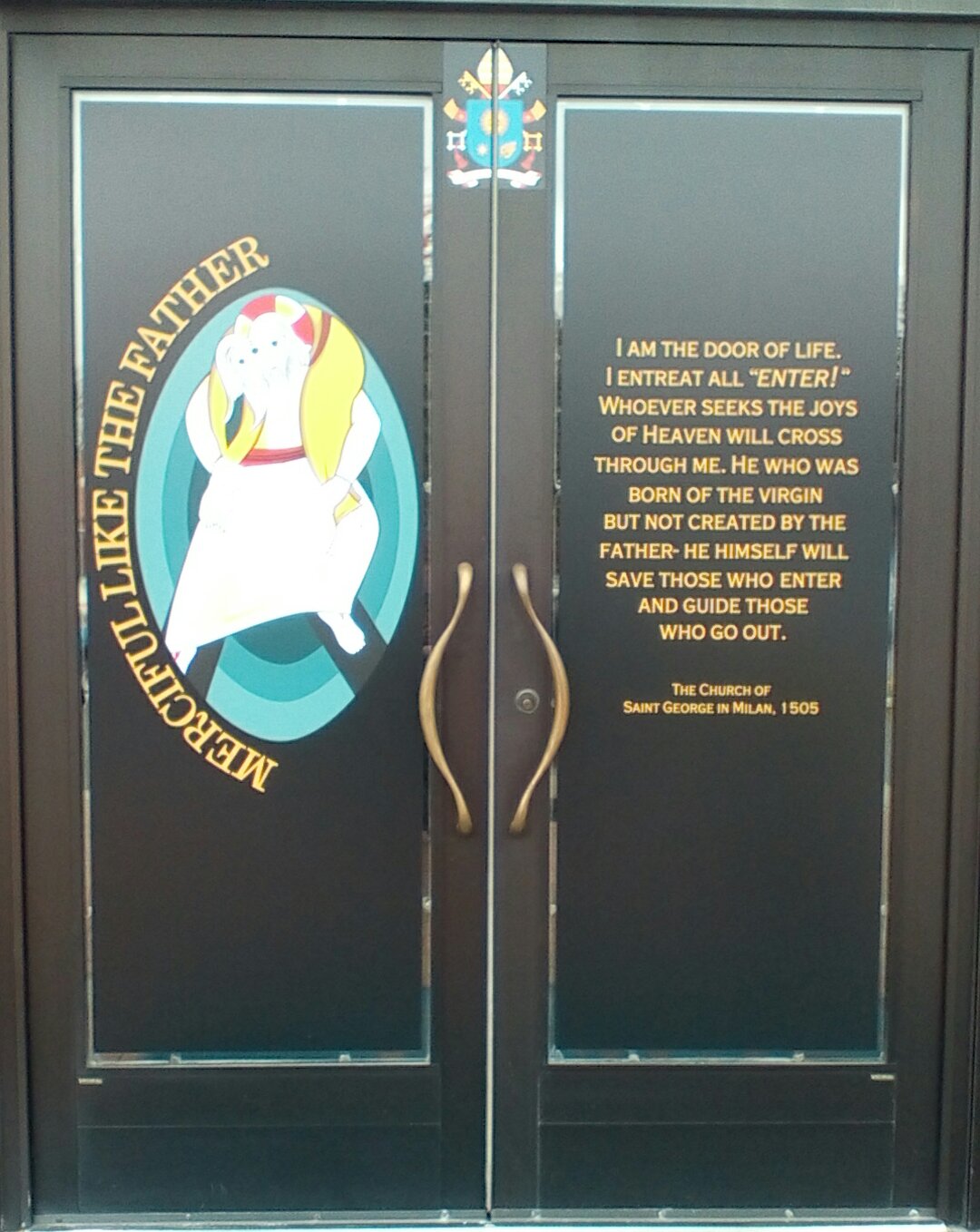
I was on retreat when my parish’s holy door went up officially. The Pope announced that there would be a Jubilee Year of Mercy, and there would not only be a Holy Door at the Vatican, but at every Cathedral across the world. This Pope is nothing if not inclusive. He walks the walk, which is one of the many reason that I am so fond of him. I was very excited to have joined the church about the same time as his election to Bishop of Rome. Without ever having met him, I felt welcomed by the world church as much as I had been welcomed by my parish church,.

I had planned on going through the Holy Door at our Cathedral, but was very excited to learn that our parish was one of a handful that was permitted to have our own official Holy Door. People have come from as far away as a two hour drive to walk through our holy door.

The one thing about walking through the door wasn’t that I could easily do it. it’s not a regular door. There is a purpose to it. The people who enter through those doors should do so with a purpose, with a reason and a contemplative mind. Like all doors, walking through this one is a beginning, not an objective.

Continue reading

Should a Day of Service Be Used to Evangelize?

Standard

I know several of my readers are religious and I’m kind of curious what people think. I’m part of a committee with my church to organize and hold a parish wide day of service. We were discussing our mission and our “slogan” (for lack of a better word), and one person objected to not including Jesus in the promotional materials and our language of introduction when we go on these service opportunities.

I objected to that overt evangelizing once we get to the service location. The locations are places like soup kitchens, nursing homes, hospitals, etc.

His main point was that we’re doing this in service to Christ and walking in his steps, and we should be expressing that to the people we’re volunteering with.

I obviously don’t believe we should ignore the fact that we are coming from the church. And expressing Jesus’ influence and mission as part of our recruiting of parishioners to volunteer is clearly appropriate. I also don’t have a problem with telling the people we’re working with that we are with the church and this is our day of service, that we’re volunteers and we’re excited to be there and even that our faith influenced our volunteering for service.

I do think, however that there’s a difference between evangelizing and serving and we need to be aware of what our mission is as a volunteer and follower of Jesus.

Our mission as volunteers is to walk Christ’s path.

That may not the expectation or interest of the random person we’re working with whom we’ve never met before.

I’m not suggesting hiding our Catholicism or that we are doing this as part of our works of mercy, and I’m not even afraid of offending people, which is the word my acquaintance used. It’s not about offending or not offending.

It’s about respecting.

I think that the majority of people we’ll be encountering will be at-risk, whether they’re kids or elderly, poor or other marginalized groups, and they shouldn’t feel blackmailed into being prosthelytized to just to get a special service. Or to feel that if they don’t listen to the Jesus time-share lecture, they shouldn’t participate.

For anyone who’s ever experienced that (and I have been on the receiving end of condescension of my own faith and the hard sell that I was following the wrong religion). It’s a turn off. More than that, it’s not just offensive, it’s painful to be on that side, to be the other.

Maybe I’m being overprotective of a group that doesn’t exist in this case, but I really do think it’s more important to be there in the moment and not worry about giving the message of Jesus. Our being there doing Jesus’ works is sending the only message we should be concerned about; the tangible message of helping our neighbors, of service with mercy and humility. That includes letting our actions dictate our works, and not our words.

I think we need to take into account the diverse nature of these types of places and include everyone without excluding anyone.

Pilgrimage in the Year of Mercy

Standard

“This (Holy Year) is the opportune moment to change our lives!” the pope has said. “This is the time to allow our hearts to be touched!…May pilgrimage be an impetus to conversion.”

– Pope Francis

This is what Pope Francis said when he opened up this Jubilee Holy Year of Mercy. I touched on the idea of what a pilgrimage is a few weeks ago, and as I proceed through this holy year, I’m still wondering.

I have several plans that involve retreats and learning; contemplation and writing, and I’m not sure where one activity ends and one begins.

Is that a pilgrimage? A retreat? A holiday?

And where does mercy fit in?

I honestly don’t know, and part of this year for me is looking for my own form of mercy; for me.

I’m much better at giving mercy to others, forgiving and letting things go, but I still haven’t done my pre-Easter penance for reconciliation, not because it’s too hard, but because it involves another person and that is the hardest thing to ask of me.

So I ask you:

What does this mean for me in particular as I take my retreats this year, and sort of a partial pilgrimage?

Or just wander through my notebook and my Kindle finishing projects and beginning others?

At the end of this holy year, will I have traveled enough to find my mercy?

Our parish is one of the lucky ones that is not a cathedral, but still has a Holy Door to enter. I’ve walked through it once, earlier in the year, simply as an introduction to myself and to G-d of my intentions, but I will be going through it again after some prayer and meditation.

It gives me joy to see it whenever I go to my church, and it also gives me the reminder that the year is not over yet. I still have time to find my way, and my way begins through that door.

image

Incense

Standard

Incense is a large part of Catholic ritual. Two years ago at my Holy Thursday Mass I was standing in the back of the church waiting for the procession. I was to carry the oil of catechumen. I had spent the previous two years looking for signs and when I looked toward the front, I watched the incense rise and rise and then as it fell again in twisting spirals of smoke, its wisps joined into the shape of a Star of David. And then it was gone. I had received my sign.

Breathing in the incense at not only last night’s Holy Thursday Mass, but nearly every time I have seems to transport me to the ancient times and lands of my people. I haven’t gone anywhere but it’s drier, it’s sandy and my mind can’t help but wonder how these rituals and beliefs got started. History is an amazing thing. FAith is also. There is something about the scent of the incense traveling through my nose, reminding me of a place I’ve never been, but will always belong to.

Holy Wednesday

Standard

On Palm Sunday, we read the Passion of Christ for our Sunday Gospel. our palms were blessed with holy water and we sang Hosanna. This is one of those times during the Mass that many voices are heard: the narrator, the priest as Jesus, Peter and others voiced by one person and the crowd, voiced by the rest of the congregation. In my mind, when we are the ones calling for Christ’s crucifixion it is our reminder that we are all with sin and all seek salvation.

Christ dying for our sins isn’t a free pass to continue sinning; it is only the beginning of our salvation.

Throughout this Holy Week, the Gospels remind us of the difficult week that was in store for Jesus and his disciples.
In today’s homily our Deacon called it Silent Wednesday. When I went to look that up Google offered me the question, ‘why is the D in Wednesday silent?” Not quite, Google, but thank you for reminding me that wording is everything.

It is Silent Wednesday because we are unsure of what Jesus did on this Wednesday. There is no mention of his actions, although we assume this is when Judas put his betrayal into action. For that reason, it has also been called Spy Wednesday; spy having a slightly different meaning in ancient/medieval times and related to ambush. (There are a few Biblical scholars that have expressed the idea that the actual crucifixion took place on Wednesday, but I think that still needs some more research.)

For the modern Catholic, we look at Judas, the betrayer, the catalyst to Jesus’ crucifixion and wonder how as his friend, he could have done such a thing, betrayed his friend, his close friend. We can’t imagine any of us doing that to Jesus, and for me, it baffles the mind.

It causes me to think of the times I was betrayed or betrayed someone close to me. how did I feel? How did they? I know in one instance it took years of grudgingly thinking about this person before I finally dismissed it. I’m not sure if it’s forgiven, but it’s not as important in my life. I have a long memory and some grudges are really insignificant regardless of how much they hurt in the moment, even the later. moments.

I let go more now. I really do try to have no grudges. It’s hard. It’s human nature to blame someone else, and if they’re actually guilty, well, why not then?

But then I think – Jesus forgave Judas. He didn’t blame him personally. He forgave Peter for disavowing their friendship and hopefully Peter forgave himself.

Today is the day to think about that forgiveness and how hard it is and can be to forgive someone, to move forward in meaningful ways.

Reflect on those times you were forgiven and those times you forgave and try to hold the feelings of forgiveness and letting go in your heart on this quiet, Silent Wednesday.

Massiversary

Standard

I was running late this morning, and wondered if I should even try to make it to the 9am Mass. Since it’s Tuesday during Lent (the last Tuesday in fact) there is another mass in the evening. I thought a moment more or two about which one to choose, and then decided to go to the first one.

I was glad I chose that one. Today is my Massiversary, so it was really important for me to be in attendance then.

When I first started showing up at this church, it was random. If I got the urge that I should stop in, I did. I’d find a pew, also randomly, and read that day’s readings from the Missal. Often, they were right on target for what I was feeling or what I needed to hear at that moment. I was going through a lot at that time, and all I wanted was a quiet place where no one would bother me and I could sit quietly. Somewhere I could be anonymous.

I wouldn’t describe it as a perfect solution to what I was feeling, but it was peaceful and what I wanted; what I needed when I needed it. I did this for a couple of weeks, probably closer to almost four. It wasn’t everyday; It was perhaps ten times in total but they were important to me. They centered me and got me ready for my recovery. I hadn’t realized what else I had to look forward to, but all that was on my mind in these first few moments was evening out my mental health. I still call it recovery.

I had been talking about my depression on Facebook and talking about my church visits and receiving encouragement from a small group of close friends who knew what was going on as I started my medication and therapy. One of these friends, T was a college student in Nebraska. He talked about going to the seminary, but was in college for a different major. He was an incredible friend during this time, posting encouragement on his own page that really resonated with me. Scriptures, Antiphons, quotations from saints and holy people. He sent me a very nice, personal note that I still look at on occasion and it gives me abundant feels. Another friend, B, loves choir music and he would also post a variety of encouraging things unbeknownst to him until I mentioned that I found the posts and the music encouraging.

On one of these days, T suggested that I attend an actual Mass, telling me that the Easter week masses were really quite beautiful and he thought I would enjoy them.

I took his suggestion to heart, and showed up on the Tuesday of Holy. Week. A woman was sitting at the end of a middle pew in the church. I noticed her because of her jacket. It was black with multi-colored flowers and stems and leaves embroidered on it. She was also wearing a light colored straw pill box hat. She would wear a hat every day. I loved the embroidery, so I sat two seats behind her. I stood when she stood, and sat when she sat. I didn’t kneel or cross myself, but I followed along as best I could.

The service really affected me, the priest’s homily hit on things that I, again, needed to hear,  and I went back the next day and the day after that. The day after was not a Mass, but a prayer service. At the end of Holy Week the masses are in the evening. We went to visit my mother in law and I borrowed one of the missals for the weekend. I read it every day that we were away.

That was the start. Over the course of that first year, I’d either sit directly behind that woman or two rows back, depending on when the other women arrived. We’d switch back and forth until one of the women sat right next to me. We still sit together.

Today when I arrived, an elderly man was in my usual seat. I sat behind him and about halfway through I realized that this was my original seat that first day, two rows behind my first church friend with the embroidered jacket who’s not here anymore.

I hadn’t intended to make such a memorable statement on this morning, but it was nice that it randomly happened that way.

It was nice remembering that first time. Every day, it’s like the first mass. Except I know what I’m doing. I pray, I cross myself; it all came in its own time, and each different ritual when I was ready. I hadn’t told myself that I was ready; I just did something and realized after that fact that I’d participated in some aspect of the mass.

The rebirth and renewal of Easter is the perfect time to remind me of my beginning with the church. I was baptized two Easters ago even though I’ve attended since 2012. This week is full of those anniversaries, but that first Tuesday will always be a special one for me.

Lenten Almsgiving

Standard

While the use of the word Almsgiving has fallen out of the modern vernacular, it is still to be found in religious language and one of the three tenets to be acknowledged during Lent along with fasting and prayer. Many of us give money to our churches and temples and a variety of other charitable organizations, but how many of us specifically give alms to the poor?

In the nearby city, there are several soup kitchens, homeless shelters, a city mission, and poor boxes in a variety of church denominations. Unless we are involved int he day to day lives of the poor, we do not always see the needs.  We leave it to our friends and neighbors. Much of this is without thought. Whenever I pass someone asking for money on the road, my first inclination is to roll down my window and give something to them.

Unfortunately, in this electronic world of debit cards, I rarely have any cash in my pocket.

One of the groups that is organized out of my church (and out of many churches across the country) is the St. Vincent de Paul Society. Even before I was a member of my parish, they helped me many times, including with money for a much needed hot water heater. When I went to them it was for advice, perhaps they had a suggestion of a reliable company to use or one that offered the group a discount. I had not expected money towards the heater even though we desperately needed financial assistance. We’re one of hundreds of families who request and are given help throughout the year with both money, food, and resources. Contact your local society or go through your local Diocese’s website for ways to reach them and contribute, not just money, but time as well.

Every year, despite our own monetary shortcomings, I try to give back a. little bit towards them.

Also at the top of my list is our local volunteer fire department. This is not necessarily an alms in the traditional sense of the word, used for the poor, but our local firefighters do not get paid and they come out to help with fires and medical emergencies whenever they are called, no matter the weather or time of day (or night).

Places where I try to send my money when I have it follow below. Please add your own suggestions and charities in the comments to make us aware of what opportunities are out there for us to donate to.

Don’t forget – you can donate more than money. Many charities are looking for clothes, household items, baby items, school supplies, and your time and talent. As the organization before you drop things off so you can make sure that they need what you’d like to give them. Items should definitely be in good, working order and be clean. Imagine if you were receiving this item.

image

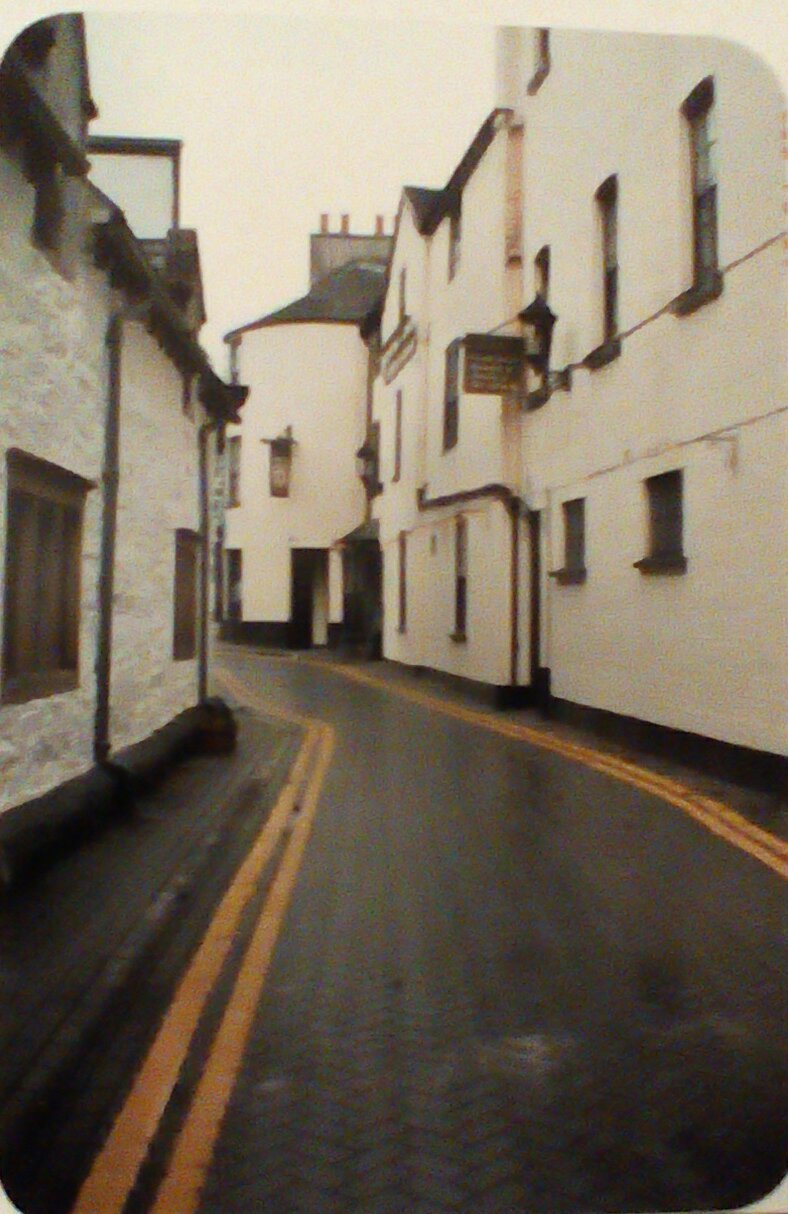
Almshouses in Llanrwst, North Wales built by Sir John Wynn in 1610 as seen from the entrance at Ancaster Square

image

View of the alley of Almshouses in Llanrwst, North Wales as viewed from St. Gwrst Parish Church and the Afon Conwy

Random Acts
 
American Red Cross

The Trevor Project

Pediatric Brain Tumor Foundation

Human Rights Campaign

Lenten Prayer

Standard

Prayer is one of those things that sounds like an easy fix, but it is far from that. It is also not rocket science. Prayer is one of those things that is very individual to each person doing it. There is no right way or wrong way to pray. As long as it’s meaningful to you,  you’re doing it right.

It took me a long time to figure that out. While I’ve always believed in G-d and had conversations with him, I had always found formal prayer to be out of my reach.

There are many opportunities during the Lenten season to pray a little extra each day and to spend some of that time in contemplation of those things for Lent: fasting, abstinence, penance, almsgiving and prayer itself.

One suggestion that was just offered at a recent retreat is that upon waking up in the morning, sit up in bed with your eyes closed and breathe slowly. No special counting or breathing necessary, just try and clear your mind. No thinking, no listmaking, no complaining. Think about what you’re grateful for, thank G-d for all that He’s given you, all that you have and get ready to start your day.

Think about the ways you can be better, can do better. Last Lent I tried to pray the rosary every day. This Lent, I’m trying to be a little quieter in my thoughts and writing a bit more and looking inward.

When I first began to attend the daily masses at my church, I never knew what to pray for during the prayer of the faithful. It was easy to pray for the sick and the dead – that’s right there in the big print. I had people who were sick, including myself; I had people who had died, but what were my silent intentions? I felt that I needed something tangible to think about in order to pray for it. If I had nothing more tangible to pray for, I had started praying for patience, courage and strength. Sometimes it was a bit more – patience with my kids, courage with my therapist and the like, but it couldn’t hurt and it still felt respectful.

At that recent retreat, I was reminded of an interview Mother Theresa gave on television where she was asked what she spoke to G-d about during her prayers. Her answer was, “Nothing, I just listen.” And while she’s listening, what was it that G-d was saying to her? Her answer to the reporter was, nothing. He just listens.”

Sometimes the silence is enough for our prayers to reach G-d. It’s taken me quite some time to find that place in my prayer. I can now sit in silence during a Mass without looking around, not sure if I’m doing it the right way. What I discovered is that my way is the right way for me. And we will all find our way.

That is one of the things I really love about The Little books. I’m currently reading The Little Black Book for Lent. On the left page is usually some kind of historical reference. On the right side is a portion of the day’s Gospel and a meditation. At the very bottom of the right hand page is the suggestion to “spend some quiet time with the Lord.”

Quiet time, contemplation, meditation, prayer.

Don’t let the focus rest on you. Focus on the joy of the season. Lent isn’t about you or me or the sin we might be running away from. It’s focus should remain on G-d. Every step on this journey should be moving us towards G-d. Lent gives us the opportunity to slow that journey down and look deeper into ourselves and our relationship with G-d.

At a recent Lenten reflection, the director told us to look at who we are and offer ourselves during this time. Lent gives us the time for reflection, for prayer, for thoughtful communion with G-d.