
A twisty, turny path, bridge over a stream to what? [Glenarrif, Northern Ireland] (c)2018

A twisty, turny path, bridge over a stream to what? [Glenarrif, Northern Ireland] (c)2018
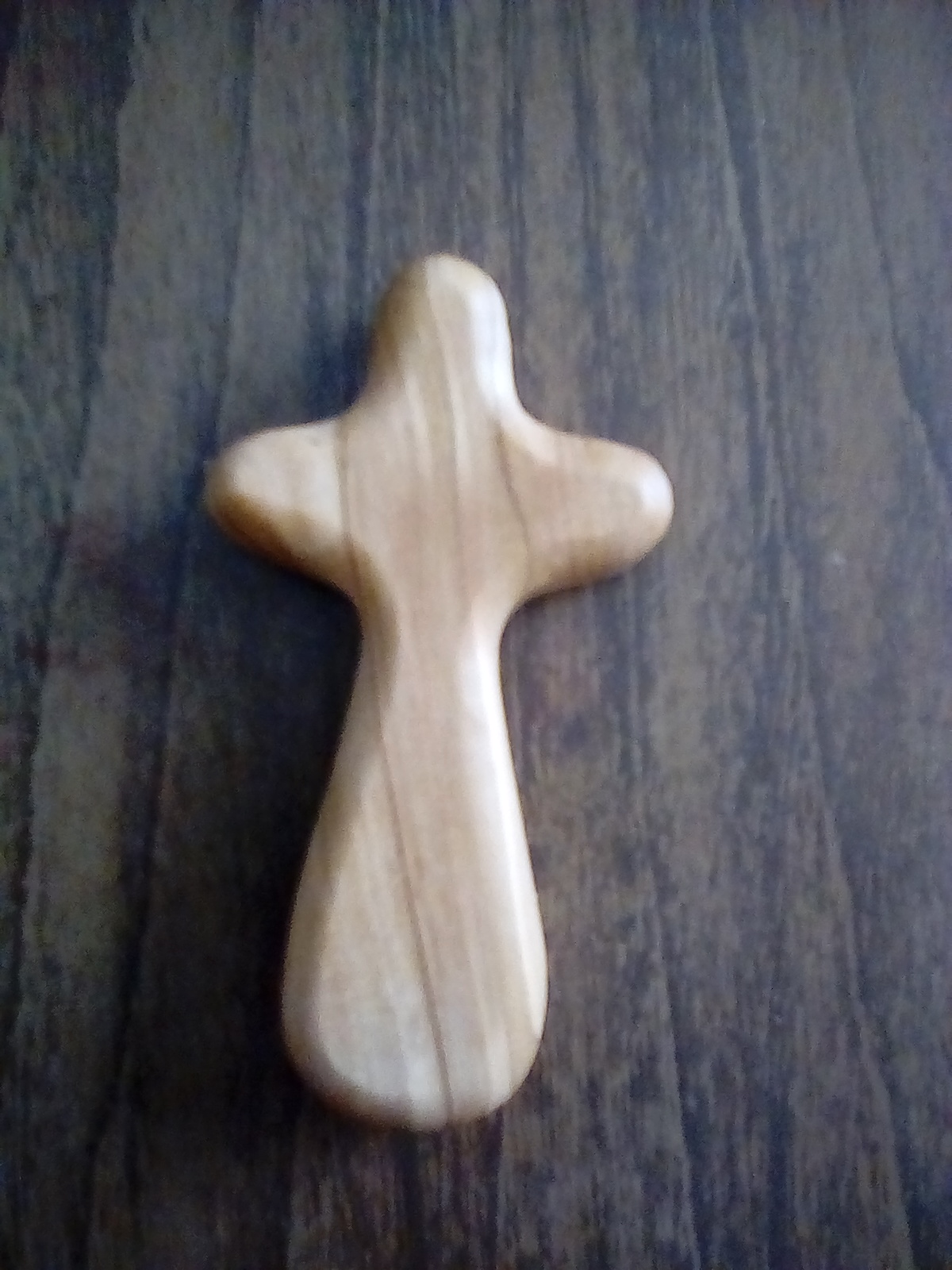
There are a few things that I do to get ready for Lent to begin. One of them is enjoying what my church provides. As my priest said during his homily, the heart is to keep in our pockets and remember that Jesus loves us. I often have some kind of talisman that I can rub or twirl with my fingers, like the now-popular fidget cubes to remind me of the season or help me to focus on what my intentions are. I also love this series of booklets. This is the third one I’ve had from Liturgical Press, and it is short enough to read every day without fail as well as giving me the ability to form my own reflections with the wisdom of the author but not an overpowering do it this way.
It is a lovely combination and balance.

Booklet and Heart provided by my church for Lent. (c)2018
I did have the thought on it before my priest mentioned the duality during my first Lenten confession. Yes, I said first. This was one of those seasons that needed more than one visit for reconciliation. Every time I cleared my conscience and received absolution, that pesky Lenten abstinence came and bit me in the willpower. Sometimes, it wasn’t even about the willpower; it was forgetfulness. In my four years of observing abstinence for Lent, this was the first year that nearly did me in. It truly was a reminder of the big picture and not so much the item given up.
I believe I’ve mentioned that it took me longer than usual to choose something to give up. I finally decided on bread, and then promptly forgot what bread was. it was in my mouth, and then I knew I was done for. I had been told, this year for the first time, that I could eat the forbidden item on Sundays, but I always seemed to forget that, and abstain on Sunday, and then trade it off for another day, like my son’s birthday or the parish Holy Thursday dinner, both Italian feasts that included the most amazing breads.
Not only that, but I even confessed to a priest who wasn’t my own for the first time. That felt weird, but I was on retreat, and wanted to be absolved before I began the retreat. I like beginning those with a clear head and heart.
So I gave up bread.
The reasons were two-fold. One was for the religion of it all. I have to give up something. What would be meaningful? The second reason was that bread was something my doctor wanted me to give up. I actually had given it up last year under doctor’s orders. That included all bread products, sugars, cakes, cookies, etc. Everything except flatbread. I lost nearly thirty pounds in three months of doing that. And then, I got lazy and complacent and gained it all back, and a little bit more. I thought that I’d try to follow the doctor’s plans as part of my Lenten abstinence and at the same time attempt to once again jump start my health care.
That is what Lent is about. Giving up something to make room for something else, in order to take on a new direction to focus. That focus is not only a benefit to my spirituality, but also physically. It is all connected.
Give up something; add something else. All for the greater goal of becoming closer to G-d, and keeping the positive action in my life when Lent ends.
For Lent, I didn’t give up all breads; just bread. Bread, rolls, croissants, bagels, French toast, English muffins, waffles but not pancakes. Not cakes or muffins or cookies, but pumpkin bread and raspberry swirl loaf. Corn bread, but not corn bread muffins or sweet cake. I would still eat flatbread as my doctor allowed during the first change. For some of them, as obvious as they are, I hadn’t realized what comprised of bread. French toast was the hard one. I love French toast. And bread pudding.
Not to brag, but I do have to admit that I made an amazing spinach quiche using broken matzo as a bottom crust. Everytime I’ve attempted quiche it’s been a disaster, but this one was spectacular. I’m planning on making it again before Passover ends.
Now the real question: In giving up the bread, what would I be taking on?
I’ve been keeping a Lenten journal since Ash Wednesday. I jot something in it every day; most days I have quite a lot, and if I left it off for the entire day, I wrote a little admonishment about forgetting or being tired, but I usually made up for it the next day, coming back to it two and three times or more throughout the day. There is no word minimum; just something contemplative, prayerful, meaningful every day. I have really loved doing this. I have already decided to continue it through the Easter season. I may keep it up as a prayer journal after that, but I will see how it goes through Pentecost.
Unless I had a retreat or a doctor’s appointment, I have also attended the daily nine o’clock mass. When I started attending those five years ago, they were something to do, something to keep my depression in check, to give me a schedule to adhere and then they became more. Now, I go because it’s Lent, but also because I miss going when I don’t. Whether the reason is that I’m busy or too lazy, it doesn’t matter. I didn’t go, and I really missed it in my life. It is a good beginning to any day.
For the past two weeks, I have added praying the rosary with the church group daily after those masses. While I have my issues with some of the political aspects of the after rosary prayers, I have still gotten something out of it for my spirit, and it has given me some incentive for working on my own prayer card for St. Elen, my name saint. It is in these informal prayer settings that I see how I, and anyone else can write their own prayers that will rise to the subject they are addressing, whether they be the Holy Mother, Jesus, the saints, or a family member deeply missed.
In giving up bread, however, I of course did not give up the Eucharist. For one thing, it is a flatbread, so technically it didn’t count for my purposes. It’s also not really a bread at all when it’s consecrated as Jesus. I also had to reconcile with myself the giving up of bread and then continuing to take the Eucharist during Passover which would be during the Lenten season and Holy Week. I have managed to separate the two that has worked for my purposes and conscience. The balance of the two isn’t quite a burden, but it is something that I do struggle with as I blend the two important observations without shorting either of them.
It was kind of perfect, though to give up bread. This is the season after all, that we are given life-giving bread; the season that celebrates its origins. While we receive it weekly, we are reminded of how it came to be during our Last Supper Mass. “This is my body, which will be given up for you.” It seemed appropriate that in giving up the bread of everyday, I was continuing to take the bread of redemption, of salvation. Every time I gave up a bread item during Lent, I was reminded of the bread I would receive each Sunday.
Every time I resisted a piece of bread or a biscuit, inside I smiled, not at my willpower or how wonderful I was to uphold my promise, but because of what giving up that bread represented. Instead of physical bread, I received eternal bread, and the taste of that lasts much longer and satisfies much more than regular, unconsecrated bread from wheat. I am nourished through the bread of Jesus, and it lingers with me throughout the day, and the days between my next taste.
Christ is Risen. Lent is over now, and I go back to my regular life. I hope that it includes regular masses during the week, and pausing when I eat my bread in memory of why I gave it up this Lent in the first place. It seemed apropos to substitute Christ’s bread for sustenance, and a never ending supply of faith and life everlasting.
Amen.
Lent is over. The Easter fire is lit. In just about seven or so hours, it will be blessed, we will light our candles and illuminate the church. And so begins the Easter Vigil; practically the same way across the world in their own time zones. It begins so late because we wait until dark.
Every year from Ash Wednesday until tonight, I am asked if it brings back memories of my own first Easter Vigil. I never know what to say. Of course, it does, in many ways, but in others it fosters new memories that blend with the old ones. It is also hard to explain that my Easter Vigil is often somehow with me more often than not. Every time, I cross myself at the holy water font. Every time, I receive the Eucharist, I think back to that very first one. Each one feels like the first time, and each subsequent one is a crumb on the path I have chosen.
For many, Christ is chosen for them, through their families and traditions, through their spouses or wanting to give something to our children to connect them to “their people”, but as we get older and understand more and hear more, and even listen more, we make choices along the way, every step of the path we follow. Turn left? Or right? Confirmation? Or not? Weekly communion? Or is that first one enough? Is it all that I need?
I didn’t know what was being offered when I chose Christ. I had only intended to choose a ritual, a place of being that make me feel…something; feel better about my life. In staying, I chose a new path, a dim path until one day, just like that, it was lit, brighter than the sun, all encompassing, my eyes rising to meet the glow. Despite the glow of suns and brightness unimaginable, my eyes stayed. I didn’t hear words or sounds, but my heart heard the words. Not words, but something translated, engraved on my soul, that while giving me many choices really gave me none.
Once it was there, it can not be taken away. My only choice is to accept what I’ve been gifted and continue my direction, my directing, my learning, my new way.
Every day that I have not been on retreat, I have attended the daily mass during Lent. For the past two weeks, I have remained in the church to recite the rosary. Those two commitments have given me a steadiness to carry me through this time in the desert.
Easter begins and Passover is ending, and they both celebrate the release from bondage, the exiting from the desert, the wilderness, our yearly exodus.
(c)2017
In talking about how we balance an interfaith family, I’ve mentioned how I like to keep Christmas and Chanukah as their own holidays. Usually, the calendar cooperates by keeping them separate. The same goes for Passover and Easter. Usually, I can juggle Passover’s restrictions with Easter’s celebrations. When we would go to my mother-in-law’s for Easter, I tried to allow my kids to enjoy Grandma’s holiday her way without making our Jewish traditions …, well, restrictive.
For a long while, I bought all the new kosher for Passover cereal, pancakes, muffins, and the rest. It cost a fortune and we usually had several boxes of things leftover. By the time the next Passover rolled around again, they had passed their expiration dates.
This year, all I bought was a large box of matzo, Temp-Tee cream cheese, matzo ball soup mix, potato pancake mix, and macaroons. Oh, and gefilte fish.
The blending of the two holidays has been a bit more complicated since my baptism. I try to give both their significant place in our family.
Both promise death from life.
In our Exodus from Egypt, we began with the Ten Plagues, the angel of death and the first born. After forty years of wandering in the desert, we found new life over the Jordan in Canaan.
Easter begins with forty days in the desert, death by crucifixion, and life everlasting.
The kids see matzo and bunnies, chocolate and latkes. They get more latkes during Passover than Chanukah.
This year sees a lot of compromises. My church has a community dinner on Holy Thursday to commemorate the Last Supper, held before the Mass of the Last Supper of the Lord, the first day of the Triduum. It’s always lasagna. We will join my church and share the Holy Thursday meal with the other parishioners before Mass in spite of it being Passover.
I don’t know how it translates religiously, but in according both holidays proper observances, I think it brings the long held traditions to my kids. I never went to temple (kids weren’t really allowed), but I remember Seders and presents lined up for Chanukah. Lighting candles. Somewhere I still have my childhood Haggadah, dogeared and torn in places; colored and drawn on, and every year, read from cover to cover.
I remember Elijah’s wine glass sitting on our radiator with the front door open to let him in. This was unusual for my mother – her doors were always closed and locked, but not on Passover. There’s always a space for Elijah.
And by the same token, there’s always a space for learning, understanding, and sharing our traditions with each other.
Tuesday night was my parish’s annual Communal Reconciliation Service for Lent. (We also hold one for Advent as well.) This Lenten service lets me reflect on sins and good deeds and everything in between. I’m mulling over a couple of reflections as I pray and contemplate my sins I’ve committed and what I want to ask absolution for.
The service itself is about an hour long with a short service, that includes what is typical for a daily mass: a reading, responsorial, and a Gospel reading with a reflection in place of a homily. After that we all recite the rite of reconciliation together and are given our penance. We then have the opportunity to confess and receive absolution individually with a priest. The lights are dimmed and we choose our line. There are four priests in four different areas of the church for privacy. Playing the piano begins.
Our director of music is on hand for the musical portions of the service, and he remains to play at this time sharing several quiet, contemplative selections. It is the predominant sound echoing through the chapel, bouncing and being enhanced by the church’s acoustics. That, along with the buzz of a few quiet conversations lays the groundwork for the continuation of reflecting on what we want to say to the priest. There are young adults from the confirmation class lining up in large numbers, some looking a little uncomfortable while they wait, but still talking and laughing a little bit. This is not their first confession.
I think for as important as reconciliation is, and it is important, it is also beneficial to remember that this is a routine; it’s a normal part of the everyday life of the Catholic. It is not anything scary nor should it cause apprehension even though for many of us it does a little bit. The one thing to remember is that lack of judgment that greets you in the confessional. The confession itself and the absolution received is often a relief, and sadly it barely lasts the commute home.
There is that split second of a moment – it might last as long as two minutes where I am without sin, absolved of everything, a clean slate to try anew to be a better person, a better example, a better disciple of Christ.
Sinlessness.
And then it’s gone. As I notice a hairstyle, or curse at the traffic; or the rain. I come home to arguing kids and can’t find the charity that I give to strangers.
But right now, at this very moment, I am free of sin.
There is also the non judgment of my pastor as I alluded to above. He greets me as a friend, calling me by my first and last name, that funny way that people do sometimes, with a grin and a twinkle in their eye. The smile is there to make me feel at east, but not simply for ease’s sake but because he lives the Gospel and confession, reconciliation, penance and absolution are simply one more part of it. One fo the sacraments that allow us to continue our journey and accept the other sacraments and responsibilities of Christianity. One more piece to this spiritual puzzle. He also commented on my shirt which sparkled in the candlelight.
Penance is not punishment as in you were bad, now you are punished. Penance is a consequence. Punishment can be avoided; consequences cannot.

We’re a little more than halfway through Lent. I’ve mentioned before my difficulty in giving up bread. Fortunately, the additions I’ve made to my Lenten journey are working out much better than the bread. I have indeed attended the 9am daily mass unless I had a prior commitment. I’ve remained after mass on some days to join the other ladies who stay daily to pray the rosary. I read the Lenten reflection book my church provided. I’ve kept a Lenten journal, writing in it daily, and using it for notetaking on my retreats. I have also done some art projects. Once they’re completed, and I make room in my media files, I will share them here. I love the burst of creativity that the retreats give me.
Even just a two hour session once a week is enough to breathe a renewed spirit in me, and set me off on a project.
The month of March was full of spiritual opportunities. I was lucky to be able to attend a total of thirteen days of retreats or workshops. I’ve tried to go through the retreat center’s calendar, and I’m able to continue once a month through June. Just the idea that it’s available has me full of adrenaline to keep pushing.
As you can see, I also have my keyboard back, so I’m hoping to do a little catch up from last weekend, especially with my series: Emma Watson’s Book Club, The New 52 for weeks 12 and 13, and another book news. Those book news posts really help me organize my thoughts on the two books. They’re very jumbled up in my mind, I think due to the emotional level of both stories.
I was also asked last week to share my conversion story, which would mean talking to people, like an audience, and it’s not something I want to do, but I do kind of want to share it. When I talk about it, I get a lot of positive feedback, but I’m not sure I’m ready for it. However, after saying all that to the person suggesting my opening up, I did feel as though I might be able to in the future. That was definitely something that surprised me.
I can feel myself growing.
I will absolutely talk more about my church’s parish mission that occured in the early part of this week, but in short it focused on Pope Francis’ life and thoughts, which in general focus on mercy and forgiveness. I was truly blessed that i joined the church around the same time as Pope Francis’ choosing. He is a true inspiration to me, and the three days I spent immersed in his merciful ideas was really what I needed to end this half of Lent, and be able to continue down my path. Related to our parish mission, I will have a story of mercy and grace to share tomorrow.
I had expected to be able to post throughout this week, but unfortunately this is probably the busiest week of Lent for me. Until next week that is. As I mentioned to my priest last night, it’s all good busy, but this morning I was beyond exhausted. I stayed in bed an extra hour until my headache subsided, and now I’m slowly getting ready for today.
As part of my Lenten journey this year, in going to the desert figuratively, and finding my own wilderness, I have taken on many spiritual projects that are dear to me. It was fortunate that my local retreat center had so many sessions and experiences to choose from.
I have been keeping a Lenten journal since Ash Wednesday, and I have been loving it. From the feel of the pen gliding across the paper to the beautiful green Celtic designed journal itself, it has given me a feeling of purpose that I will try to continue, although not daily, throughout the spring and summer, and perhaps convert it to an Advent journal later in the year. Continue reading
One of the goals of Lent is to look back and look forward; to see what’s changed and what needs changing. I’ve discovered that one of those ways to to re-read some of the more directional Scriptures; put them in the context of where I am today. The Scriptures may not change, but I will always, and the reminder in different times is just enough to propel me forward and setting new goals, both earthly and spiritual.
Sometimes, we all need a little direction, and from the moment I began to sit in on masses, the readings spoke to me in tangible ways. There’s no reason to think that would change.
In additon to love thy neighbor and lay down one’s life for a friend, the Beatitudes are a step-by-step guide to the good works, tangible things that can be done by anyone, in any order, at any time.
Recently, Pope Francis added a few more to guide us in the modern world, saying that “new situations require new energy and a new commitment.” I will include them at the end.
Matthew 5:2-12
He began to teach them, saying: The Beatitudes*
Blessed are the poor in spirit, for theirs is the kingdom of heaven.Blessed are they who mourn, for they will be comforted.
Blessed are the meek, for they will inherit the land.
Blessed are they who hunger and thirst for righteousness, for they will be satisfied.
Blessed are the merciful, for they will be shown mercy.
Blessed are the clean of heart, for they will see God.
Blessed are the peacemakers, for they will be called children of God.
Blessed are they who are persecuted for the sake of righteousness, for theirs is the kingdom of heaven.
Blessed are you when they insult you and persecute you and utter every kind of evil against you [falsely] because of me.
Rejoice and be glad, for your reward will be great in heaven, for so they persecuted the prophets who were before you.
Pope Francis’ addition on 11/1/16: New Beatitudes for Saints of a New Age
Blessed are those who remain faithful while enduring evils inflicted on them by others and forgive them from their heart.
Blessed are those who look into the eyes of the abandoned and marginalized and show them their closeness.
Blessed are those who see God in every person and strive to make others also discover him.
Blessed are those who protect and care for our common home.
Blessed are those who renounce their own comfort in order to help others.
Blessed are those who pray and work for full communion between Christians.
“All these are messengers of God’s mercy and tenderness,” Pope Francis said. “Surely they will receive from him their merited reward.”
Why Do People Fast for Lent? (a view from Vox)
As the first full week of Lent comes to a close, I thought I would talk about some of the difficulty I’ve been having during this year’s time of reflection. It really has been a struggle to find what I want to make of this Lenten season.
On Sunday last, I finally decided, after four days that I would give up bread for Lent. Not all bread products, but the delicious, soft, warm, fluffy bread. Then on Monday at my friend’s funeral reception, I ate a roll. It was not unintentional. I wanted the roll, and I took one. I probably would have had two, but since I knew that I had succumbed I didn’t want to compound my misstep. I do plan on going to confession on Saturday, and I plan on abstaining from bread for the rest of Lent.
I could not decide on what would be a meaningful fast. Everything seemed hollow and superficial. I thought of the other items I’d given up for Lent in the past: diet Coke, ice cream, and McDonald’s breakfast burritos. For some reason, I feel like chocolate should also be on that list, but I don’t recall actually giving it up. Perhaps it was on the list of options in the past.
Should I give up all three?
No, that would be crazy, and near nigh impossible. The abstention is supposed to be thoughtful and somewhat difficult, but I don’t think it’s supposed to be impossible.
I finally decided on bread for a few reasons:
1. I eat way too much bread. [But it’s sooooo good.]
2. My doctor wants me to eliminate bread and sugar and empty calories from my diet. I did this for three months last year and I lost almost thirty pounds. Then, I got lazy, gained it all back, and then some, and I feel much more crappy.
3. Bread would be not impossilbe, but it would also be challenging, and the benefit at the end of forty days would be both physical and spiritual.
So, bread it is.
I am also adding to my Lenten “diet”.
1. I’m returning to the 9am daily mass when I don’t have a prior commitment. On the other two days, I’m planning tea and meditation and/or prayer.
2. I’m keeping a Lenten journal.
3. I’m speaking out, but trying to do so in a more diplomatic way.
4. I’m finding me, and being me more often.
5. Prayer, fast, alms. I’m thinking more about the particulars of Lent, and how to carry Lent throughout my year.
I am also reading Not By Bread Alone. It is a reflection book very much like the Advent one I liked so much.
I am going to try and cook one meal a week. I have been poorly disposed to cooking for quite a while now. Some of it is depression, and some of it is that I haven’t done it in so long, it feels weird to start again.
I have many retreats/workshops, mainly at the Dominican Retreat Center that give me so much spiritually and through fellowship with others.
I’m less self-conscious about discussing my differences with many of the Catholics I know. I talk about growing up Jewish, which not everyone knows, but it really relates to who I am today, and how I approach my Catholicism. I talk about my feminism without as much embarrassment as I used to have. I defend Hillary Clinton and the Democrats, diplomatically. I embrace my allyship of LGBT, especially youth and trans people who need more allies. I accept and embrace my thoughts and beliefs on reproductive rights, even where it diverges from doctrine.
As a funny way to end these thoughts of Lent, as a Jewish person, and yes, I still consider myself to be Jewish as much as I’m Catholic, I find it funny the dietary rules of Lent as compared to Yom Kippur. During the twenty-four hours of Yom Kippur, our fast was no food or drink, and typically most adults would spend the entire day in temple in prayer. I would only take water with my medicine and I only ate when I was pregnant. But Lent…you only fast on Ash Wednesday and Good Friday, and you abstain from meat on those days as well as all of the Fridays in Lent. But only if you are under 59. And a Catholic fast is one normal sized meal, but as many as two small meals with no in between meal snacking. I think water is acceptable throughout the day. This seems so easy to my Jewish mind.
I also know that it’s the thought that counts, so while I am partaking in these fasts and abstentions, I am reading and reflecting, meditating and contemplating, and drawing closer to G-d without all the hub-bub of food getting in the way.
Lent is a slow down to discern what is important, and to set goals for the rest of the year after the celebration of Easter.
This is only the beginning of the time in the desert, but it is not a trudge, but a slow pace to get to the other side better than before, and the first steps have been taken.
May your fast be easy.
 Griffins and Ginger Snaps