March: Blustery, Green, Wet: Recipe

Standard

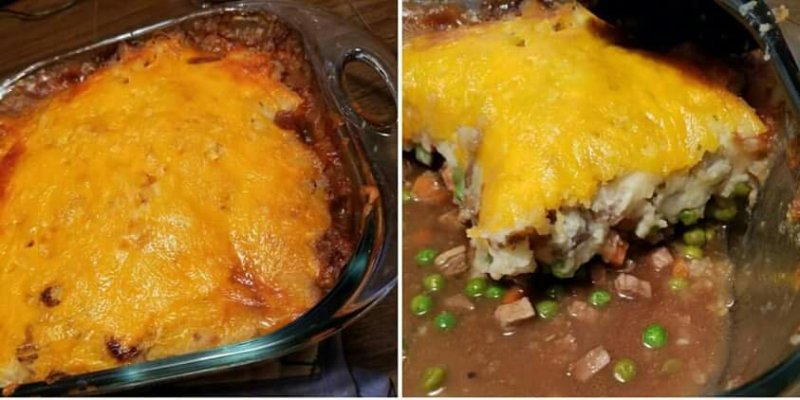
One of my favorite comfort foods, and perfect for the cold, unpredictable days of March is Sherpherd’s Pie. I have always called it Shepherd’s Pie as has my mother-in-law who is actually from Ireland, but alas over the years I have been informed (many times) that what I make is not Shepherd’s Pie. The last time, in fact, was when I was in Northern Ireland and our cousin, Christine, made this for us one night for tea. Shepherd’s Pie is made from mutton, or sheep. What I make, and what she made for us is better known as Cottage Pie, which is basically the same thing except substituting beef in the place of mutton.

I used to make this with ground beef, but after seeing my mother-in-law in the kitchen, I began to use leftover roast beef, which is traditionally how it is made.

It is a great leftover dish, both made from leftovers and to eat as a leftover, but I’ve yet to have it last more than a meal and a half.

The ingredients I use are:

Leftover roast beef, cut into small chunks or diced. Uniformity is not necessary.

Leftover gravy, 2 TB Worcestershire sauce, 1/4 cup HP sauce (found in the international aisle of your supermarket) or you can use ketchup.

Leftover sliced carrots, peas, anything really. If you have no leftover vegetables, use half a bag of frozen peas and carrots.

Mashed potatoes.

Cover with cheddar cheese and sprinkle with bread crumbs, although the bread crumbs are optional.

Bake for 45 minutes at 350.

Scoop and eat. It goes well with dinner rolls, Yorkshire pudding, salad.

It is delicious and filling.

Champ – Bringing Back Some of Ireland with Me

Standard

I had never heard of champ before asking about it in a quiet restaurant in Glenariff, Northern Ireland. It was listed as a choice of side dish alongside chips, crisps, and veggies. It turned out that it is a mashed potato dish with scallions and a few other things that I couldn’t hear her say.

Mashed potatoes?

In Ireland?

I’m there.

At first I thought it was colcannon, but champ originates in the North and is a Northern Irish dish, and it was delicious. 

It was also different than any of the country mashed I’ve gotten in the US (think Cracker Barrel with gravy) or any I’ve made myself. It wasn’t that I’d never thought of combining these ingredients together, but I was just used to the simplicity of mashed potatoes – butter, milk, salt, crushed under a masher until smooth – ish.

It wasn’t until I did a quick Google search that I saw how simple champ really is to make.

As for our masher, it is almost always at the bottom of the sink or at least it seems that way when I need to use it so I have a few alternative tools to use as mashing tricks.

Large forks are good mashers.

So are large spoons if applied with the right pressure.

And last, my most recent discovery, a copper one-cup measuring cup. This really did a great job.

For my version of champ, I washed, cut, and boiled about seven medium-sized potatoes. I did not peel them, but they can obviously be peeled if you prefer them that way. The ones we had at the restaurant were peeled. Their mash was a perfect creamy white.

After the draining and mashing, I added one stick of unsalted butter, about two tablespoons of salt, three scallions diced as finely as I could get them, and a scoop of sour cream. You could use more scallions if you like. I also didn’t use milk, but it could be added or used instead of the sour cream.

Just before the rest of dinner was ready, I added about 1/4 cup of shredded, sharp cheddar cheese. I used white to keep the color of the potatoes. The topmost photo was taken in bad lighting; I’ll have to correct that when I make them again.

Only the usual suspect (the picky eater) complained despite loving them abroad. Everyone else loved my rendition, and I’m sure they’ll make it into regular rotation.

AllRecipes has a recipe to follow if you like measurements. Usually, I do, but when I’m cooking (rather than baking) I like to gauge how it looks, feels, and tastes.