I wanted to begin by acknowledging that I write this (and most of my writing) from the traditional, unceded land of the Haudenosaunee Confederacy, primarily the Kanien’keha:ka or Mohawk people.
I have always been a student of history with a deep interest in New York and Native Iroquois since childhood and have a deeper appreciation and understanding through my research for my book about St. Kateri. It is with that basis and love that I share some resources, for reading, for music, for traveling for some of the indigenous spaces in upstate New York and southern Canada.
Indigenous Peoples’ Day was Monday, nearly a week ago, but that doesn’t mean that now we can forget about an entire culture, language, history, or a people. I usually will say that especially in the Northeast, where the Iroquois, more properly known as the Haudenosaunee lived, we should remember them. There are several things wrong with that sentiment though, and I am embarrassed to admit them. For one thing, the Haudenosaunee live, now, among us. They cover the six nations: Mohawk, Onondaga, Oneida, Cayuga, Seneca, and Tuscarora, across all of New York State and the international border with Canada. For another thing, Native tribes have lived on this continent from ocean to ocean, from the time when there were no borders at all. Just like our states, their nations had rivalries with others, they had distinctive cultures separate from one another. It’s important to remember that Native culture, whatever nations are represented, they are a living, breathing group of people, and it is well past time to recognize their contribution and their sacrifices. I’ve had several people (non-Native, I should note) that it was in the past, it’s history, there is nothing I can do, and that attitude disturbs me on many levels. I don’t know if it’s a connection I feel to the people whose land I live and work on. I don’t know if it’s from my childhood admiration and longing to be more involved in the limited Native culture around me as a child. I don’t know if it’s because of my Jewish background where people will say the same sentiment: it’s history, why are you still upset about…? I will call out some by saying that the same people who say that the Trail of Tears and stolen land in the 1880s and 1890s is “ancient history” and we “need to move on” are the same people who insist on the rest of the country worshipping a man who died over two thousand years ago. The continued hypocrisy is staggering in so many ways.
I have a few thoughts and photos that didn’t make it onto the website on Monday, and I hope to share them with you today and in the early part of next week.
I have been fortunate to have visited the village of Kahnawake in Quebec, Canada three times. Kahnawake piqued my interest through my studies and research of St. Kateri Tekakwitha who was born, lived, and was baptized very near to where I sit right now. Each visit was unique in that I saw new things and learned new things each time. The first time during covid was very limited to the outside world and was a superficial encounter. The second time had a decidedly Mohawk perspective, and the third time was more of a Catholic and Mohawk-Catholic perspective. Each visit gave me a new outlook, answering questions and thoughts, and offering insights that raised more questions and contemplations. I expect and look forward to returning next year to do some more research as well as visiting their language and cultural center that we were unable to see previously.
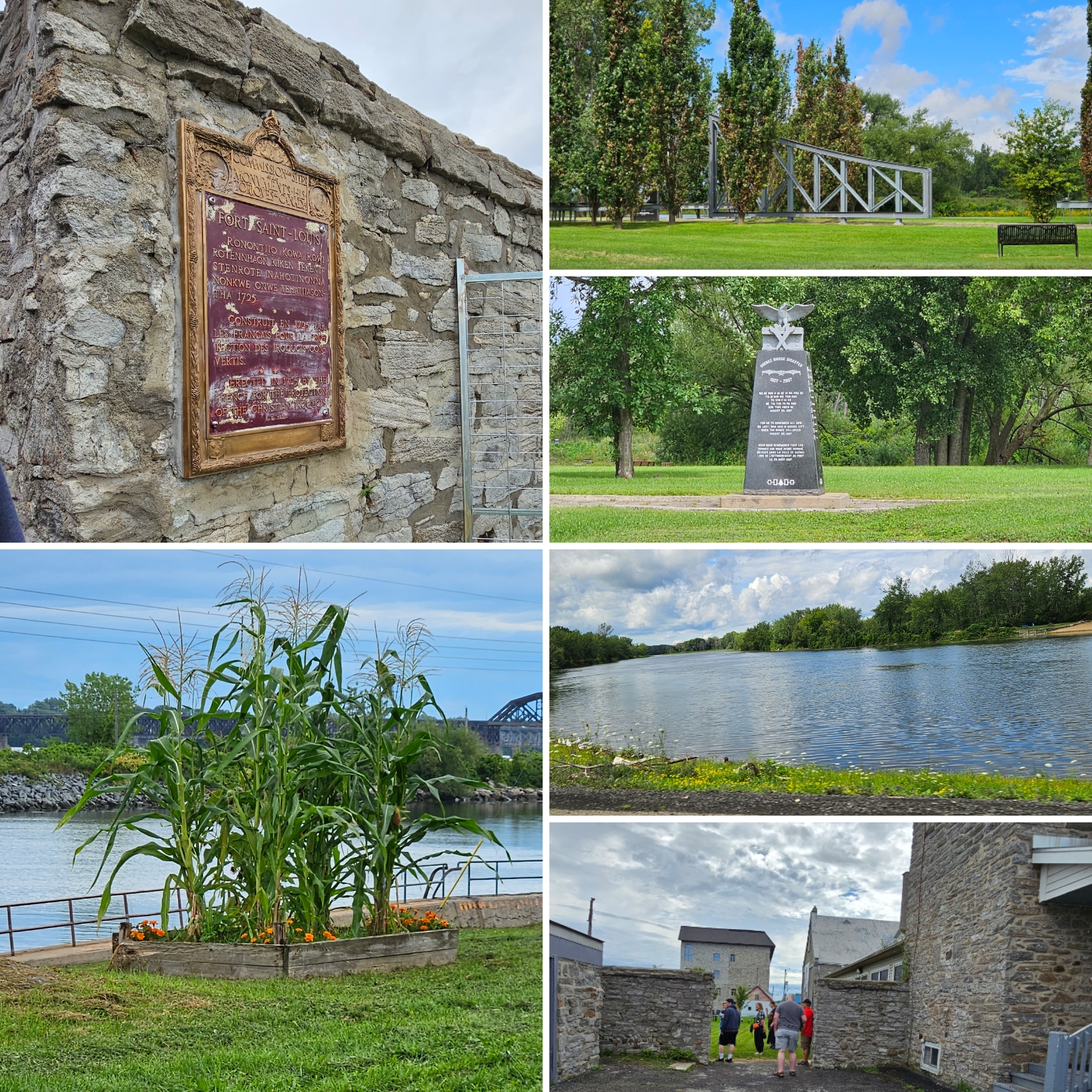
These photos are a little taste of the village. I will also share the one thing that really surprised me. The Mohawk in Kahnawake primarily speak English and Mohawk. Their street signs and stop signs are in those two languages. I thought the second language would be French. As I said, there is always something new to learn.
From the top, clockwise: Original wall of the Fort Saint Louis, Replica of the Quebec Bridge, Memorial to those who perished in the Quebec Bridge Disaster, part of the St. Lawrence Seaway, the back of the St. Francis Xavier Mission Church, what I presume are the Three Sisters, which are grown on Mohawk land. Kahnawake, Quebec. (c)2023
I just wanted to add one or two notes about the above photos:
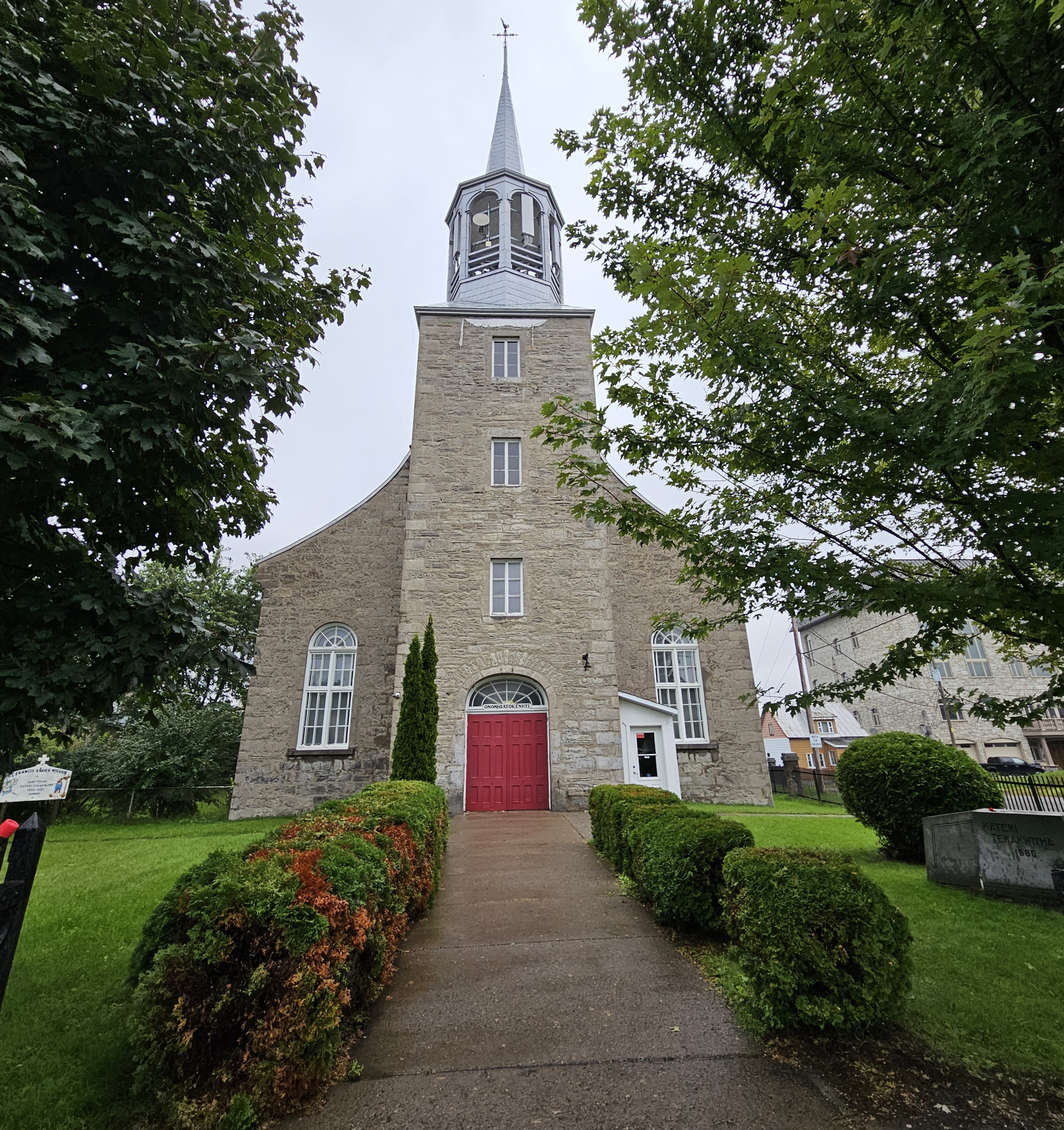
The St. Francis Xavier Mission Church moved with the Mohawk. It moved four times, I believe, before it settled permanently here and was built as a permanent structure in 1716. St. Kateri’s relics were moved here in 1973.
The Quebec Bridge Disaster killed 32 Mohawk ironworkers from Kahnawake. This left 25 widows and over fifty children fatherless. The compensation from the Canadian government was negligible. The Clan Mothers decided from then that so many members from one family could not work on such a dangerous job.
The Canadian government changed how the St. Lawrence River flowed, so it moved it away from Kahnawake and left the still St. Lawrence Seaway. The River was more profitable and was able to accommodate boats and fishermen as the Seaway was not. This is still an issue today.
The Three Sisters are known to the Haudenosaunee as the most important crops, sacred, and include corn, beans, and squash. They grow together in the same area and help each other thrive.
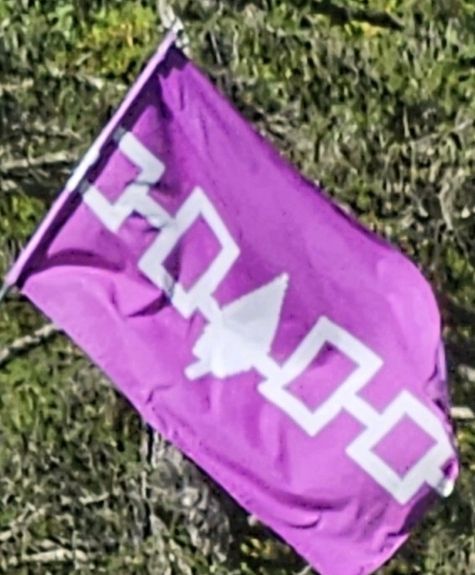
Haudenosaunee Confederacy Flag, which is a depiction of the Hiawatha wampum belt. (c)2023
Front of the St. Francis Xavier Mission Church. Kahnawake, Quebec. (c)2023
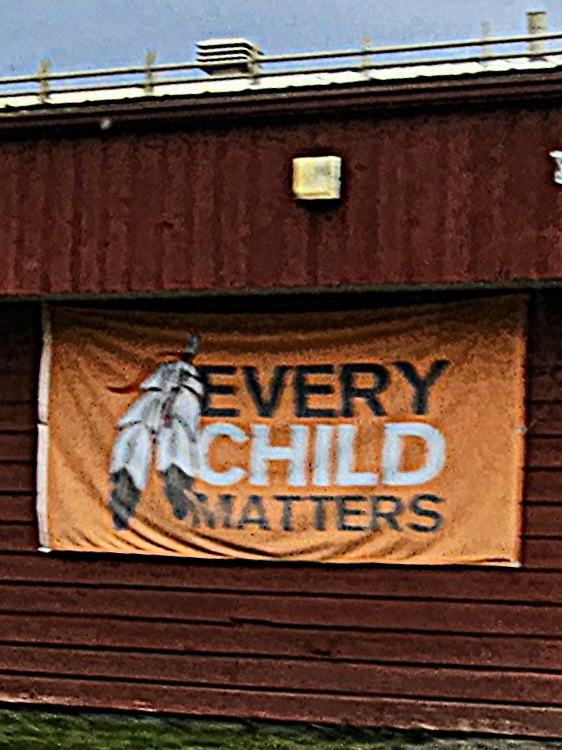
Signs and flags of Every Child Matters on orange are seen in many places. Despite Canada’s Truth and Reconciliation Committee, there is still much to be answered for. (c)2023
I would like to acknowledge the land where I live is the traditional and historic land of the Haudenosaunee, specifically the Mohican [Eng.] or Lenape and the Mohawk, known as Kanienʼkehá꞉ka in the Mohawk language.
The Haudenosaunee have been known in New York as the Iroquois and the Mohawk are the Keepers of the Eastern Door, traditionally guarding the Iroquois Confederation from eastern invasions.
In acknowledging the land I am on, it is an attempt to come to terms with the violent history of the European settlers and immigrants who did not understand the way the Native peoples viewed the land and in many cases simply did not care.
We, and they are the caretakers, not the owners of the land, and it is important to recognize that and move towards the future with respect and compassion while acknowledging our collective past.
I spent today praying at the St. Kateri Shrine. There was Catholic Mass and a celebration of miracles attributed to St. Kateri. This was also in recognition of Indigeneous Peoples Weekend as well as commemorating the tenth anniversary of the canonization of St. Kateri Tekakwitha.
Tomorrow, I will share some photos from that beautiful time. It was full of Mohawk tradition, language, music, and spirituality and grace. It left me in a better place.



 Griffins and Ginger Snaps