Election Connection: 40 Weeks: Democratic Primaries

Standard

Beginning next Monday is the first of nineteen voting days to choose the Democratic candidate for President. Voting will take place in fifty-seven primaries and caucuses from the fifty states and seven territories. What follows is all of the primary/caucus dates. Find your state, make sure you’re registered, and vote for the candidate you feel passionate about. Be part of the process; make your voice heard. Then after the Democratic National Convention in July, unify behind the candidate (more on that in later weeks) and return the country to the rule of law and common decency.

Before you review the primary schedule, visit Vote Save America. They have tips on how you can help the candidates, stop gerrymandering, volunteer, donate to the eventual nominee, check your voter registration, and other resources to make your vote count. Check them out.

February 3

Iowa (caucus) 41 delegates

February 11

New Hampshire 24 delegates

February 22

Nevada (caucus) 36 delegates

February 29

South Carolina 54 delegates

March 3 (Super Tuesday) 1344 total delegates

Alabama, Arkansas, California, Colorado, American Samoa (caucus),

Maine, Massachusetts, Minnesota, North Carolina, Oklahoma, Tennesee, Texas, Utah, Vermont, Virginia

March 10 365 total delegates

Idaho, Michigan, Mississippi, Missouri, North Dakota (firehouse caucus), Washington

Democrats Abroad voting period ends

March 14

Northern Mariana Islands (caucus) 6 delegates

March 17 577 total delegates

Arizona, Florida, Illinois, Ohio

March 24

Georgia 105 delegates

March 29

Puerto Rico 51 delegates

April 4 107 total delegates

Alaska, Hawaii, Louisianna, Wyoming

April 7

Wisconsin 84 delegates

April 28 663 total delegates

Connecticutt, Delaware, Maryland, New York, Pennsylvania, Rhode Island

May 2 46 total delegates

Guam (caucus), Kansas

May 5

Indiana 82 delegates

May 12 57 total delegates

Nebraska, West Virginia

May 19 115 total delegates

Kentucky, Oregon

June 2 215 total delegates

District of Columbia, Montana, New Jersey, New Mexico, South Dakota

June 6

United States Virgin Islands (caucus) 7 delegates

July 13-16

Democratic National Convention, Milwaukee, Wisconsin
Election Connection: 42 Weeks

Standard

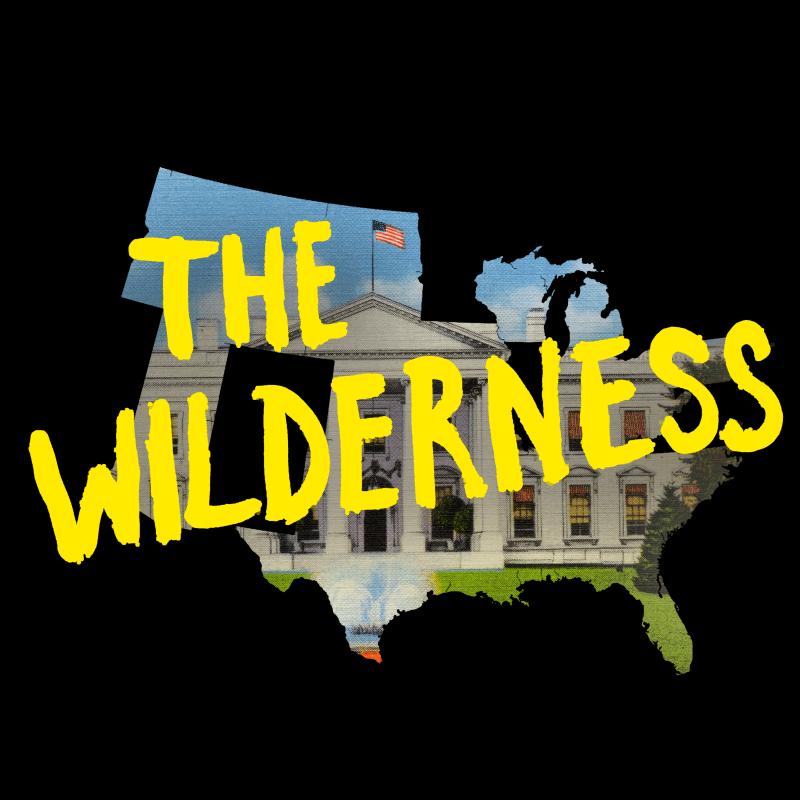
From Crooked Media comes a new six-episode series talking to whomever necessary in order to defeat Donald Trump at the ballot box on November 3rd. This election is too important to skip out on. We’ve seen what can happen when the wrong person is in The White House, and we have forty-two weeks to rectify this.

What will it take to defeat Donald Trump in November? In season 2 of The Wilderness, Jon Favreau looks for the path to victory in 2020 by talking to voters, strategists, organizers, and candidates in the battleground states that will decide the election.

Favreau takes listeners to the four most competitive regions on the road to 270 electoral votes and 51 Senate seats, where he conducts focus groups with voters in Pennsylvania, Arizona, Florida, and Wisconsin. The series also follows grassroots organizers and candidates in these states who share their winning strategies to reach these voters.

Through his own experience as a campaign veteran and speechwriter for Barack Obama, Favreau attempts to unpack the complicated and often surprising reasons voters support a particular candidate, or choose not to participate at all.

Episodes 1 and 2 are available now wherever you get your podcasts. (I personally use Player.FM and like its service very much.)

Subscribe so the rest of the series will automatically download each week and you won’t miss any. If you didn’t catch The Wilderness, Part 1 when it premiered, the link will take you to the first of fifteen episodes that are well worth listening to.

The Wilderness, Part 2

Episode 1: The Stakes

Episode 2: The Northeast

NEW SERIES: Election Connection

Standard

Beginning today, each Tuesday, I will have a post related to the upcoming election. It will focus primarily on the Presidential race, but will also include important local and state races. As we saw in 2018 and 2019, all elections have consequences. We saw in 2016 what complacency and disinformation can do, not to mention foreign interference. We have forty-three (43) weeks until Election Day. It’s a lot less time than it feels right now. As I write this, we are on the cusp of another unnecessary war by an unfit and incompetent President. We cannot let him be re-elected. He does not represent the values that we espouse as Americans and the values we try to raise our children with. Everything he claims to be is a lie, and we need to continue to call out those lies; not just his directly, but all of his surrogates, supporters, and enablers. Voters may still like him and want him as President, and that’s their decision to make and to live with, but we can’t let them continue to lie and to gaslight the rest of us. As a journalist on Twitter reminded me the other day, there are more of us; we are the majority.

You’re probably wondering what you can do in the next 43 weeks?

I hope to share some ideas and advice with you between now and November 3rd.

First, are you registered? If you’re answer is ‘no’ or ‘I don’t know,’ find out and get registered. Right now. I’ll wait.

Second, visit Stacey Abrams organization, Fair Fight 2020 and find a way that you can help ensure that everyone who is entitled to vote will be able to vote and that their votes will not be suppressed. In all likelihood, Stacey Abrams would be governor of Georgia right now if not for the Republican candidate’s voter suppression efforts. He was the Secretary of State for Georgia and made the election rules including where and when polling places would be open, what kind of identification is acceptable, and whether or not and when to certify the election. He is now the Governor. Election fraud and voter suppression hurts everyone.

If you have any ideas to share for voter protection, please put them in the comments.