Travel – Seneca Falls, NY

Standard

Today is the third day of Women’s History Month. Typically, there’d be a proclamation from Washington, Congress and/or the White House, but I won’t hold my breath waiting for that. It was clear last week when the Olympics closed for this year that the White House would only be acknowledging the white men on the men’s hockey team. Yes, they did win the gold medal, and should be congratulated, but (or is it and) the women’s hockey team also won the gold as did ten other US athletes or teams. I will say that the last time that the men’s hockey team won the gold was right here in New York forty-six years ago. They were truly a ragtag team of true amateurs. I wasn’t even in high school. The women’s team, on the other hand competed in their first Olympics in 1998, and have won a medal in every Olympics they participated in.

You may think from that introduction that this is going to be a diatribe against misogyny, for Title IX, against discrimination, for DEI (which benefits everyone), but it’s not. It is, however, the world we live in currently with Congress and the White House attempting to take women back to their dark ages. We will not let them. We are not going back.

I begin this Women’s History month with that declaration: we are not going back. We are 50% of the world. We are equal. Even though we’ve earned it, we do not need your respect, but we will not be mocked.

One way to commemorate and celebrate women is to support their spaces and we can do that by using our time and our dollars and visiting some of those spaces.

We have traveled to Canada yearly for the past several years, and each time we’ve driven west towards Niagara Falls and the Rainbow Bridge, we pass a sign on the New York State Thruway that declares the Women’s Rights Historical National Park, and every time I see that sign, I say (out loud), I want to go there one day. And maybe one day, I will.


Links

Begin at the Visitors’ Center and visit the historic houses there that include:

  • Wesleyan  Methodist Church
  • Elizabeth Cady Stanton House
  • M’Clintock House
  • Richard Hunt House
  • Amelia Bloomer House

There is also a trail through the area that includes the following sites:

Comics with Barbara Brandon-Croft

Standard

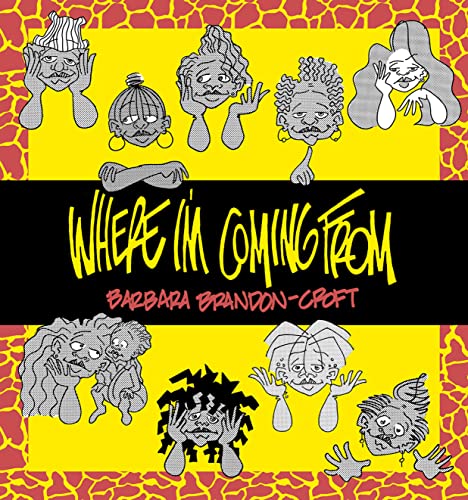
Barbara Brandon-Croft has a new book out, reflecting on her place as the first African American woman with a syndicated comic strip. Where I’m Coming From: Selected Strips, 1991-2005 hit shelves last month.

In this Washington Post article, author Michael Cavna tells us about Brandon-Croft’s beginnings, her social commentary through comics, and learning from one of the best and first African American comic strip writers, her father, Brumsic Brandon Jr. He told her three steps described the cartoonist’s job, and she repeats those words, almost as a mantra:

Observe, interpret, and record.

Good advice for anyone in the creative fields.

While celebrating Black authors, artists, and creatives, check out these Black-Owned independent bookstores

Stagecoach Mary

Standard
Stagecoach Mary (Mary Fields of Cascade, Montana)
Public Domain

Stagecoach Mary was a mail carrier on a star route between Cascade, Montana to St. Peter’s Mission. She held two four year contracts with the United States Postal Service beginning in 1895, and received her stagecoach that she drove to deliver the mail from her friend, the Mother Superior of an  Ursuline Convent, originally in Ohio, but now missioning in Montana.

I should also mention that she was the first African American woman to carry the mail (only the second woman to do so) and in her time she became a Wild West legend.

Sounds intriguing, doesn’t it?

Mary Fields was born in 1832, most likely in Tennessee, into slavery.


As times change, so does language. Since I’ve been in school and up until recently, we’ve referred to the “slaves” in the South (or elsewhere in the world). This denies the people their humanity. It tells the reader/listener that their only value was as a slave; that they are slaves at the heart of their being. But of course, that’s not true. They are people first. Men, women, and children who were kidnapped and enslaved and their children born into slavery and enslaved. These two links should help with the explanation:

Writing About Slavery: This Might Help

This column from the Chicago Tribune: Language Matters: The Shift from ‘slave’ to ‘enslaved person’ may be difficult, but it’s important.


She was freed with other enslaved people after the Civil War. From that time, she worked as a servant and laundrywoman on riverboats up and down the Mississippi River. She worked for the Dunne family until the wife died. John Dunne sent her to live with his sister, a nun and Mother Superior of a convent, where Mary lived and worked. She became very close with Mother Mary Amadeus Dunne and after Mother moved to Montana to mission with the Jesuits, Mary eventually followed her and helped nurse her back to health.

As if that wasn’t enough, Mary Fields wore men’s clothing, drank, smoked cigars, shot guns. She was tough and intimidating, two traits needed to be an independent contractor working alone on the frontier.

At some point, the bishop barred her from the convent after an altercation with a co-worker/colleague involving guns. To be fair, I can’t imagine that it would have been palatable for a man to be answering to a woman, an African-American woman and that may have played into some of the friction between them. Of course, it can be hard for any two headstrong people to work together.

It was then that she contracted with the Postal Service to become a star route carrier. She drove her stagecoach on the route with horses and a mule named Moses.


Star Routes were named such after their motto/mission of Celerity, Certainty, and Security in delivering the mail. They were denoted on paper with three asterisks: * * *, thereby becoming “star” routes. This name was renamed Highway Contract Routes in 1970.


She retired from her role as a mail carrier when she was 71 and lived on in town becoming one of the more popular figures of Cascade. She was praised for her generosity and kindness, especially to children. When she died in 1914 at 82, her funeral was one of the largest ever seen in the town.

She was very popular – schools closed on her birthday. When an ordinance was passed disallowing women from enjoying the saloons, the mayor exempted her. When her house burned down, volunteers rebuilt it.

Born a slave somewhere in Tennessee, Mary lived to become one of the freest souls ever to draw a breath, or a .38.

Gary Cooper, Montana native, writing for Ebony in 1959

A Litany of Holy Women

Standard

A Litany of Women for the Church

from Joan Chittister, OSB

Adapted from Benetvision – Benedictine Sisters of Erie, PA

We call on the holy women

who went before us,

channels of Your Word

in testaments old and new,

to intercede for us

so that we might be given the grace

to become what they have been

for the honor and glory of God.


Saint Esther, who pleaded against power for the liberation of the people, pray for us.

Saint Judith, who routed the plans of men and save the community, pray for us.

Saint Deborah, laywoman and judge, who led the people of God, pray for us.

Saint Elizabeth of Judea, who recognized the value of another woman, pray for us.

Saint Mary Magdalene, minister of Jesus, first evangelist of the Christ, pray for us.

Saint Scholastica, who taught her brother Benedict to honor the spirit above the system, pray for us.