Sybil Ludington’s Ride and the Erasure of Women

Standard

Today, in 1777, two years after Paul Revere’s famous ride, at age 16, Sybil Ludington rode all night on horseback, forty miles to rally militiamen after the Brits burned down Danbury, Connecticut. Whether the ride occurred has been in question since about 1956. The accounts of the ride come from the Ludington family, possibly in an effort to promote tourism.

Last week in talking about Revere, I asked who will warn us this time? I linked to the Alt National Park Service, an invaluable source for what is going on in this administration – clarifications, corrections and call outs of the lies and falsehoods perpetuated since before Election Day.

In reference to Sybil Ludington, I have the same questions. On social media we’re told of the women, so many women who are standing up to the fascism, and yet, when a woman warns us in 1777, we dismiss it as ‘maybe it didn’t really happen.’ And to be honest, I don’t really know if it happened. I do know that when women accomplish anything there is someone there to take the credit, to claim the discovery, and to shush the little lady. We dismissed Kamala Harris, the Vice President for four years, Senator before that. We dismissed Hillary Clinton, First Lady for eight years, Secretary of State for four, Senator before that, and accomplished lawyer before that. At what point, will women be taken at face value, and I don’t mean at pretty face value.

How can the women save us if we won’t listen to or acknowledge them?

Abigail Adams wrote to her husband John, “Don’t forget the ladies.” We are not only forgotten but ignored, blamed, and pushed aside while (many, too many) men crush this country under crippling debt, ruin families, arrest women for biological functions, and allow them to die for those same reasons. We are not less than. We don’t need to apologize for existing.

If we were treated as we should be, as equality requires us to be, we wouldn’t need to constantly put ourselves in the stories to uplift us. We would already be there, and there wouldn’t be a question as to whether it is a true story or a folktale.

Black History Month

Standard

Somehow it is expected to fit all of Black History into the shortest month, and the more we study Black History, we find that it encompasses all history, from the African continent to the New World. I usually post a link to a terrific Black History Resource, but unfortunately, it is coming up with a 404 error. I hope to find it again soon. I’m hoping it has just moved since it really covered so many aspects of the diaspora.

This post will share links to some online offerings to get everyone started.

First, beginning on February 6, you can sign up to join the Black-owned Tw*tter alternative, Spoutible. It is definitely having some growing pains, but as a pre-registrant I’ve been using it since yesterday and it looks like this could be the one. On the 6th, I’ll be creating an account linked to this website, so join me.

Second, this link highlights free online resources for kids, and while the website says, “It’s never too early to teach children about Black history,” I believe it is also never too late for anyone to learn what’s been missing from mainstream curriculums, and in the case of Florida, being eliminated.

Free Online Resources for Kids that Celebrate Black History and Culture

Next, from The Smithsonian: Heritage and History Month Events

The History Channel’s Black History Month

Common Sense Education’s Best African American History Apps and Websites

And finally, from multiple government agencies: Black History Month

I will leave you with a local mural of Medal of Honor recipient, Henry Johnson, WWI hero who served in France.

Mural of Henry Johnson and other WWI heroes on Henry Johnson Blvd. in Albany, NY. (c)2023

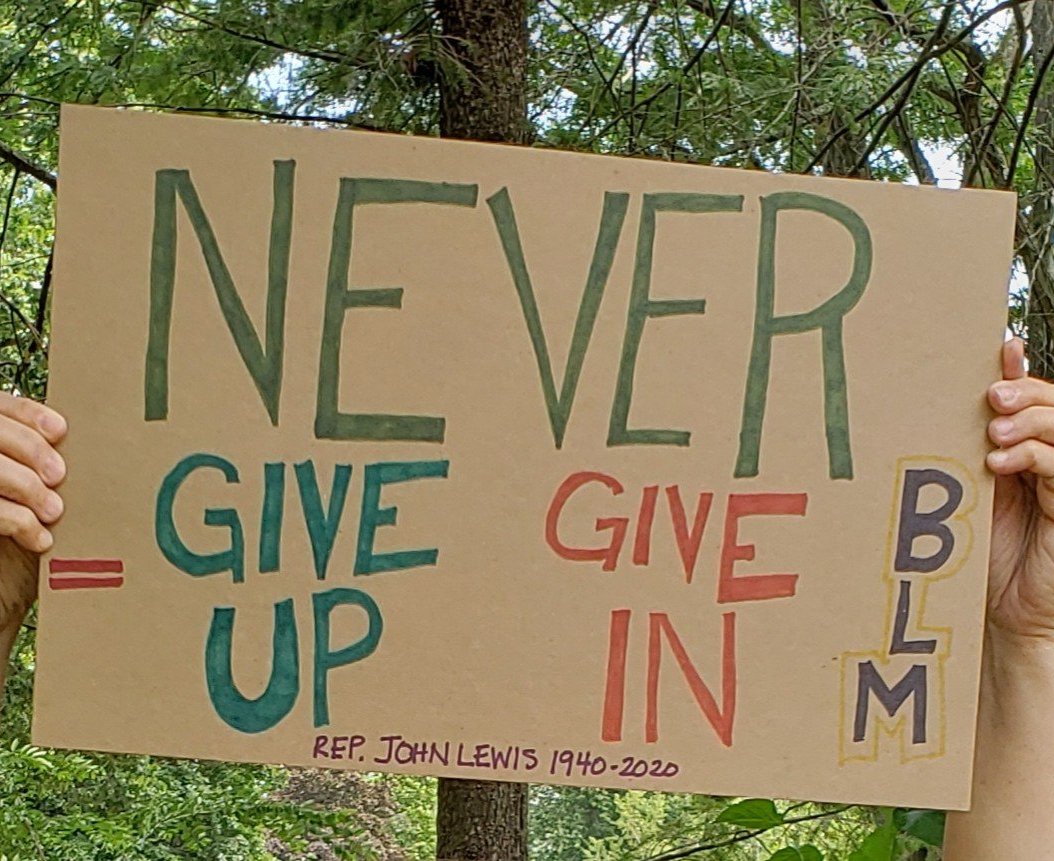
Black History Month – American Hero, John Lewis

Standard

You must be bold, brave, and courageous and find a way… to get in the way.

– Congressman John Lewis, 1940-2020

A few years ago, I bought the book, The Children by David Halberstam, but I only read it recently. As an aside, David Halberstam was the commencement speaker when I graduated from college, so I always took a second look at his books.

I looked at this one often in my kindle library, but was never quite ready to sit down for such a serious book. In the last four years, I’ve been engulfed with politics, including racial justice, but I wasn’t ready for a history lesson.

I finally started it last summer, soon after George Floyd’s murder, and with all of Halberstam’s work, it did not disappoint.

I had misinterpreted the title to mean the literal children of the civil rights movement, the young people growing up in that time and after. What I discovered is that Halberstam’s implication that the civil rights movement was left to “the children” – the young adults who risked everything, including their lives to march, to sit at lunch counters, to register to vote, to do many of the things we take for granted, even today.

One of the very surprising things that stood out to me was the level of participation of John Lewis. John Lewis was a hero of mine, but more in an abstract way listening to his modern, inspirational speeches rather than his history, and I wondered why I hadn’t learned his name as readily as I learned about Martin Luther King, Jr. In school. I didn’t realize they were contemporaries, and met and worked together to build what they called the “beloved community.” As I thought about this missing piece in my childhood education, I realized that growing up in the seventies during busing, and my really formative years of middle and high school in the eighties, John Lewis wasn’t part of “history” as we think of it; for that matter, neither was MLK. Lewis’ beating on the Edmund Pettus Bridge was in 1965, one year before I was born, and King was assassinated in 1968 when I was a toddler. These events, and the bulk of the civil rights movement occurred a mere twenty years before I graduated high school; nineteen years to be more precise. In the time between Lewis and King’s assault and assassination, I hadn’t even reached adulthood. This book really brought that home to me. John Lewis would live in my kids’ history books, but for me, he was in my now.

I hadn’t even made it halfway through the book when John Lewis died, and I thought for several days of putting the book down and reading something else, but I didn’t. I finished the story, cringing and welling with tears, and sometimes gasping for air at the horror of it all and the idea that while we’ve come far, we have so much farther to go. When I finished The Children, I immediately read Jon Meacham‘s new book, His Truth is Marching On, and that bridged the short gap between Lewis’ civil rights activism and his congressional career all on that path to the beloved community.

Learn more about John Lewis and his role in the civil rights movement by reading John Lewis in hhis own words in his memoirs, Walking With The Wind: A Memoir of the Movement and Across That Bridge: Life Lessons and a Vision for Change as well as his graphic novel trilogy beginning with March: Book One.

One of the things that I found somewhat amazing, miraculous even, was the number of long-lasting activists all being in the same town at the same time. They didn’t travel to Nashville; they were already there from around the country attending school. John Lewis, Diane Nash, James Bevel, CT Vivian, James Lafayette, Kelly Miller Smith, Rev. James Lawson, who learned the non-violent method he taught them from his trip to India and learning from Gandhi, and of course as witness, David Halberstam, a local journalist with The Tenesseean in Nashville. Reverand Lawson described it as providential during his eulogy for John Lewis in 2020, and that just gave me chills.

If you do one thing, watch the Reverand James Lawson at the funeral of John Lewis in Atlanta, Georgia:

(c)2021
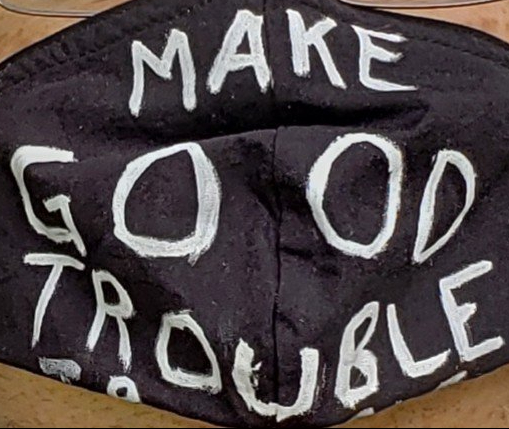
Wearing a Mask is Good Trouble, Necessary Trouble.
(c)2021

Black History Month – W.E.B. Du Bois and Nikole Hannah-Jones

Standard

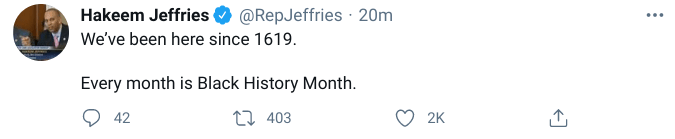
Today is February 1st, the traditional start of Black History Month. It would be good to remember, as Congressional Representative Hakeem Jeffries of NY’s 8th District tweeted this morning: “We’ve been here since 1619. Every month is Black History Month.”

I grew up in NYC in the 70s, at what seemed to be the height of bussing as well as a prominent Back to Africa movement. I didn’t understand why my Black friends didn’t live near me. One of them, Robert, moved with his family to Africa, although I don’t know if that was related to his father’s job or if they decided to “return” (I don’t know the proper term and I apologize for that).

In school, we learned about Harriet Tubman, Booker T. Washington, George Washington Carver, and of course Rosa Parks and Martin Luther King, Jr, but not nearly enough. No Medgar Evers, no Emmett Till; at least not that I remember. Thurgood Marshall, of course; he was currently on the Supreme Court at that time. As historic as their lives were, many were left out.

Malcolm X, for example was deemed too militant. It wasn’t until last year when I read his autobiography that I saw how little difference there was between him and the mainstream civil rights movement. Of course, no one agrees with anyone one hundred percent of the time, but students in school should be given all the information and use critical thinking skills to form their own opinions.

I can’t possibly make up for the lack of Black history within American history. As a country we can absolutely begin to try, and I do try in my small space of the internet. Since I am not part of the Black community, I try to draw on Black voices and offer links and some information to get you started.

What I had planned for today was postponed by another tweet I saw this morning; that of March for Our Lives activist, David Hogg who asked if anyone had the link to W.E.B. Du Bois PhD thesis on the history of slavery and abolition in the US, and so with the assistance of David Hogg and Carl Fonticella (who provided the link), I am sharing that to get us started.

W.E.B. Du Bois’ The Suppression of the African Slave Trade to the United States of America, 1638-1870, originally published March, 1896.

Relatedly, the 1619 Project would be important reading as well. The pdf is provided through this link from The Pulitzer Center and begins with an introduction from New York Times journalist, Nikole Hannah-Jones, who provided the idea for the project.

Juneteenth

Standard

This will link you to my post last year on Juneteenth. I tried to include a variety of views and thoughts.

I made the decision not to do new content this year for the simple reason to encourage you to search out Black voices about today and what it meant in history and what it means today.

As I see things posted, I may return and link them below.