

St. Patrick’s Day in the Morning by Eve Bunting, illustrated by Jan Brett
In Bruges starring Colin Farrell and Brendan Gleeson
Here Be Dragons by Sharon Kay Penman
The Winter King by Bernard Cornwell
A Writer’s House in Wales by Jan Morris
“Tri chysir henaint: tân, te a thybaco.”
Translation: “Three comforts of old age: fire, tea and tobacco.”
“Dywed yn dda am dy gyfaill, am dy elyn dywed ddim.”
Translation: “Speak well of your friend; of your enemy say nothing.”
“Deuparth gwaith yw ei ddechrau.”
Translation: “Starting the work is two thirds of it.”
Source: http://www.theapricity.com/forum/showthread.php?2364-Some-Welsh-Proverbs
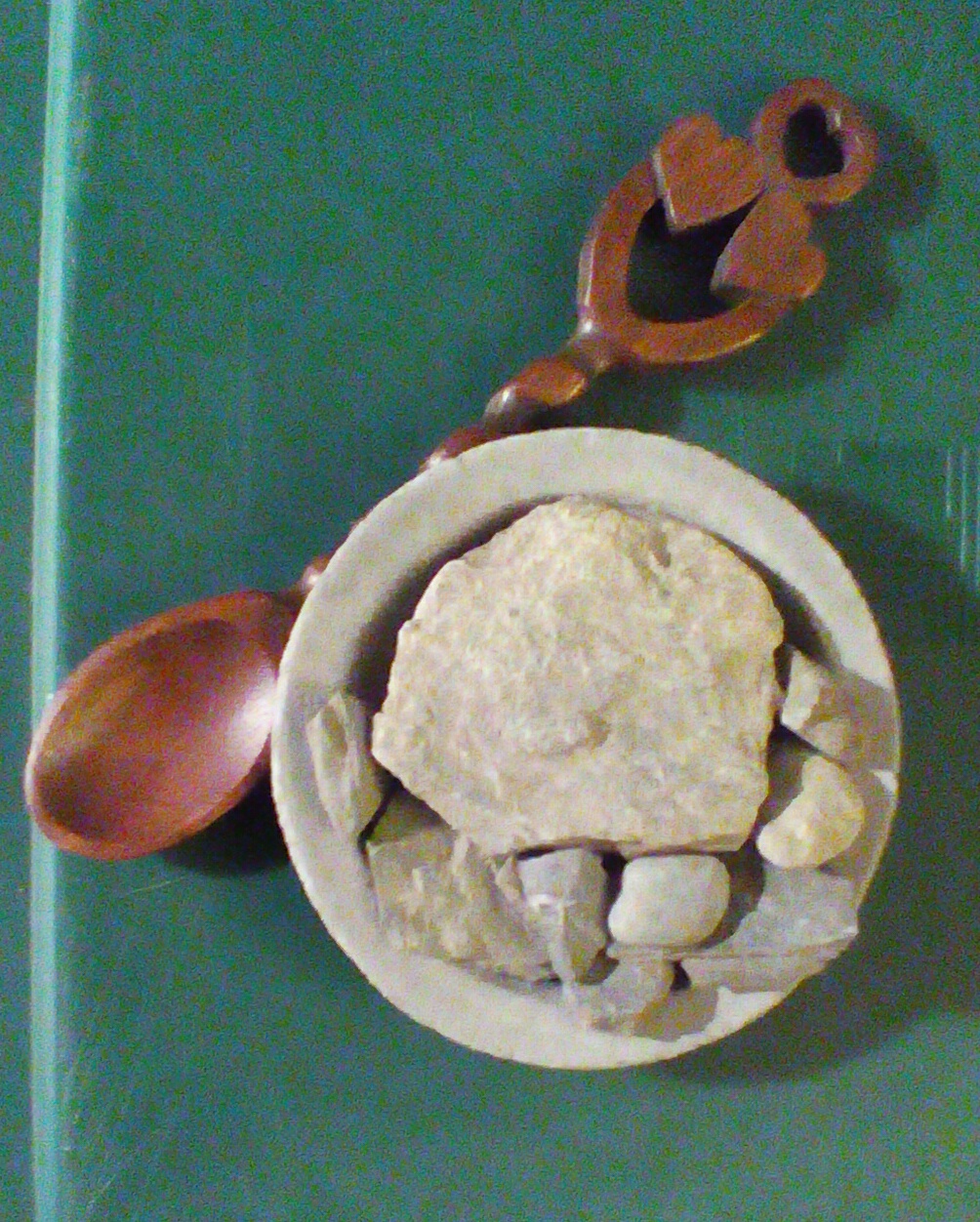
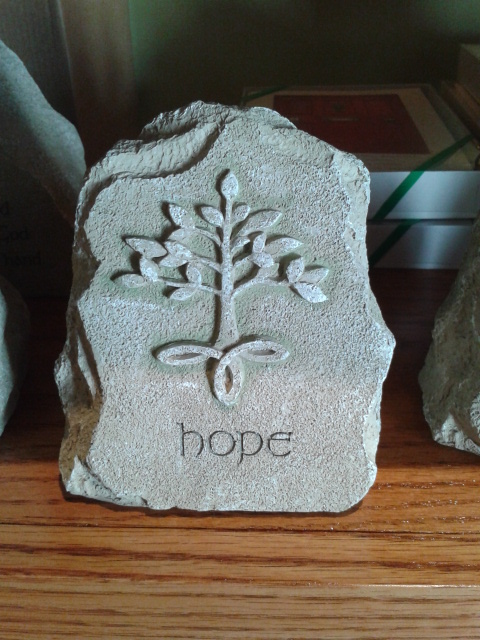
Bliss to me is Wales. The rocks are from my trek to Dolwyddelan Castle in North Wales. Adjacent is a Welsh love spoon.
In the UK and Ireland, it is World Book Day. A perfect start to this day in a week dedicated to reading. I would add Jan Morris to this list of Welsh writers.
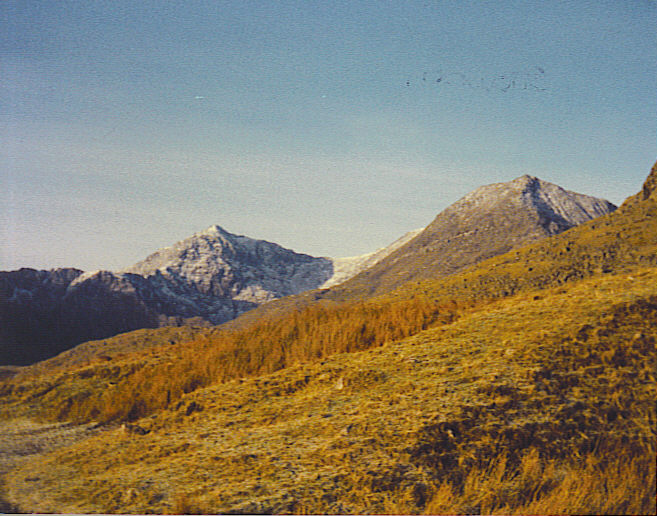
Snowdon Mountain
Pen-y-Pass
North Wales
Jan, 1987
Snowdon Mountain, 1987

Mt. Snowdon, Llanberis, North Wales
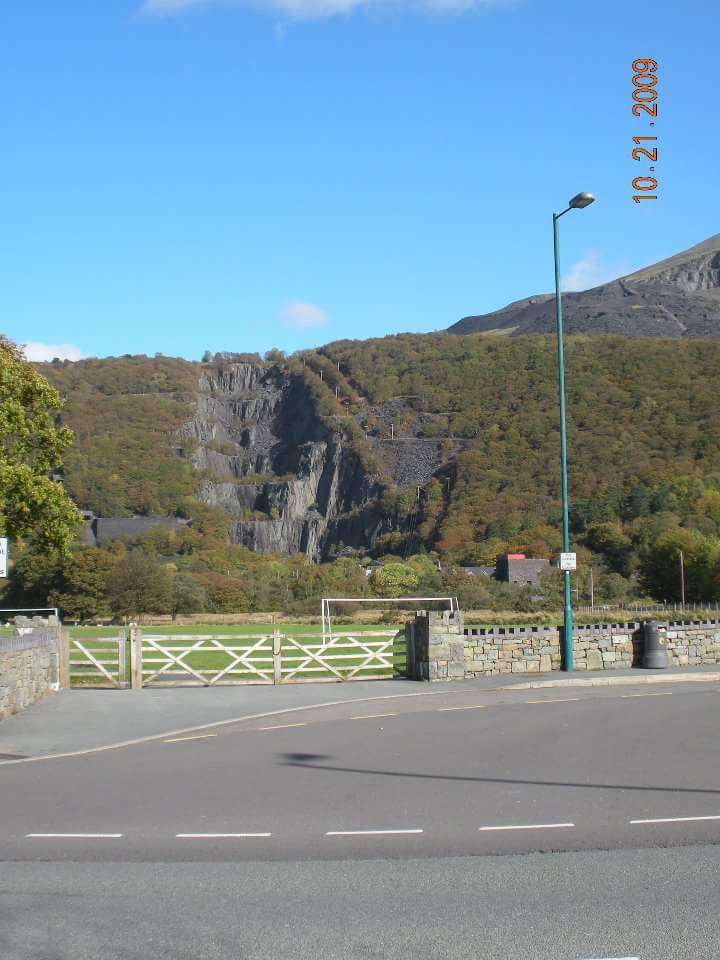
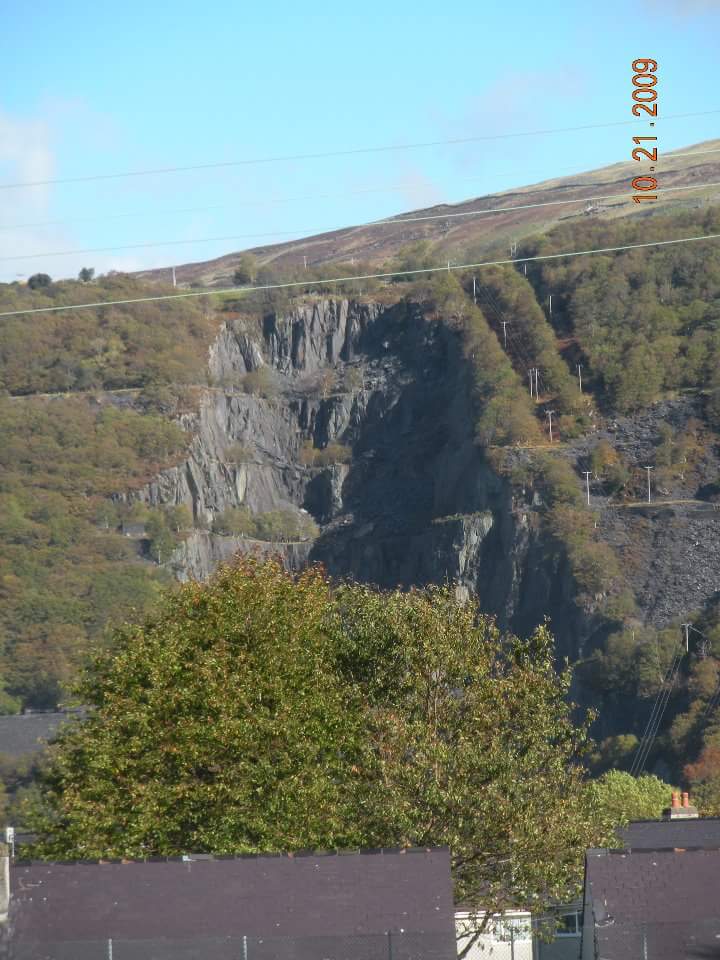
Snowdon Mountain, Llanberis, 2009

A Town Crier.....on a Segway
Town Crier on a Segway

Somewhere between hitchhiking in Wales and Colonial-Era Town Crier on a Segway is who I want to be. Maybe this is that year. 🙂
[An essay from my memoir workshop with the prompt of Columbus Day]
In light of the controversy that Columbus Day can bring up as well as the hurt and disagreement it can stir up, I’d like to tell you about Madoc, the son of the true and rightful King of Wales in the 12th century, Owain Gwynedd, and who is the true first discoverer of the Americas!
Prince Madoc sailed across the Atlantic, landing on the shores of Mobile Bay, Alabama in 1170. This is commemorated by a plaque in place from 1953 until 2008, obviously another casualty of another controversy.
There are several tribes known as the Welsh Indians, thought to be descendants of the Native Indian tribes and the Welsh settlers who came here in 1170 with Prince Madoc.
The Mandan people are a different group of Indians and were said to be different from their neighbors in their culture, language and their appearance, probably appearing more Caucasian than their other Native contemporaries.
It was found that the Mandan boats are similar to the Welsh coracles as well as fortresses and other village architecture that is related to medieval Welsh/European designs because of its extreme similarity.
The Mandan people still survive to this day, but have intermarried with other tribes after a small pox epidemic.
Thomas Jefferson believed in the legend, and commissioned Lewis & Clark to look for these Welsh Indian tribes on their explorations.
In addition, during the French and Indian War, one of the signers of the Declaration of Independence (Francis Lewis) was captured and is said to have a conversation in Welsh with the Indian chief. This is not a singular event, but it is often thought of as an anomaly. I’m not so sure.
The legend reached a peak of interest in the Elizabethan era when the British were laying claim to New World lands and claimed that their representatives were here before the Spanish who laid claim to many areas of the New World.
Historian John Smith of Virginia (c. 1624) wrote that Madoc went back to Wales for more people and then returned for a second voyage to the New World. From this point, he never returned to Wales.
There is no historical or archaeological evidence that Madoc actually arrived on our shores, but we have the circumstantial speculations, some of which that I’ve outlined above.
Resources:
Prince Madoc and the Discovery of America
Prince Madog and the Discovery of America- an investigation by Michael Senior
The Discovery of America – Betsey and Guilio Maestro
Snowdon Mountain
Pen-y-Pass
North Wales
Jan, 1987
St. Elen (Elen of the Hosts) (St. Helen of Caernarfon – English)
Everyone keeps asking me about my choice of saint for my confirmation name. I thought it might be easier if I wrote up a little bit about her since she is an unusual choice. With a person so far back in history, there are many things that are conflated and confused, especially with so many having the same names and much of the history and mythology being intertwined as one, not to mention that it was an oral history with bards and storytellers, and so what was remembered may be less than accurate to what actually happened, but some of Elen’s life is well documented through The Mabinogion (known as Elen Luyddog) and the writings of St. Gregory of Tours and Sulpicious Severus.
St. Elen is known as Elen of the Hosts or Saint Helen of Caernarfon.
She is a Welsh Catholic Saint and is often confused with Helena of Constantinople because of their similar names and the similar names of their sons, both of whom were named Constantine. Helena’s son was better known as Constantine the Great although Elen’s son was called Custennin Fawr, which is Welsh for Constantine the Great. This was not helpful. St. Helena of Constantinople’s son is the famous one.
It is also possible that the sons have been confused over the centuries and they did not both have the Great descriptor and that was added later. There are other sources that describe nearly every royal house in Britain traces its lineage back to Elen and her husband Macsen, 4th century Emperor of Rome.
Elen’s feast day is May 22.
It is said that through her association with St. Martin of Tours, she brought the monastic church to Wales with her sons, Custennin and Peblig (who is also a Welsh saint known as Publicus.)
Elen is also named on several Roman roads in Wales and is known to be the patron saint of British roadbuilders and the protector of travelers. Roman roads in Wales are known as Sarn (au) Elen or The Causeways of Elen and she is said to have commissioned the road themselves to be built, but it is more likely that the roads were named for her after her death as their existence is much older than she. There is recent discovery that there are even older roads in Ireland, showing that the Celts were proficient roadbuilders, so who know?
Initially, I was seeking out a Welsh saint because of my long spiritual connection to Wales and the Celtic peoples, but upon discovering St. Elen, I discovered that there were several other reasons why I connected to her.
First and foremost, Ellen was my mother’s middle name and it gives me a connection to her as I join the church. My first teacher, who taught me lessons of generosity and the importance of family.
Secondly, Elen is from Caernarfon, the town in which I stayed for three nights in 2009. It hadn’t been on my list of places to visit until a Welsh friend randomly suggested it that I should go there and see the castle.
Her daughter is said to have married Vortigern, the only source for their marriage being carved on the Eliseg Pillar which is very near Valle Crucis Abbey, another Welsh place I gravitated to.
Ellen is also one of my favorite television characters: mother, business owner, independent, smart, how could I go wrong?
As I mentioned earlier, St. Elen is also the patron/protector of travelers, and more than anything else I consider myself a traveler. It is always my choice for being and writing and seeing and I love that this saint has a connection to something I love so dearly despite the anxiety that accompanies it.
*sources are limited and all the ones I used are second hand sources. I tried to use only the information that was known in more than one source.*
 Griffins and Ginger Snaps