50-34 – Stonehenge

Standard

I’ve been once. Very nearly thirty years ago. What is most amazing apart from the stones themselves and the sacred space itself is how much of the feelings remain with me after so many years away.

I’ve always had a thing for rocks. Pebbles and larger, colored and polished, rough, formations that can’t be moved no matter how hard you try. When I returnd to Wales in 2009, I touched the stones of castles and rock formations, and almost none gave me the feeling that I experienced at Stonehenge.

I was lucky when I went. You could still touch the stones and move in and out, around them and about. There were some ropes to keep you from sitting on the flat ones, and of course, they didn’t want you climbing, but just being there, surrounded by the cool plains air, the cold to the touch stones, gigantic, and not just tall but broad and sturdy.

The sun was setting. We were one of the last buses allowed in for the day, and I was very thankful. This was our only chance to visit, and this was one of the important places that I wanted to see. To touch. To feel. To be.

If you’ve never been to a place of great spirits, you can’t imagine the electricity coming off of not only the stones, but the ground below them. I’ve been to Gettysburg, and I imagine Standing Rock in North Dakota has the residual of all that has gone before it, but Stonehenge….Stonehenge is in an entirely other category; another world.

You almost don’t notice the other tourists. I was spellbound, moving from one monolith to the next, placing my hand, palm flat against the cold, rough edifice. I didn’t have to imagine what had gone before in this place; I could feel it: the heartbeat. The pulse, the pulsating of life, of forever.I never wanted to leave.

The sky dimmed and then darkened, the powerful stones becoming shadowed and dark against the darkening sky. I can remember leaving, sitting in the bus, looking out the window at the stones growing smaller as we ambled slowly away, getting further and further distant, and yet, they are still with me; within me.

There is magic there, so much that it is able to let a little bit leave with its visitors and keep them in touch with the pulse of the land, the stones, the past, and the future, and of course, whatever else we believe is out there, be it Druidic or Diety, Nature or Nurture, Spirit and Faith.

It’s taken thirty years to get this much down, and I still feel more wanting to bubble up, but not ready – I’m not ready to let it all out. I want to be selfish and keep it inside for me alone. It can’t be shared in a way that anyone else can feel what I feel. It’s too much to share so I’ve shared what I could.

(c)1987, (c)2016


(c)1987 (c)2016


Amazing. (c)1987, (c)2016


Stonehenge. (c)1987, (c)2016


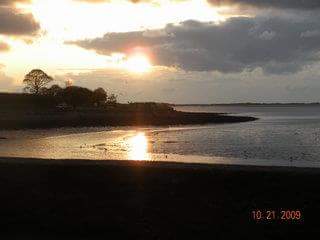
Sunset at Stonehenge. (c)1987, (c)2016

50-29 – Wales, The First Time

Standard

​When I first arrived in Wales many years ago, I didn’t know how profoundly it would affect me and change my viewpoint of everything. It wasn’t until years later that I discovered the word for what I was feeling: hiraeth. Hiraeth isn’t homesickness, but a longing, a yearning for one’s homeland, and it is not so much that you know it when you feel it, but the emotion of hiraeth is so much more than its literal definition. In fact, it doesn’t really have a literal definition, but a broad emotional meaning. It’s spiritual.

Wales, that first time, was in so many ways, a surprise. I wanted to visit a castle, not realizing that the castles I associated with Wales were English castles used to subjugate the Welsh people rather than built by the Welsh to protect them and their interests.

Wales is a surprise, and never what you’d expect. If you expect rain, the sun will shine. If they say hill, they mean mountain. Their lifeblood is slate and coal, daffodils and leeks, but most of all the people. It’s palpable. No matter where you are in North Wales it seems that you can see the mountains. The English call it Snowdon, but it is Eriyi in Welsh – the haunt of eagles. So much more evocative, isn’t it? So much more poetic like the Welsh lilt and cadence.

That cadence of the Welsh tongue is much like the valleys and peaks of Wales itself. They know their history and remember their independence, although that mostly ended in 1282 with the beheading of Llywelyn the Last and the drawing and quartering of his brother, Dafydd, their blood as much a part of the land as the craggly rocks and the rivers.

My first trip to Wales came about by accident. Luck. Fate even. I was asked to join my college roommate in England. Sure, why not? Of course, there was more to it than that, but that’s the gist of it. I borrowed the money from my brother, who was better at keeping his than I was with mine and off I went.

My roommate asked me what I wanted to do. My only response was, “I don’t care. I want to see Stonehenge and a castle; I don’t care about the rest. I’ll follow you.” She planned it all through trains and buses and hitchhiking, hostels and B&Bs. I followed along, collecting pictures and memories.

We made our way from London at this first day of 1987, a new year. We went westward and south and west again, and eventually entered Wales. I don’t remember crossing the border but Wales was different. Welsh had made a resurgence so all the signs were bilingual. I began keeping a little dictionary in my journal although no one made us speak in consonants. W is a vowel by the way, but that’s another memory.

Wales was different.

The air was different.

The sky was different.

The sheep were different.

It didn’t rain in Wales; at least not the Wales I was in. This was January, and Britain was grey; very grey. It held the first patch of blue sky I’d seen in the two weeks I’d been on this island. It was that perfect cloud peppered Crayola sky blue color that exists nowhere else, its reflection off the quarries deepening it and the snow evening out its perfection. It must be special.

But the sky wasn’t all that made it special. There was a feeling I’d never experienced before, not deja vu, but I had been here before. I don’t know how or if, but physically I’d never, but I was.

How can everyone not feel it?

It was overpowering. I needed to be here, high in the mountains, midnight hikes, counting the stars, not having an historical clue, but knowing that I walked in the footsteps of ancestors, of family, of specialness, feeling as though I’d taken these steps before. This wasn’t restless spirits like I’ve felt at other historical holy places; these were memories, memories of feelings.

Crazy, I know.

There was a weightlessness, a joyful singing in my soul that nothing else compares to. I only imagine this is something of the feeling that people get when they travel to Israel, but I don’t actually know.

It is my spiritual home, an ancestry I wasn’t born to, but I was called on to feel, to be a part of,  to let inside and settle into my soul. It is always there, this feeling of Wales and the Welsh, the people as much a part of the land, and as much a part of me as my own children.

When I went back almost twenty-three years later, I found the feelings still strong with only my research and readings that gave me more context and made it more tangible to breathe in. My footsteps following Welsh princes, understanding how remote a castle stronghold really was breathing the same air, wondering if I would ever understand these feelings.

Even home, I get fleeting glimpses through a looking glass – the wet colored leaves on a rural road and I forget that I’m not in Wales. The hesitation at a roundabout, confused about which way to enter it. The tree outside my church’s window when it rains – it is always a surprise and always a physical reaction and then I realize it’s through a window and I’m not in Wales. These come upon me through no special thought, but there is the realization that Wales is a part of me and who I am, and maybe one day I’ll find out why and maybe even how I have this connection.

50-17 – Manchester

Standard

​I thought I was just afraid to fly. I thought I was really afraid to fly. I had a talisman to hold onto from my friend, a bottle of Xanax from my doctor, and even then I wasn’t sure if I’d get on the plane or not. I’m wasn’t worried (and still not for the most part) about the plane crash landing, but the enclosed spaces get me. I want an aisle seat every time, and that doesn’t really help. It gives the illusion that I have an escape route.

Psychology. It’s mind-boggling.

I didn’t find out until about three years later, but that fear of flying wasn’t a fear – it was anxiety in the form of disorder. It was diagnosed when I was diagnosed with depression, but at the time of this transatlantic holiday, I thought I was afraid to fly.

Continue reading

Gifts

Standard

image

On Friday, I talked a bit about my mother-in-law and the life she led. We were lucky to see her as often as we did, with her traveling to us by bus or once in a while by train before her accident three years ago, and our traveling to see her as often as we could. She lived about two hundred-fifty miles away from us so it was a long drive, but well worth it.

We were visiting her the last week in June. We had waited for the kids to get out of school, and down we went. We had no idea that she would be gone before we left for home. There’s being sick in the hospital and there’s sick in the hospital, heading to rehab to regain mobility and since she was the latter we were already making summer plans to visit again when she passed away.

She was able to have seen her three children and three of her six grandchildren. She admired my daughter’s outfits, which I mentioned on Friday were inspired by her own free spirit and her grandmother’s. She asked us about visiting my parents’ graves and bringing rocks from her garden. (Leaving rocks on gravestones is a Jewish tradition that we followed whenever we were at the cemetery.)

My mother-in-law grew up during World War II in and around Belfast to a Catholic mother and a Protestant father. I mention this again because it influenced her lack of use for the Church. She had seen too much. Even as her kids went to catechism, her opinions on the bureaucracy remained.

When I told her of my decision to join the Catholic Church and be baptized, she was nothing but supportive. She immediately went into her dresser and gave me the prayer book pictured above. She said she wondered why she kept it all these years; now she knew why.

On another visit, she gave me the keychain/folder that is also pictured above. I don’t know that she ever carried it seriously in her purse, but it was the most perfect piece of religious kitsch that I’ve had the pleasure of seeing.

She also gave me a little confirmation statue of Jesus and a girl that she happened to have, probably from one of her beloved garage sales, still in an old, dusty box.

Despite no love for the physical church that she remembered, she supported my new found faith and asked me about it whenever we were together. She enjoyed looking at my Easter Vigil photos from my baptism, confirmation and first communion.

No matter what she thought, everyone had their own path to follow and she encouraged them in it, always.

Top of the Mountain

Standard

Sunday’s Gospel was Jesus on the mountain, well one of them. It’s the Transfiguration as witnessed by Peter, James, and John. They see it, and they’re not sure what they see. My priest called it a mountain top moment, in both the literal and the metaphorical sense. The Transfiguration is pivotal and bridges, through Jesus, the earthly life and the eternal life. Pope Saint John Paul II included the Transfiguration when he added the Luminous mysteries to the Rosary. At a recent day of reflection, Father P talked about those “born again moments” and that reminded me of Father J and his homily on Sunday about mountain top moments. We all have them in various parts of our lives and they all mean something different to each of us in those times.

In my mind during that homily, I was reminded  of a literal mountain top moment that I experienced. I was in college and had the opportunity to travel to the UK with my college roommate. She made all the plans and I followed her. I followed her to the point that I’ll follow you became a running catch phrase for the trip and the rest of our friendship including when I see her today nearly thirty years later. At some point she gave me the the itinerary with a few changes along the way, but I barely knew where we were going before we got there.

That level of trust and spontaneity sounds completely foreign to me, but at that time it was easier to just tag along. It was the trip of a lifetime and whatever happened, wherever we went would be amazing. I had no expectations and that let my mind stay open, probably for the first time in my life.

It was a wonderful trip: New Year’s in London, feeling the magic of Stonehenge, finding out that the buses don’t run on Sundays in Stow on the Wold, snow in the Highlands, but the most filled with wonder moment took place unexpectedly near the top of the Snowdon Mountain in North Wales.

Continue reading

Stuff and Things – Y Ddraig Goch

Standard

For those of you who don’t speak Welsh, the subtitle translates to The Red Dragon. The Red Dragon, Y Ddraig Goch is the national symbol of Wales, and in addition to being pictured on the official flag, it is pretty much on everything else in country.

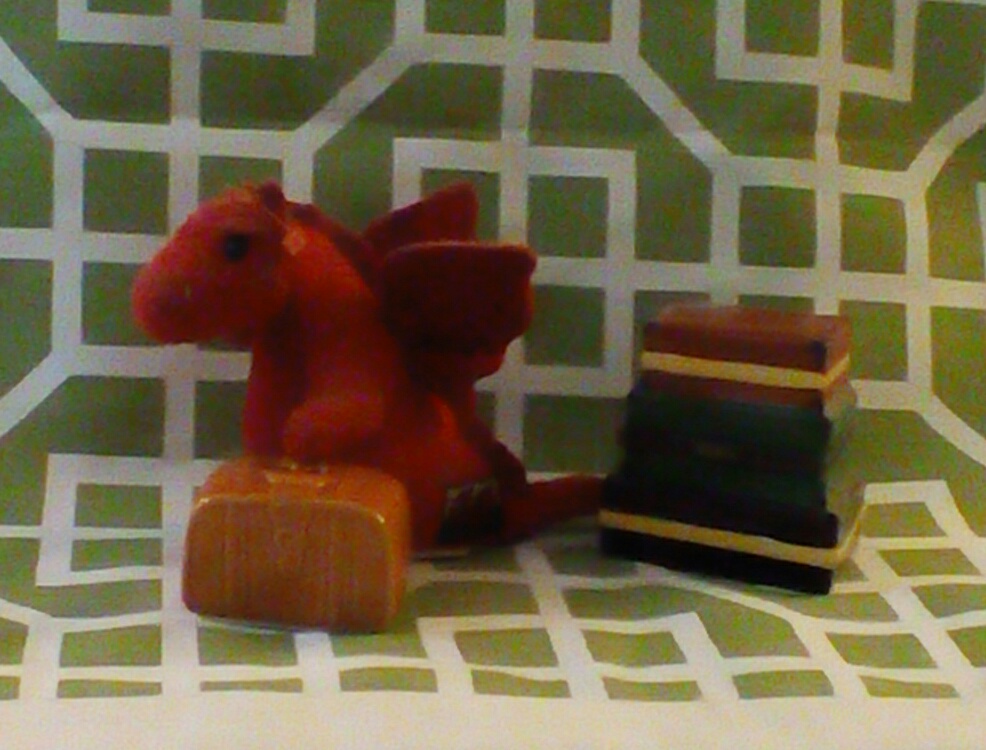
When I was there, I picked up stuffed red dragons for each of my three kids, but for myself I got this little keychain. For the longest time, I had it clipped to my pocketbook, and it went everywhere with me. His tag fell off, but the plastic hangy thing is still attached to his ear. On his left side, as you can see if you squint and zoom in, he has a patch of the Welsh flag attached.

image

A few years ago, I was in the post office, my purse slung over my shoulder with the red dragon hanging in the front. I finished my transaction, and the postal clerk asked if I went to college at Oneonta. It is a state college in upstate New York, and I had in fact graduated from there.

I was confused how she knew that, and she pointed at my red dragon. My response was that it was a Welsh dragon, not an Oneonta red…

And then I realized, and it hit me that I hadn’t realized it before, but the coincidence was ridiculously obvious to me and I chuckled. I might have said that I guessed it was after all.

At college in Oneonta, our mascot was a red dragon. I lost that in the twenty-five years and I’d been carrying around my Welsh dragon and never once associated it with my college mascot.

So in the 1980s I had red dragons, and in 2009, I went back to Wales and got a different red dragon. It only cemented my connection to Wales. There are many threads attaching me to the land, and their only connection is me. In my mind, it makes sense. It’s a faith thing.

Lost and Found in the Homily

Standard

Today’s homily was all about being lost, and being lost sheep, and the everyday ways we are lost and find ourselves again. I don’t know why, but my first visit to the UK kept popping up in my mind throughout my pastor’s talk. Not just the visit or the trip itself, but all the little times that I was lost there. I don’t think we were ever truly lost,  but those moments seemed so big at the time, and even now they stand out in a seemingly unrelated homily that included my pastor being lost in the snowy woods with his dog.

My first thought of being lost in England was standing in the rain. I don’t think we had umbrellas, but we were looking at a map and it was raining. It was a cold, poking kind of rain that covered my glasses  We were years away from little wipers on your eyeglasses.

At that time, we stayed at youth hostels and you can’t spend the daylight hours at a hostel, even in the cold, winter months, so we were up and out every morning. I don’t remember where we were heading on this day, just that we didn’t know where we were, and we needed to look at our map.

We were surprised when an older woman came out of her house and across the street with an umbrella and showed us where we were, and how to get to where we were going. She said to go across the field we were standing next to – it was faster if a bit muddy. We weren’t sure about going across someone’s property, but she said it would be alright. We took it.

It was definitely a shortcut.

When we crossed the border into Wales, I hadn’t realized that I was lost, but I knew that I had been found. I talk about this aspect of my trip often, so I won’t be redundant, but it is a significant thought of being lost even if I hadn’t known it at the time. It was, and continues to be a sacred place for me.

We also found ourselves lost on Craigower Hill just above Pitlochry in Scotland. We kept climbing up and up and up. We didn’t quite make it to the summit, but we made it pretty close. We slid down and had to start again about halfway up, and then it started snowing.

Luckily we found ourselves at the bottom eventually at The Moulin Inn for some fabulous lasagna and cider.

We became stuck in the Cotswolds having planned on leaving on Sunday, and not knowing that the buses don’t run on Sunday. The hostel warden took pity on us and let us in earlier than their usual evening opening. He also loaned us books and told us some of the history of the town, Stow-on-the-Wold.

Being lost in Edinburgh, in the snow, at two o’clock in the morning was better with a new friend than alone.

This was a three week trip in January with my college roommate, and these are only a handful of memories that popped up during the homily on lost sheep.

Being lost isn’t so bad. I know I’m never alone and what all of these anecdotes remind me is that no matter how long you’re lost or where, there is always a way out, a way to be found, a way to find yourself and that trip was one of those places and times that I did.

(Reading: Jeremiah 23:1-6)

Edinburgh

Standard

There are things that stand out in my mind, a quick memory that jumps to another, a smell, the feeling of a particular fabric on your skin.

My first trip overseas was to the United Kingdom. It was 1986/1987 and my college roommate was student teaching in England. She asked me to meet her there and then we would travel together for winter break and afterwards return to school together.

It came at a perfect time, that if any one thing had been different, I would have turned her down. Luckily for me the stars were aligned in my favor, and the trip literally changed much of my life.

She asked me what I wanted on the itinerary, and I believe my response was: Stonehenge and a Castle. Everything else was her choice. I didn’t care as long as I got to see Stonehenge and a Castle.

There is much to tell that happened during these almost-three weeks, but when I put my request for a prompt and I limited it to seven choices, and People: Edinburgh was chosen.

We barely spent any time in Edinburgh, but it truly was the people who stand out in my memory.

For one thing, I’m weak-kneed for a Scottish accent. And bagpipes…… Completely unrelated, but I visited a Gettysburg battlefield at the same time as Bike Week and one of the riders got off his Harley and started playing the bagpipes. It was one of the most moving feelings I have ever experienced. The memory still manages to choke me up. Sorry for the digression.

I’ve always been a tremendous fan of Scotland and the Celtic people.

In the summer before the trip, we both (my roommate and I) worked at a camp that had an entire group of British exchange students, and one of them was Clive A. Clive was the canoe specialist and he and I embarrassingly started a food fight in the dining hall. It was disgusting and we both got in serious trouble and I couldn’t drink orange juice for almost a year afterwards, but it was one of our bonding moments. And I was one of three people who could understand him through his thick Scottish accent.

Our trip from Pitlochry to Edinburgh was somewhat eventful, although not as eventful as Edinburgh to London, but still. The snow had begun falling before we got on the train, and once we’d arrived in York, the snow turned to mush in a country that didn’t know what to do with mush. Trains were delayed, but eventually we made it into the city to meet up with Clive.

On our way, we ran into an Aussie fellow we met on the train in Wales.

This was January and so the hostellers were a small group. We didn’t run into the same people, but we did meet a couple, stay a bit, change hostels with them, meet a couple more and then trade. It was neat. We met Peter in Bangor, went our separate ways. Actually we were ion the same train. At Perth, we went on to Pitlochry and he changed for Aberdeen. I was indeed surprised to find him later on that evening in Pitlochry, and the next morning he came with us to Edinburgh.

The Scottish hostels were a bit different than the English and the Welsh ones we’d been used to up until now. For one thing, the Scottish curfew was 2am rather than eleven or midnight. Scottish hostels also did not provide silverware; you were supposed to carry your own, and we did not know that. They were kind enough to let us borrow. Also in Scotland, we, as women, were not automatically served a half-pint like we were in England and Wales. In Scotland, we got a full pint, and for me who didn’t drink that much, but soon discovered the wonder that is hard cider didn’t really pay attention to the size of the glass other than to be marveled that I was given a pint in Scotland. It was very exciting.

Not to mention that by this time the drinking age in NY was 21 (raised on my birthday, the bastards!), so my first legal drink was received in the UK.

Clive took us to three places, but the only one I remember the name of was Preservation Hall. He’d said it was named for the one in New Orleans. *shrug* I didn’t know. He and my roommate seemed to be in charge and that was fine for Peter and me. We tagged along like wayward puppies, following as Clive searched streets for a working ATM. They weren’t on every street corner in 1987, and it took a little time for him to get some cash.

We laughed and talked and drank and three and a half pints later we stumbled out.

The next thing I knew Peter and I were put on the taxi queue, given an address to get us back to the hostel before the curfew and my roommate and friend left me there.

We stood for a moment or two and decided we could find our way back before curfew, and we didn’t need to pay for a taxi. Thinking back, that was probably one of the stupidest things I’ve done. I met this guy three or so days earlier and so we wandered down the streets.

By now it was snowing, and Peter, being from Australia had never seen snow, but this wasn’t just any kind of snow I told him; this was fairy snow. The kind that lightly dusted your hair, and sparkled in the lamplight. We sat on a snow covered bench beneath the Edinburgh Castle that was lit up for the evening and watched the magical snow glitter and glimmer, twinkling in competition with the stars against the blackness of the Scottish sky, the only light one or two lamps and the castle far above us.

It was sweet and cozy as we walked hand in hand, stumbling down one street and then another, not even knowing what we were missing by not having a cell phone or a nav system, but we made it.

Right before curfew. We came in as the warden was about to lock up, although he was kind enough to ask about my other friend, and I said she wouldn’t be back.

We found a warm spot next to a crackling fireplace and left drips where the snow melted off our woolens, our hair spraying water on each other like a dog might when he comes in from the rain.

Peter and I stayed up most of the night in case my roommate needed us to open the door for her, but he was right about that being futile and I didn’t see her until the morning when she woke me for the train back to London.

Peter and I said goodbye until our pen pal letters started up once he was home and that lasted several years.

A two hour delay, sitting on a moving train car that was only moving for me and my hangover, a crick in my neck from how I fell asleep on my rucksack, wondering why we weren’t in London, an amusing conductor who was much funnier than he should have been sober and snow, snow, snow, and wondering if we’d even get back to the United States because flights were being cancelled left and right.

Finally, we were heading to London, but we weren’t able to sit together. I ended up with a man named Kevin. Scottish, but he needed to show up at the military something in London to check in and then turn around and go home. Didn’t make much sense to me, but we had a nice chat the entire way to London. He was short and had very small hands, and I’m not sure why that stands out in my mind. We also talked about the Scottish money – the pound note, well all of them that doesn’t have a picture of the Queen on them. There was a shortened history lesson of Scotland, and my roommate and I were back in Bishop’s Stortford hoping to get on the plane the next morning, and Kevin and Peter were just happy memories.


The Beauty of Touch

Standard

image

I love when inspiration hits; a memory of something good; a phrase that sets my mind wandering and that happened in a wonderful way at today’s Mass.

Today was the Feast Day of St. Thomas the Apostle.

Thomas needed to see that Jesus had risen from the dead before he would believe it. It wasn’t because he didn’t trust his friends or Jesus’ word, but Thomas needed to touch him. How many of us does he represent?

When the priest described Thomas as touchy-feely and gave an example from his own life; of his three year old self touching a hot oven after his mother warned him not to, so many things in my mind came flooding to the front. We all have those moments.

This touchy-feely part of the sermon clicked and immediately I thought of my first trip to England and my visit to Warwick Castle.

I am a Doubting Thomas.

If you tell me the water’s too hot, I must put a finger under the tap. I like to open cabinets and the drawers in the refrigerator, and in a museum, I am an absolute horror to bring along. If it doesn’t specifically say in big bold letters DO NOT TOUCH, it’s a safe bet that I will touch it. Granted, I have not ever climbed up onto a Revolutionary era cannon at The Smithsonian as I saw one young child do, but I have my other mo
I’ve slid my fingers along the woven edges of medieval tapestries at The Cloisters. If I’m in an art museum with a roped off masterpiece, I must run a finger along the velvet rope that keeps me from the painting itself.

I’ve touched the fire truck at The State Museum.

When I was visiting my close friends, often a touch on my shoulder relieved any anxiety that had been rising, a hand grabbed and squeezed in friendship elicited a smile, fingers brushing as a cup of tea was passed was a small hug.

Most recently In Wales, the only thing that kept me from rocking and weeping during the flight was my hand on my pocket frog, the cool Lucite against my palm, my thumb rubbing the same spot over and over again. I also liked to rest my hand against the cold stone of thousands years old castles and brickworks and abbey walls.

Touch is the most soothing thing when it’s wanted or when you least expect that you wanted it. I feel this at daily mass every day during the peace part of Mass. I’m a little lost when there is no one around me to shake my hand. That simple touch sets my whole day on a positive note.¬

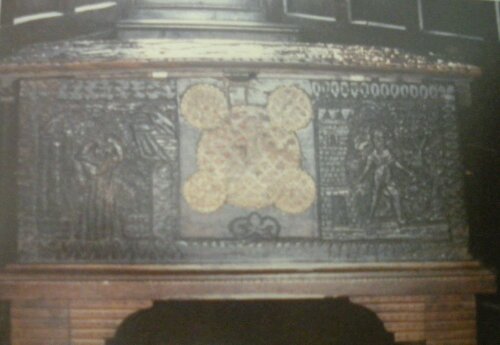
In Warwick, though, we were able to take a tour of the castle, and we eventually came to a room with a large, stunning chest. We were told that this tower (known as the Ghost Tower) was known to have the ghost of Sir Faulk Greville who was murdered by his servant, and we should listen for it. I think we all chuckled nervously.

The chest was next to a locked door and yes, I turned the old knob. The door didn’t budge in case you were wondering.

As the tour group was heading into the next room, I touched the top of the carved chest. I looked around and tried to lift the lid.

It opened!

It opened quite easily. I was just about to peek inside when a voice began to speak. I jumped at least ten feet, dropping the lid that fell noisily into its original closed place. I looked around the empty room and ran out after the tour group as fast as I could catch up.

When I met up with them, I realized that it was the tour guide on the other side of the door speaking at the exact moment I lifted the lid. Not quite the ghost I had just started believing in.

Touchy-feely is one of the more adventurous and a most beautiful part of human nature.