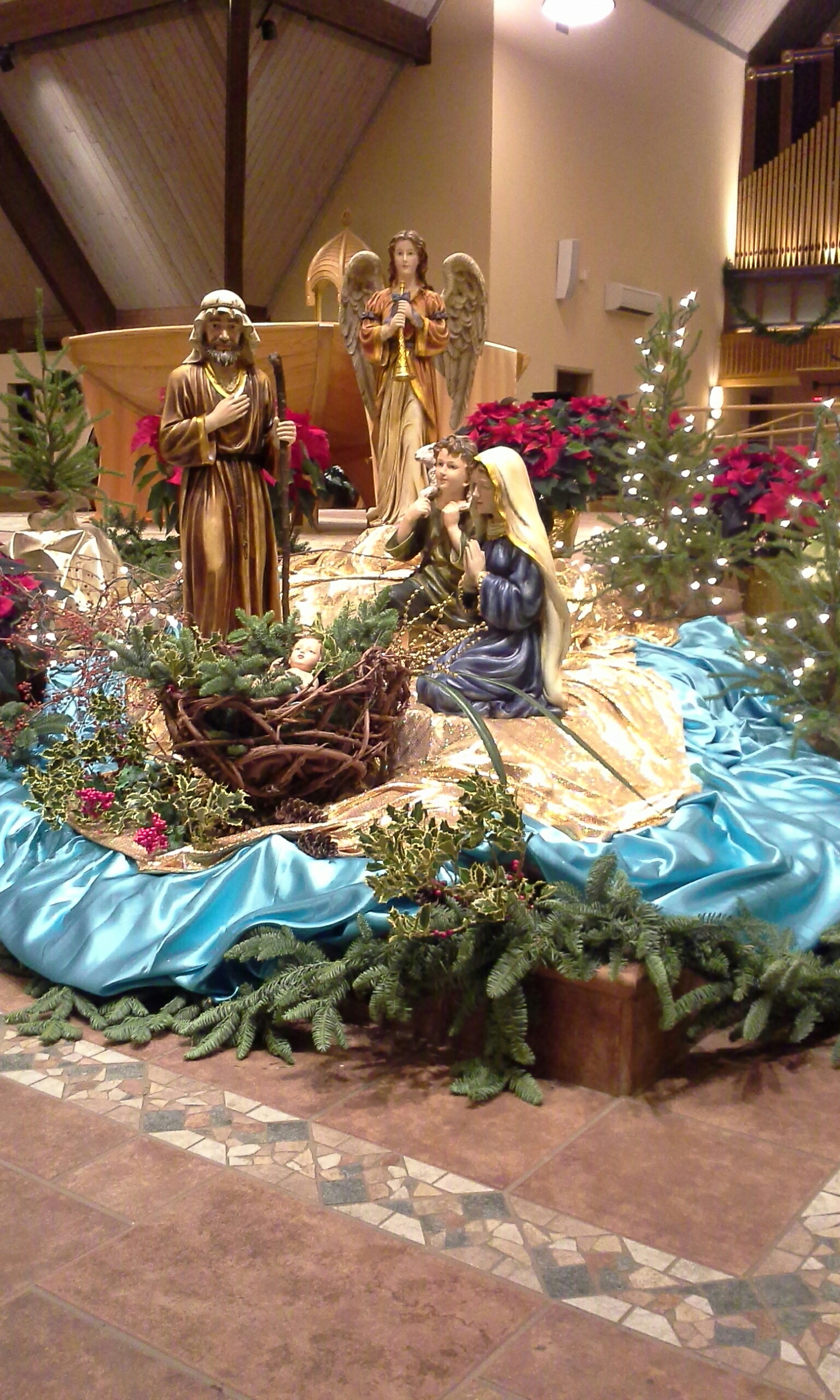
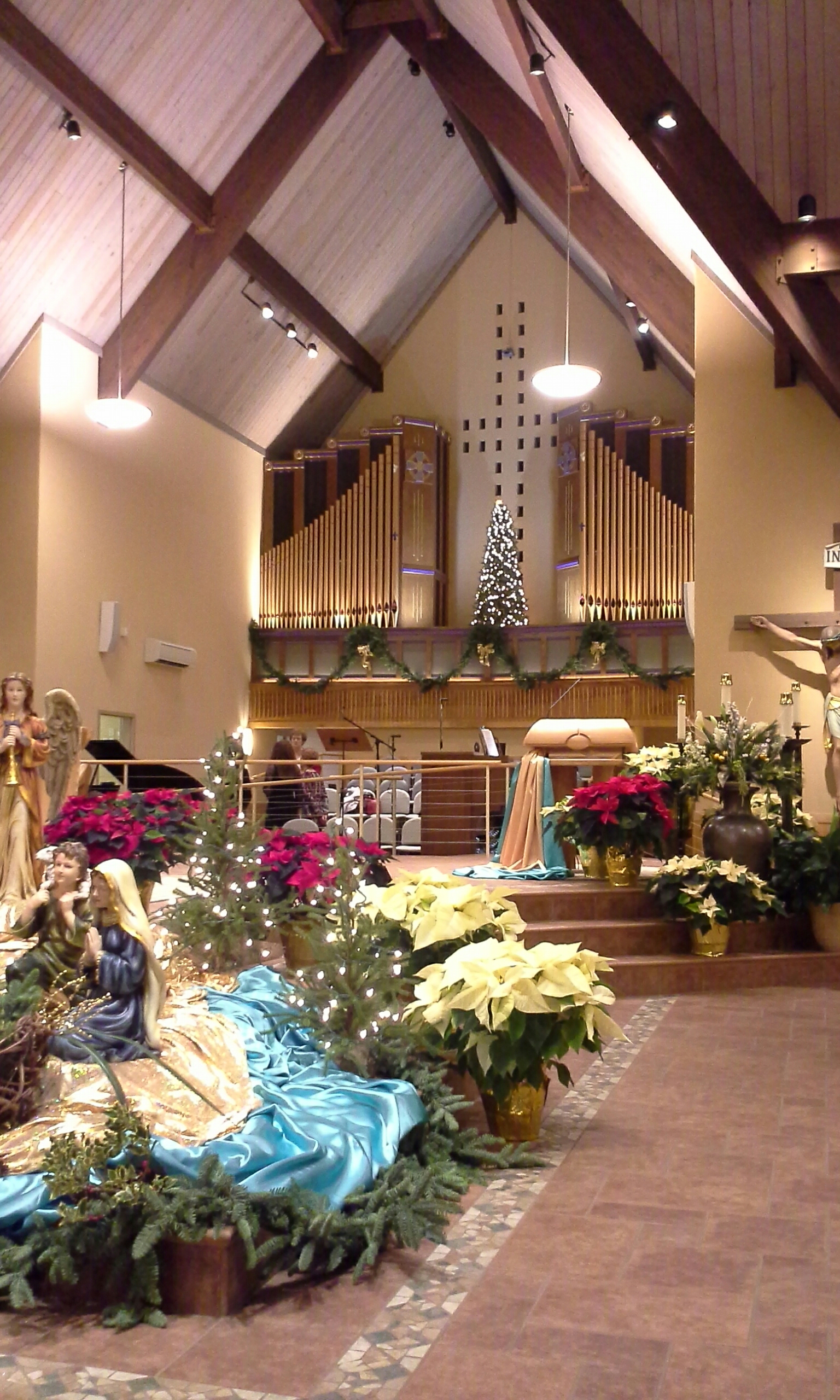
First Sunday of Advent

Standard

One of the things I became re-acquainted with when I began to attend Mass at the Catholic Church was the liturgical calendar. I had never realized that just like an Asian New Year and a Jewish New Year, there was also a Catholic New Year, and it begins with Advent.

Once Thanksgiving is over, many move into Christmas mode. After all, it is the Christmas season.

There is the misconception.

The Christmas season doesn’t actually begin until Christmas Eve, the Vigil of the Nativity. The song, The Twelve Days of Christmas…well, those twelve days begin on December 26 and conclude on January 6, also known as Three Kings Day, Los Posadas, Epiphany, and Twelfth Night. That was the traditional day to receive presents. When I was involved in medieval re-enacting, we often gave gifts and celebrated Twelfth Night.

After Thanksgiving, begins the season of Advent, the time of waiting; waiting for the birth of the Christ child. Like Lent it is an anticipatory time. We reflect on the past year that’s concluded. We begin a new Gospel cycle. This is the A year – Matthew. I am very fond of Matthew. It was his Gospel year when I first joined the church and I took a great lecture series on his gospel. I learned a great deal and so I became very attached to him.

Today, our church gave out a Daily Reflection book for Advent and Christmas. This one is compact and gives you something each day to read. It takes about five minutes or so, and you can meditate longer if you have the time and the inclination. Personally, I’m going to try and sit quietly with a cup of tea while I read and reflect.

I read the Introduction and then turned the book over to read the description on the back. The blurb recommending the book at the top caught my eye, and then I realized that the blurb was written by my godmother. A surprise that brought a smile to my face.

Front of the book given out by my church for the Advent Season.


Back of the book with the description and a blurb about the author, Bishop Robert F. Morneau.


There are many Advent resources offered in paper form, online or as e-books. I will sometimes buy the e-book of whatever the book is that my church gives out so I can read it on my Kindle, only if the price is reasonable.
One of the things I love about these little books is the change and the challenge to do a daily meditation as well as the Introduction to a book that I might not have ordinarily found on my own.

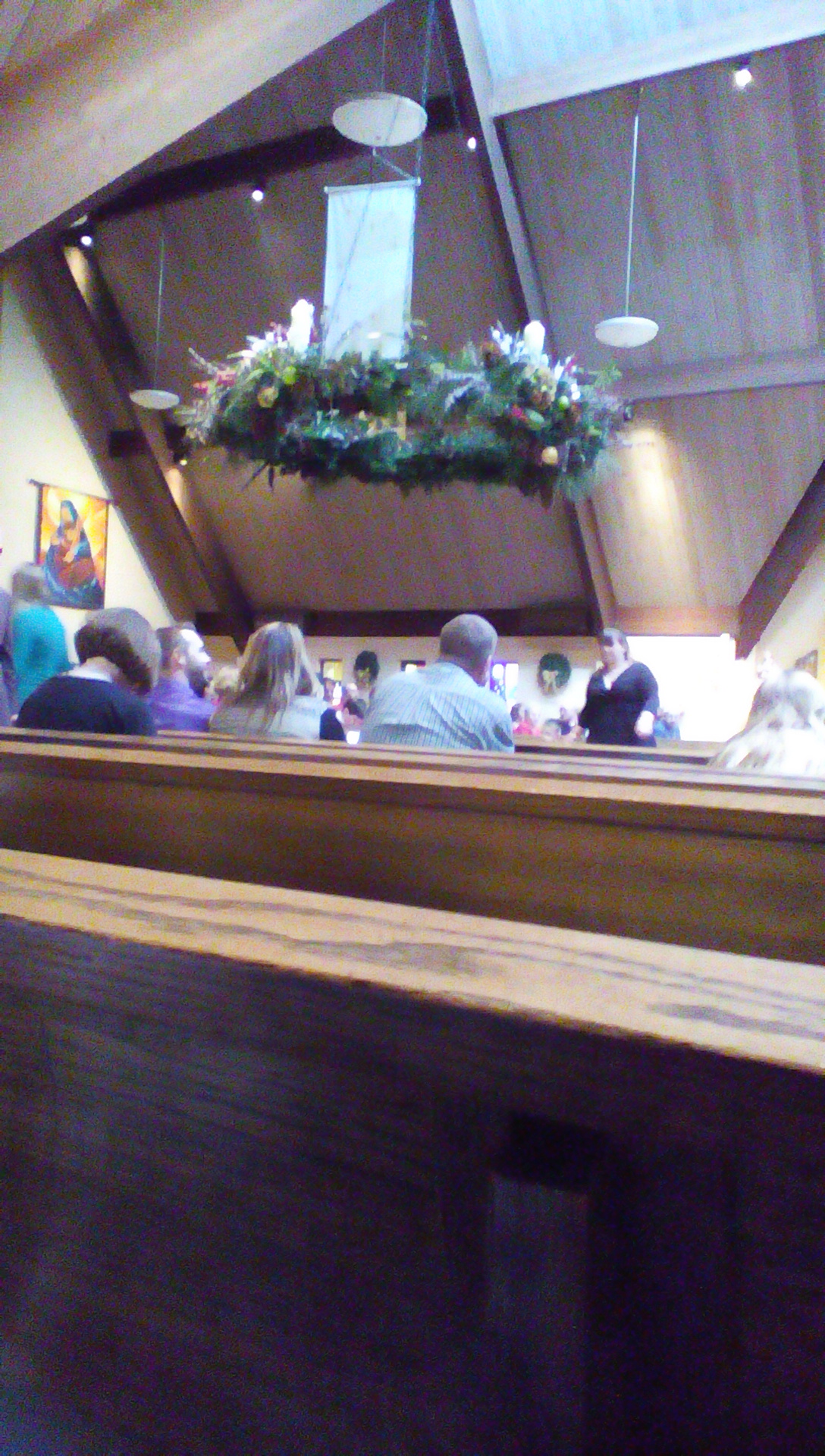
The Advent wreath is up, the banners are changed, the colors are purple, the incense is fragrant. Now the waiting begins, and a new search for something wonderful on this Advent journey.

Later in the week, I will share some other resources for your Advent journey.

Insta – Morning of Service

Standard

A glimpse of my parish’s Morning of Service in conjunction with the Pope’s Jubilee Year of Mercy. Top left, clockwise: Room assignments, Information/Registration table, sample rosary bracelet (which was one of the projects), worship aid for our prayer service prior to the volunteering, Fr. J during the worship service, our volunteers at the service. In the center: Magnet for all participants. (c)2016

After months of planning, my parish’s Morning of Service was finally held on November 5, 2016. We had over two hundred fifty live bodies to work on projects for a variety of community organizations, both off-site and on-site at the parish. In addition, there were dozens more who donated items and money to complete the projects.

We will meet in January to discuss how things went (fabulously) and make preliminary plans for next year’s Service Day.

I was at the information table for the morning, and I will tell you that when people left they were just as happy as when they arrived. No complaints about the early day, smiles on faces throughout the day, all ages. It was wonderful to see it in real time how this affected the volunteers in such a positive way.

It was one of the most fulfilling days I have had the pleasure to spend, and I can’t wait to continue to offer ideas for the next one and participate.

6/8 – Year of Mercy – Service

Standard

In two weeks, the Extraordinary Jubilee Year of Mercy will conclude with the closing of the Holy Doors across the world, including at my home parish, and so this is a time to think back, to reflect on the past year, and what it meant to me personally.

In addition to the several things I’ve done or experienced in the past year, one of the ways to be a part of the year of mercy is by doing merciful acts.

In the Catholic Church, there are seven Corporal Works of Mercy:

1. Feed the hungry

2. Give drink to the thirsty

3. Clothe the naked

4. Shelter the homeless

5. Comfort the sick

6. Visit the prisoners

7. Bury the dead

Earlier in the year, I was asked to volunteer for a ministry, a committee to plan and implement our church’s first Morning of Service, where our parishoners come together on and off site to do volunteer works along the lines of those corporal works. Our day of service was held yesterday to great success.

We had over two hundred people offer their services and dozens more donate items. There were groups making pet beds, rosaries, Welcome Bags for the Ronald McDonald House, visiting nursing homes, painting community rooms, building homes for Habitat for Humanity and a plethora of other works that look small and insignificant until you put them all together and see how they impact those on the receiving end.

In my short time with this parish, I have seen so many giving so much in the name of service. It astounded me at first, but now it makes me happy to be part of such a giving group as this. I continue to try and do my part to varying degrees and varying amounts of success, but I try, and that is most important.

I can’t express the feelings granted from giving. It is overwhelming and almost too much. It defies description.

While next year, there will be no jubilee, no Year of Mercy, what was begun this last year by Pope Francis and taken on by parishoners all across the world will continue through our committees, our ministries, and our parishoners.

Once the step forward is taken, it cannot be taken back.

Entering the Holy Door

Standard

I was on retreat when my parish’s holy door went up officially. The Pope announced that there would be a Jubilee Year of Mercy, and there would not only be a Holy Door at the Vatican, but at every Cathedral across the world. This Pope is nothing if not inclusive. He walks the walk, which is one of the many reason that I am so fond of him. I was very excited to have joined the church about the same time as his election to Bishop of Rome. Without ever having met him, I felt welcomed by the world church as much as I had been welcomed by my parish church,.

I had planned on going through the Holy Door at our Cathedral, but was very excited to learn that our parish was one of a handful that was permitted to have our own official Holy Door. People have come from as far away as a two hour drive to walk through our holy door.

The one thing about walking through the door wasn’t that I could easily do it. it’s not a regular door. There is a purpose to it. The people who enter through those doors should do so with a purpose, with a reason and a contemplative mind. Like all doors, walking through this one is a beginning, not an objective.

Continue reading

Should a Day of Service Be Used to Evangelize?

Standard

I know several of my readers are religious and I’m kind of curious what people think. I’m part of a committee with my church to organize and hold a parish wide day of service. We were discussing our mission and our “slogan” (for lack of a better word), and one person objected to not including Jesus in the promotional materials and our language of introduction when we go on these service opportunities.

I objected to that overt evangelizing once we get to the service location. The locations are places like soup kitchens, nursing homes, hospitals, etc.

His main point was that we’re doing this in service to Christ and walking in his steps, and we should be expressing that to the people we’re volunteering with.

I obviously don’t believe we should ignore the fact that we are coming from the church. And expressing Jesus’ influence and mission as part of our recruiting of parishioners to volunteer is clearly appropriate. I also don’t have a problem with telling the people we’re working with that we are with the church and this is our day of service, that we’re volunteers and we’re excited to be there and even that our faith influenced our volunteering for service.

I do think, however that there’s a difference between evangelizing and serving and we need to be aware of what our mission is as a volunteer and follower of Jesus.

Our mission as volunteers is to walk Christ’s path.

That may not the expectation or interest of the random person we’re working with whom we’ve never met before.

I’m not suggesting hiding our Catholicism or that we are doing this as part of our works of mercy, and I’m not even afraid of offending people, which is the word my acquaintance used. It’s not about offending or not offending.

It’s about respecting.

I think that the majority of people we’ll be encountering will be at-risk, whether they’re kids or elderly, poor or other marginalized groups, and they shouldn’t feel blackmailed into being prosthelytized to just to get a special service. Or to feel that if they don’t listen to the Jesus time-share lecture, they shouldn’t participate.

For anyone who’s ever experienced that (and I have been on the receiving end of condescension of my own faith and the hard sell that I was following the wrong religion). It’s a turn off. More than that, it’s not just offensive, it’s painful to be on that side, to be the other.

Maybe I’m being overprotective of a group that doesn’t exist in this case, but I really do think it’s more important to be there in the moment and not worry about giving the message of Jesus. Our being there doing Jesus’ works is sending the only message we should be concerned about; the tangible message of helping our neighbors, of service with mercy and humility. That includes letting our actions dictate our works, and not our words.

I think we need to take into account the diverse nature of these types of places and include everyone without excluding anyone.

From Death into Life

Standard

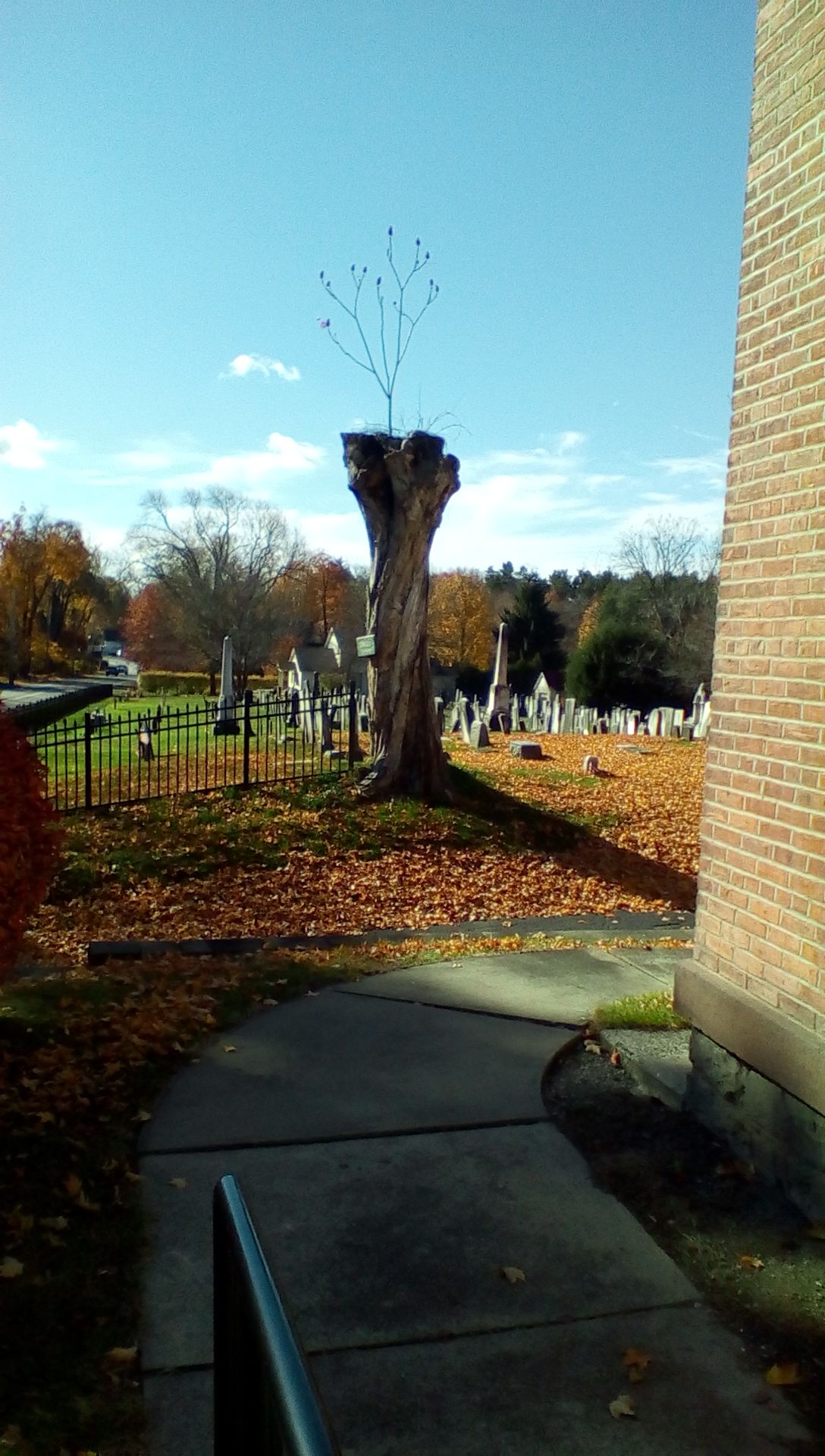
image

There is a line in a hymn, I think it’s sung at funerals or as they’re called in the Catholic church, Mass of Christian Burial. It goes, “from death into life.”

I began attending this celebration of life by accident in one of my early days of attending Mass. I was there, and I couldn’t leave without drawing unnecessary attention to myself, so I remained, hidden in plain sight, in one of the back pews, wishing I was invisible, feeling as though I didn’t belong in such an intimate family gathering. I was, however, wrong – this mass invites the community members, the congregation; to be in communion with the family, to send their loved one on their next journey. I followed the program, I sang along, I prayed, and I found something in that service. I think my first funeral service was for a woman named Dottie. I still have her program in my church papers that I’ve collected and saved.

After that first time, I continued to go to the Rite of Christian Burial when it occurred during the daily mass time. I almost never knew until I arrived at church, and after one or two more, I found great comfort in this Mass.

But I still didn’t get it – that death into life bit.

I could never understand that phrase. How can you go from death into life?

It wasn’t until after my spiritual conversion, and after passing this tree, always on my way to my writing workshop.

On the way to the library, I passed the church adjacent to this tree, and the cemetery that surrounds this tree, and one spring day it was gloriously sunny and bright, and the green leaves had sprouted and grown.

I could see them bright against the white of the siding on the church building; this delicate new growth rising from the fallen tree, its life long thought buried and gone.

This was when I could grasp death into life, life from death, the infinite from finite, everlasting life from our journey on earth.

Now, when I sing the hymn, I picture this tree when I sing death into life.

Link: Father James Martin – Why Do We Celebrate All Souls Day

Standard

This is a perfect explanation, written in terms that anyone can understand, including me. I get confused on some of the holidays and holy days and Father Martin as a relaxed, down-to-earth way of telling it without losing the true spiritual meaning.

No matter how much we already know, we are always still learning, and Father Martin is an excellent teacher.

Why Do We Celebrate All Souls’ Day? (On Father Martin’s Facebook)