Spring Enrichment 2014: An Introspection

Standard

This is a list of the classes/workshops I took and the one thing I learned that I didn’t already know:


Keynote: Open the Door of Faith (intro with Bishop Edward Scharfenberger of the Albany Diocese, Keynote with Bishop Frank Caggiano of the Bridgeport, CT Diocese)

The themes that rang true for me were: Be open to the voice of G-d and there is no challenge that cannot become an opportunity.

Pope Francis’ The Joy of the Gospel (with Bishop Frank Caggiano)

“Joy is the deep abiding faith and contentment that everything will be alright.”

I realize that I’ve been absorbed in Supernatural themes and fandom, but what he said during this talk was “Family don’t end in blood [boy]” and I promise you, Brooklyn accent or no Brooklyn accent I heard this is Bobby’s voice.

The Judeo-Christian Contribution to the Rise of Science

The one thing that stood out to me isn’t the disagreement between the Church and the Secular or between Creation and Evolution. The conflict that arose wasn’t between science and faith; it was between the different faiths. The Church encouraged science and wanted to learn more. The Big Bang Theory was a phrase used to mock and deride the Belgium priest who was the scientist who came up with it in the first place.

It was also believed that the pursuit of science was a sacred duty – that was how to experience G-d.

Also, a very interesting statement that I would need a little more first-hand research on, but Father Pat stated that there was no gender assigned to Adam until the second person (commonly known as Eve) is created (read the Scriptures)

An Overview of the Spiritual Exercises of Ignatius of Loyola and a Contemporary Way to Pray Them

I’ve never been a fan of the idea of meditation and contemplation and this opened me up to trying it in bits and pieces. The journey of Ignatius of Loyola mirrored mine in an emotional way and it really struck me as parallel in ways. I’m interested in exploring the Spiritual Exercises a little more. We were given a shell to symbolize our pilgrimage, and I do often use objects to focus my thoughts and prayers, not necessarily religious objects like crosses and rosaries.

Thomas Merton’s Down to Earth “Christology from Above”

This ended up being more of an introduction to Merton, which was good for me who had never heard of him. He really spoke to my bias that you need to be religious and pious to find the comfort in G-d, and Merton was far from piety, but he still managed to take his hyperawareness and experimentation and find his religious and spiritual center and that leaves hope for the rest of us.

It is also a reminder that most Saints don’t start out that way (see St. Augustine).

Witnessing to Christ in the Digital Age: Strategies for Discipleship and Tactics for Evangelization

A Brand-New Parish for a Brand-Driven World

These two classes really showed me the link between church and secular life. All of the things we are doing with social media secularly can be done for our ministries and our parishes. It is more of a joining, a combining of our religious and secular lives rather than compartmentalizing them into an us vs. them scenario. It is also the reminder that all things can be used for good or ill, and it is up to us to use our skills and the available technology (see Ignatius of Loyola) to promote positivity and who we want to become instead of shunning them as too hard or difficult to learn or deciding that it doesn’t fit into the religious context. It ALL fits. We just have to figure out the best way to use it in what context.

How Catholics Read the Bible, Part 1: The Hebrew Scriptures

How Catholics Read the Bible, Part 2: The Christian Scriptures

How the Bible is set up, the historical context, a reminder that the Bible is written by humans and it is an interpretation and an ever-evolving document. There is also literary form to consider. These are all things that I never considered.

We are also prompted to take the Bible seriously, not literally.

Though He Slay me, I will hope in Him (Job)

My least favorite subject (and one that I didn’t realize was the subject of this workshop): end of life, pastoral care, bereavement. There was a great visual of our understanding of heaven is a hug. If you look at Jesus on the Cross, his arms are stretched out before in really a universal symbol of an embrace. It is an invitation, a welcoming.

This is not something that I considered before, but I can think back on one or two or three particular hugs that not only gave me comfort but took away pain, and the picture of Christ is less than I imagined as well as so much more.

History of Liturgy Part 1 and Part 2

This. My most favorite learning piece of this is how much of the current liturgy, prayer service, Mass has been part of the Mass since around the 3rd century. It’s worked so well for nearly two thousand years and really shows me the true belief and the specialness of Mass for me today.

Walking Through the doors of Faith with Jesus and Frodo: Praying with the Gospels and “The Lord of the Rings”

I am a huge fan of modernity and pop culture being connected to religious life – it isn’t separate but equal – it is two halves of the same coin. Just as pop culture changes, so must religion. I also enjoy seeing the parallels of the Lord of the Rings (and other pop culture works, see Supernatural) with Biblical texts and stories. For me, the movie visuals made more of an impact than the readings (which I’ve never done), but I also think there is a slippery slope not to make more of something that isn’t there and not to put words into the mouths of the artist (in this case, JRR Tolkien).

TED Panel: Open the Door of Faith (three viewpoints: theology, art and architecture and liturgy

I love the melding of different forks in the road into one theme. Of course, doors are one of my staunchest symbols of many things. Leaving one side to the other, finding hidden opportunities, looming large and scary but they don’t have to be, the different materials used in making the doors, the simplicity, the beauty, the attention to detail.

When you don’t know what is behind the door, that first hesitation is a tiny bit apprehensive mixed with excitement and wonder and once the door is opened, the introduction to all of the senses is there on the threshold and you still have the choice to close the door, but nine times out of ten you step through. Even that tenth time that you close the door; often we are drawn back and eventually enter. These are the roads in our lives leading us and greeting us and supporting us by providing nourishment along the way and sometimes offering us other doors with other choices or breaks from the journey, but at the end of the corridor, we still keep going.

Diocesan Spring Enrichment

Standard

I spent four very full days last week at an enrichment program from our Diocese. It is primarily for the catechesis teachers, and I was fortunate to be offered the opportunity to participate. As a recent participant in the RCIA* program, I know that there is so much more to know and learn about Catholicism.

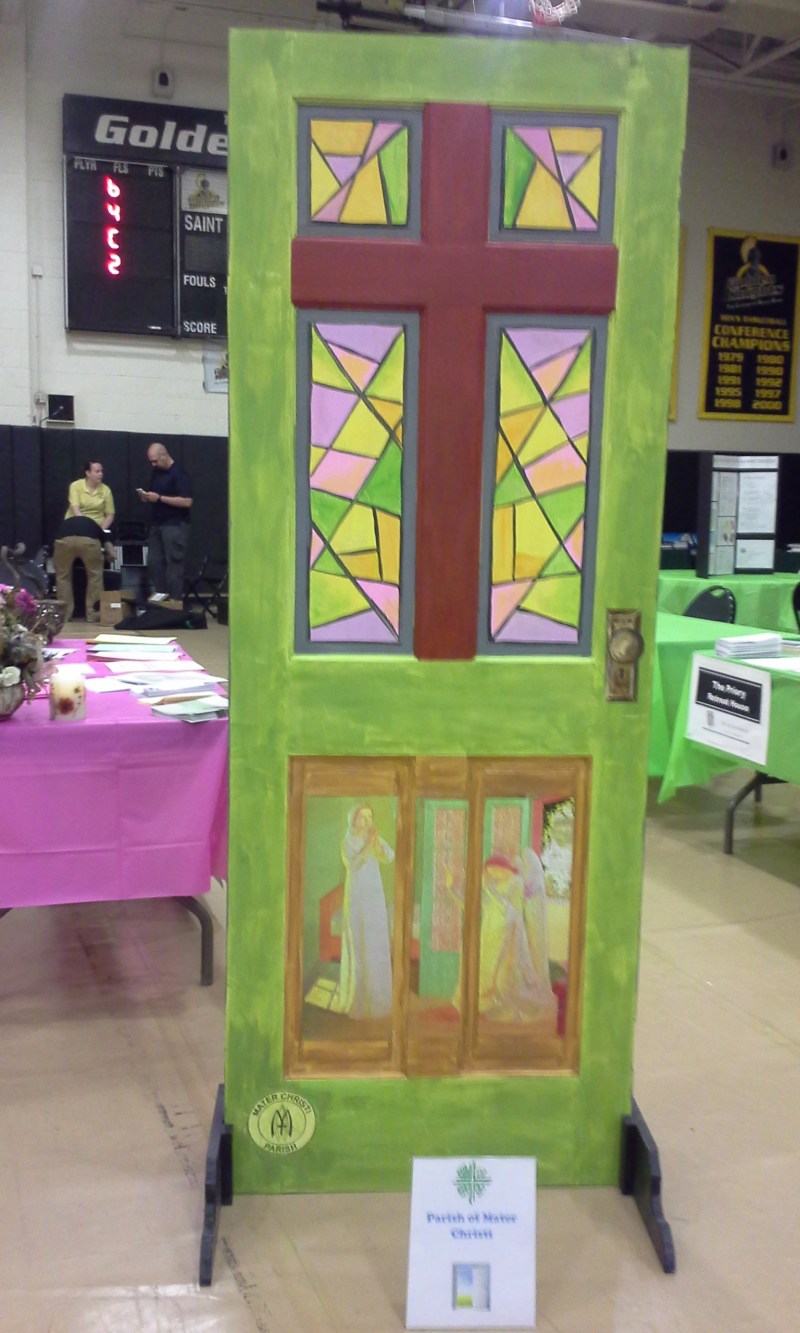
The theme of this year’s event was Open the Doors to Faith, which for me was a fitting first time. If you know anything about my thing for doors, I use their metaphor in a lot of my writing as well as being a sucker for a beautiful door. The picture below is the front of the church where the Mass was held with the Bishop on Wednesday.

2014-05-14 11.18.58

The workshop program opened with a prayer service with our new bishop and a keynote with Bishop Frank Caggiano from Bridgeport, Connecticut. Bishop Caggiano was a brilliant speaker and had a way of both reaching higher and bringing things down to earth. I gave up my morning break to hear him a second time at his regular panel.

I also took some two part workshops that showed me the history of the Biblical writings and the Liturgy. As someone who didn’t grow up in the faith, the history of the New Testament and the period of time after Jesus’ Resurrection are really a blank for me personally and I’m intrigued how the church came into being. And just to balance things out, on my last day I took a class entitled, “Walking with Jesus and Frodo: Praying with the Gospels and “The Lord of the Rings”.

There were other classes including Social Media in the church, the Spiritual Exercises of Ignatius of Loyola and an introduction to Thomas Merton. There was nothing that didn’t interest me and my copious notes prove that.

I also met people, not only the people I was introduced to by a friend, but a variety of people who simply reached out to me to say hello, to ask my background, to ask my opinion on something and I was a different person here, although I’m not sure if I was so different or that I was more me than I’ve been in the past.

I raised my hand. I asked questions. I offered my insight. I didn’t feel as though I was intruding as I usually do in these kinds of events, always feeling as though I don’t belong and everyone knows it. My confidence was in a great place, higher than it’s ever been. Even not being an expert in religion, I was still comfortable presenting my viewpoint and discussing my opinions with others who’ve been exposed to the language and the history of the church for their lifetimes.

I knew when to bite my tongue and when to correct people on their assumptions. For example, this was a program with the Diocese of the Roman Catholic Church. Talking about my pro-choice stance and the importance of reproductive rights would have been extraordinarily inappropriate of me. However, when a fellow attendee expressed a 1950s view of the mentally ill and the “excuse” of mental illness rather than a medical and physical problem, I did correct him. Even if I didn’t reach him, the other twenty people in the classroom heard what I said and might think twice the next time someone gives that erroneous outlook.

I was very confident and comfortable in everything I did during this week long enrichment, and really the word enrichment encompasses what I was doing through the learning as well as through being in the environment.

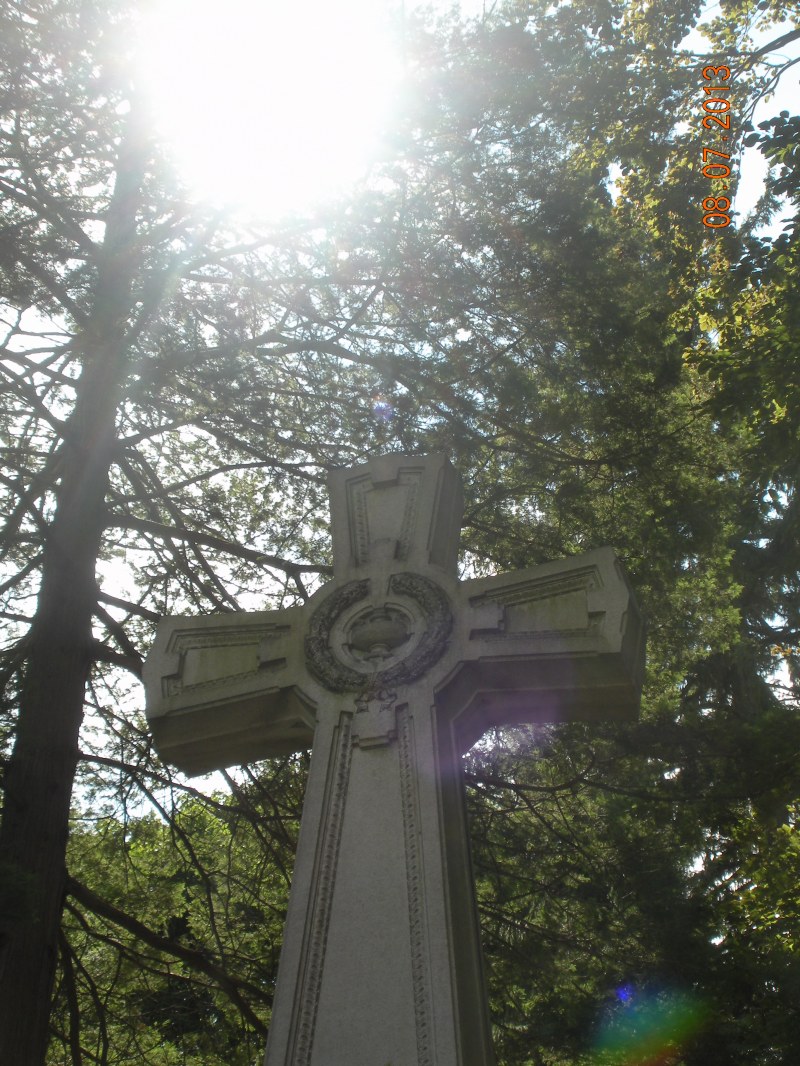
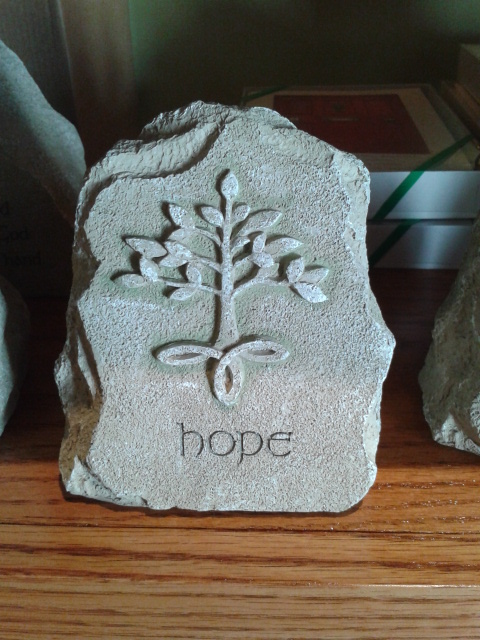
I drove myself on one day, got a ride from my spouse another and carpooled for two others. I had some workshops with my car pool driver (and godmother) and many without. I ate lunch with her and not; I sat next to people I met once, I sat alone. I contemplated in the gardens. I took photographs (which I will share with you over the next few days).

For those of you who’ve followed me when I’ve taken self-imposed writing retreats or gone to the IWWG*’s writer’s conference, this was very similar experience and yet not at all the same. I always come back excited and inspired and this week did that for me, but it did more than that.

It gave the professional immersion that I need as well as the ‘alone’ time that I also need to jump start my batteries. This week also gave me a faith basis for jump starting those batteries. I was in a state of constant excitement and inspiration. I have notes all over my book to look up things that I didn’t know about. I have writing prompts to organize and write. I have faith journaling to accomplish. I even got information about Cain and the Mark of Cain that I can use for a meta essay for the Supernatural fandom. This conference, workshop, enrichment, what4ever it wants to call itself was faith and writing and life and happy all rolled into one. It touched on all aspects of my life and creativity.

By the end of it, I was exhausted and my feet hurt, but I wanted another day to hear more, learn more and get more ideas to share with my readers.

I felt things that I haven’t felt…..well, I haven’t felt ever, and I’m looking forward to taking the push and running with it. I can still feel the excitement two days later.

I do believe that things will happen for a reason even if we don’t always see that reason.

Last year when I desperately needed a change, an impetus, something, I was very luckily granted a visit to my best friend in Virginia. This diocesan enrichment was perfectly timed since I wouldn’t be able to travel south this spring and I wondered how to gear myself up, how to incentivize myself. I am, however blessed to be able to visit him in the fall and I’m going to plan that as my next retreat using the themes that I’ve grasped this week to propel me through the upcoming summer.

For now, I have notes to transcribe, memoir homework to complete and enrichment things to write up, both for here and for my church’s blog.


*RCIA – Rite of Catholic Initiation for Adults

**IWWG – International Women’s Writing Guild

Martin Fletcher: Breaking News

Standard

20140510_173308

Reading about your heroes can be dubious business. On the one hand, this is someone you admire a great deal, try to emulate and without knowing it, they take on the air of mentor through their deeds and actions. On the other hand, when you dig in deeper you find that your hero is merely human, and in some ways it is disappointing to find that they have faults and poor judgment and, well, quite frankly, too much like you than you would have liked.

I found this recently, and then I had to wonder if it was the man I admired who I should blame or I for putting so much emphasis on what really is his caricature, his persona that appeared in the toughest circumstances, in the most dangerous places in the world. Could I expect so much more from him than others? In fact, how could I expect this perfection in anyone?

There were few things I wanted to be when I grew up. I was very much an idealized version of a stereotype. I didn’t want to be a pilot; I wanted to be a stewardess. I didn’t want to be a doctor; I wanted to be a nurse. I didn’t want to be a cowboy; I wanted to be an Indian maiden captured and rescued (so not only was this a gender stereotype, but a racist one as well.)

I also wanted to be a writer.

But not just any writer; a journalist.

These were the mid-70s. Women politicians in my neighborhood were the rage: Bella Abzug, Liz Holtzman, others resigned to the annals of my childhood memory.

But all the information flowed through the newspapers. Nixon had resigned. I adored Woodward and Bernstein. They were my heroes then. I wanted to be them. It didn’t hurt that Robert Redford was in the movie version – in fact, I’ve yet to read their book. Lou Grant had moved on from Mary Tyler Moore’s station manager and was now the editor of a prestigious newspaper in California. I loved the female journalist, Billie Newman, just as tough as her desk partner, Joe, curly red hair of which I was more than a little envious of with my straight dark brown hair, not black. I should have red hair. (Eventually, I did, and I do, but I’ve left the curls to the perms of the 1980s.)

Television was big in our house. When I hear teenagers talk about jumping the shark, I know that they have no real clue. I watched Fonzie jump the shark literally and figuratively finding his way into the pop culture vernacular forever.

We were a political family. My parents voted every year. They both worked for the post office, at that time a government job. We celebrated Memorial Day and the Fourth of July. I was on a first name basis with Peter Jennings, Tom Brokaw, Walter Cronkite and all of their successors.

For today’s Middle East news bulletins, most would know the name Richard Engel, but my foreign correspondent was (and is) Martin Fletcher.

One of the benefits of knowing Martin through television is reading his books with his voice ringing clearly in my head. He has a distinctive accent and voice; I would recognize it from the television even if I wasn’t paying attention. Like Peter Jennings, if Martin Fletcher was talking in the middle of the day, pay attention; it is something important.

I’ve always considered Martin an American correspondent despite his British accent. After all, his accent wasn’t the prim and proper British accent that most people were used to here in the States. His was….different. Now I know that his growing up in London to German and Austrian Holocaust survivors melded their accents with those around his family to give him a unique pitch to his words. It offered me an expertise in what he was talking about simply by virtue of sounding not like the other journalists. It was also noted that Tom Brokaw was in the New York studio while Martin was in the thick of it, whether that be in Kosovo, Rwanda or Israel, where he made his home with his wife and three sons.

I was expecting Walter Cronkite on the road. All knowing, non-plussed, quiet, reserved, straight-laced, very much a desk jockey, going out, getting the story, filing the story, filming against the backdrops of war.

This was not Martin Fletcher.

I was shocked to find that he is a human being. I was also shocked to find my own moralistic, narrow-minded, prudish reactions to his life as a cameraman/reporter/journalist twenty-something.

He drank.

And passed out.

He swam naked.

He had sex.

He and his friends were constantly involved in debauchery (his word) and my reaction was so much of what happened to my quiet, reserved, British-accented journalist? Was this also Woodward and Bernstein while they got the story? Rossi and Newman? (Fictional, I know, but still, they would never!)

Well, no. He’s not any of them. They also weren’t in war zones, interviewing warlords stealing humanitarian aid and selling it, talking to the maker of the bomb that injured his family’s close teenage friend and killing her two friends. They weren’t climbing mountains in Afghanistan during the Soviet occupation, getting the story but trying to avoid the Soviets and getting himself killed.

He skirted land mines, trusted murderers’ bodyguards to safeguard him and his crew while they got the story out, filmed a woman dying of starvation, compromised his morality knowing that the story must get out, the truth to the world.

It was dangerous; it was life-changing; it was mentally sapping. Sometimes it was too much.

As much of his private life surprised me, I needed to remind myself that I was ten when he was living this kind of life, not to mention that in hearing his older voice that I am used to as an NBC viewer does sound funny when he recounts his younger, freer days. As he reminds me throughout the book, and in reading this glimpse behind the curtain of the evening news that I remembered was when I thought of becoming a journalist, the story was the most important thing. Always the story.

Journalists risked their lives – the story was that important.

There are hardly any like Martin Fletcher anymore. Everyone has a smartphone. We have citizen journalists on every street corner. Think about recent events in Iran and Egypt including the Arab Spring where the news got out through Skype and banned pictures through Twitter. I first saw Trayvon Martin’s story on Tumblr weeks before the mainstream media caught up to the social justice advocates reblogging there.

I still don’t know if this is a book review, a classroom book report, mini-biography, or op-ed on the life of a journalist. It could be all four, I suppose.

I’m still not sure why I let the dream of being a journalist drift away. Even at twenty, I don’t think I had the stamina for that kind of life. I am at once both afraid and in awe.

While I said at the start that dissecting your heroes can be a dubious affair, the three dimensional insight into someone like Martin Fletcher is invaluable to me. He is human; and so am I.


Martin Fletcher’s website

Breaking News: A Stunning and Memorable Account of Reporting from Some of the Most Dangerous Places in the World by Martin Fletcher

Lectio Divina

Standard

Last week I was introduced to Lectio Divina, a fancy Latin name for Divine Reading and something that I had been doing already much of this for the last two years even though it was unbeknownst to me. Honestly, it came so naturally to me that I recognized my participation immediately as it was described and I wondered why this is considered a unique concept and why this isn’t done by everyone all of the time.

I try to read the Mass readings daily. Once I’ve done that, I currently have two other daily devotionals that include meditations and individual perspectives on the day’s Scriptures. Unless I am attending Mass, I let my feelings dictate when I will read. Despite leaving it to a sign of wanting it and not obligatory I have rarely skipped the readings.

During this time of Easter until Pentecost, I have been reading the Little White Book which I like for its combination of facts and related particulars along with Scripture and the Gospel of Matthew.

Upon becoming Catholic, I received a gift of Grace by Max Lucado from my best friend and after the other readings, I will read the morning page and then the evening section right before bed.

Many of these days I will latch upon a word or a phrase that strikes me as important or so closely related to my life that I can’t ignore it even if I wanted to. As a writer, there are days when I’m fortunate enough to take one or two of those wisps and express my heart.

Lectio Divina, to me is very much like this with a deeper meaning as it relates to my relationship with Christ.

I understand and appreciate the divine and the sacred, but I also find it sacred that many of my questions in my life, tangible, practical concerns that I seek guidance on are found in ancient texts that happen to know when I’ll need to hear them. I have the faith to accept this, but it is still a wondrous happening all the same.

It was explained to me as a fine food that you take into your mouth by small morsel and let it lay on your tongue so you can identify what it is that is so special about this tiny piece, savor it until you can taste all it has to offer and then seek more.

In researching online I have found that this is not far from what is happening while savoring the Scriptures.

Read whatever you’ve chosen for today and if something jumps out at you, grab it and hold onto it. See how it fits. Why did this word or phrase speak to you?

I have a perfect example of this happening today, so I’ll share it here: In reading Max Lucado’s Grace for this morning, the Gospel reading is from Matthew 7:2:

“You will be judged in the same way that you judge others.”

I found this appropriate that it should come today. One of the things that came between my murdered friend, whose anniversary of death was yesterday, and me was my judgmentalness. It is a reminder of all the negative that I projected when I should have been listening. I’m also afraid of being judged harshly because of my way of judging too harshly, so it makes me insecure and fearful about how others feel about me and whether or not they really like me.

In an essay I read yesterday by Mary Stommes, her quote, “A love you could come home to any time…” flew out at me quite unbidden. As an adult, married with children, I always felt that I didn’t need to worry; I always had a home to go to in my parents’ house. It wasn’t until after they both died that I realized I could not go home again. It left me drifting. Even though they hadn’t abandoned me, they both would certainly have chosen to remain here, but they were gone nonetheless and it left a hole, but not only a hole in my heart that losing a parent (or both) does to someone, but it left a frightening chasm that reminded me that if I took a misstep or made a huge mistake, I had nowhere to run to. I couldn’t hide and on an unconscious level this scared me.

It wasn’t until I had no childhood home to come back to that I began to search for myself, and where a few years later, I continue to search for other parts of myself still missing.

I use Lectio Divina in my secular life, grasping onto the words and phrases that stand out, and when I started relaying that kind of meditation to my spiritual life through the daily Scriptures, I could see and remind myself of G-d’s love and the never alone feeling that eluded me for so long. If that reminder was in a Bible written more than 2000 years old, some parts more than 5000, there was somewhere to turn to reconcile me to afjusting my thoughts and my deeds and that things were not impossible.

With Lectio Divina there are four steps: Read, Meditate, Pray, Contemplate.

Clare of Assisi had a noted four step method to hers: Gaze on the Cross, Consider, Contemplate, Imitate (as in become more Christ-like). Her method seems very much like the one that I’ll describe below.

I’ve also discovered that the Cistercians (as well as other monastic orders) used this method of meditation and contemplation. They were the White Monks in Northern Wales during the Middle Ages and whom Llywelyn Fawr was a patron of.

The meditation itself is a slow progression from one to the next, but it is definitely a quiet contemplation, a time to be alone with Christ.

I will almost never find myself in silence, so I try to adapt. The white noise of a coffee shop, headphones listening to music without lyrics, the hub of the house ,if it’s not too loud and through a closed door, so long as I can focus my energy on my reading. The important part for me is centering my spirit. The willingness to look deeper needs to be available. Music without words. Tea. Water. The day’s reading. Sometimes I find myself choosing a random page in a motivational book or checking a particularly insightful horoscope, and see where that guides me. For me, even these seemingly mundane inspirations still find their way to becoming closer with Jesus.

I leave the passages and the amount that I will read in G-d’s hands. I try to have no set plan as to x number of words or y number of verses. When you find it, you will know.

Read it slowly.

Repeat it until it becomes a mantra on your lips and in your mind.

Ponder the words, pay attention to how they feel on your tongue. When something comes to you – an answer, another question, a face or an item, savor it, meditate on it and then pray on it.

It should be quiet and contemplative.

Sometimes, I know I am too wound up to have any positive affect and so I’ll walk away for a bit. Read a book, make a list. It is very rare that I am not called back to my reading.

One of the most exciting parts for me is that there is no set time. This can be a ten minute exercise or twenty minutes or an hour.

It’s possible that I’ve so easily adopted this method of meditation because of my work with quick, ten minute or less writing prompts that this seems to fit into how my brain works.

However it does it, I’m happy that it is something I can do and feel comfortable with.

Holy Communion

Standard

Leading up to my sacraments, the one that was the most public, the one that everyone watches and sees always is receiving the host. No one would ever know (and most didn’t until a few months ago) whether or not I’d been baptized or confirmed, but everyone knew that I didn’t receive Eucharist.

I wasn’t particularly nervous about the logistics of it but there were a couple of things on my mind. I’m always anxious of tripping over my own two feet, and the thought did cross my mind of what might happen if I swallowed the wrong way and had a coughing fit. Coughing in church is a nightmare.

I think I thought that I’d feel like when you’re a kid and you’re constantly picked last and then you finally get picked in gym class or invited to the Slug Club in Harry Potter. I would be in this elite, privileged group and there would be some self-satisfied feeling of being part of ‘it’. Part of me felt bad for thinking this, and I also felt that that wasn’t what I wanted it to feel like.

But how else should it feel?

I can still count on one hand the number of times I’ve received the Eucharist since my first time at the Easter Vigil, and it is so completely not like I thought it would be.

There is a slight nervousness of not knowing if I’m giving enough respect. Have I bowed low enough? I know I’m forgetting something at the end, but it’s not intentional; my respect and love for Christ is very much present.

I always have a pause because for that second I forget to say ‘amen’, especially when it’s Father Jerry giving me the body of Christ. I try to see his hand, the perfectly round wafer as he offers it to me, but invariably our eyes meet. In the last couple of weeks, he will say my name, and there’s an intensity in his look, a solemn shadow that emanates from his gaze that puts me in mind of the Mystery, and there is so much feeling that I’m receiving in my heart that the ‘Amen’ gets stuck for that moment.

It is all at once calm and comfort, belonging and humbling while at the same time remaining spiritual and wonderful and electrifying.

There is also feeling behind the wine, joy and excitement, but it is not as gripping as my initial and internal reaction to the Host.

Joining my brothers and sisters in Christ each day, there is that belonging, but not the prideful way that I was afraid of feeling. There are no mean girls, no cliques, no hazing. Each of us feels different things and even if we were to describe the experience using the same words, I would doubt very much that we’re feeling the same feelings.

I’m also glad it isn’t the kind of privilege of exclusion; it is not remotely elite. All are welcome here to participate in the liturgy, the breaking of bread, the sharing of sustenance. There is no self-satisfaction, no prideful better than you sentiment, but there is a satisfaction of contentment. There is feeling beneath your feet and the sensation that the path is so clearly ahead.

For me this daily reminder and partaking in the sharing of Christ’s body and blood is also a time to slow myself down beginning with the walk up to receive, to breathe, to clear my mind to everything except the host and for that moment let the Resurrection take hold as a reminder before my day moves forward.

There is no club, but there is belonging.

Basement Refuge

Standard

Prompt – Was there a place you liked to sit and hide when you were a child?


My basement was my refuge. We had half of a green velvet couch down there tucked against the paneled box where the oil tank lived, so generally it was a warm, cozy place. It had one arm rest. It must have been a sectional sofa when it was in my grandparents’ apartment and I do vividly remember it there too. The arm faced the television on one of those wheeled stands complete with its rabbit ears and an Atari console. I remember lying down on it, my legs thrown over the arm, my head uncomfortably angled to watch the baseball game. I don’t recall if those years were as a Mets fan or a Yankees fan, Doug Flynn or Bucky Dent and I even spent a season as a Red Sox fan for Carl Yastrzemski. I think at this time Phil Rizzuto was a sportscaster and I thought watching the games so intently made me qualified to play one day despite my handicapping non-athleticism.

Also in the basement was a colloquial bar with many, many bottles of liquor: Johnny Walker, Chivas Regal, Dewar, others. It was very common to receive a bottle as a gift, not me, I was 11 or 12, but my parents even though they didn’t drink. I was, however allowed to bring one bottle to college if I remember correctly. The bottles were lined up nicely on the shelf and behind the bar counter was space for glasses and ice buckets. It even had its own light and switch.

On top of the bar was kept the stereo. Very large, very boxy with a clear plexiglass or plastic cover, it took up a third of the bar. Two large speakers stood on either side of it, although my huge headphones were usually plugged in. Here, I was a Beatle singing along to a box set long since warped in a basement flood. I sang loudly and of course, beautifully. They were all still alive and so in 1978 and ’79 there was that small chance that they would reunite. I think we still had an intense dislike for Yoko Ono although that somewhat mellowed after John died.

No one bothered me down there and I liked it like that. It was always my turn to choose the television programs and no one was ever in my seat.

Sylvia

Standard

Prompt – someone important in your life with whom you’ve lost touch with


Lost touch with seems to be an accidental or choice of losing touch, so I’ll stick to live people, although that doesn’t much narrow the list down. Faces assail my mind until one remains: Sylvia.

Oh, how I love Sylvia. Short and plump, coffee colored skin with a head of loose dark curls that she kept short-ish. She had a round face and a flat nose and the voice of angels. She had a way of moving as if she were floating on air or about to dance. Not just a skip in her step, but a hop and a pirouette too. Her voice soft and lilting, but more that brilliant combination of mother, sister, spiritual healer from New Orleans, Louisiana, a place that for me holds the mystical and mysteries and a longing place to try it just once.

Her husband was an NCO, a Staff Sargent, I think in the Marines. She had three kids who were about my age at the time or barely younger.

She used her softness to get her point across. We taught together for the US Navy’s child development program until she became the assistant director, one step down from where she truly belonged. She brought multi-cultural education to a place that should have had it all along considering the clientele. She taught me how to make the perfect sweet potato pie even though my own mother did not understand the concept of Dessert rather than side dish. As an aside, when I was recently in Virginia, McDonald’s had sweet potato pie instead of pumpkin. I’d consider moving south just for that.

Sylvia was encouraging and smart and strong and delicate. She was comfortable in her own skin with a bright smile. She wore loose, bright, colorful clothes and sandals with the most beautiful huge to my eye necklaces, bracelets and earrings. Her rings were simple to fit her small hands.

She inspired and awed me and the thought of her makes me smile.

In Hand

Standard

Write about something that feels comfortable in your hand


I have many of these things that I hold, touch, rub, play with, not as bad as a smoker fiddling with a cigarette, but relatively close. You’ve already met Bob and despite what looks like a bulky outside, he really does fit comfortably in the palm of my hand. I’ve held him on car rides through ice; I clutched him flying over the Atlantic, rubbed across the chips in his casing during an MRI and slept with him in my hand in a hotel room. I can always find him if I wake up in the middle of the night and he’s hopped away.

Until Bob, I hadn’t really thought about all of the other talismans that I’ve had over the years. In high school and college, I played Dungeons & Dragons (D&D) and would roll the dice around in my palm under the table while my other hand held a pen. Although roll around is a bit of an inaccuracy since most of the dice were an assortment of odd shapes.

During those games, I also held what was known at the time as a worry stone. It was a small oval polished rock like thing with an indentation for your thumb to rub over it, made to rest in your hand. The rubbing was supposed to be comforting during times of stress and I suppose it was. It was procured at Kmart on the other side of town, and is long since lost, but I have other stones with words of encouragement or comfort on them: Breathe, Balance, xoxo (although that one was more because of the color) and I thought I had one that said Thrive.

Also at college, when I had to do any kind of public speaking, I held my friend’s matchbox from RIT. That was the school he longed to go to, and as his good luck charm, it transferred to me. I still have one of those matchsticks somewhere in my boxes of memorabilia.

When I’m at my therapist, I almost always wear a scarf so I can play with the ends or the fringe.

I have a Welsh spoon key chain that I rub with my thumb when I’m driving sometimes and a smooth stone from a medieval Welsh castle that I hold occasionally.

Last Easter, at the church, they gave out a small metal cross for Lent. This year, it was a small ceramic heart. I often hold them in my hand and in the case of the cross, I found it very comforting during some very stressful times as my medication was being adjusted. Rosaries are still a bit foreign in my hand, but they are also more utilitarian, for prayer rather than comfortable for just being held.

I am definitely one for symbolism and assigning importance to objects. I believe that some of that is due to the material world we live in. I also know how much some people care for me, but I get anxious and worrisome and a bit paranoid, but re-reading a birthday card or a book inscription or even just holding something that they gave me for a moment or two reminds me of the love they have for me and I for them.

I do like to hold things and think of what they remind me of. Most of them are calming just by their presence, and some of them need a closed palm to keep the good feels inside and close. At church, after the Lord’s Prayer, if someone has held my hand, I keep my hand closed to keep the warmth of that touch with me a little longer, and in this last week, for that brief moment between receiving the Eucharist and placing it gently on my tongue, I close my palm around it.

My charm bracelet gives me this kind of feeling. The charms symbolize different feelings, wants and peoples and I move around the chain pressing my thumb and forefinger together as I stop at each charm like a mini-hug.

Those are a few of my favorite things that burst from my heart but still manage to fit in my hand.

Holy Thursday or Mass of the Lord’s Supper

Standard

A lot was going on today.

There was a prayer service this morning, and surprise, Father J called me up for a special blessing. I do not like the center of attention place, but I really like all of the warm-hearted and good wishes that I’m being given. When I turned to go back to my seat, one of the women in the front (who I don’t know), grabbed me and hugged me. There is a lot of hugging.

In fact, as an aside, the only group who hugs more than this church is the posse!

While on my errands, I received a call from my going-to-be-godmother who is also the parish office manager to say that Father J had a revelation.

This worried me.

It should have.

He wondered why I wasn’t having my feet washed at tonight’s mass.

My first reaction was, “NoNoNoNoNo…”

I do NOT like people touching my feet. They’re dry and very ticklish and let’s just leave it at that. Basically I only take my socks off to take a shower.

I was told that I didn’t have to, but it was one of those you shoulds but you don’t have to, and I’d still have to do it next year, so I said, ‘whatever he wants me to do,’ which has been my usual response to most things that I know I can get through but don’t want to say yes. (Like Wales and LARP and an emergency c-section, but I digress.)

I’m already carrying the oil of catecumen in the processional, and I am supposed to announce it. It needs to be very loud. At rehearsal, they made me say it three times because my voice is too timid. If they let me type it on tumblr, I could have gotten it in ALL CAPS, bolded and italicized, and it would have been perfect.

And then of course, I’m carrying a glass jar of oil that’s been blessed by the Bishop for the parish for the entire year. No pressure there on not tripping and throwing it through the air like Daffy Duck.

One of the things that has surprised me about all of the things asked of me for the ritual of becoming Catholic and observing Easter has been how non-plussed I am about everything.

“Are you nervous?”

“No,” I say, and surprisingly I’m not.

I’m more nervous about meeting tomorrow’s train than anything I’ve been asked to do.

I’ve gotten a tiny surge of anxiety and in my mind asking myself, ‘you want me to do what?!’ but it’s fleeting, and I nod my head and smile and I mean it.

I have been given a certain grace to accept what I need to do or maybe it’s that it’s like an obstacle course. I jump through the hoops to get to the prize, and of course this prize is being in communion with Jesus Christ.

Once it was there in front of me, it was there. No doubt. No question that I believed and this was the right thing and if you ask anybody there is not one thing in my life that I can say that about.

If you asked me what’s for dinner, I’d answer, but it would be with a question mark – a kind of ‘is that okay’ at the end that I have never said or felt with joining the church officially.

Telling people made me more anxious, but once the statement was out of the way, the decision was right, and I always knew it.

Tonight, all of us oil and banner carriers were standing in the back waiting for our cue when I noticed a smoky wisp at the front of the church. I didn’t smell incense, and thought at first that it was that dust that you see in a ray of sunlight, but I realized that it was indeed the incense, but it wasn’t a smell, it was the way the incense rose. I watched it climb slowly, steadily and I promise you it was in the shape of a Jewish star. (Also called a Star of David, and it is through David’s line that Jesus is born.)

I could feel myself getting emotional. It was only the most recent moment of clarity.

While Father J was washing feet, he seemed to say something to make the person more at ease. We laughed, and he poured the water over my foot.

I’m pretty sure they put ice cubes in it. I have never felt water that cold and my foot jerked. I’m lucky (or was he the lucky one?) that I didn’t kick him in the face.

It was a humorous moment, but when he laid his hands on me, the humor went away and a most incredible feeling came upon me, I want to say ‘washed over me’, but that seems a bit cliche, although that’s what it was. He dried my foot and leaned forward to kiss it and looked into my eyes and said, “G-d bless you,” and it was a moment much like the one earlier with the incense.

If in my mind thngs don’t make sense, there is no rationale or reason to it, these moments of clarity, of faith, of knowing give so much calm and comfort and warmth.

After that we venerated the altar, eucharist was given and we walked and sang as a group to the parish hall for the host to be kept for adoration and tomorrow’s mass.

The kids were a little antsy, but one more mass for them. We have lots of cleaning and grocery shopping to do tomorrow. (Good Friday fasting is much different than Yom Kippur fasting.)

As I said, there are things I’m anxious and nervous about, but I think it will be okay; I hope so anyway.

At this moment, I feel content, so i’ll post this and go to bed.

Grumbles, Grumblies, Grumblr

Standard

Today’s homily was about grumbling. The Grumbles. Grumblies. Father J may have looked directly at me, but that may also have just been my guilty conscience. He was saying that we should have less grumblies. The Grumblies are those things that pick at your brain and land on your very last nerve, like typos or posts with your instead of you’re, captions that don’t match the picture or any number of things like leaving the toilet seat up or the tea kettle turned the wrong way.

If you follow my blog with any regularity, you all know that I am a grumbler. I grumble. I grumble a lot. Sometimes, well, no, that’s not fair; it’s always warranted, at least in my mind, but sometimes all it needs is an outlet. I post here. It gets ignored. I’ve actually cut back on the grumblies; I was becoming Peter and I did not want that. I do not want that. There are times that I need the comfort and the hugs and the shoulder to lean on, and asking for it is just too hard.

Another problem my grumblies have is in the need to get them out; it’s not always the best idea to name names. However, when not naming names, the problem is often misinterpretation as to the subject of the grumblies. Another downside is the common feeling that whatever is bothering me isn’t what’s been word-vomited and that leads to the assumption that it’s passive-aggressive. I will tell you a secret: It is almost never passive-aggressive.

I do know how it sounds, but sometimes, truly it is just the truth coming out and there is only one way to say it, like tearing the band-aid off, but in my world, I don’t want to hurt anyone, so I hem and I haw and I stall and stammer, and grumble here and grumble there, and talk circles around the real matter-at-hand that in the end no one knows what the problem is, but everyone is all pissed off and there is a new conundrum, and no one knows how that happened. But I guarantee, with 85% accuracy that I was not being passive-aggressive.

You know, there’s stuff that’s been going on for many, many weeks. Only a handful of people know what it’s about, and I would hazard to guess that even they’re in the dark because I don’t talk about it. I don’t have anyone to talk to about it. So I grumble.

I want to fix things. I want to say things, so I only say half of what I wanted to say – dipping my toe in the water as it were and I end up with my foot in my mouth. I apologize and try again with more words, with explanations that are so wordy and twisty that a contortionist would feel at home in my sentence. And I do it again, and I hope that all I get is my own foot in my mouth as opposed to someone else’s foot up my ass.

I stay quiet when I should speak out, and a mole hill becomes a mountain. And I grumble. And no one listens. And at some point it comes to a head.

In this particular case, today’s instance is more complicated than when I usually do this. There’s baggage. There’s misunderstanding. There are private issues that I can’t grumble about. There is consideration that I need to give, but sometimes it bothers me that I feel as though no consideration for my issues is given to me. I’m expected to step back, to take the deep breath, to wait, and for the most part, that’s okay because I try to know where that expectation is coming from, but some days are harder than others, and this is one of those days.

The stress is piling on with family and teenager and what’s for dinner and mother in law (who is truly the easiest person to get along with in the world), sorting out my sister’s schedule, Easter and church and wow, it’s next week already, and I have more appointments and yesterday’s doctor’s visit was a bit more intense than I planned on and now I’ve got more appointments for blood work and tests, and today I hit a wall.

I could feel the misplaced snark, but not snark, more like it’s nasty cousin, and the anger that had no place, and I needed to just shut up, which I did. Mostly. But it’s pent up, and instead of a full blown volcanic eruption, I released little currents of steam, drips of hot lava and tumblr grumblrs.

I’m not even sure if it helps me.

I know what I want.

I want someone to read my mind. To tell me what I’m thinking and that it will be alright, and I can ask anything again and say anything and it will be alright, and normal is a horrible word, but I want normal, even if normal is a little different. I want it back. I’m trying so hard not to be a jackass that I’m being a jackass, aren’t I?

Babble, babble, grumble.

I’m reading Ashley Judd’s memoir and I’ve said this week, in some places, it is just too much. Too much emotion, too much spirituality that is too familiar and so a bit heartrending, too much pain. I think of how lucky I was, and am, and so much of the emotional upheaval and depression from her, I feel, and I feel as though her recovery tools might be helpful for me, so I might try a couple. Parts of it I’m finding intense and stressed. I could use a massage after this book.

Tomorrow is Wednesday, but more than that it’s a New Day and I have a chance to try again. Maybe I’ll get up the courage to send a message, to ask the question, to say the words.

In the meantime, I will have Mass, which is a balm on my heart, and I have my Memoir Workshop and before this weekend I will ask someone for a hug. Not anyone off the street, but I will walk in and ask someone for a hug, and that will get me through for a short bit.

It will be alright, right?