
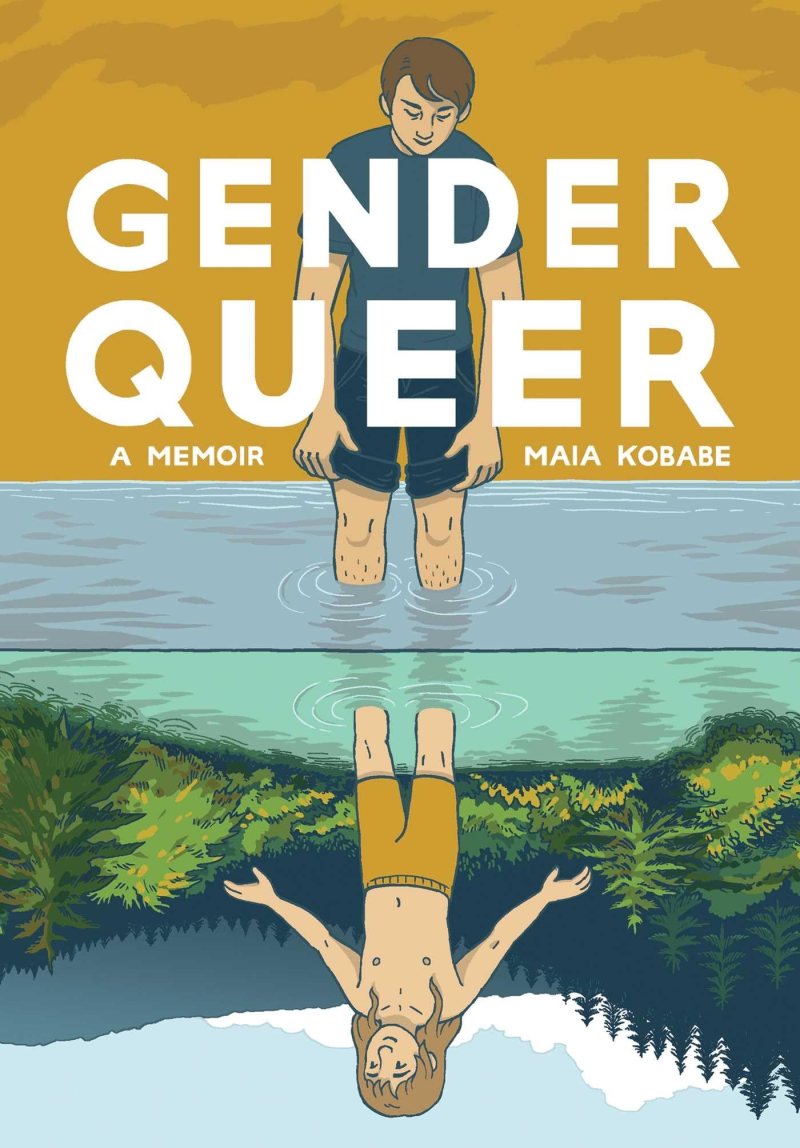
After all the Republican outrage over banning books, I thought it was time to read one of the more “controversial” ones for myself. I already knew from previous experience that once these book banners got it into their heads that a book was “inappropriate”, there is usually no going back for them. One thing that I’m proud about myself is that I’m willing to make mistakes and apologize for them, and even, heavens to Betsy, change my mind as I grow and evolve. That doesn’t seem to be the case for the immediate future.
I do remember a few years ago that an Oklahoma organization banned the Anne Frank graphic novel. They saw the word “graphic” and thought that this was not appropriate for little Jimmy or Jane. This is my main problem with people censoring books that they haven’t even read. Just for the continuing education of readers who may not know, a “graphic novel” is a long version of a comic book. It is often bound, and sometimes hard cover. That doesn’t mean that they are all for children; many graphic novels are geared towards teens and older. However, that doesn’t mean graphic in the sense of sex or violence and one more reason why we should let professional librarians decide on age and maturity appropriateness.
Now that we’ve got that out of the way, I read Gender Queer: A Memoir by Maia Kobabe. Since it is a memoir, we know that we will be reading different aspects of Maia’s real life including her journey as a queer person which includes puberty, experimenting with language and their body (all perfectly normal), and going through clothing, hair, and other styles to discover what fits their person; what makes Maia who they are.
We all do this.
We all spend much of our lives in gender affirming care, making ourselves look a way that makes us feel good about ourselves. This gender affirming care is unique for each of us, depending on who we are and how we feel at that moment.
For a long time, my daughter, who is cisgender only wore dresses. She designed outfits based on her likes and some of them were not what I (or her teachers) would call weather appropriate, but she liked experimenting. No one would ever suggest that she not wear jeans or sundresses or jeans with sundresses. With a cowboy hat. And winter boots. Now, as a teenager and high school graduate, her go-to clothes are pajamas. Flannels and fleeces and on more than one occasion wrapped up in a fleece blanket. She has more pajamas than I have clothes. They are neat and clean, and most of them are cute. The only one who knows they’re pjs are she and me, and neither of us care.
I don’t want her to be criticized, but why is she not criticized for her choices of clothing, her choices of gender affirming care, but someone like Maia is? We need to be clear in our lives and careful not to be phobic, but to be accepting.
I spent some time reading Gender Queer. I didn’t want to rush through it. Overall, I enjoyed the book. I realize that I’m not the target audience: I’m a married, middle-aged mom of three who went through puberty and questionable fashion choices in the eighties.
I enjoyed Maia’s story. I liked seeing how they came to their realizations. I loved the support they got from their family. Were there some scenes that were a little more for an older person? Yes. Just like there are different books and movies for different ages, this book is no different. It is not for every age. Do I think this should be in a public library or a public school library? Yes, I do. I think it is up to an individual parent to read along with their children and help them select age appropriate books. Would I want this in an elementary school? I don’t think that would be appropriate. That’s why schools and libraries have librarians. Librarians are professionals who can ascertain if a book is appropriate for your child’s reading and maturity level. They will also ask your opinion if they have a question about appropriateness. My daughter’s librarian wouldn’t allow her to read age-appropriate horror books that were in the school library. She spoke to us and we spoke to the librarian and we sorted it out together.
None of that is to say that a parent can’t tell their child that they don’t want them to read certain elective books or have a conversation with the librarian about what their child is allowed to read. However, you as a parent do not have the right to tell MY child what they can or cannot read. That is my job as a parent, and if I fail in that job, it is still none of your business. I decide what’s appropriate for my child.
Part of that is having diverse books available; books that my child may not find in my home. My child (and yours) should be exposed to many different viewpoints because it’s a big, beautiful world, and they need to be prepared to experience it with an open mind and an open heart, and they can’t do that if society keeps banning books, especially if they have no real reason to.
With Gender Queer, I wonder if this book was in a public school library at all? Was it just a book that grabbed the attention of the “small government” crowd that only believes in small government when Democrats are in charge.
Censorship is not the answer, and parenting your children should come first before you start demanding other parents follow what you deem appropriate.
I liked Gender Queer. I felt many emotions, and I could feel the changes and the wariness that Maia felt throughout their puberty and their feelings towards themselves and others. As I said earlier, the book includes mature themes. I found it perfectly acceptable for high school ages as well as more mature middle schoolers who might be going through the same emotions and having similar concerns as Maia. It is always a good idea, as a parent, to preview a book to see if it is on a reading and maturity level for your child, and it can also be good for both of you to read it together.
Read together.
Talk to each other.
Answer questions honestly.
That goes for books that aren’t controversial or banned.
 Griffins and Ginger Snaps